Ad

University president on powerhouses: ‘If we do nothing, we will hit a wall’
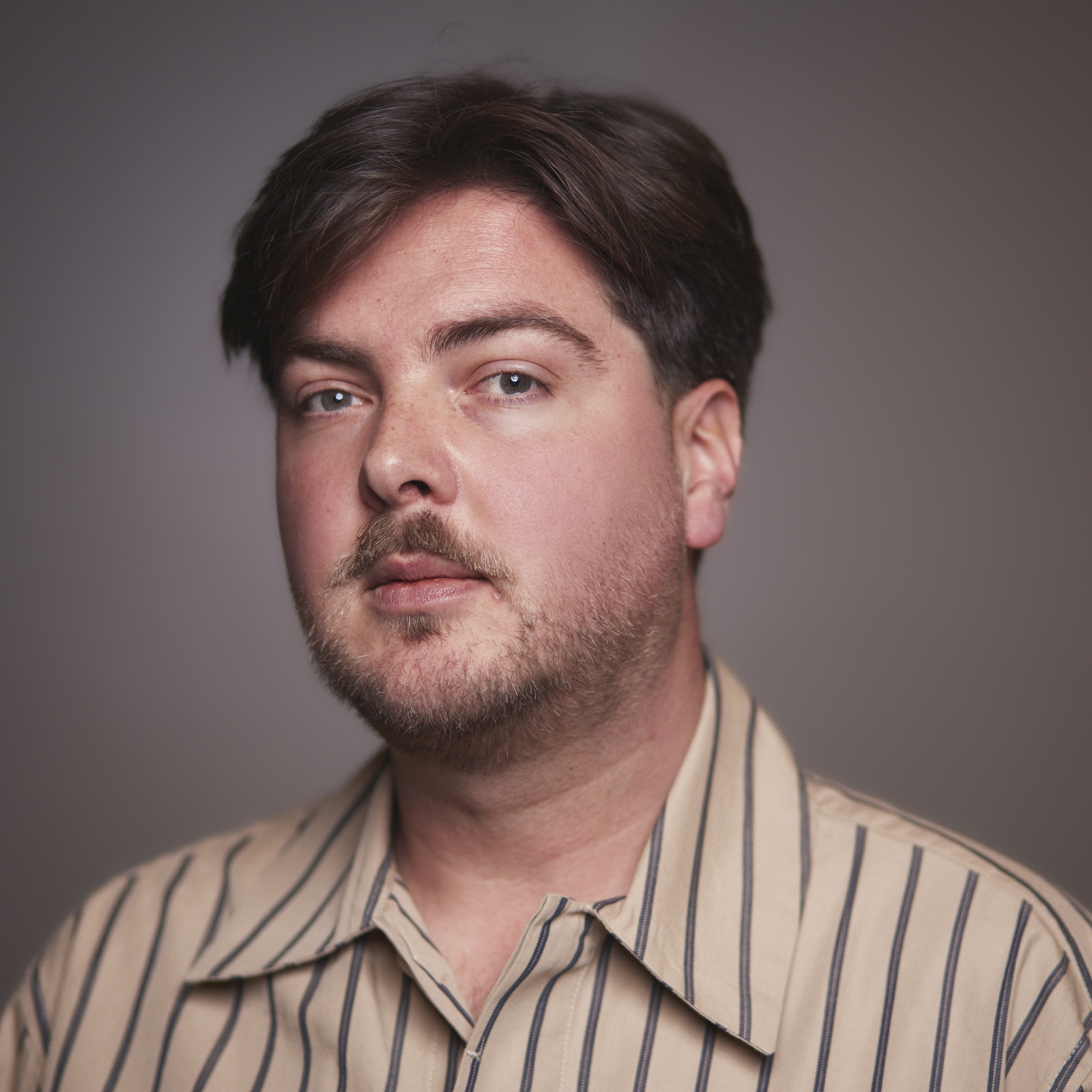
Just before the summer, the Executive Board and the deans announced the outlines of a potentially far-reaching plan for the future. The university wants to cluster faculties to become more resilient in the face of looming threats, such as declining student numbers and shifting government budgets. Chair of the Executive Board Annelien Bredenoord on the need for change.
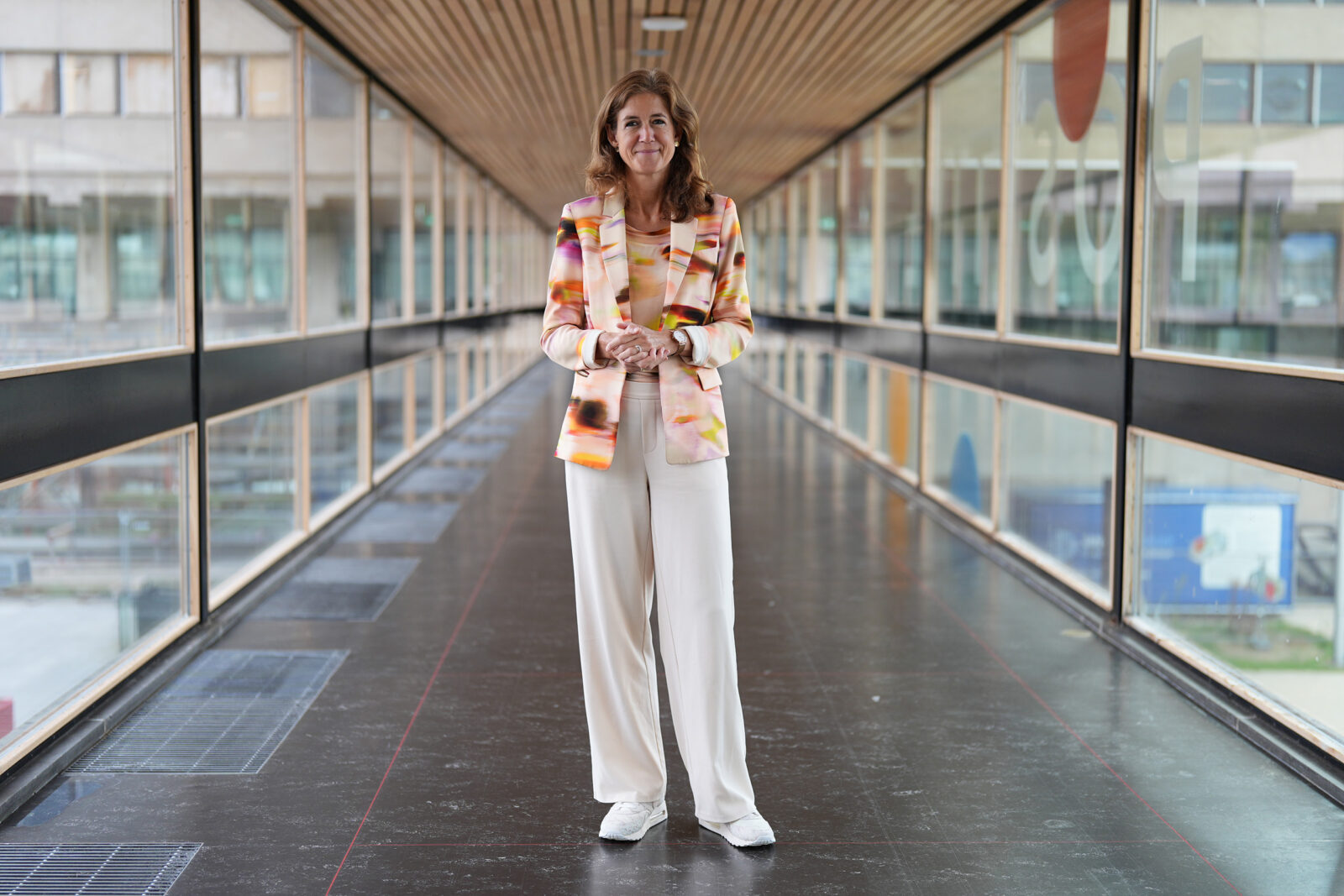
Image by: Arie Kers
When did you first think: we need to do things differently?
“Two or three years ago, I gradually began to realise that a great deal is coming our way at universities. At the time, I was on the committee advising the European Commission on the future Horizon programme.
“A lot is changing demographically, and student numbers are falling. On the one hand, because there are fewer 18-year-olds, and on the other because of agreements to reduce the number of international students. As a result, there will be forty thousand fewer students at Dutch universities in 2031. At the same time, we have seen funding per student decline for years.
“The Jetten government is fortunately reversing most of the 1.5 billion euros in cuts to higher education, but we have been calling for more investment for years because of the high workload. And much of the investment that is coming is going to STEM – science, technology, engineering and mathematics – and defence. On top of that, there is a stronger focus on border regions.”
'All in all, we expect to be vulnerable. We do not want to sit around waiting for that vulnerability to catch up with us'
It sounds as if this will have consequences within a few years.
“It is already happening. The growth of recent years has come to an end. The EUR is the only university that is stabilising (the number of first-year students remained unchanged this year, while it fell at other universities, ed.). But after that, unfortunately, the inevitable decline will come.”
What makes the EUR specifically more vulnerable than other universities?
“The EUR is exceptionally strong in our core fields: economics, management, social sciences, law and medicine. But STEM is not part of our university’s identity. We are not in a border region. All in all, we expect to be vulnerable. We do not want to sit around waiting for that vulnerability to catch up with us. We are going to focus on what we are good at and make sure we are indispensable and fully relevant in 2030. That is how the plan came about.”
Suppose we do nothing. What happens then?
“First, our quality, excellence and relevance will suffer. And secondly, we will run into financial problems, genuine deficits. Whether you are a company, a university or another organisation, you must keep renewing yourself. Otherwise, you become Nokia, which always thought: we are a frontrunner. And eventually nobody knows Nokia anymore.”
Een lijst met artikelen
Are you afraid that at some point politicians will say: there is no room for fourteen universities in the Netherlands at all?
“I already hear that in the corridors regularly. We want to get ahead of that and build a strong Erasmus University through our own strength. That is what our strategy for 2030 is for. What can you call Erasmus University for? We are the engaged university that knows how to turn knowledge into societal impact.”
It is also an alarming story. The announcement of the plan said: “We still have the space to choose for ourselves – a luxury with an expiry date.” I was a little shocked by those words.
“To be honest, I do not think that is such a bad thing. We need to continue developing and changing together; it is important that we do so. But there is no panic, precisely because we are acting early. Together, we have looked at what is coming our way and how we can combine the EUR’s strengths so they become even more visible, so that people can find each other more easily and work together more effectively. That is how the idea of the powerhouses came about. There will simply be forty thousand fewer students in the Netherlands. We can hope that they will all come to us, but that is not realistic. So we need to adjust course.”
'This world talks very much in terms of tech, tech, tech and defence'
Why is greater cooperation between faculties the best response to this?
“At the moment, there is a certain fragmentation, with seven faculties and two institutes. Changing the way governance is organised is not the goal. The goal is to look at where the themes, people and expertise lie in which we are genuinely strong, and how we can make them even stronger and invest in them more. That means ensuring that people can find one another and looking at where we can work together more intelligently or organise things differently.
“Traditionally, we have been strong and visible in economics and management, medicine, and the social sciences and humanities. In addition, we have a global and a legal perspective, which do not quite fit or would not be done justice if you forced them into a single theme. They are more like cross-cutting connections running through all the themes.”
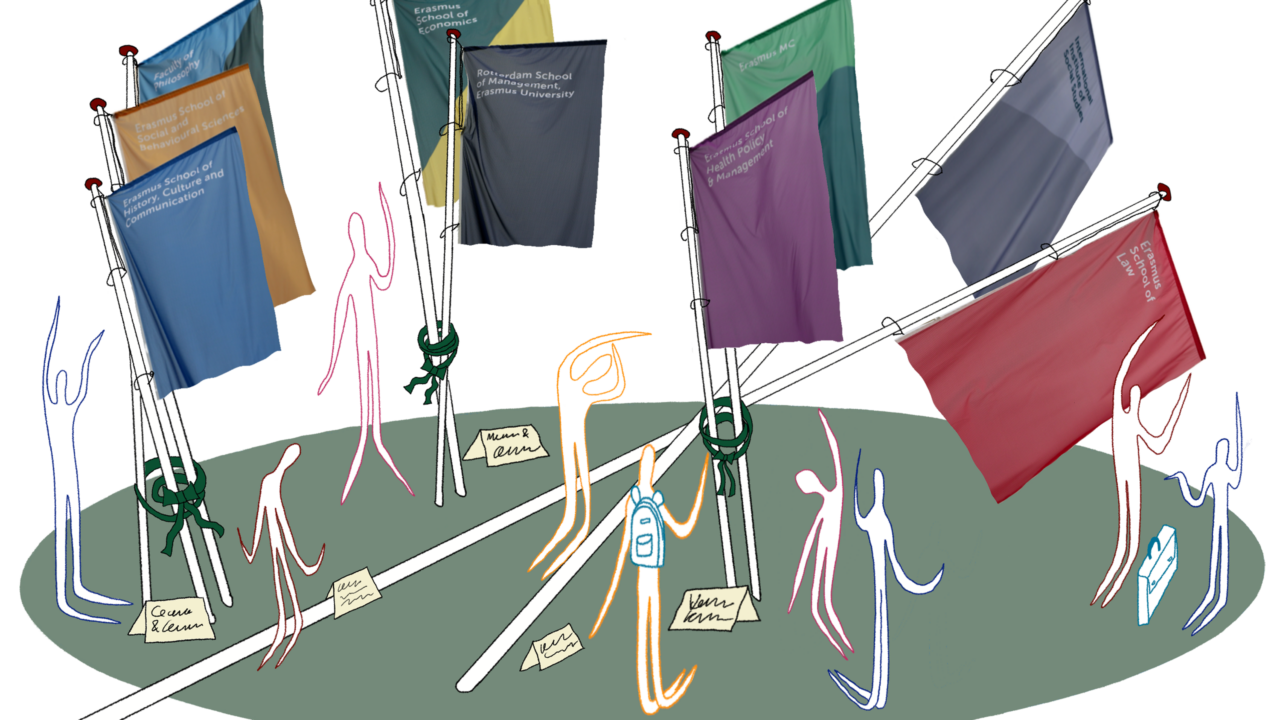
The faculties are currently exploring the formation of three so-called ‘academic powerhouses’. The clusters being considered are Economics and Management (RSM and ESE), Medical and Health Sciences (Erasmus MC and ESHPM), and Social Sciences and Humanities (ESSB, ESHCC and ESPhil). ESL and ISS are to provide perspectives that cut across and link the powerhouses in the areas of law and the Global South, respectively.
The announcement also said: “What the EUR delivers is indispensable, yet risks being overlooked.” What do you mean by that?
“This world talks very much in terms of tech, tech, tech and defence. That is partly in response to the report by Manuel Draghi, who wrote a report on the European Union’s future earning capacity. Draghi does in fact clearly emphasise the importance of the behavioural sciences, humanities, economics, business and law. But you see governments and companies reducing the report to: we need to invest in tech. The same applies to the Dutch translation: you have to be careful that it does not become all about tech.
“You can develop a very fine vaccine, but if people do not trust science or healthcare, they will not take it. You can develop algorithms and AI, but if they increase inequality, that will lead to societal debate.
“Innovation will not take hold if it is not addressed comprehensively. However impressive it may be, if you do not consider the behavioural components, the financial and business side, the ethical and societal aspects or the legal side, innovation is of limited use. And those are precisely the EUR’s core areas of expertise.”
'What you are very good at can also become a vulnerability'
What does this require of academics? Do they all have to work differently?
“No, ultimately we are a kind of football team as a university, in which you need all kinds of characters and expertise. In the past, it was more possible to conduct research using teaching funding. The opportunities available now are often national or European grants, and those applications are becoming more complex. A consortium is then put together in a very short time, and you have to respond within a few days or two weeks. That requires a different way of working as a scientist. We expect this to increase further.”
The EUR is more dependent than other universities on the money per student that comes directly from the ministry. Is that because we are not very good at securing grants?
“It is important to emphasise that we are actually very good at this through private entities. But for the public part, we are highly dependent on student-based funding that comes directly from the Ministry of Education, Culture and Science. If you know that student numbers and funding per student are falling, you do not have to be a mathematician to see that this makes us genuinely vulnerable. Traditionally, we have been very good at teaching, with strong, large-scale educational programmes. But what you are very good at can also become a vulnerability. That is why our strategy says we need to diversify our income.”
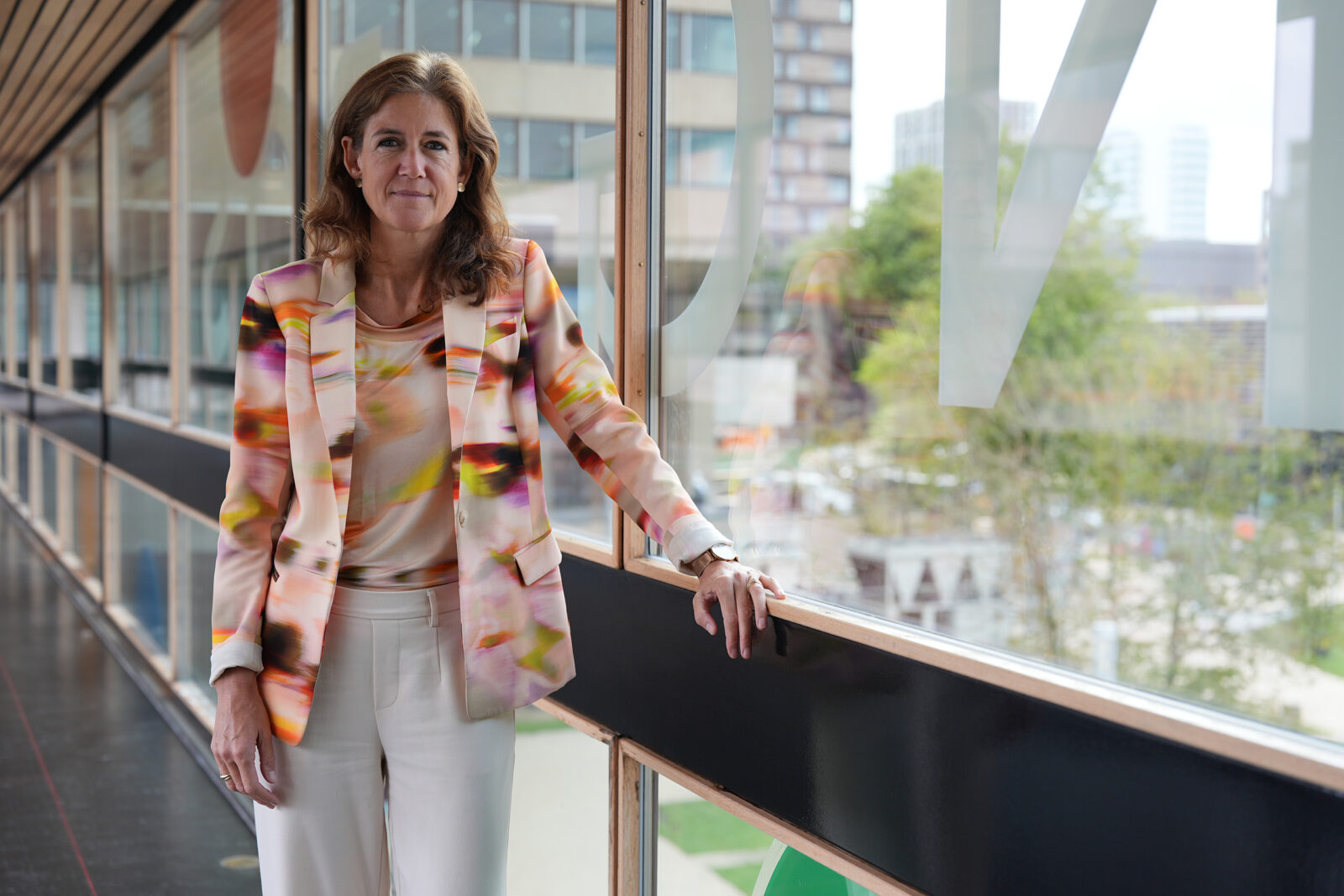
Image by: Arie Kers
Not so long ago, university leaders were calling for an end to growth. What exactly has changed?
“I never said that. The EUR has also grown rapidly, from around twenty thousand to more than thirty thousand students in roughly ten years, reaching that figure in 2021. I believe there is a need for a highly educated workforce, and that employers are waiting for it. But if you are going to shrink, you need a plan. Fewer students also means that you need fewer lecturers, buildings and so on. That cannot happen overnight. I think it is realistic to prepare for it.”
Does this mean that people should prepare for reorganisations, mergers or cuts?
“I would rather turn that around. If we do nothing and simply carry on working, the situation will become untenable in 2030 or 2031. It is our responsibility as administrators to get ahead of that. We are in time; it is 2026, so we can make plans now. I do not want it to sound threatening, because that is not how I see it at all. It is more: come on, everyone, this is what we are going to do.”
Een lijst met artikelen
-

Criticism of academic powerhouses: ‘A university is not a power station’
Gepubliceerd op:-
Governance
-
What will individual academics ultimately gain from the powerhouses?
“I hope academics will be very enthusiastic about this because they will be able to work on the same themes with all kinds of other intrinsically motivated people. They will be able to find one another across disciplines more easily. I hope it will become easier to find people working in related fields. When you bring smart and motivated people together, energy is released. And I also hope it will create room for innovation.”
And what will students notice?
“Not much in the near future. It is currently a discussion with staff and the participation bodies. Our score in the National Student Survey has been dramatically low for years. I secretly hope that we will ultimately also manage to increase students’ satisfaction with their degree programmes. And it could also lead to the development of new teaching. The working groups with the deans are also looking at the educational portfolio, because that is the most important thing we have to offer.”
'Everything the EUR has to offer in the fields of the humanities, behavioural sciences, ethics, philosophy, law, economics and business is incredibly necessary'
Merging faculties has been attempted before. And the EUR was or is known to some extent as a university where deans have a great deal of power and protect their own fiefdoms. Why will it work this time?
“Because it is now crystal clear why we need to change. I think people feel the necessity. And the alternative that we wait, carry on and hit a wall is much less attractive. I see a great deal of energy and willingness to cooperate in the team of deans.”
Een lijst met artikelen
-

‘Academic powerhouses’ to launch by end of 2027
Gepubliceerd op:-
Governance
-
What do you hope it will look like in 2028?
“I hope people will have the confidence to commit to this with energy. My vision is that Erasmus University has exceptional strength, precisely in a world where so much is being said about technology and defence. Everything the EUR has to offer in the fields of the humanities, behavioural sciences, ethics, philosophy, law, economics and business is incredibly necessary. We need to establish that strongly to prevent ourselves from being pushed aside.
“In the longer term, we will have convinced the whole world that there is no technological innovation without social innovation. I also feel that people are increasingly recognising this, and that this is what distinguishes the European Union. Not ruthless technological capitalism, but genuinely socially supported, inclusive innovation. We can contribute to that.”
The plan is currently in the exploration phase. Boston Consulting Group is helping to map out the facts and figures, including expected student intake, key financial data, grants and rankings. That phase will be completed at the end of this month. The deans will then map out opportunities for greater cooperation in working groups. That design phase should be completed in the spring. The elaboration phase and implementation will follow in the second half of 2027.
De redactie
-
 Tim Ficheroux
Desk editor
Comments
Ad
Read more in Governance
-
‘Academic powerhouses’ to launch by end of 2027
Gepubliceerd op:-
Governance
-
-
Criticism of academic powerhouses: ‘A university is not a power station’
Gepubliceerd op:-
Governance
-

Leave a comment