Ad

Universities want to work with Defence even more

On Monday, the universities signed a declaration of intent with the Ministry of Defence: they want to work together more often. They signed the agreement after a series of talks about academic freedom.
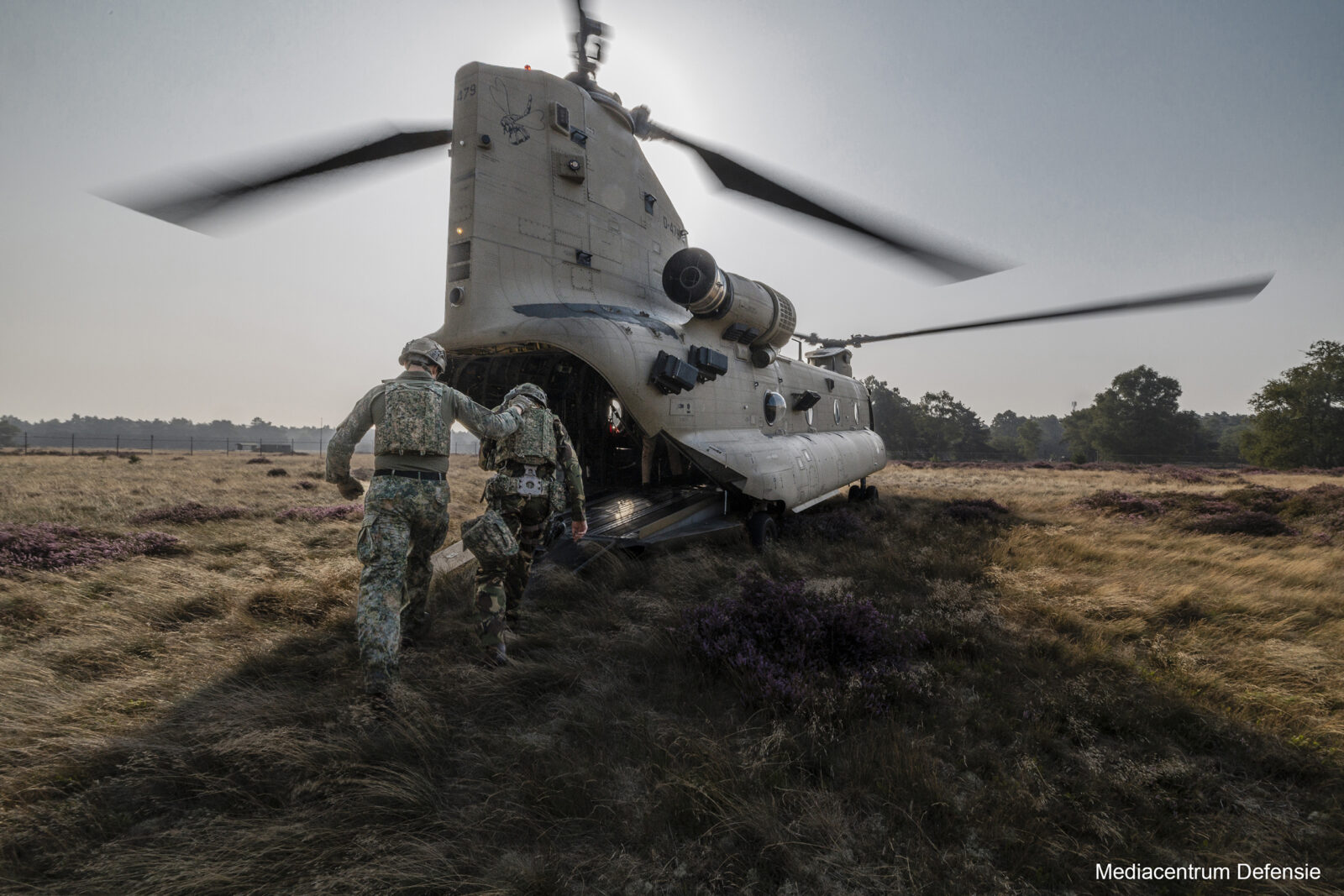
Image by: Mediacentrum Defensie
Billions of euros in additional funding will go to the Ministry of Defence in the coming years, some of which has been earmarked for knowledge and innovation. The question is where the armed forces will obtain that knowledge and innovation.
Last year, the universities of applied sciences already said they were standing by. Now the universities’ association UNL is joining them. On Monday, state secretary Derk Boswijk and UNL chair Caspar van den Berg signed a ‘letter of intent’.
Free world
Van den Berg seems to regard the cooperation as self-evident. Universities are at the heart of society and are keen to contribute to solutions for major social issues. “That includes peace, security and resilience”, he said when asked.
It is not just about universities’ technological research, he emphasised. Universities also conduct research into, for example, the consequences of war, effective decision-making in crisis situations and trauma among military personnel after peacekeeping missions.
He believes the cooperation also strengthens the universities’ own survival. “We provide education and conduct independent research. We can only do that in a free world where there is peace.”
Secrecy
The sensitive issue in this cooperation is, of course, academic freedom. Open and free research, preferably with colleagues from around the world, can sometimes clash with the secrecy that Defence may demand.
That is why the university administrators did not allow themselves to be rushed into concluding such an agreement. They held a series of talks with people from the Ministry of Defence ‘to learn to speak each other’s language’, Van den Berg said. “We wanted to understand their needs and explain why the universities wanted to do this within a clear framework.”
Academic freedom and scientific integrity would be beyond question. The declaration states: “Because this is also where the strength of science lies, these principles are important to Defence too.”
Ongoing cooperation
The declaration comes while the universities have long been working with Defence. Declarations of intent have even already been drawn up with individual universities. TU Delft, for example, signed one in April 2025, nearly a year and a half ago. There, the army even has its own ‘base’ on campus.
Researchers can also already apply for funding through research funder NWO for research that could help the army move forward. The first ten grants have now been awarded, nine of them to technical universities and one to the University of Amsterdam.
Nevertheless, Van den Berg says it is useful to have one joint declaration of intent. He believes this will enable talks about new research to get to the heart of the matter more quickly.
Few, if any, financial agreements have been made. The universities and Defence have only agreed that they will follow the universities’ current ‘costing system’. Cooperation can therefore take place through research funder NWO, through direct contract research at the universities themselves and through cooperation with the Netherlands Defence Academy, a training institute of the armed forces.
Universities of applied sciences
The universities of applied sciences are also seeking closer ties with the armed forces through their research groups. The Association of Universities of Applied Sciences signed a framework agreement in December 2025. Several universities of applied sciences will soon receive funding for applied defence research through the SIA task force, the universities of applied sciences branch of NWO.
Interest in Defence was fuelled not only by geopolitical developments, but also by the previous cabinet’s cuts to higher education and, conversely, by the major investments in Defence. In addition, the armed forces are eager for knowledge and innovation.
Students
Students can now also take a military minor. This is possible not only at many universities of applied sciences, but also at several universities. Students are then appointed as reservists, receive a salary and learn ‘basic military skills’.
The National Student Union opposes cooperation between universities and Defence, describing it as having a ‘major negative impact on academic freedom’. Academic freedom is already in a poor state, the union argues, and now Defence is getting involved as well.
Not public?
The wording of the declaration of intent illustrates the tension facing the universities. It states that the declaration ‘will not be made public’ without mutual consent, unless there is a legal obligation to publish it.
But they immediately sent out a press release and made the declaration public straight after signing it. UNL chair Van den Berg also does not know exactly why the clause was included. He thinks it is standard wording from Defence. “There is not much behind it. We agreed beforehand that we would announce this.”
Een lijst met artikelen
-
Defence interested in collaborating with higher education
Gepubliceerd op:-
Science
-
De redactie
Comments
Ad
Read more in Politics
-

National budget: extra money education and research, no unexpected cuts
Gepubliceerd op:-
Education
-
Politics
-
-

Budget Day: Students’ purchasing power barely changes
Gepubliceerd op:-
Money
-
Politics
-
-
Students will still be allowed to occupy a building, but perhaps not while masked
Gepubliceerd op:-
Politics
-
Protest
-

Leave a comment