Ad

Nobel Prize awarded to Covid vaccine pioneers
Katalin Karikó and Drew Weissman have been awarded the Nobel Prize in Medicine for their research into mRNA. Thanks to their discoveries, coronavirus vaccines were introduced at lightning speed.
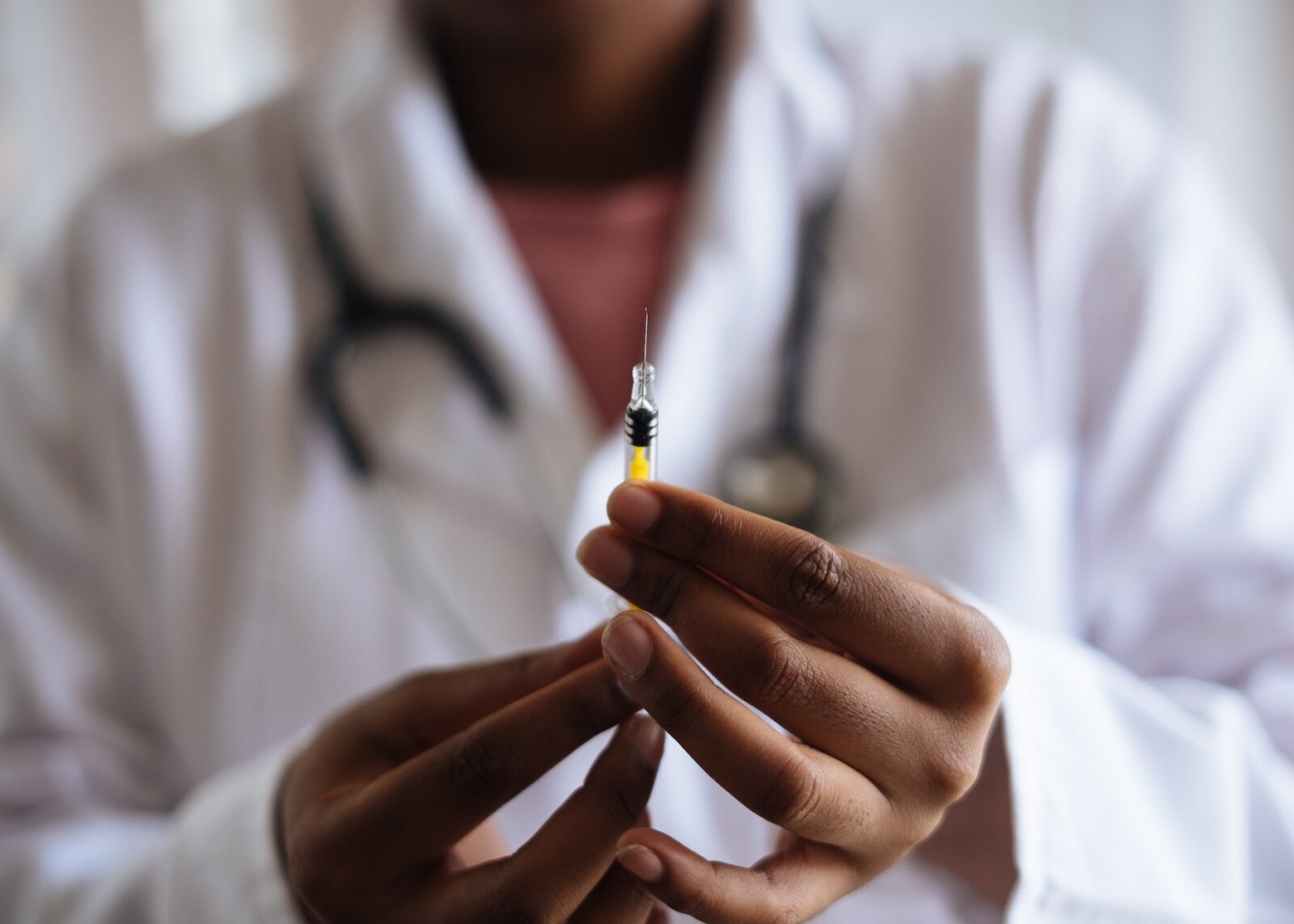
Image by: RF Studio (Pexels)
Last year, many people were already expecting the Nobel Prize to go to the COVID vaccine pioneers. In the end this didn’t happen, but this year it has.
A vaccine trains the body to make antibodies against a virus. This used to happen based on the virus itself (or parts thereof). Developing these kinds of vaccines took a relatively large amount of time.
Thanks to the research by Hungarian Katalin Karikó and American Drew Weissman, it can be done much faster these days. COVID vaccines were introduced at record speed.
Nineties
Karikó and Weissman met at the University of Pennsylvania in the nineties. Together they delved into the role of the messenger RNA in the immune system. The mRNA acts like a messenger between the DNA and the rest of the cell.
Theory dictated, therefore, that it should be possible to use synthetic mRNA to ‘tell’ the body something, for example how to react to a new virus. But there was a problem: synthetic mRNA was seen as a foreign substance, and rejected as a result.
Karikó and Weissman learned to understand why mRNA functions differently in a body cell than in a test tube. Their first groundbreaking article was published in 2005, fifteen years before the COVID pandemic. Their insights made the elaboration of mRNA-based vaccines possible.
Last year, Katalin Karikó was given an honorary doctorate by Radboud University Nijmegen. But there are other researchers who worked on such vaccines. In 2021, the University of Amsterdam presented two of them with an honorary doctorate.
Anti-vaxxers
The Nobel Prize isn’t likely to convince anti-vaxxers that the vaccine is safe after all, the Nobel Prize Committee said in response to questions from a journalist, but perhaps it will make a difference for people who are on the fence about it.
This year’s Nobel Prize amounts to 11 million Swedish krona, the equivalent of around 950 thousand euros. Two Dutch nationals won the Nobel Prize in Physiology or Medicine in the past. The first, in 1929, was Christiaan Eijkman for his research into vitamins. In 1973, Niko Tinbergen got the prize for his research into the behaviour of social animals such as bees and birds.
Read more
-
‘Long-term risks are very rare.’ Six questions to Diederik Gommers about the coronavirus vaccine
Gepubliceerd op:Article type: Video-
EM TV
-
De redactie
Latest news
-
Interest on student debt at highest level in 17 years
Gepubliceerd op:-
Money
-
-
Behind on repaying your student debt? DUO may soon pass the details on to your municipality
Gepubliceerd op:-
Politics
-
-
Extra funding for higher education does not keep pace with inflation
Gepubliceerd op:-
Education
-
Politics
-
Comments
Comments are closed.
Ad
Read more in Science
-

The emotions of science (and scientists) are palpable during theatre performance DOPE
Gepubliceerd op:-
Culture
-
Science
-
-
‘There should be a minimum age for fatbikes’
Gepubliceerd op:-
The Issue
-
-

Dutch people increasingly believe AI cannot help advance science
Gepubliceerd op:-
Artificial Intelligence
-
Science
-