Ad

Need for clarity emerges in dialogue on academic freedom

Around forty staff members and a handful of students gathered on Monday at the Putselaan, speaking in small groups about academic freedom in the context of a university that is embedded in society. Erasmus University aims to be an engaged university, but what does that mean for the academic freedom of researchers?
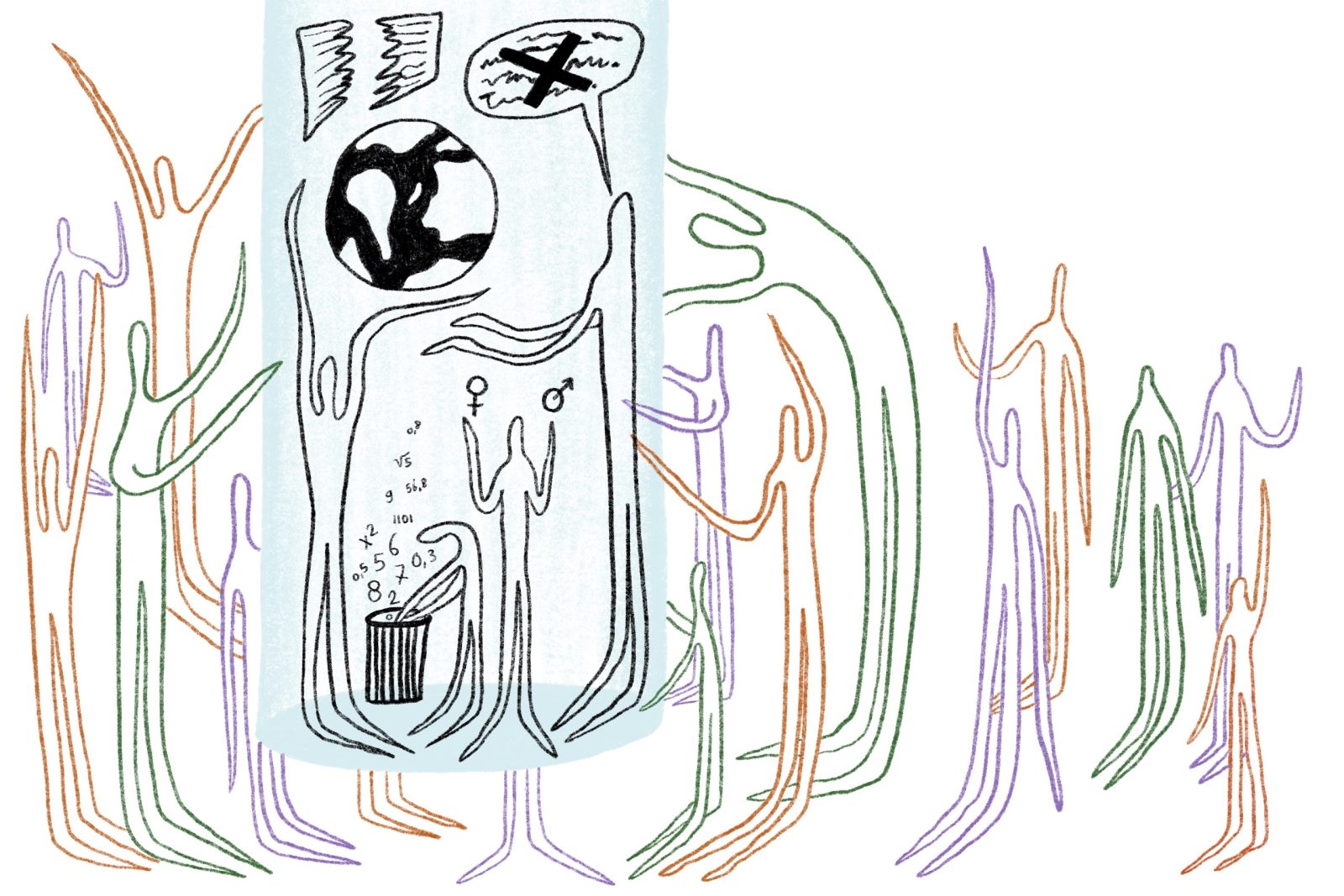
Image by: Sonja Schravesande
The location, at Cultuur&Campus on the Putselaan, is no coincidence. “This is where we want to connect with Rotterdam and society”, rector magnificus Jantine Schuit said in her opening remarks. “As an engaged university, we want to create a research and education agenda together with our surroundings.” But collaboration also brings challenges for academic freedom. Schuit herself worked for many years at the RIVM, which conducts a great deal of research commissioned by the Ministry of Health, Welfare and Sport. “There were times when the ministry tried to influence the title of a study.” It is precisely these kinds of difficulties that the dialogue on academic freedom addressed today.
A year ago, the rectors of Dutch universities called for a nationwide dialogue on academic freedom, as it is under pressure worldwide. At Erasmus University, three meetings are therefore being organised in which academics, staff and students discuss academic freedom. This was the second meeting. The third will take place on 18 May and will focus on the role and responsibility of academics in the public debate.
Negative outcomes
In the attic of the old school building on the Putselaan, the three panellists discussed how scientists should deal with partners or clients who are unhappy with the outcomes of a study. “We cannot resolve this dilemma”, said Arwin van Buuren. The Strategic Dean Impact & Engagement conducts a great deal of research for government bodies. “I have experienced that outcomes are less welcome, and then wording becomes important. I’m a little pragmatic about the extent to which I let a partner read a report before I publish findings. As long as you always stand by your conclusions.”
Eveline Crone, professor of Developmental Neuroscience in Society, emphasises the importance of clear communication and cooperation from the outset. According to her, it is not common for clients or partners to be unhappy with negative research outcomes: “If you communicate well and work together from the start, your findings are also their findings, even if they are negative.” Marguerite Soeteman-Reijnen, chair of the university’s Social Advisory Council, adds that scientists should not be afraid of differences of opinion, negative outcomes or conflicts of interest. “Indicate it if that is the case. You can always stop.”
Crone asks the Executive Board for support: “It does happen that a partner uses your name or research to sell a product, without you knowing. Scientists need help or support in such situations.”
Academic and democratic freedom
After the panel, participants discuss in small groups what academic freedom means in the context of an engaged university. Several participants express a need for clarity: guidelines, an anchor, a normative framework or policy on academic freedom and engagement. At one of the tables, a researcher warns against engagement washing: there is a risk that scientists quickly interview a few people in the south of the city just to meet funding requirements. Topics such as engagement, and previously impact, are increasingly becoming conditions for research funding.
Another recurring theme is that academic freedom and democratic freedoms are interconnected. This also makes the discussion more complex, because where is the boundary between academic freedom and freedom of expression? It is one of the insights participants share via the mentimeter at the end of the meeting: “We need to be more critical about how we use the term academic freedom.” Arwin van Buuren also notes this at the close of the dialogue: “How we use the term needs clarification: what falls under democratic freedoms, and what specifically under academic freedom.”
Een lijst met artikelen
-

Participants in dialogue on academic freedom want actions to match words
Gepubliceerd op:-
Science
-
De redactie
-
 Tim Ficheroux
Desk editor
Comments
Comments are closed.
Ad
Read more in Science
-

Seven EUR scientists receive a Vidi grant
Gepubliceerd op:-
Science
-
-

New code of conduct for science emphasises ‘distinctiveness and autonomy’
Gepubliceerd op:-
Science
-
-
Hate campaigns and political pressure: KNAW wants legal protection for academic freedom
Gepubliceerd op:-
Science
-