Ad

Autonomy of Hungarian universities is top priority for Magyar

Restoring the independence of higher education is a top priority, Péter Magyar said in an interview on Wednesday. The winner of the Hungarian elections named the autonomy of universities as one of four matters that must be resolved before the EU releases the frozen funds to Hungary.
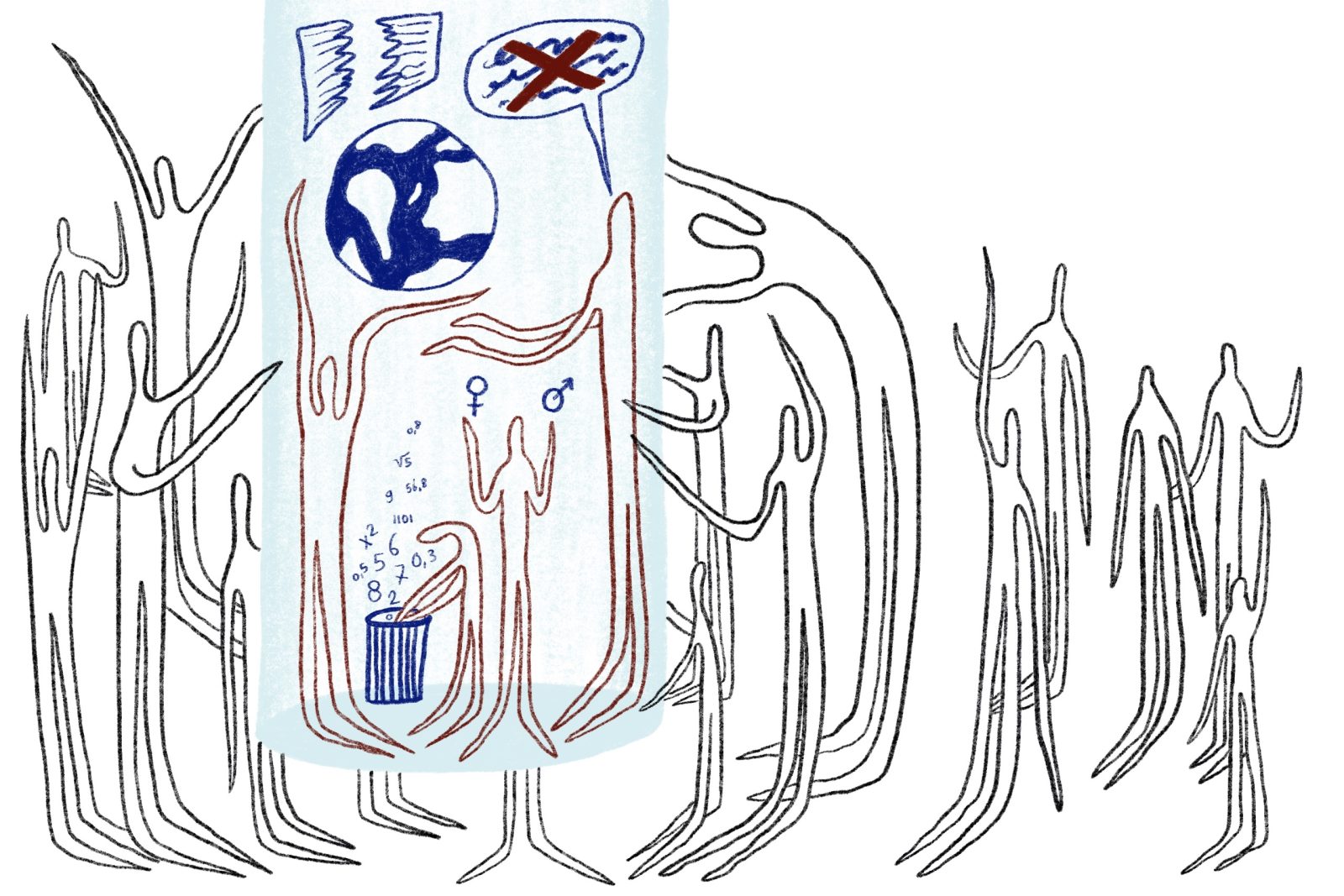
Image by: Sonja Schravesande
The likely successor of Viktor Orbán gave an interview to the state TV and radio for the first time in one and a half year. He accused the presenters of having spread propaganda and lies for years on behalf of Viktor Orbán’s regime.
Under Viktor Orbán the Hungarian rule of law was put under such pressure that the European Union drew a line in December 2022. It decided to freeze billions in EU contributions to the country. Hungary first had to take serious steps to tackle corruption and strengthen the rule of law.
It is precisely with that promise that the Hungarian opposition party Tisza has now won the elections. Incoming prime minister Péter Magyar may gain a two-thirds majority in parliament, which would even allow him to undo Orbán’s interventions in higher education.
Sanctions against universities
That is good news for the country’s higher education institutions. Since 2022 twenty-one Hungarian universities have not received any EU money. They cannot apply for Horizon research grants or receive funds for exchanges via Erasmus+.
That is partly the result of a new system Orbán introduced in 2019. He privatised the universities and put his political cronies on the boards. Since then they have decided where the money goes and made the key appointments. Exactly the kind of cronyism that triggered the European Commission in 2022.
With the possibility of a two-thirds majority for Magyar, the Hungarian political scientist Miklós Sükösd also began to ask himself: can the independence of universities be restored? Can they once again become public, autonomous institutions?
Sükösd is affiliated with the University of Copenhagen. He is in Hungary to follow the course of the elections and has recently written about Magyar’s rise. But about his plans for the universities? “If you want to breathe new life into democracy, making universities independent is part of that. But I have followed these elections closely and in my view Magyar has said nothing about it”, he said before Magyar gave the interview.
Een lijst met artikelen
-

No more EU grants for 21 Hungarian universities
Gepubliceerd op:-
Campus
-
Other issues more important
Magyar won the elections on other issues, says Sükösd. “Besides democracy and corruption, classic social issues played a major role, such as healthcare and pensions. Education too, but mainly primary and secondary education.”
When it comes to restoring democracy, universities are not alone on the priority list. The independence of the media also needs urgent repair, as does that of the supreme court and Hungary’s national budget adviser, who will still be able to veto the way a new government wants to allocate funds.
The road back to Europe may be a very long one for Hungarian universities, thinks Ferenc Laczo. He is a historian at Maastricht University and originally from Hungary. “And in the meantime the EU faces a dilemma: should it already be accommodating towards a new, reform-minded government? Or should the EU continue to enforce the rules strictly, because of the burdensome legacy of Orbán’s Fidesz party?”
He hopes the EU opts for trust, ‘so that Hungarian institutions can rejoin Horizon and Erasmus+ while they are reformed and regain their academic freedom’.
If Hungary reforms its institutions, European leaders will have to decide whether the country can come off the penalty bench. Four years ago it took them a long time to make a decision. Allowing Hungary back into European programmes will probably be less complicated.
Central European University
Viktor Orbán also drove the Central European University, originally founded by George Soros, out of the country about ten years ago. Apart from a small site in Budapest it now mainly sits in Austria. Laczo doesn’t think that university will simply return now that Orbán is gone, although he hopes its Budapest presence will expand and help strengthen democracy.
Sükösd does not expect the CEU to return to Hungary either. “I have been musing about that over the past few days”, Sükösd says. “I taught there for fourteen years. But the CEU has become a different university in the meantime, much more oriented towards the West. I don’t believe they intend to come back. That is a great loss for Hungary.”
Een lijst met artikelen
-

Academic Freedom Index: Academic freedom is declining worldwide
Gepubliceerd op:-
Science
-
De redactie
Comments
Comments are closed.
Ad
Read more in Science
-

Why these scientists are keen to work with the Ministry of Defence
Gepubliceerd op:-
Science
-
-

Seven EUR scientists receive a Vidi grant
Gepubliceerd op:-
Science
-
-

New code of conduct for science emphasises ‘distinctiveness and autonomy’
Gepubliceerd op:-
Science
-