How Karin van Wingerde switches between big-picture systems thinking and the little things
Books tell stories. Based on a book that inspires them, EUR employees tell about their lives.
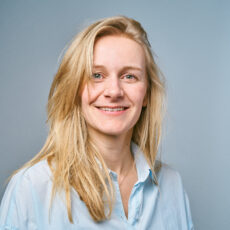
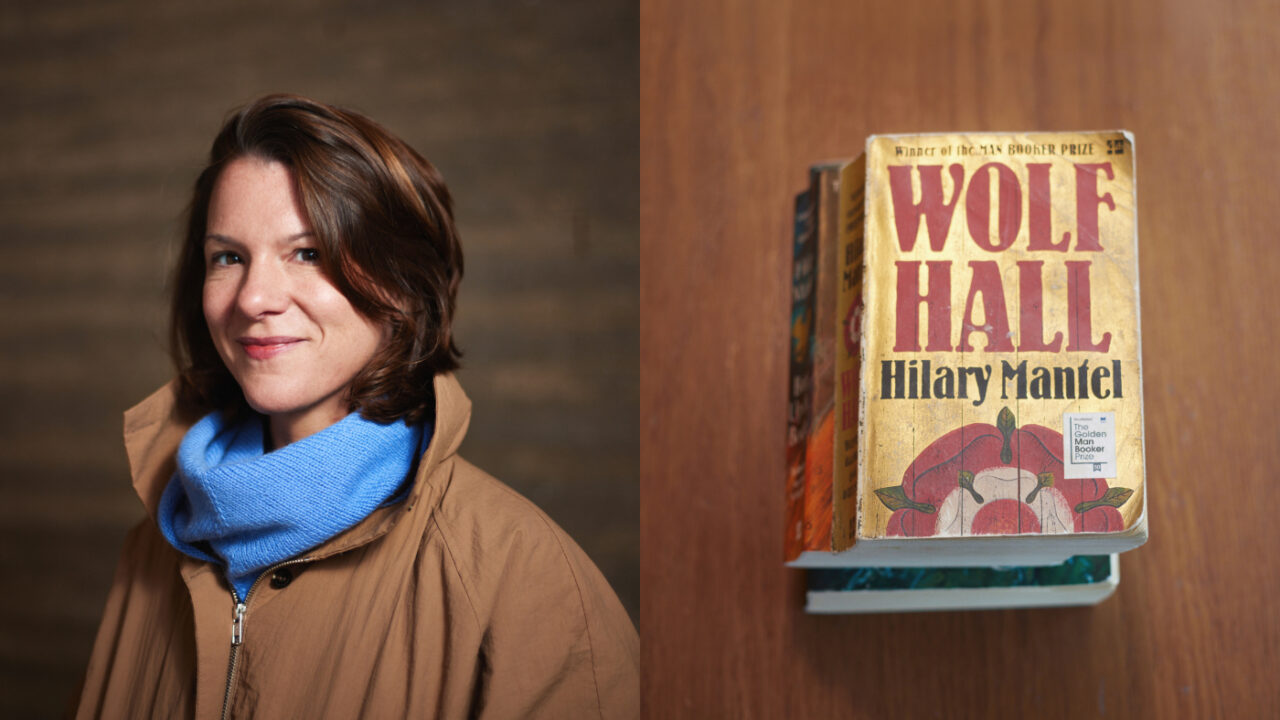
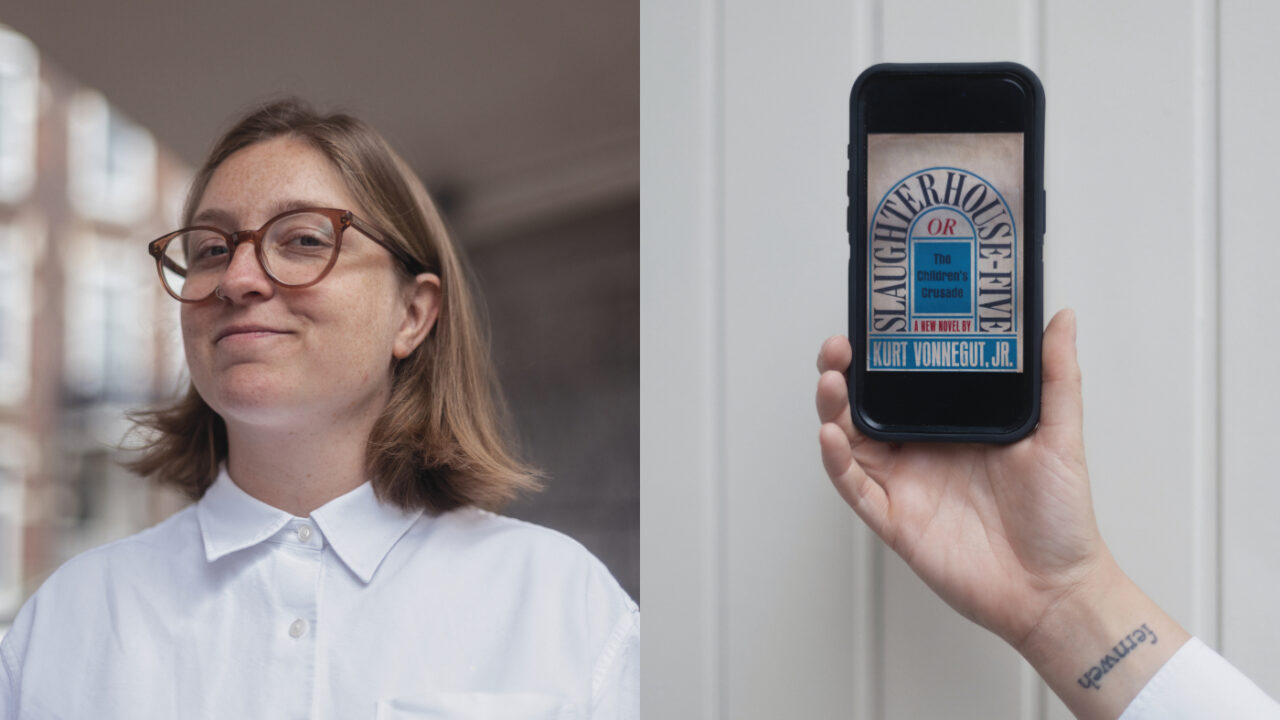
Karin van Wingerde focuses on the big systems behind crime. At the same time, she believes in the significance of small gestures. She reads about the harmful effects of capitalism in Vulture Capitalism, then finds nourishment in a book such as De Redding (The Rescue). “Meaning lies precisely in the little things.”
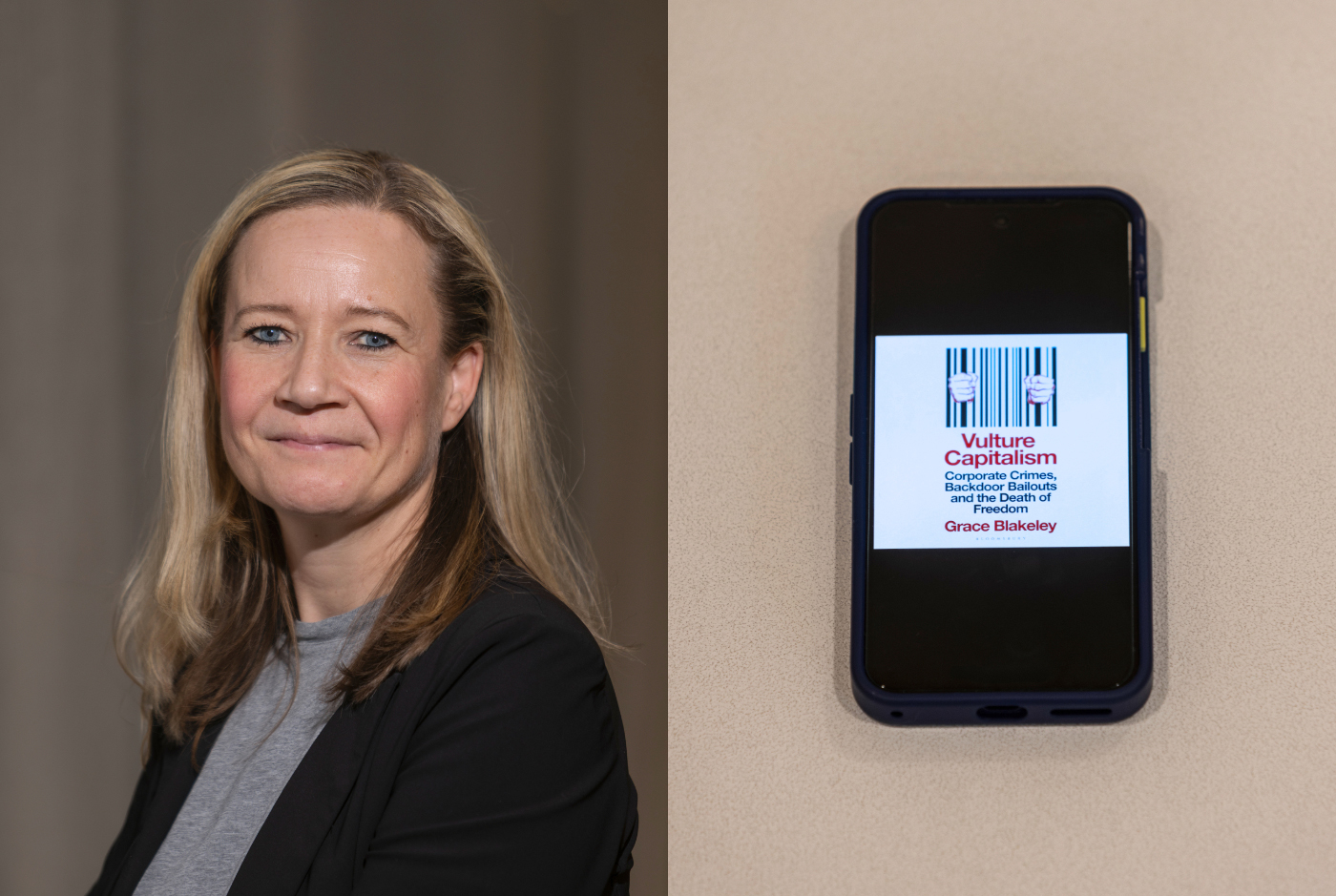
Image by: Leroy Verbeet
Karin van Wingerde takes a step back. She is involved in Dope, a dance and theatre performance about drug crime and human trafficking in the Port of Rotterdam. “Whether you like it or not, drugs affect you”, reads the promotional text. The performance is about dreams of making money quickly and the temptations of social media. It is about failed anti-poverty policies and young people’s sense that they do not matter. Eleven researchers have turned their work into an artistic solo performance, which they stage in the foyer before the show. Through her solo, Van Wingerde wants to talk to the audience about the system behind this form of crime. Her focus is not on the container in the Port of Rotterdam, but on the system that enables crime.
Karin van Wingerde has been professor of Corporate Crime and Governance at Erasmus School of Law since 2021. She researches the interplay between public, private and hybrid forms of governance and their relationship to corporate crime, white-collar crime, organised crime and harm. Over the years, her research has influenced government policy. In 2023, the research team received the EUR Research Prize for its project Focusing On the Right Things in the Port of Rotterdam.
She wants to know: what can I do as a researcher? The people who see her monologue do not have an immediate answer either. But that does not stop her from engaging with society a few evenings a week. “I wasn’t expecting a magic bullet, but perhaps someone might have an answer to the question of what I can do about the system”, she says. It is a reflection of her commitment. After years of research, she knows how complex systems are and how difficult it is to explain that efforts to tackle organised crime often do not work.
Big, bigger, biggest
Part of her research looks at crime in the Port of Rotterdam and the national response to it; another part examines the harm caused by large companies, such as industrial pollution. In the master’s in criminology, she teaches a class on corporate and white-collar crime, taking an even broader view of systems that transcend national borders, such as capitalism and Big Tech.
'Meaning lies precisely in the little things'
She was given Grace Blakely’s Vulture Capitalism as a thank-you from a researcher in her department. The author shows that today’s crises are the result of the capitalist system. According to Van Wingerde, too little attention is paid to the structures and systems on which our society runs, and the harm they cause. She is rereading the book to see how she can use it in the master’s.
Greatness in the little things
Vulture Capitalism may be about the big system, but she also treasures the book because it reminds her of a former colleague she would have liked to work with for longer. When Van Wingerde wonders what she can do as a link in the larger system, it is the small acts of kindness that inspire her. In her inaugural lecture last year, she addressed her sons, aged six and eight. She thanked them for the small everyday things, ‘which are, of course, the big things’. Playing football together, being outdoors, reading – with two boys, it suddenly becomes easy to break away from the big systems.
Her tone changes when she talks about the little things. At first, she criticises the big systems with seriousness and passion; then her eyes fill with tears as she describes the significance of a small gesture.
She read De Redding (The Rescue) by Judith Koelemeijer, in which an older woman wants to park her car neatly by a quay before a theatre performance, but ends up driving into the water. A young student is standing on the quay and, unlike the others, decides to jump in. An act that changes both their lives. The book is based on real events. Saving someone’s life is a great thing, but jumping into the water is a straightforward act. “Meaning lies precisely in the little things”, says Van Wingerde. With that in mind, she can feel content taking a step back in her work.
Number of books per year: “I read every day for work. Outside work, I enjoy reading too. Sometimes twenty books a year. Sometimes five. I don’t have a definitive answer.”
Main motivation: “Letting my thoughts run free, broadening my worldview.”
Most recently read: All the Blue of the Sky by Mélissa Da Costa. “A friend told me she had cried an awful lot while reading it. I did exactly the same. You know where the book is heading, but it still moved me.”
Favourite genre: “In my free time I read fiction, another novel by a writer, books from the reading lists. I don’t have a favourite book, and I don’t have a plan.”
Een lijst met artikelen
-
Why Irene van Oorschot prefers to focus on what she does not yet know
Gepubliceerd op:-
Page-turners
-
Would you rather see EM than AI generated news in your search results? Add EM as a source in Google. Or just ignore the search engines and chatbots and use our mobile app instead.
De redactie
-
 Maartje Braam
Editor
Comments
Read more in Page-turners
-
Why Irene van Oorschot prefers to focus on what she does not yet know
Gepubliceerd op:-
Page-turners
-
-
Kindred spirits are closer than you think, Lara Fizaine knows
Gepubliceerd op:-
Page-turners
-
-
Once you have found what suits you, things fall into place, says Lenya Slierendrecht
Gepubliceerd op:-
Page-turners
-
Leave a comment