Ad

From questionnaires to MRIs, the effectiveness of preventive medical check-ups remains unproven

When is it worthwhile to have a preventive health check-up? Since the start of this year, staff at Erasmus University have been offered this option. Experts Iris Lansdorp-Vogelaar and Merel Schuring disagree on the merits and drawbacks of such preventive medical check-ups. On one point, however, they are in complete agreement.
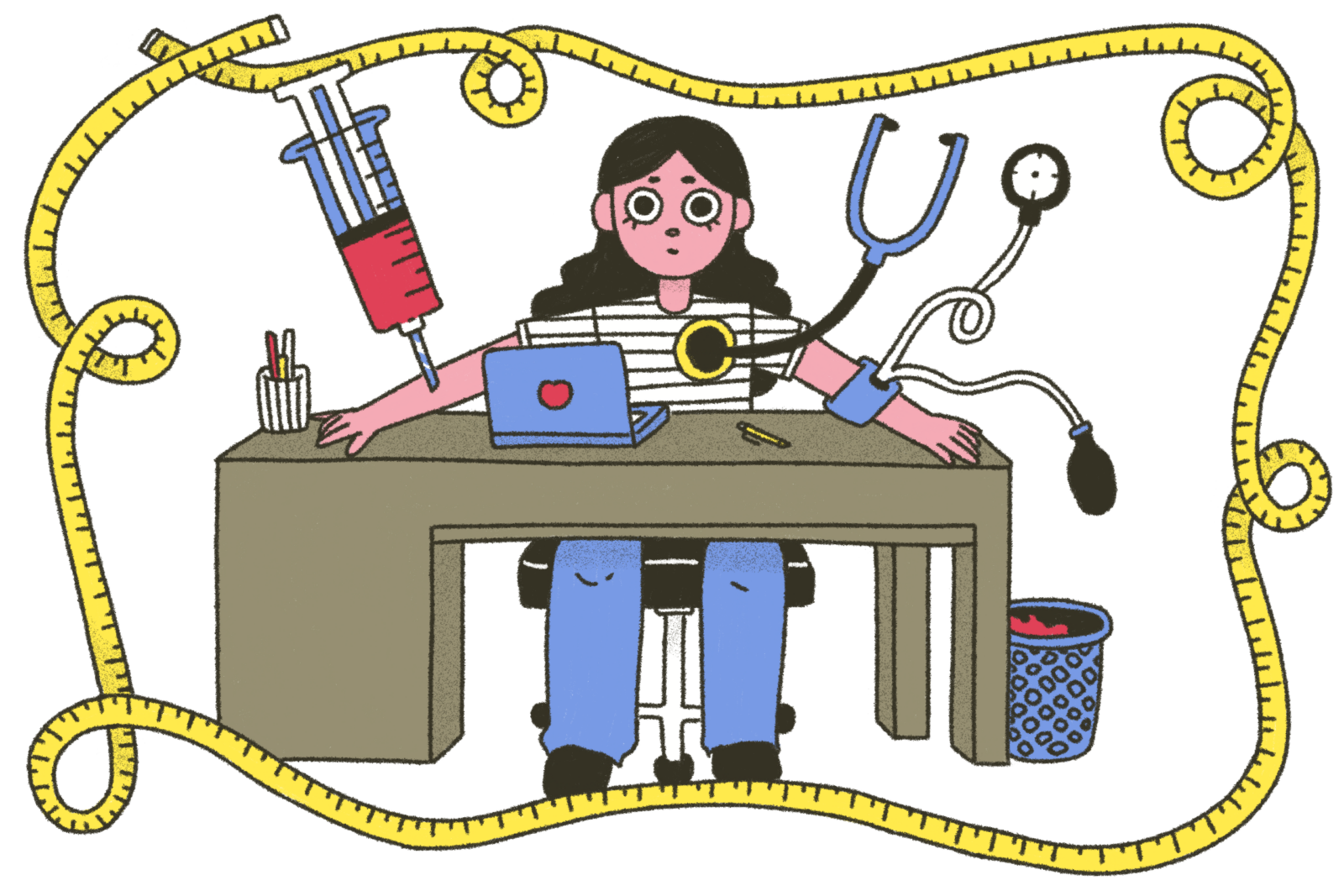
Image by: Femke Legué
From a simple questionnaire, an interview and perhaps a blood test for cholesterol and iron levels, to full scans and fitness tests. Many employers offer a preventive medical check-up to their staff now. Erasmus University has been doing so since this year as well. Over the next three years, all faculties and departments will have their turn. 408 staff members already participated in the health screening.
The voluntary screening for university staff consists of a questionnaire covering topics such as mental health, eating habits and physical activity. If desired, a participant can then see a doctor for further examination. There, your BMI is calculated and a drop of blood is taken to check your blood sugar level. Staff from the first cohort were later able to have their cholesterol checked as well, this will be included as standard in subsequent rounds. Advice may then follow on areas where you could make further improvements, such as taking more exercise. If any concerns arise, you will be referred to your GP.
Long-term savings
Merel Schuring, a lecturer in Labour and Health at Erasmus MC, understands why employers offer this. Schuring researches sustainable labour participation and the role of employers. Although Schuring focuses more on physically demanding work, she understands why a university would also offer such a screening. “An employer has a vested interest in healthy employees. Health problems can lead to reduced productivity, sick leave or perhaps even long-term absence. And that is a significant cost. A preventive medical examination is therefore an affordable investment to prevent such a potentially major expense.”
Offering a medical examination can make an employer very attractive to future employees, says Schuring. “But what I also consider a really important reason is that it gives the employer an insight, at a group level, into the health of their employees. Does everyone suffer from the effects of sitting too much? You can develop policies based on that. Switch to sit-stand desks, emphasise the importance of exercise, microbreaks and rest breaks, and offer a gym membership.”
Een lijst met artikelen
-
More than half of staff experience work-related stress
Gepubliceerd op:-
Campus
-
Follow-up is important
“Follow-up action is absolutely crucial”, says Schuring. Making lifestyle changes is very difficult; you need a bit of a nudge. According to her, the questionnaire is a vital tool for identifying an unhealthy lifestyle. “You might be living a very unhealthy lifestyle right now, yet still get perfect scores in a medical check-up. An unhealthy lifestyle has long-term effects, but it can sometimes take decades for these to become apparent.”
The conversation doesn’t have to be about physical symptoms. “What I particularly like is that this questionnaire can identify risk factors for developing mental health issues. Take, for example, people who experience high work pressure or have an unfavourable work-life balance, putting them at increased risk of burnout or other mental health problems.”
Better safe than sorry
Questionnaires and lifestyle advice do little harm, but what about those additional clinical tests? Not everyone is in favour of them. “Such tests give a false sense of security, because you don’t know what the situation will be like in a year’s time”, says Iris Lansdorp-Vogelaar, Professor of Decision Modelling in Screening. Identifying or even preventing problems with your physical and mental health sounds ideal. Yet the well-known adage ‘better safe than sorry’ doesn’t necessarily apply to Lansdorp-Vogelaar. She gives almost the same example as Schuring: “Suppose you’re young and living an extremely unhealthy lifestyle. You smoke a lot, eat a lot of fast food, and yet all your test results are fine. Then you might think to yourself: I can carry on like this.”
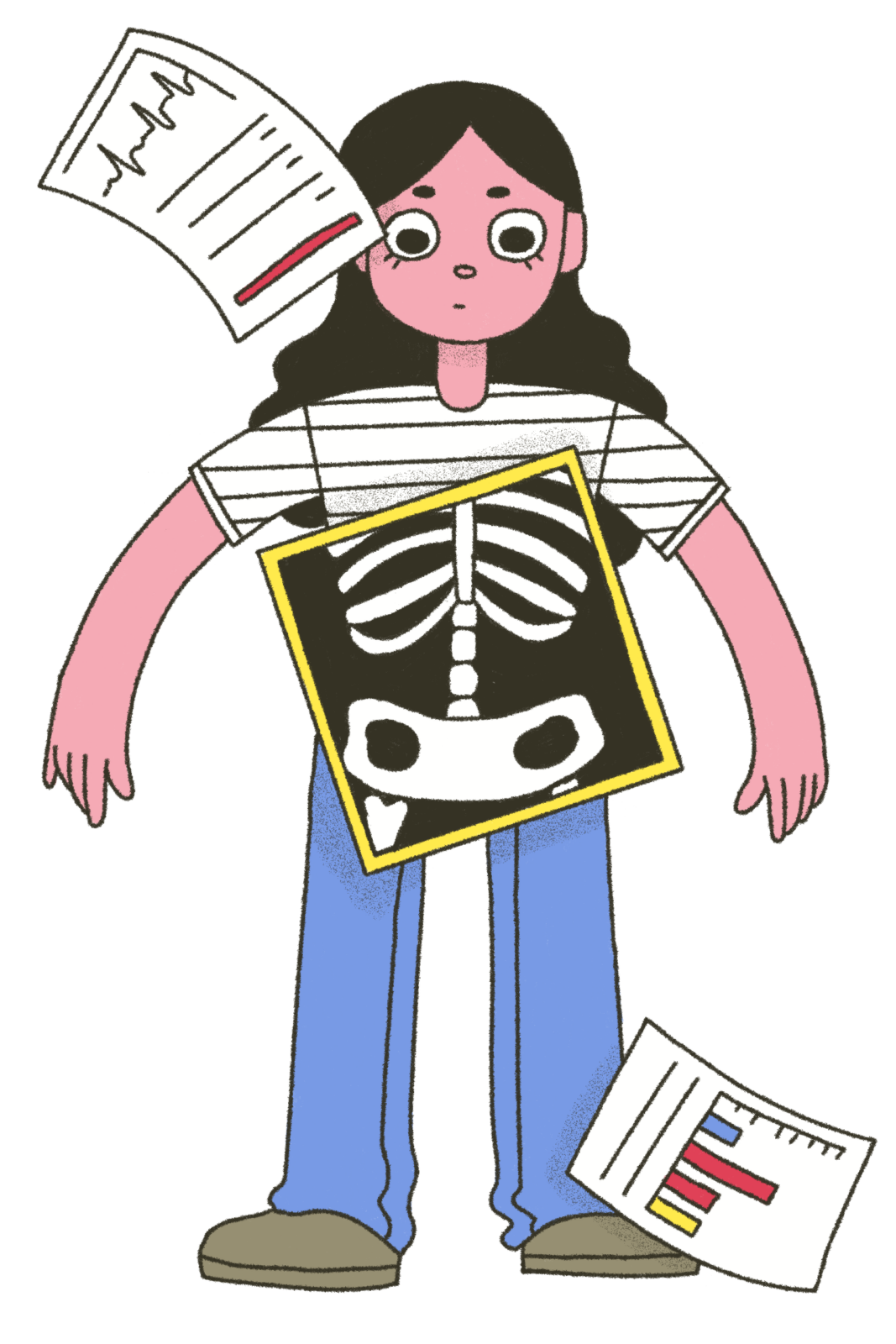
Image by: Femke Legué
It’s not that Lansdorp-Vogelaar doesn’t believe in screenings. In fact, she’s a strong advocate of them when their effectiveness has been proven. “The aim of such a medical screening is good in itself, but I always say: every screening has drawbacks, and some also have benefits. As far as I’m concerned, screenings should only be carried out when there’s proven evidence of their effectiveness and for the right target groups. Generally speaking, such tests make more sense for people over 45 than for younger people.” According to Lansdorp-Vogelaar, there is currently no, or insufficient, evidence that a general preventive medical examination is effective.
According to Lansdorp-Vogelaar, it’s all about striking a balance. Do the benefits outweigh the drawbacks? “In the case of bowel cancer, for example, the benefits are very clear: you are 40 per cent less likely to die from bowel cancer if you take part in the screening programme. There are also far fewer cases of cervical cancer in the Netherlands since the screening programme began.”
More testing means more stress
One adverse effect of any screening is stress, says the professor. Not only is it always nerve-wracking to wait for results, but it often leads to unnecessary worries afterwards: “You’re exposed to potential illnesses or the possibility of potential illnesses that you might never actually suffer from. Suppose a cyst is detected in the pancreas on a scan. Most cysts are benign, but you have a slightly higher risk of pancreatic cancer. A very low risk, mind you. Yet you end up living with a great deal more stress.”
Whilst Schuring sees mainly the benefits of preventive medical check-ups, Lansdorp-Vogelaar argues that it must first be investigated whether such check-ups are sufficiently effective. This has not yet been proven. Where the two do agree, however, is on the usefulness of preventive MRI scans, such as those offered by some companies these days. They both consider them completely superfluous, unnecessarily expensive and an unnecessary burden on the healthcare system. “It’s not even allowed in the Netherlands”, says Lansdorp-Vogelaar. “You have to go to Belgium or Germany instead.” The law protects people from themselves. Schuring: “Research shows that such a scan or a comprehensive health check involving other scans does not lead to lower mortality rates or a reduced risk of serious conditions.”
Een lijst met artikelen
-

A quarter of academics suffer from symptoms of depression or anxiety, particularly young researchers
Gepubliceerd op:-
Mental health
-
Staff
-
De redactie
-
 Tessa Hofland
Editor
Comments
Comments are closed.
Ad
Read more in Staff
-
University receives four warnings from Labour Inspectorate
Gepubliceerd op:-
Staff
-
-

Data of 22 EUR travellers leaked through bookings made via DGI Travel
Gepubliceerd op:-
Staff
-
-

RSM shrinks considerably, new round of layoffs avoided
Gepubliceerd op:-
Staff
-