Ad

RSM shrinks considerably, new round of layoffs avoided

Following a major cost-cutting operation over the past two years, the RSM is moving forward with more than 10 per cent fewer staff. A new reorganisation involving compulsory layoffs is not needed for the time being, dean Aukje Hassoldt says. However, the financial situation will remain precarious in the years ahead.

Image by: Sonja Schravesande
In total, 80 of the approximately 625 FTE positions at Rotterdam School of Management (RSM) will ultimately disappear. So far, 65 fewer jobs remain, including five compulsory layoffs as a result of the reorganisation, with the rest achieved through natural course. The workforce is being reduced by 25 FTE academic staff, 25 PhD positions and 25 FTE in professional services, along with another five FTE here and there. “It remains painful”, says RSM dean Aukje Hassoldt, “but I am pleased that we have only had to part with a limited number of people.” A new reorganisation involving compulsory layoffs is not needed for the time being. The hiring freeze will remain in place.
Deficit reversed
Two years ago, the expectation was that the faculty would face a deficit of 7.2 million euros in 2025. “We had come out of several good years, and then there were several years in which the financial problems remained somewhat hidden. During the coronavirus pandemic, for example, travel costs were much lower.” The fact that the faculty had to repay a part of the tuition fees to former students of two master’s programmes did not help either. “Most of that settlement related to a much earlier period, but it did indeed have a negative impact on our reserves.”
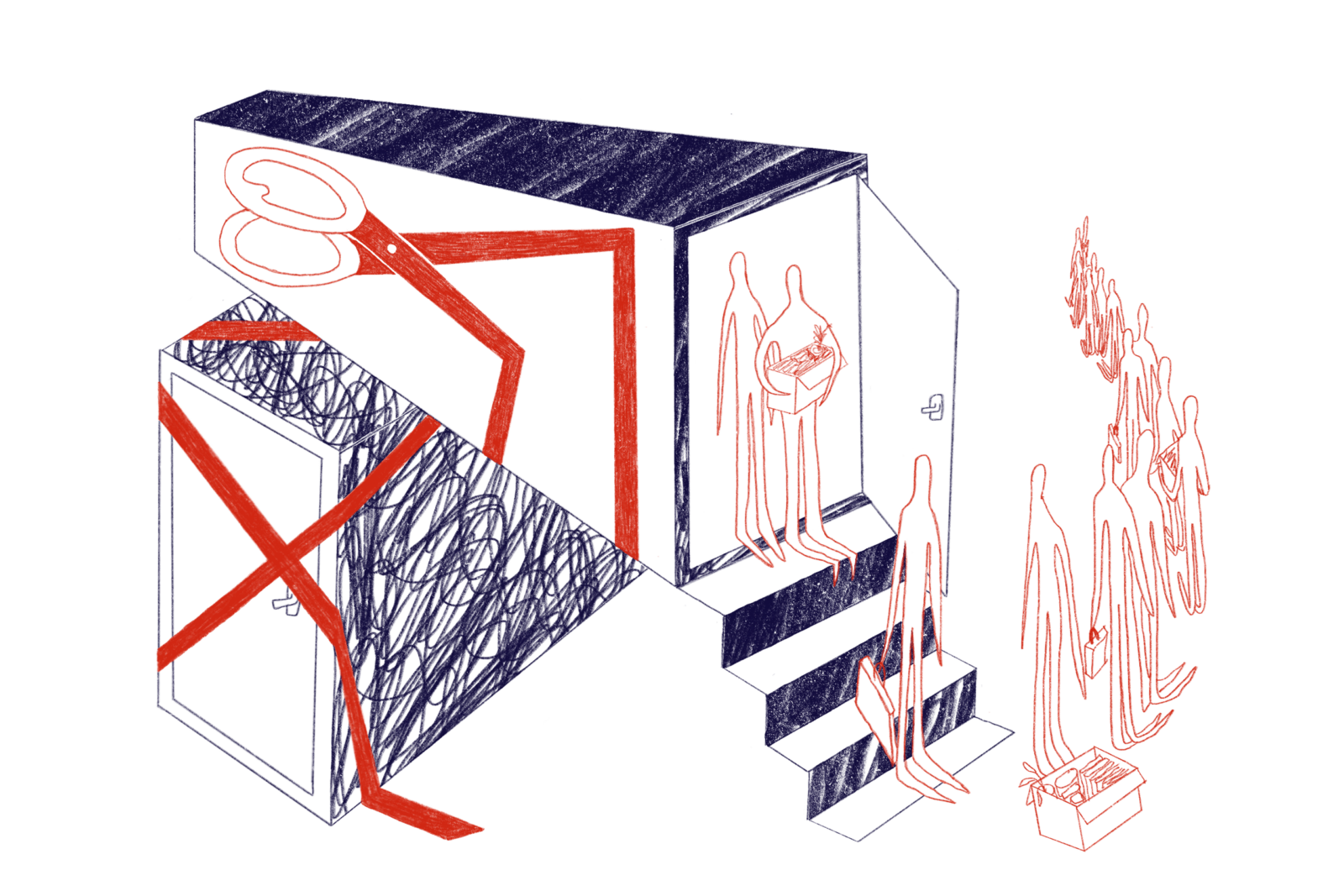
Image by: Sonja Schravesande
The cost-cutting operation and reorganisation have turned that expected deficit into a positive result of 1.9 million euros. Hassoldt does point out that there were many one-off items last year. Without those windfalls, the faculty would have posted a deficit of 1.2 million euros. The faculty expects a slightly positive result this year and next year.
Hiring freeze came at the right time
According to Hassoldt, the biggest gain came from introducing a hiring freeze in time. “My predecessor Werner Brouwer (interim dean in 2023 and 2024, ed.) introduced it in 2024, when it became clear that the faculty would remain in the red for a longer period. We had already had several years of losses behind us. And that is actually not possible; essentially, you are then continually being rescued by the university.” The hiring freeze enabled the faculty to prevent more people from being laid off.
Een lijst met artikelen

Difficult times
The hiring freeze will remain in place for the time being, as difficult times are approaching for universities in the Netherlands. 2028 is circled in red on the calendar at all universities. The contribution from the ministry is declining, the number of students at Dutch universities is falling, and rising wage costs are no longer being fully compensated. “It remains to be seen exactly how this will affect each university or faculty, but things will become more difficult.”
The faculties are currently working on a new strategy. At RSM, the focus is on improving its revenue position and processes. Hassoldt cannot say much about this yet, as the plans have not been finalised. “Our position in education and research is strong. We are mainly looking at how we can add a strong engagement position to that and how we can organise education and research in a lean and mean way.”
The other deans have the same task ahead of them. They are currently discussing the plan to cluster faculties into academic powerhouses, which was launched before the summer. This future scenario means that RSM and Erasmus School of Economics will have to work together more closely. The exact details should become clearer in the coming months. Hassoldt sees little merit in merging degree programmes or abolishing departments. “The primary process and the people are crucial.”
Een lijst met artikelen
-
Reorganisation at Rotterdam School of Management should cut back 5.5 million euros
Gepubliceerd op:-
Money
-
De redactie
-
 Tim Ficheroux
Desk editor
Comments
Comments are closed.
Ad
Read more in Staff
-
University receives four warnings from Labour Inspectorate
Gepubliceerd op:-
Staff
-
-

Data of 22 EUR travellers leaked through bookings made via DGI Travel
Gepubliceerd op:-
Staff
-