Ad

Return or stay? More and more Dutch-Caribbean students explore that question

Do you stay where you have studied after graduating, or do you return to your home island? Students from the Dutch-Caribbean islands struggle with that question. Employers are keen to have them back and travel to the Netherlands every year to persuade young people to return.

To return home or not? That question is central to the Return&Rise evening at Buitenplaats Rozenlust.
Image by: Daan Stam
“Bon bini, bon nochi. Welcome and good evening”, organiser Tanja Fraai at the Return&Rise says at the start of the event for people from the Dutch-Caribbean islands who are considering returning to their – or a different – island. The student association Dutch Caribbean Association Rotterdam (DCA) is a co-organiser. On this sold-out Wednesday evening at Buitenplaats Rozenlust, the languages Dutch, English and Papiamento are spoken interchangeably, just like on the islands themselves.
Remigration

All 150 tickets for the Rise&Return evening sold out, and there was a waiting list.
Image by: Daan Stam
School children from the islands who want to go study often have no other choice than going to the faraway Netherlands. In their first year here, many of the teenagers have to get used to the circumstances. After years of studying, adapting, working and building social contacts in the European Netherlands, going back also proves difficult. Still, the issue is increasingly on students’ minds, the student organisation notes.
Six major employers have flown in to convince young talent to return. The Central Bank of Aruba, for example, has come with a team of six. In addition to Rotterdam, they will also attend events in Utrecht, Groningen and the two-day National Career Fair in Amsterdam. The Caribbean pavilion there has grown in four years from thirty to seventy different employers. Other employers present this evening are HBN Law & Tax, Grant Thornton, Curoil, Maduro & Curiel’s Bank (MCB) and Aqualectra. All companies are driven to get people in the room excited about them – and about the ‘remigration schemes’ such as plane tickets, support in finding housing, shipping furniture, and help with repaying student debt.
Interest and doubt
One of the students interested is Tamika Raap: “I came to the Netherlands with the idea: I’ll go and stay”, says the fourth-year Business IT & Management student at Rotterdam University of Applied Sciences. “In the final year I’m starting to feel homesick for the warmth and sociability of home, Curaçao.” She has built a good life here and, after an internship, is already working in her sector. She hopes to explore her doubts about returning further this evening.
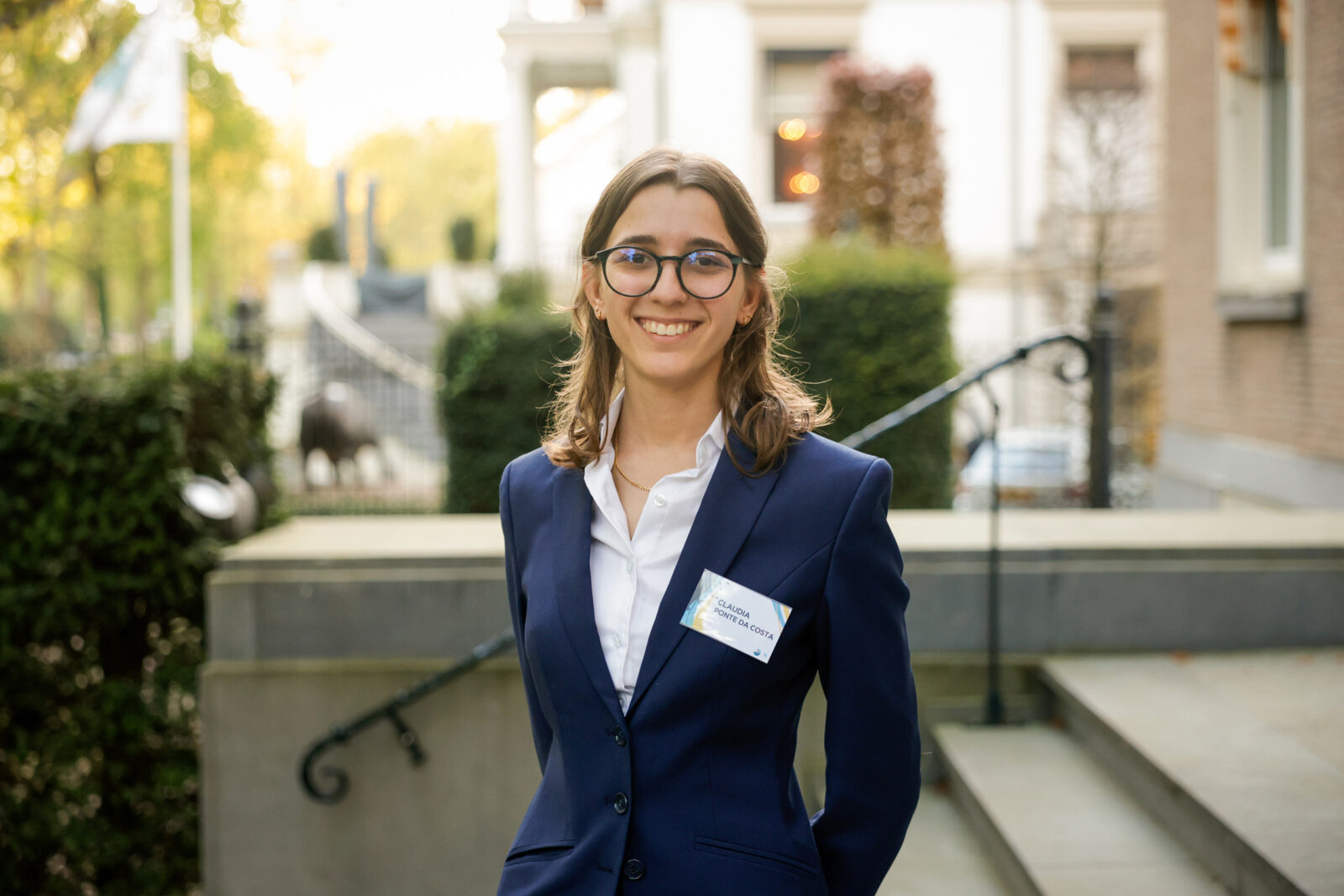
DCA chair Claudia Ponte da Costa is considering returning to Curaçao after her medical degree.
Image by: Daan Stam
Claudia Ponte da Costa, a third-year Medicine student and chair of the DCA, recognises that mix of interest and doubt. The islands suffer from a brain drain, with educated young people not returning after their studies. Although the medical student prefers to speak of a brain gain, ‘because the islands have much to gain and we can contribute to that’. She also has doubts about career opportunities: “If an island already has, for example, five internists, is a sixth needed? So I wonder: will I become a doctor my island needs, or one I personally really want to be?” She is considering a minor in management or finance so she can be deployed more broadly.
Een lijst met artikelen
-

First July took on a different meaning for these students after they came to the Netherlands
Gepubliceerd op:-
Student life
-
Disappointment
Too often, people return to the Netherlands after going back home, Fraai says. Through her company Fraaiwerkt, she has been working for years to build a bridge between employers on the islands and students in the European Netherlands. “There is a difficult tension surrounding going home. Employers have sky-high expectations and make major investments in their new employee even before arrival. It’s not only about the practical side, but also the socio-emotional aspect. Too often, people forget that you change in the Netherlands. You learn new workplace etiquette. In addition, workplaces on the islands are more hierarchical than in the Netherlands.”
What is barely said out loud this evening, but becomes clear between the lines, is that many employers consider returning islanders too Dutch. And Dutch people who ‘know better’ – that is a sensitive issue in the former colonies. Ponte da Costa hears the same stories: “What I hear is that people almost expect a big celebration upon arrival. They have achieved their goal, namely studying and returning. But their new knowledge and insights are not appreciated.”
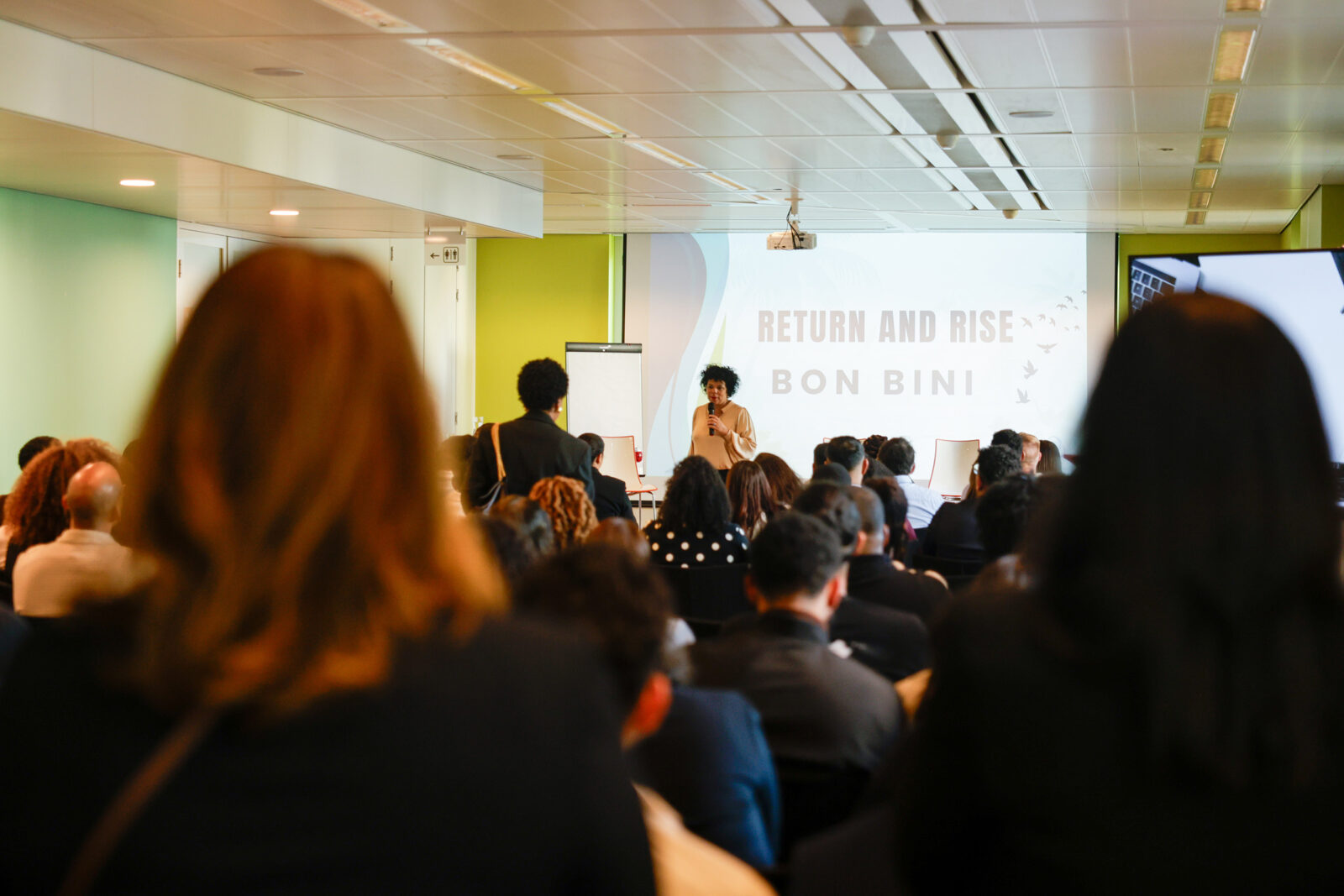
Tanja Fraai of Fraaiwerkt opened the information evening about the possibility of returning to your home(h)land.
Image by: Daan Stam
No need to worry, say the employers on stage one by one. Olivia Barreto-Samaroo of MCB elaborates: “We don’t want you to let go of everything, but when you start a new relationship, you also have to let a part of your past go.” All employers speak about opportunities for advancement and short lines of communication within companies. And yes, they admit, salaries are somewhat lower, but in return you get a better way of life, the six employers on stage insist. “You can’t put a price on that”, says Suhena Neuman of Grant Thornton. She emphasises that she herself had no regrets and encourages everyone to apply. The concerns from the audience don’t seem to have fully disappeared.
Long-term goal
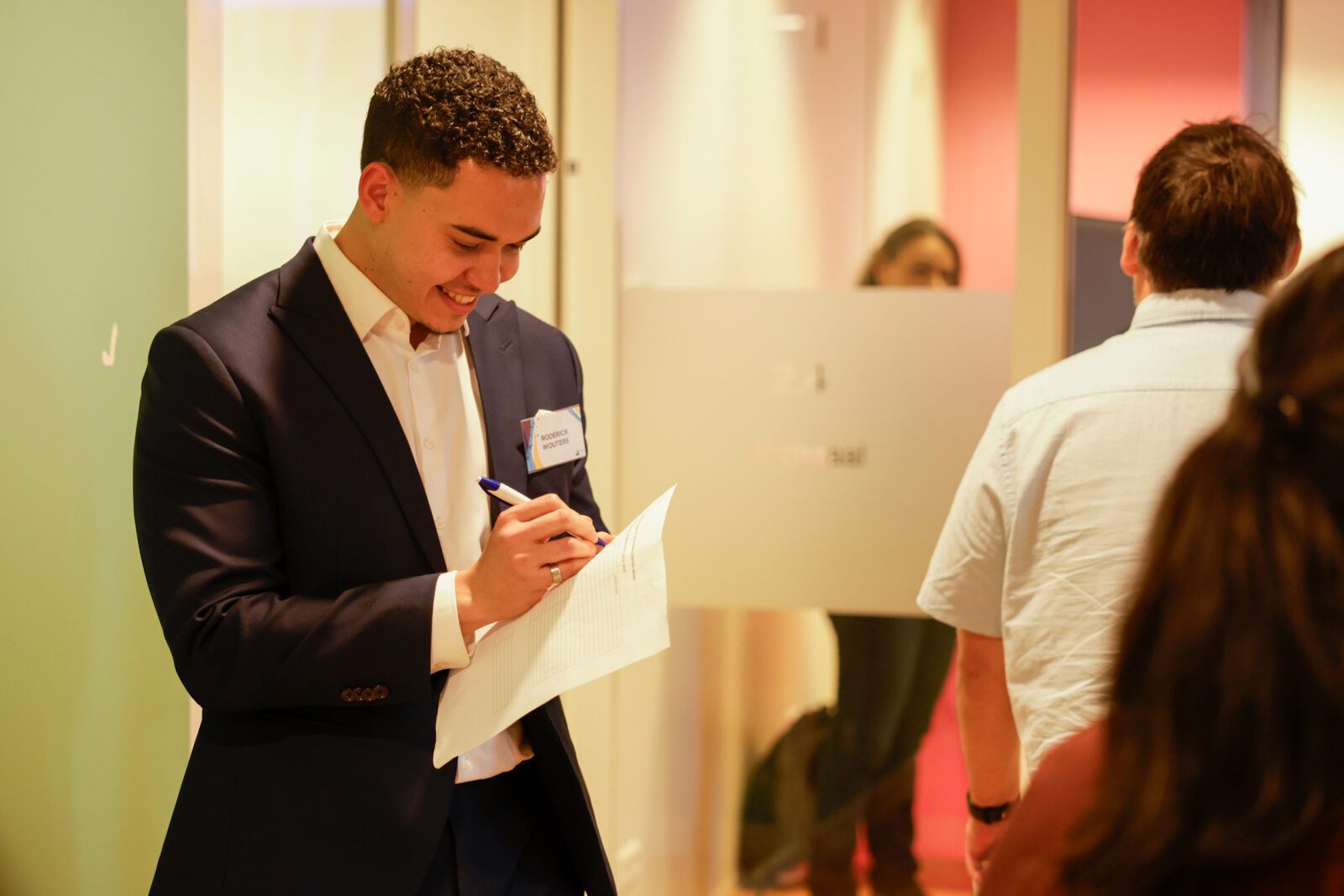
Roderick Wouters, master’s student in Finance & Investments, checks the guest list.
Image by: Daan Stam
One person who no longer needs convincing is Roderick Wouters, a master’s student in Finance & Investments. “My long-term plan is to return to Aruba, to my community. I’ll be starting my internship at ABN AMRO soon and will graduate after that. My goal is really this: to come to the Netherlands to study and advance my career, and then use that to benefit my island.”
De redactie
-
 Tessa Hofland
Editor
Comments
Comments are closed.
Ad
Read more in Student life
-
18-year-old student dies after ‘hazing party’ in France
Gepubliceerd op:-
Student life
-
-
Jasper has lost his carefree outlook since the attack on Erasmus MC, but the experience will make him a better doctor
Gepubliceerd op:-
Mental health
-
-
Government sets aside millions extra for student accommodation construction
Gepubliceerd op:-
Housing
-