Taskforce: Higher education must stand up for Jewish students and staff

Bullying, exclusion, being held responsible… Many Jewish students no longer feel welcome within the academic community, writes the taskforce on combating antisemitism.
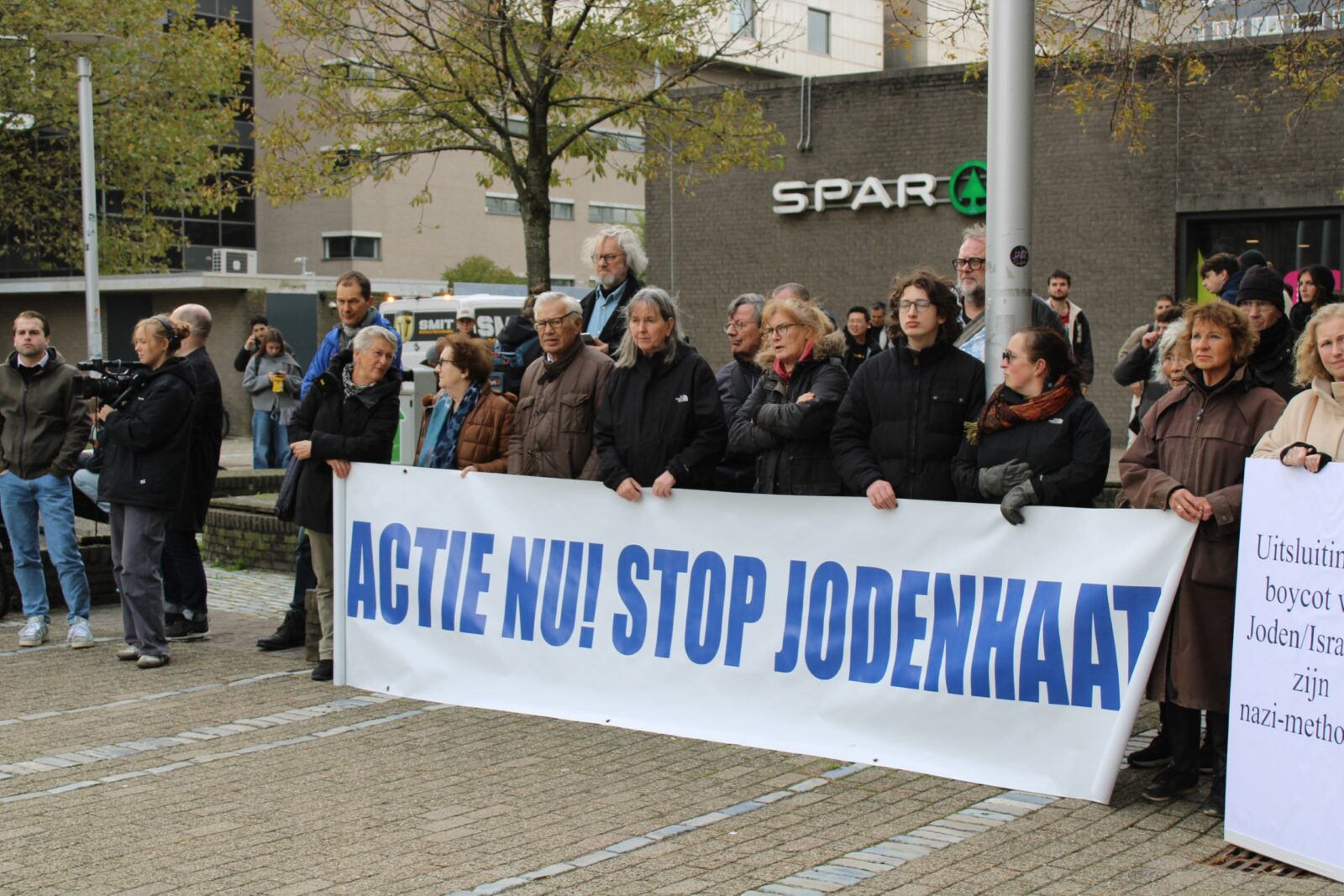
Image by: Wieneke Gunneweg
The protests in higher education against the war in Gaza have led to a different climate for Jewish students and staff, according to a report presented today by the taskforce on combating antisemitism.
The many pro-Palestinian demonstrations and occupations at universities were at times accompanied by violence, vandalism and threats – as well as antisemitic or borderline antisemitic slogans. This was one of the reasons why the government established the taskforce.
“Antisemitism in the Netherlands is on the rise”, the taskforce wrote in a report (which also covers protests and safety at railway stations). “In recent years, Jews have increasingly felt unsafe in our society.”
Prominent figures
The taskforce includes several prominent administrators and politicians, such as NS chief Wouter Koolmees. The committee was tasked not only with focusing on higher education, but also with the safety of railway stations.
Maastricht Executive Board president Rianne Letschert and former Utrecht rector Henk Kummmeling also took part. Other members include Chanan Hertzberger of the Centraal Joods Overleg and the national coordinator for combating antisemitism, Eddo Verdoner. The taskforce is chaired by Jaap Smit, former King’s Commissioner in South Holland.
Name
The members were tasked with addressing antisemitism and protest. But they stress that they do not wish to give the impression that they associate protest actions with antisemitism, the report says. “A parallel taskforce on antisemitism in the United States did take this as its starting point.”
Due to the ‘confusion and negative associations caused by the name’, some people were reluctant to engage with the taskforce, the members believe. They don’t say so explicitly, but it likely also had to do with their mandate: the cabinet in which the far-right PVV party was still participating.
Conversations
In the end, more than 120 people were consulted. Jewish students, for example, reported that they are repeatedly asked what they think about Gaza. If they stay silent, they are quickly seen as guilty by association. Posters from Jewish student associations were defaced. Some were called child murderers or ‘cancer Zionists’.
The taskforce believes that some demonstrators deliberately test the boundaries and use slogans that serve as ‘dog whistles’ for antisemitism. Slogans such as ‘Get rid of Zionist scum’ or ‘Zionists not welcome here’ often give Jewish students the feeling ‘that they themselves are not welcome or wanted’. “There is a sense that some supporters unconsciously adopt veiled antisemitic rhetoric, without understanding the impact it has on Jews.”
Jewish staff report similar experiences. “The taskforce heard several harrowing testimonies, such as being refused a seat at the lunch table or no longer being included in team activities.”
Withdrawn
Of course, there are consequences. Some students hide or deny that they are Jewish. A few no longer come to campus or have quit their studies altogether. Some staff members also stay silent – for example, those on temporary contracts who are afraid of losing their jobs if they speak out.
The taskforce (which includes former university administrators) expressed appreciation for administrators and enforcement officers ‘who must make the right decisions on the front line in this complex situation – sometimes with consequences for their own safety’.
Higher education institutions, mayors, the police and the Public Prosecution Service still struggle to prevent ‘excesses and insecurity’, the taskforce believes. “Jews are still being approached in unwelcome and intimidating ways, during classes, outside them, and online.”
Recommendations
The recommendation: universities must more clearly, more frequently and more publicly stand up for Jewish students and staff. Confidential advisers could benefit from training in recognising antisemitism. Qualified confidential advisers should be part of a national network to share their expertise.
There are other recommendations as well, including on physical safety. Based on conduct codes and disciplinary measures, students and staff who frequently undermine social safety could be addressed, the taskforce suggests. Administrators should map out all relevant legal frameworks and executive powers.
In addition, educational institutions could launch local campaigns against discrimination and hate in higher education, ‘in which antisemitism is explicitly included’. For instance, Studium Generale could be used to disseminate knowledge about Jews and Judaism.
And the cabinet? It should provide ‘financial, policy-related and legal support’ to implement such policies.
Een lijst met artikelen
-

‘Artists like Bob Vylan and Kneecap are more than just a mirror of society’
Gepubliceerd op:-
The Issue
-
De redactie
Comments
Read more in Campus
-
Art installation POND tells whether the campus pond water is healthy
Gepubliceerd op:-
Campus
-
-

Coalition agreement: Education cuts scrapped, hardly any extra money beyond that
Gepubliceerd op:-
Politics
-
-

Analysis: education and research not really a priority for new cabinet
Gepubliceerd op:-
Politics
-

Leave a comment