Ad

Art installation POND tells whether the campus pond water is healthy
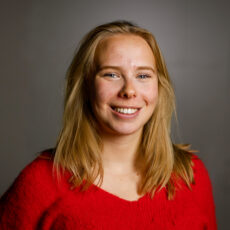
The Erasmus University has gained a striking new artwork. The POND art installation makes the water quality of the campus pond visible through light. Since the official opening on 29 January, students and staff can see with one glance how the water is doing.
POND’s opening was accompained by live music.
Image by: Anne-Christy Maljaars
Accompanied by live music and the clinking of champagne glasses, POND was officially opened on Woudestein campus. The sounds of a violin, handpan and the carillon formed the backdrop on this freezing winter evening for the moment when the three floating spheres slowly lit up. Designer Ermi van Oers stood visibly tense among her friends and family, who proudly embraced her. “I hope people will look at water differently”, she says. Moments later, the installation turned bright blue. “That means the water feels good”, Van Oers says proudly. “Let’s hope it stays that way.”
From study project to art installation
The artwork consists of three glowing spheres that use colours to provide insight into water quality. When the water is healthy and clean, the spheres turn bright blue, while a red glow indicates poor water quality.
Designer Ermi van Oers came up with the concept for POND back in 2016. Her aim was to make people more aware of the value of water and the vulnerability of ecosystems. “I wanted to create something that shows how we can work with nature, without disturbing it”, she explains.
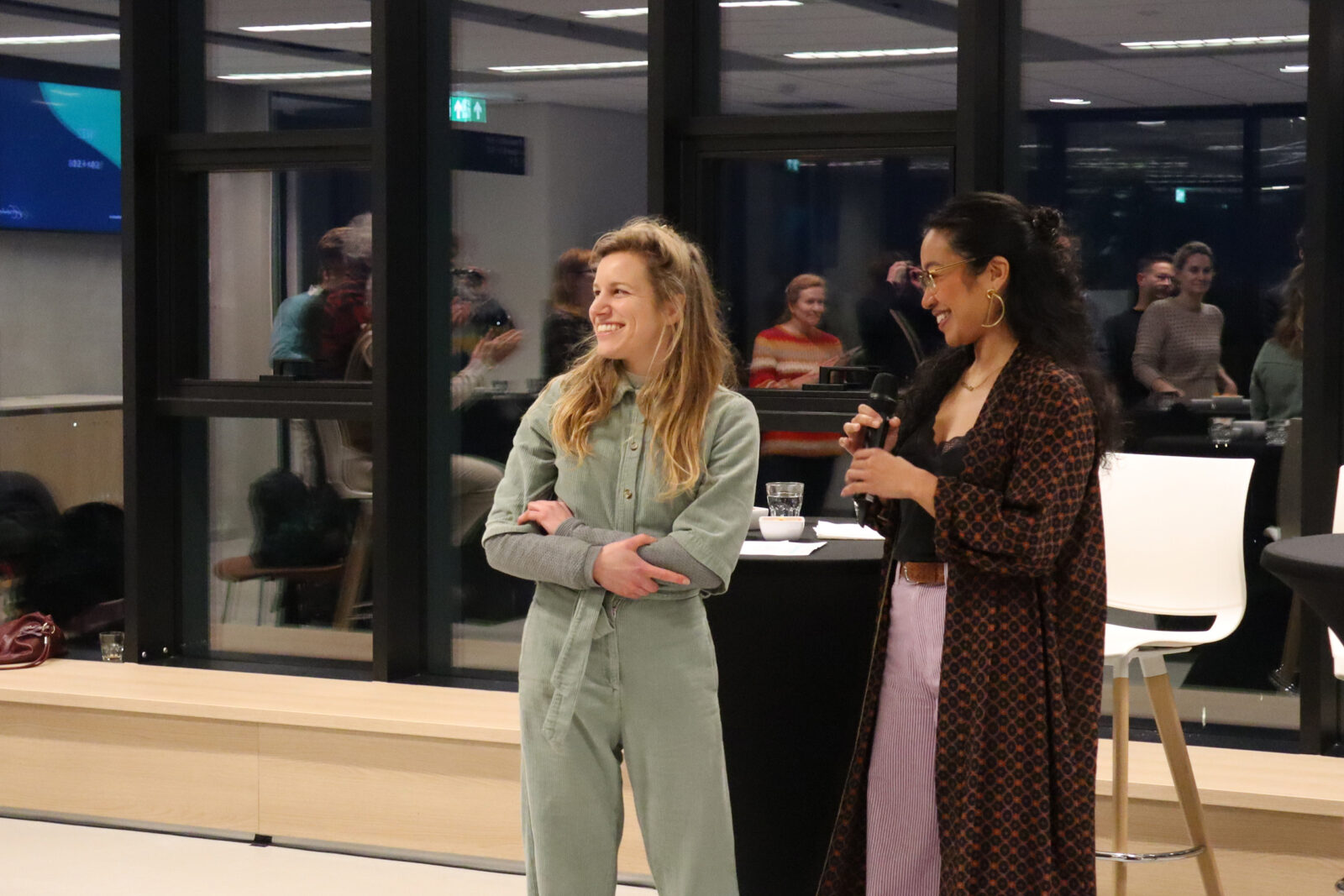
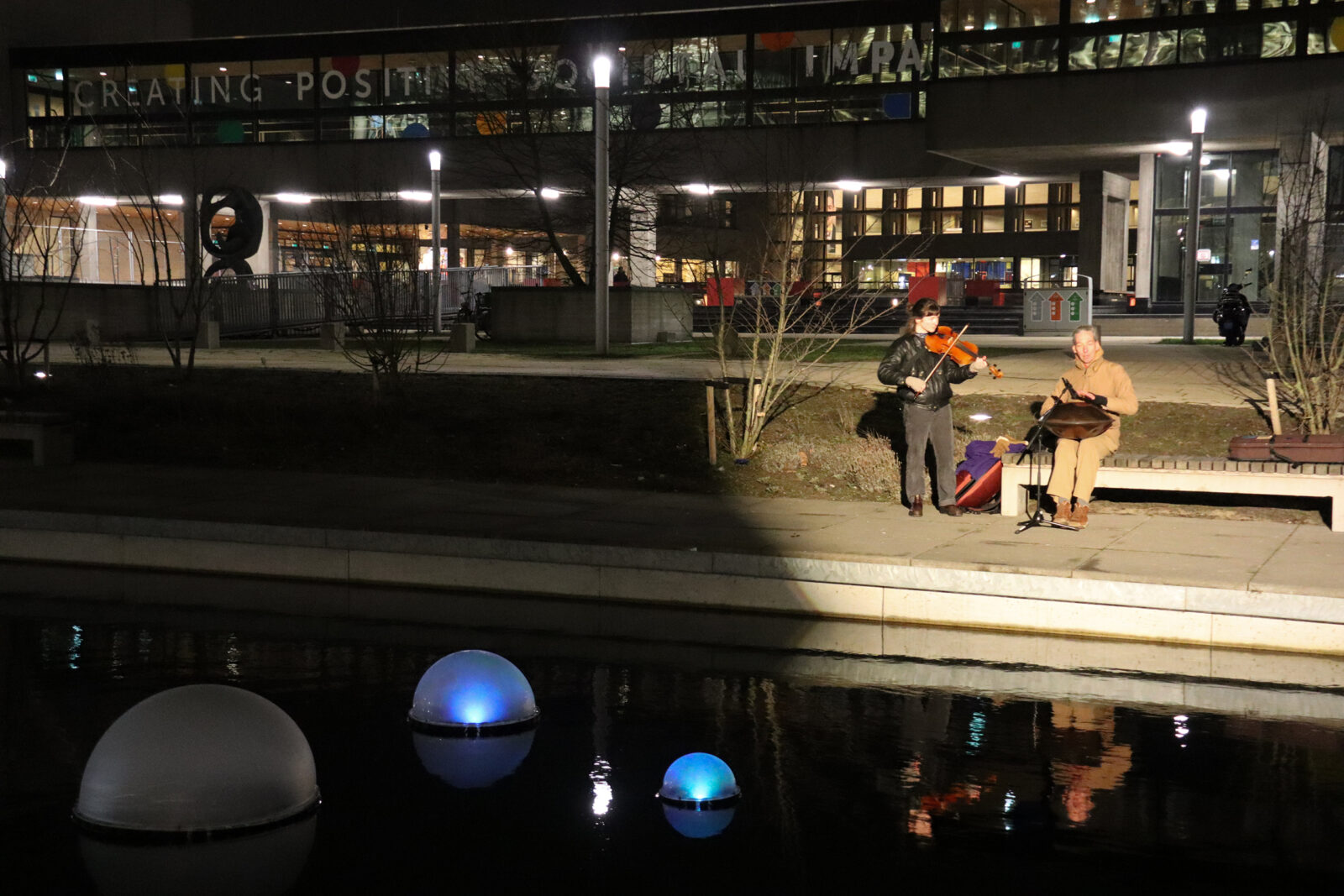
Designer Ermi van Oers (on the photo left).
Image by: Anne-Christy Maljaars
The foundation for the project emerged during her studies at the Willem de Kooning Academie. With her biodesign studio Nova Innova, Van Oers eventually brought the idea to life, after which two installations were opened in early 2026: one in Griftpark in Utrecht and one on Woudestein campus in Rotterdam.
Like a friend
The installation uses bacteria that break down organic substances and in the process generate electrons. This energy is converted into electricity for sensors that measure water quality. The measurement data are then translated into a unique ‘light language’. Van Oers emphasises how special this process is. “If we can see and feel how the water is doing, we also know when it needs attention.”
She hopes that students will start to look at the water differently. “I hope they will see the water as a friend, which can be doing well or badly. And that, if it is not doing well, they will think about what the water needs to make the lamp shine blue again.”
Only in the dark
For Annemiek Strijker, sustainability policy adviser at Erasmus University, the installation is also ‘a way to make students think about what water means to us’.
The installation is only active when it is dark. Strijker does not see this as a problem. “Now that the days are still short, many people can enjoy the lighting. In summer, the lights will mainly shine for visitors to café de Smitse”, she jokes.
When the lights are not on, the water quality can be followed online via a ‘digital twin’; a digital representation of the measurements. This not only shows the measurement data, but also provides practical tips on how to keep the water healthy. Such as not throwing plastic and cigarette butts into the water, but also not feeding bread to the ducks. This causes more algae growth and therefore less oxygen in the water, which in turn is bad for fish and other aquatic life.
Temporary
The lamps were purchased by Rotterdams Weerwoord, a partnership that aims to prepare Rotterdam for climate change, and loaned to the university. The installation will remain in Rotterdam for a year and a half, at least nine months of which will be on Woudestein campus.
Read more
-
Erasmus MC selects Clifton Mahangoe’s artwork as memorial monument
Gepubliceerd op:-
Campus
-
De redactie
-
 Sarah de Gruijter
Student editor
Comments
Comments are closed.
Ad
Read more in Campus
-
Signing up for a Dutch course ‘feels like a race’, no more places available for now
Gepubliceerd op:-
Internationalisation
-
-
Ten years of the GDPR: access to your personal data is still not routine at EUR
Gepubliceerd op:-
Privacy
-
-
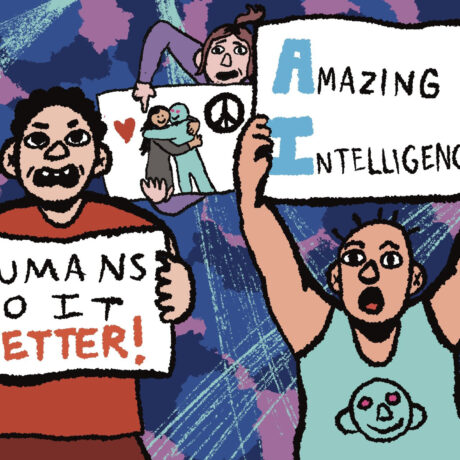
RTL: More than half of master’s theses contain AI-generated text
Gepubliceerd op:-
Artificial Intelligence
-
Education
-