UN rapporteur Francesca Albanese gives a lecture in the Van der Goot Building and warns the audience about the ‘extermination’ of the Palestinians.
Erasmus and the Israeli-Palestinian conflict
Gepubliceerd op:
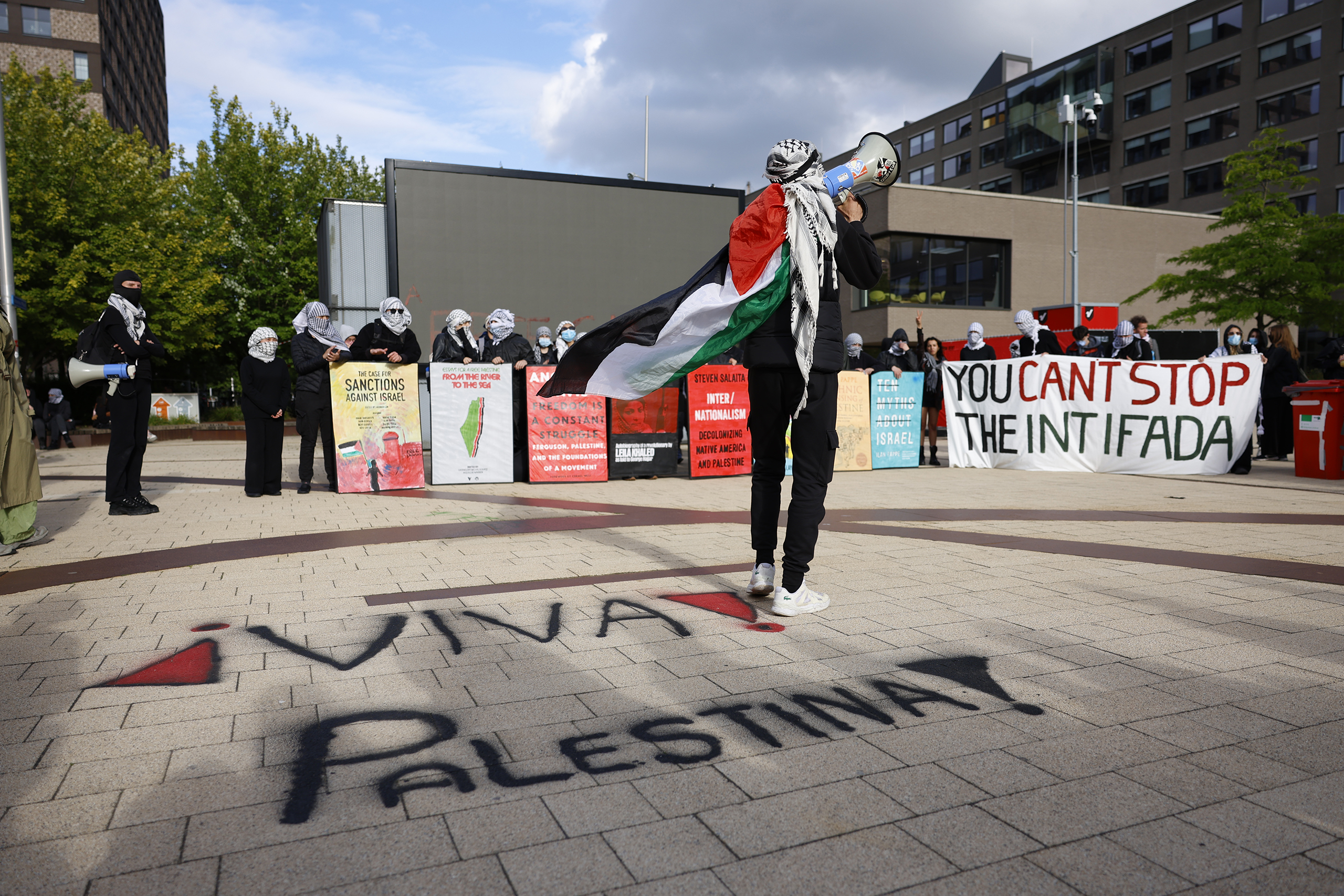
Since the Hamas attack on Israel on 7 October 2023 and the subsequent Israeli airstrikes on Gaza, there has been unrest at Erasmus University. Students and staff have been protesting, there have been teach-ins, open letters, and an encampment was set up on Erasmus Plaza.
Read all about what has happened at EUR regarding the Israeli-Palestinian conflict in this special.
Image by: Daan Stam
A week after the attack by Hamas on Israel, 18 of the 20 Erasmus University students on exchange in Israel were safely repatriated back to the Netherlands.
Read more
-

18 of 20 EUR students recovered from Israel, ‘all students are safe’
Gepubliceerd op:-
Student life
-
With growing division emerging from the conflict, a first year student decided to start a student association for Jewish EUR students.
Read more
-

New student association offers safe place for Jewish students
Gepubliceerd op:-
Student life
-
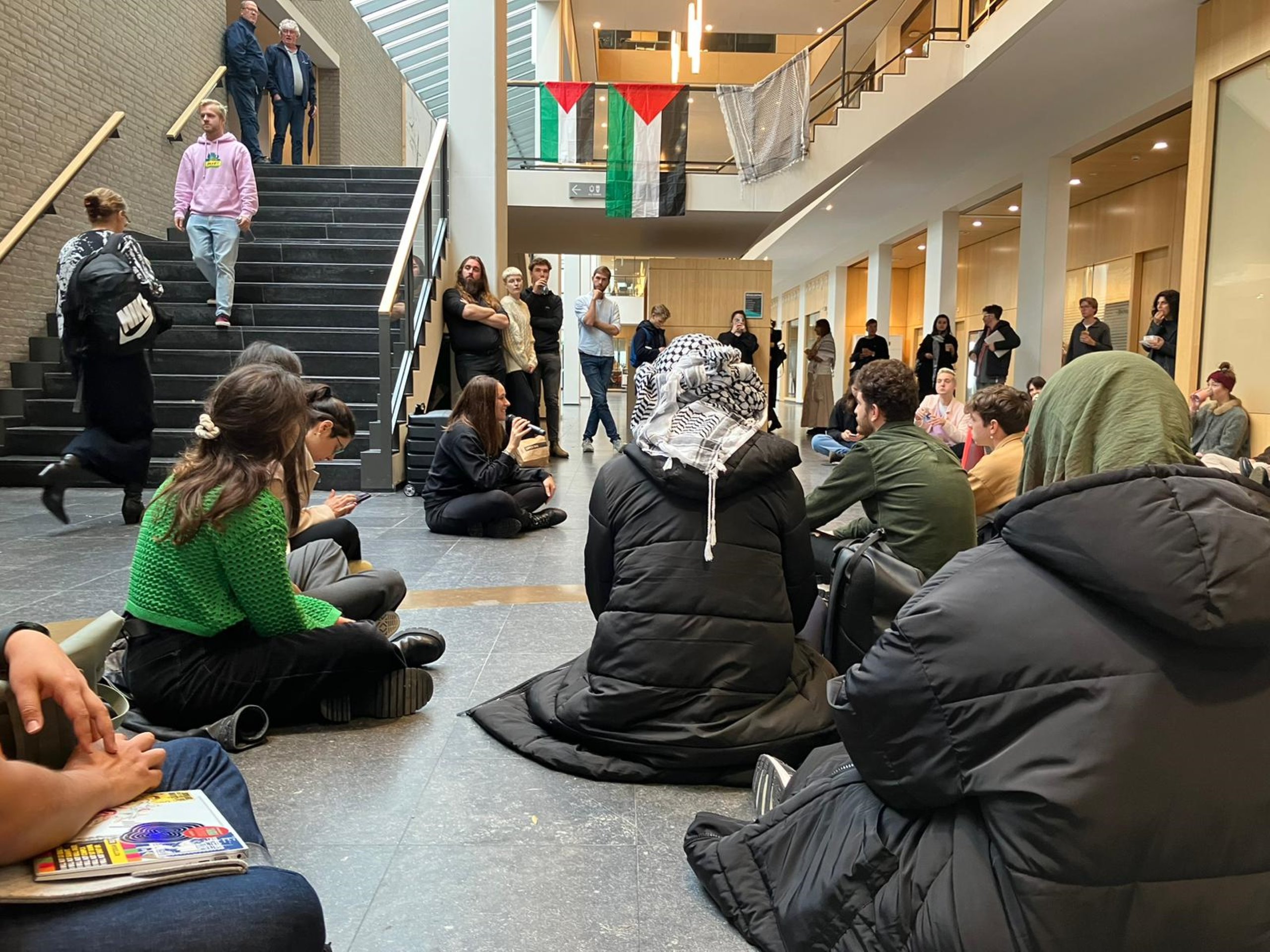
In an open letter, the EUR4Palestine Coalition called on Erasmus University to condemn Israel’s violence against Palestinians and sever all ties with Israel and Israeli institutions. The Executive Board did not directly address the coalition’s demands
Read more
-
Open letter to EUR: ‘Condemn war crimes and sever ties with Israel’
Gepubliceerd op:-
Protest
-
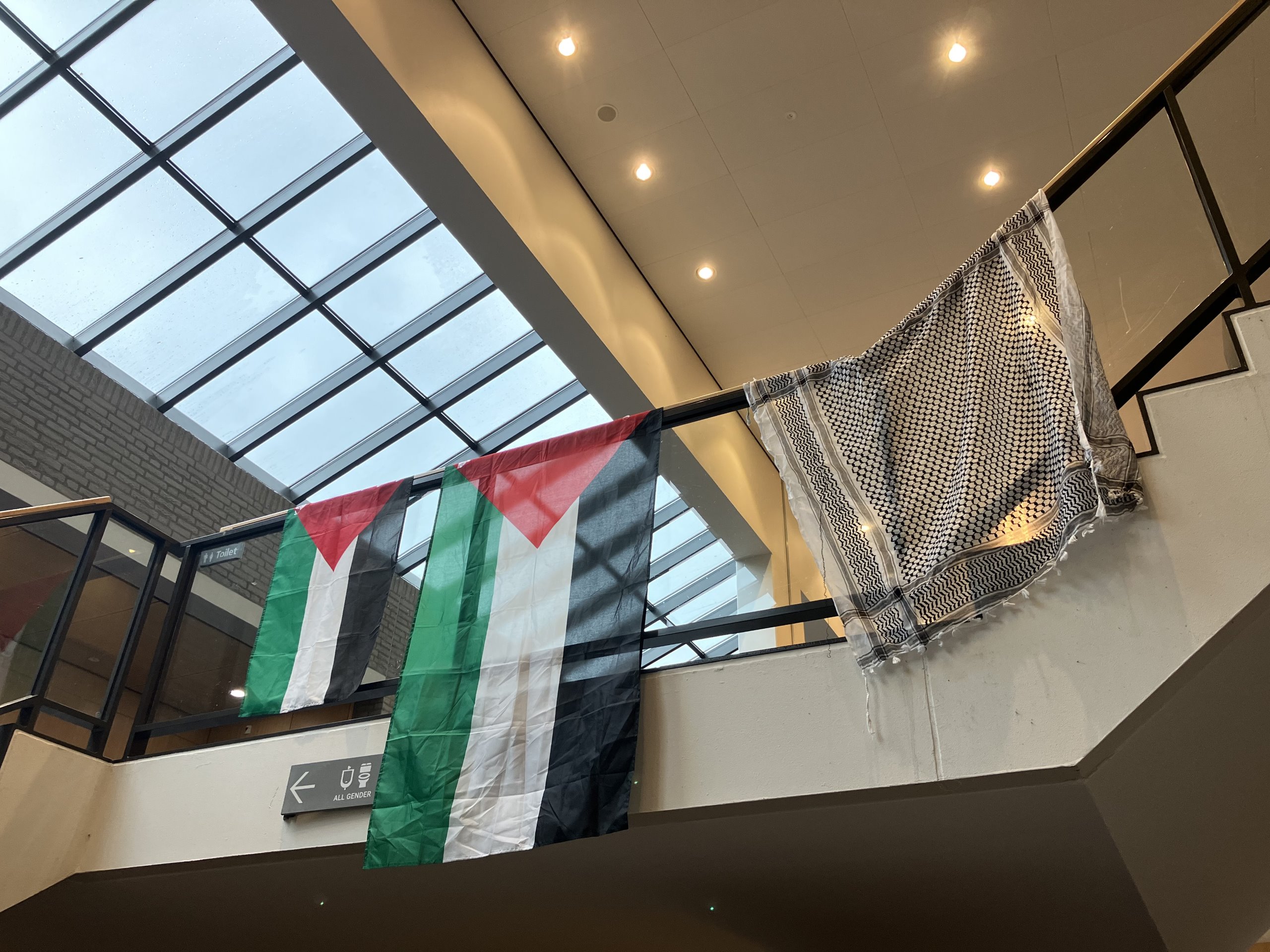
A teach-in showing support for Palestine took place in the Sanders Building, where various speakers discussed the situation at the time in Palestine. The event was organised by the EUR4Palestine Coalition.
Read more
-
Support for Palestine during teach-in in Sanders Building
Gepubliceerd op:-
Protest
-
After Israel’s response to Hamas’s attack, over 1,100 members of the UvA community signed an open letter demanding that the University take a clear stand and speak out against Israeli violence. The UvA Executive Board chose to remain neutral, however. Letter writers argued that this neutral stance “showcased complicity in the extermination of Palestinians.”
Read more
-

UvA students and employees ask university to take a stand against Israeli violence
Gepubliceerd op:-
At the neighbours
-
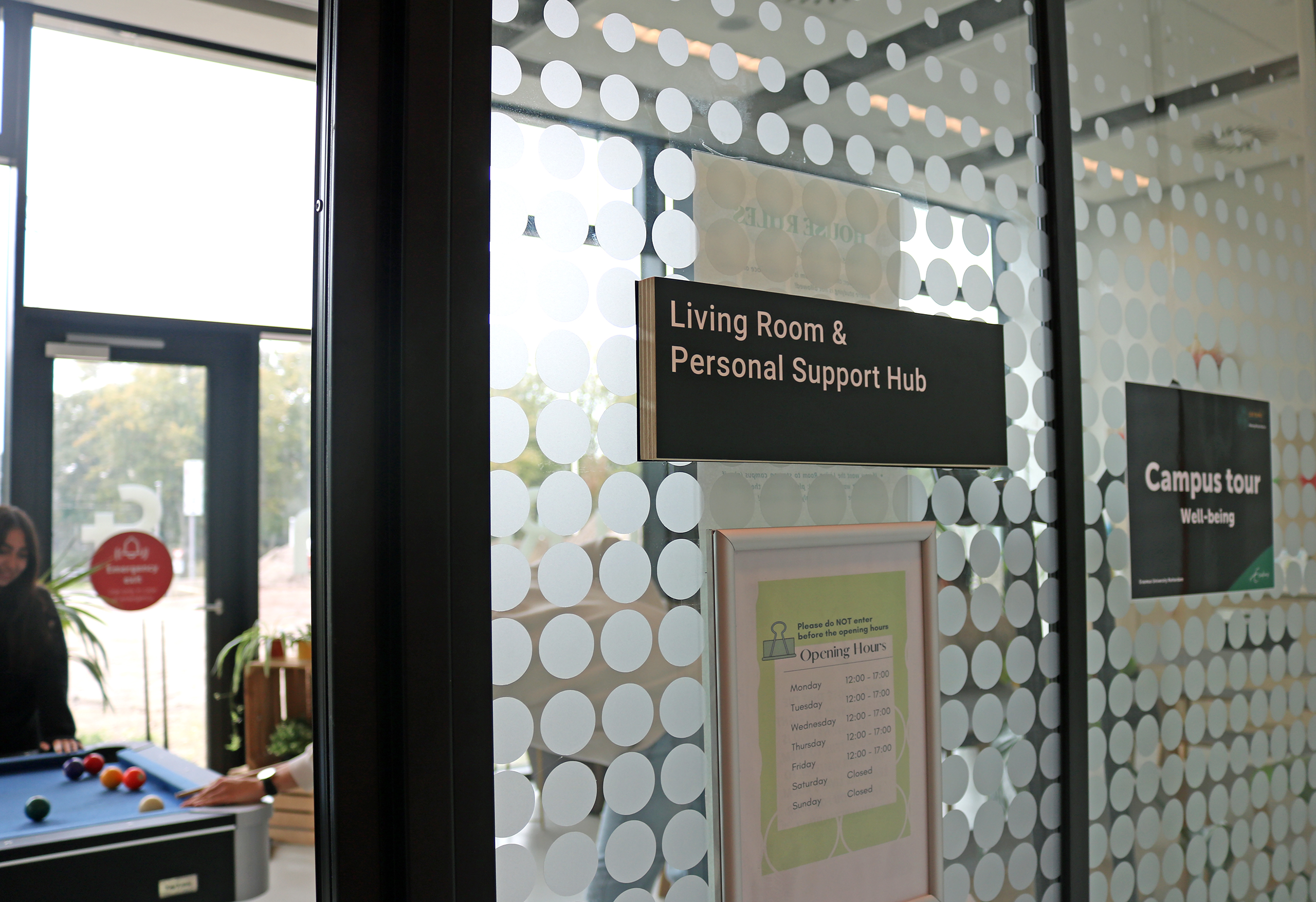
As the conflict escalated, students and staff met in the Living Room to talk about the events taking place in Israel and Palestine at the time. The gathering was organised to provide support to those emotionally and personally affected by the situation.
Read more
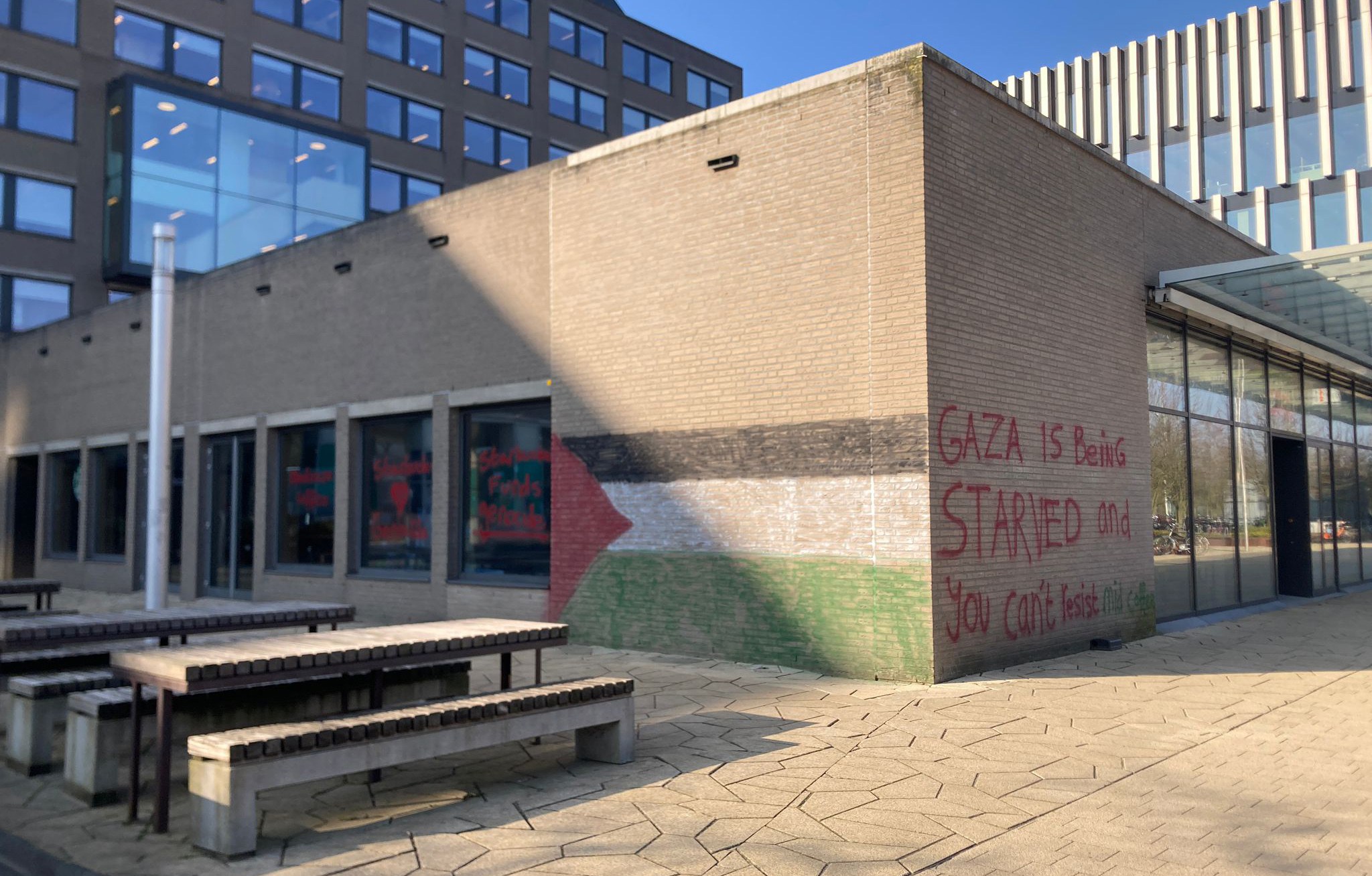
For the second time in the span of a month, unknown individuals sprayed slogans on Starbucks Woudestein as a reaction to the coffee chain’s alleged role in the conflict between Israel and Hamas.
Read more
-
Slogans against Gaza violence at Starbucks Woudestein
Gepubliceerd op:-
Campus
-
In the wake of Israel being possibly formally accused of genocide, The University Council asked the Executive Board to “scrutinise” its ties with Israeli universities.
Read more
-
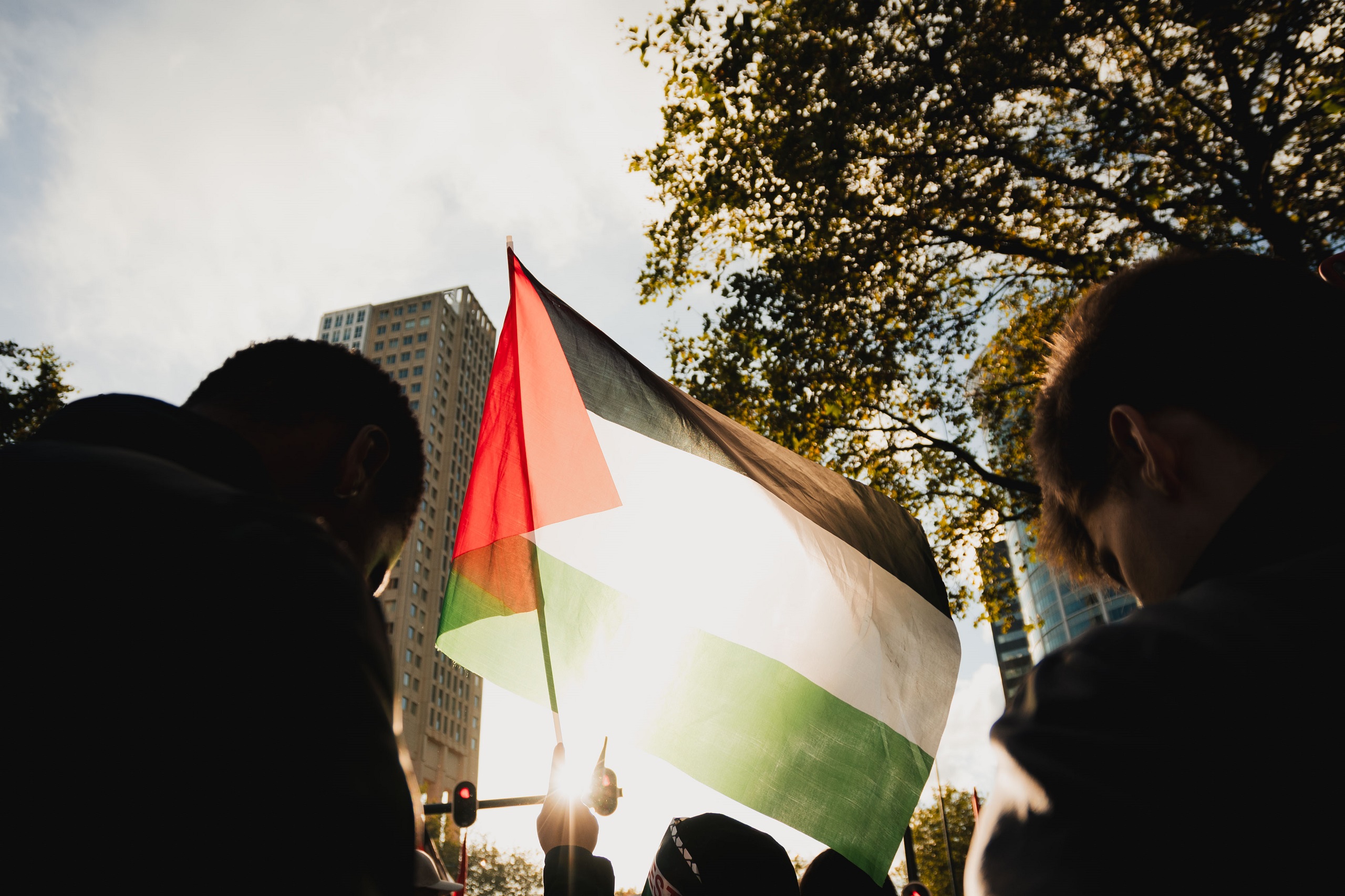
University council wants CvB to ‘scrutinise’ ties with Israel
Gepubliceerd op:-
University Council
-
About fifty staff and students commemorated their Palestinian colleagues who died as a result of Israeli military violence in Gaza in the months prior.
Read more
-
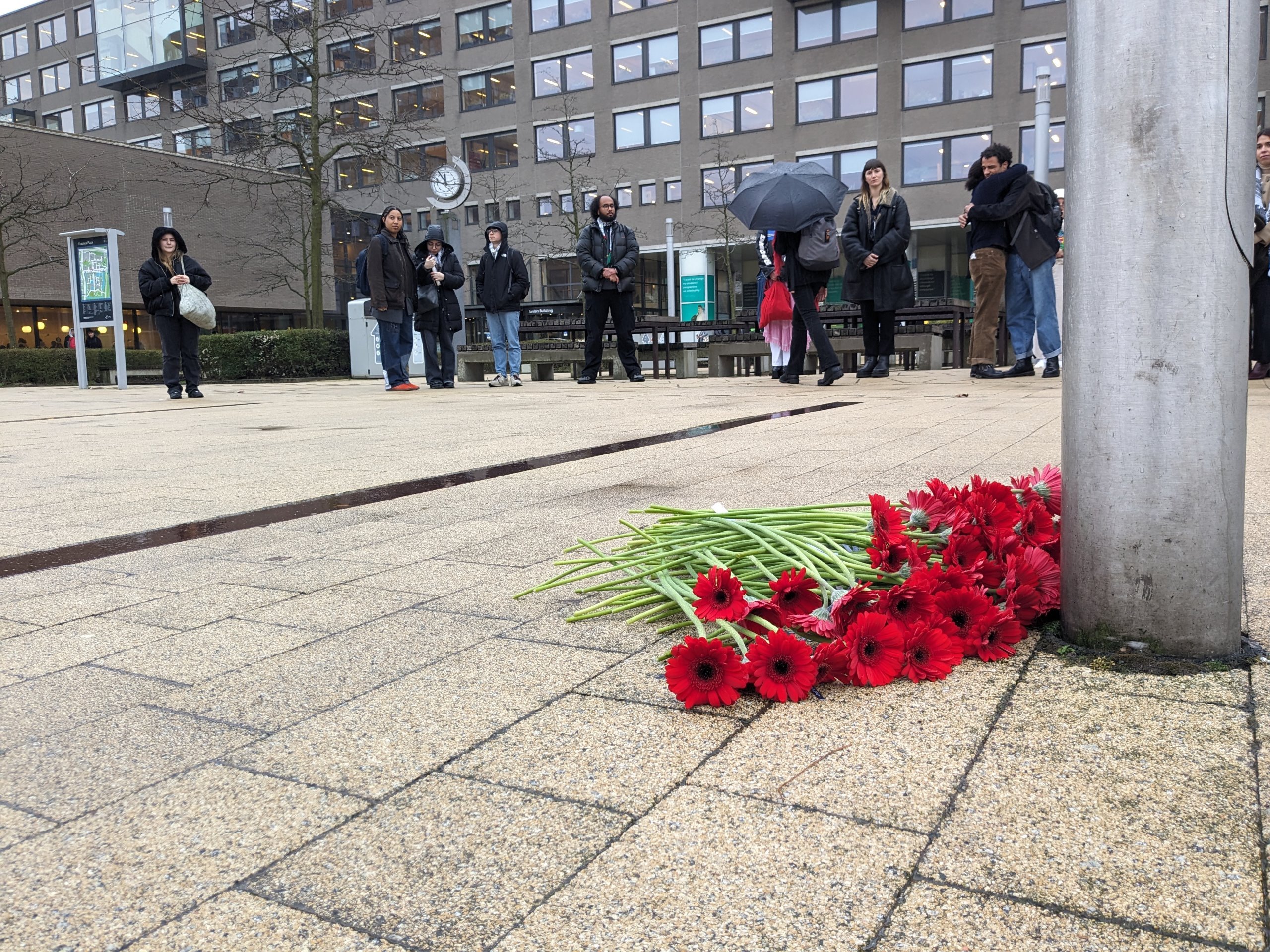
Silent commemoration on Erasmus Plaza for killed Palestinian academics
Gepubliceerd op:-
Protest
-
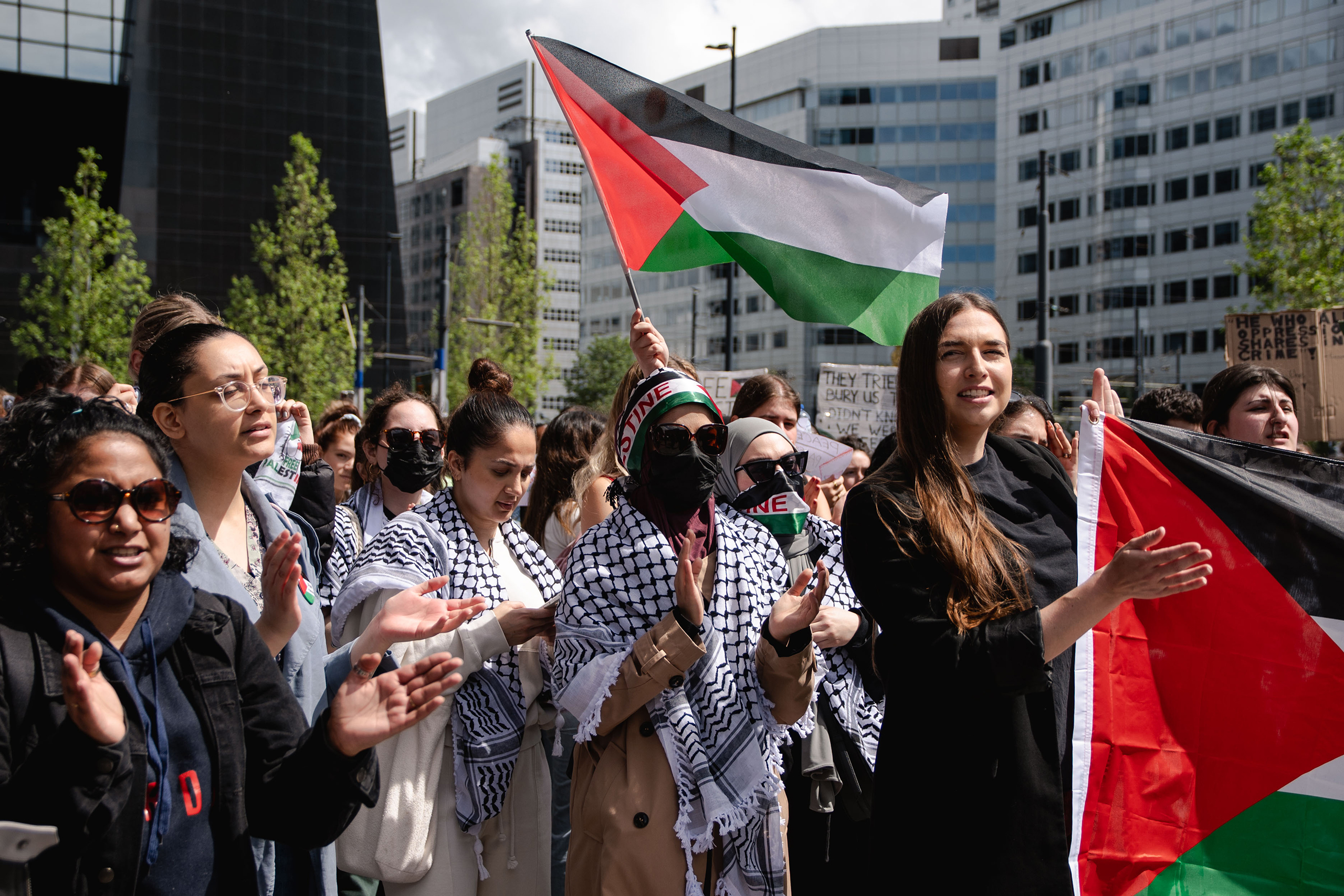
Towards the end of April, Gaza protests expanded from Universities in the United States to Higher Education Institutions in the Netherlands.
Read more
-
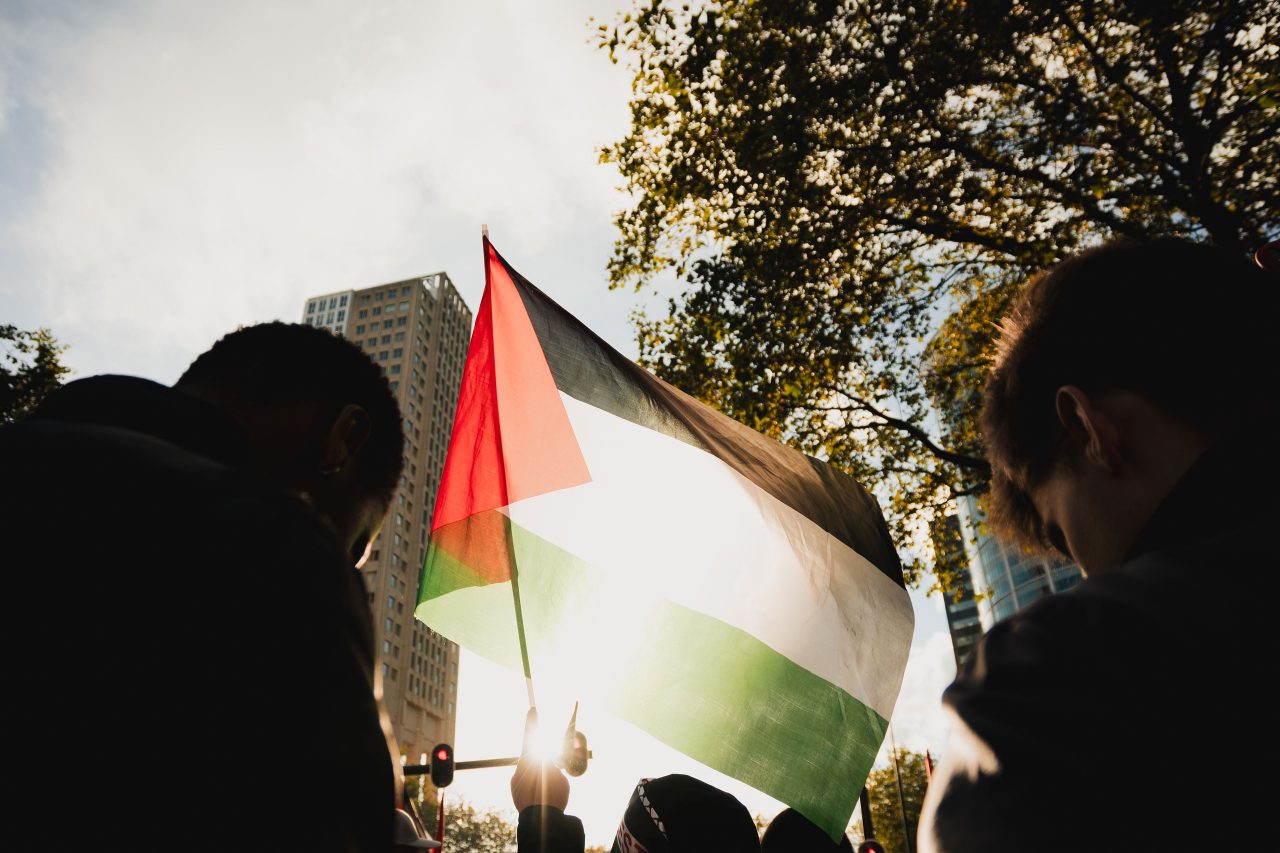
Gaza protests continue in higher education
Gepubliceerd op:-
Protest
-
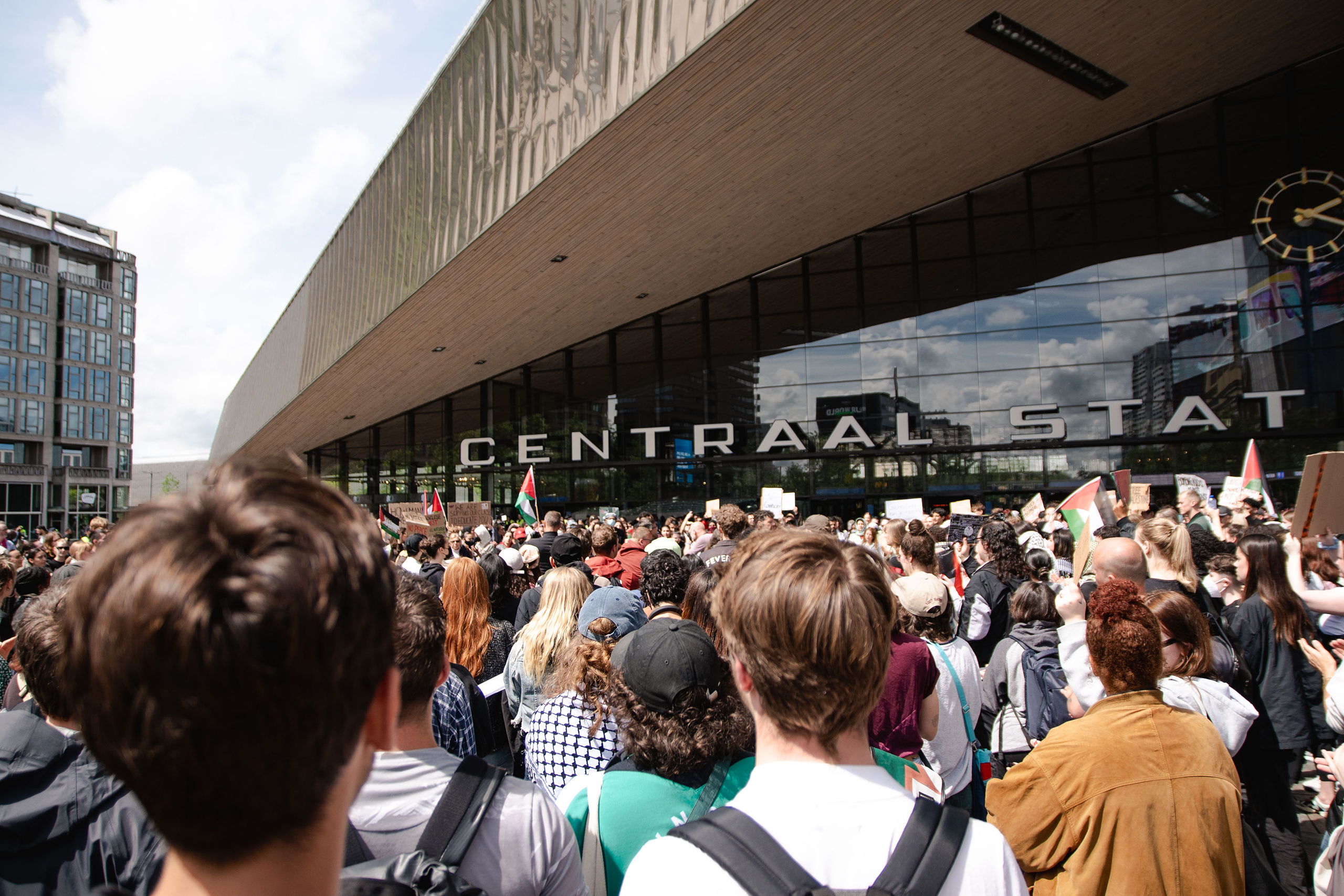
After the university closed down all building on request of the mayor, the protest was moved to Central Station. Part of the protesters joined a protest in The Hague.
Read more
-
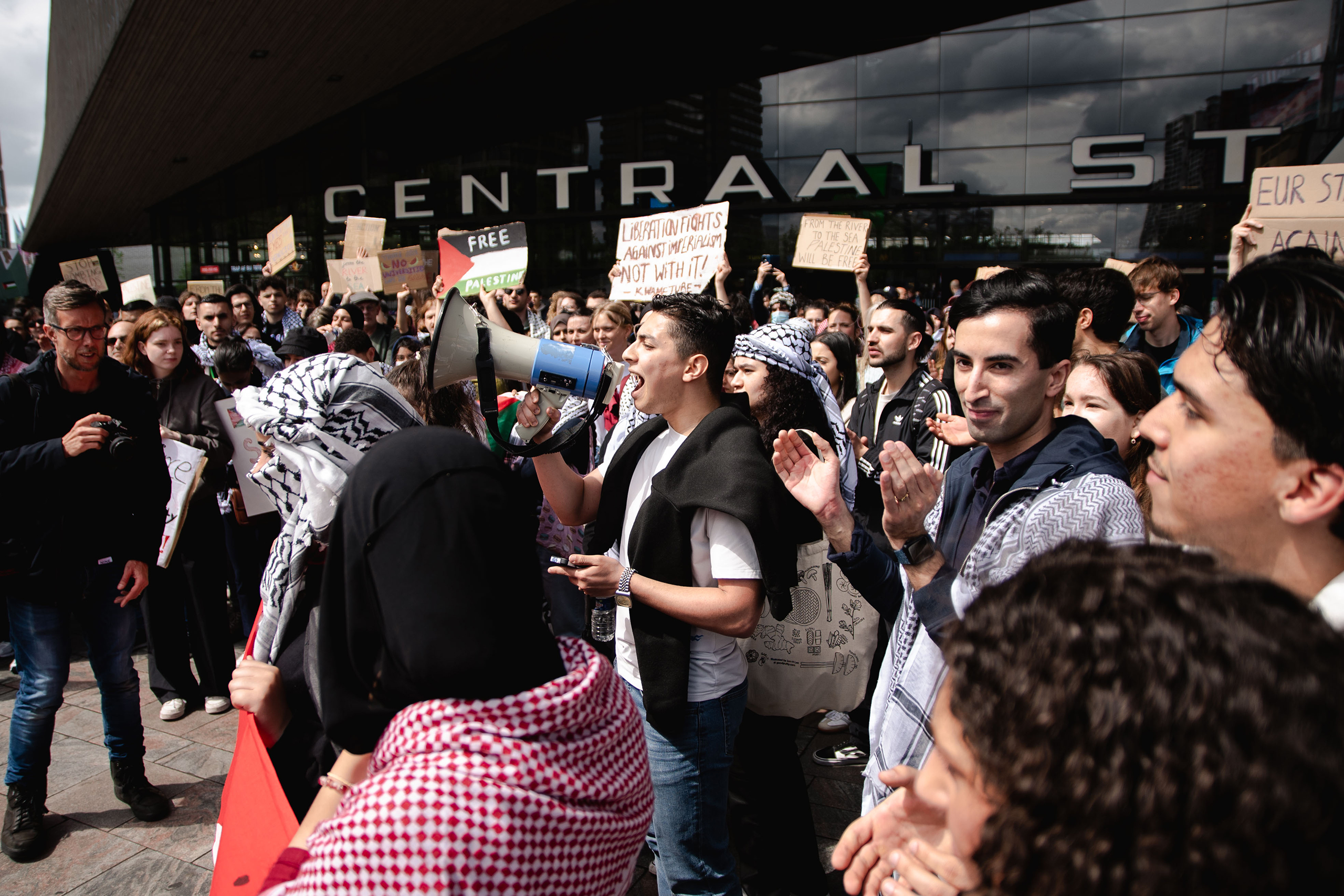
Pro-Palestinian protest on campus Woudestein moved to station and The Hague
Gepubliceerd op:-
Campus
-
The Executive Board sent a statement to students and staff on Monday announcing three plans concerning Gaza: organising dialogue tables, reviewing partnerships and assisting in the reconstruction of universities in Gaza.
Read more
-
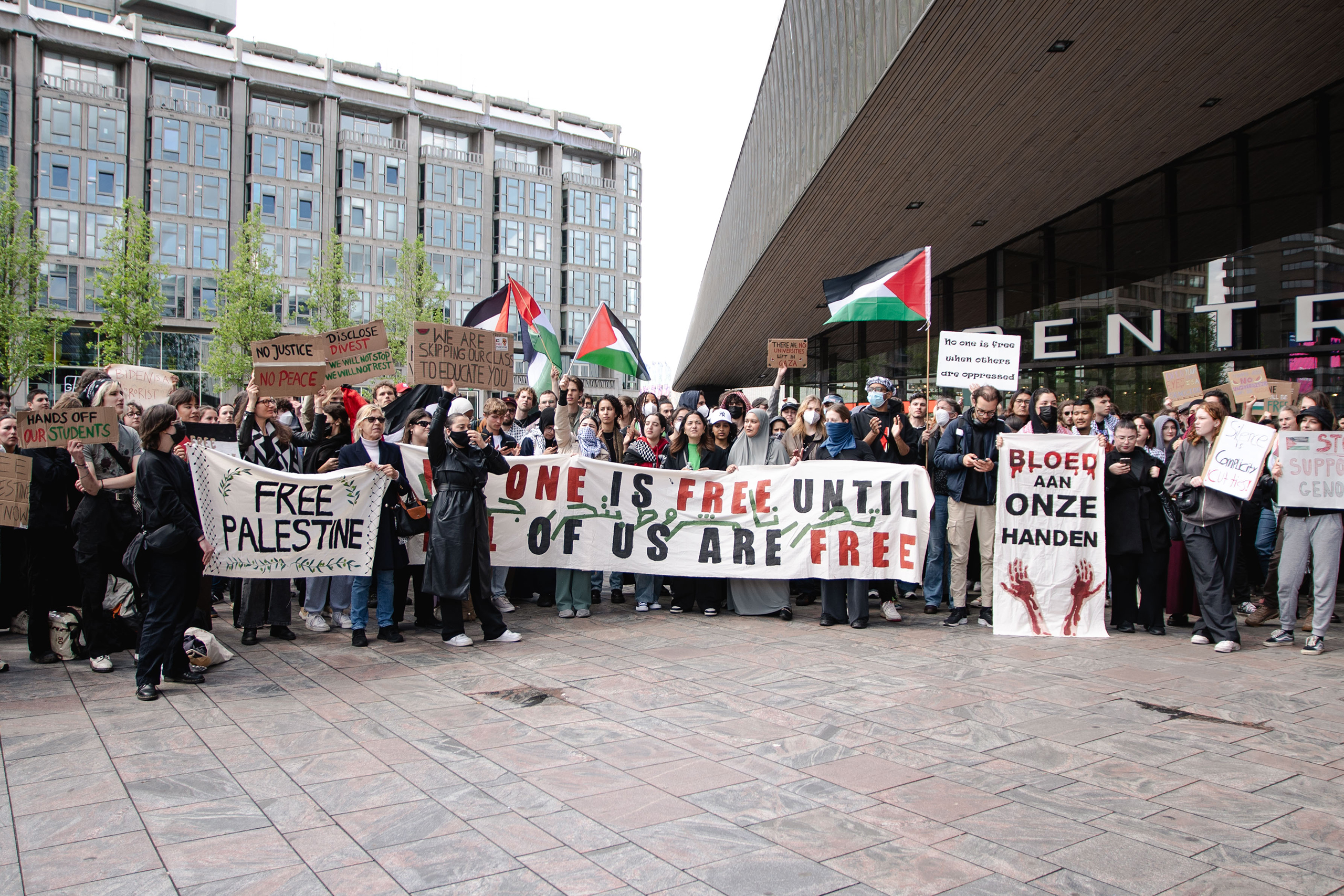
Executive Board proposes dialogue tables and aid for Gaza reconstruction
Gepubliceerd op:-
Board
-
In response to the Executive board offering dialogue tables, three EUR students believe that ‘ the Executive Board effectively demonises those who do not want to participate in such a dialogue’.
Read more
-
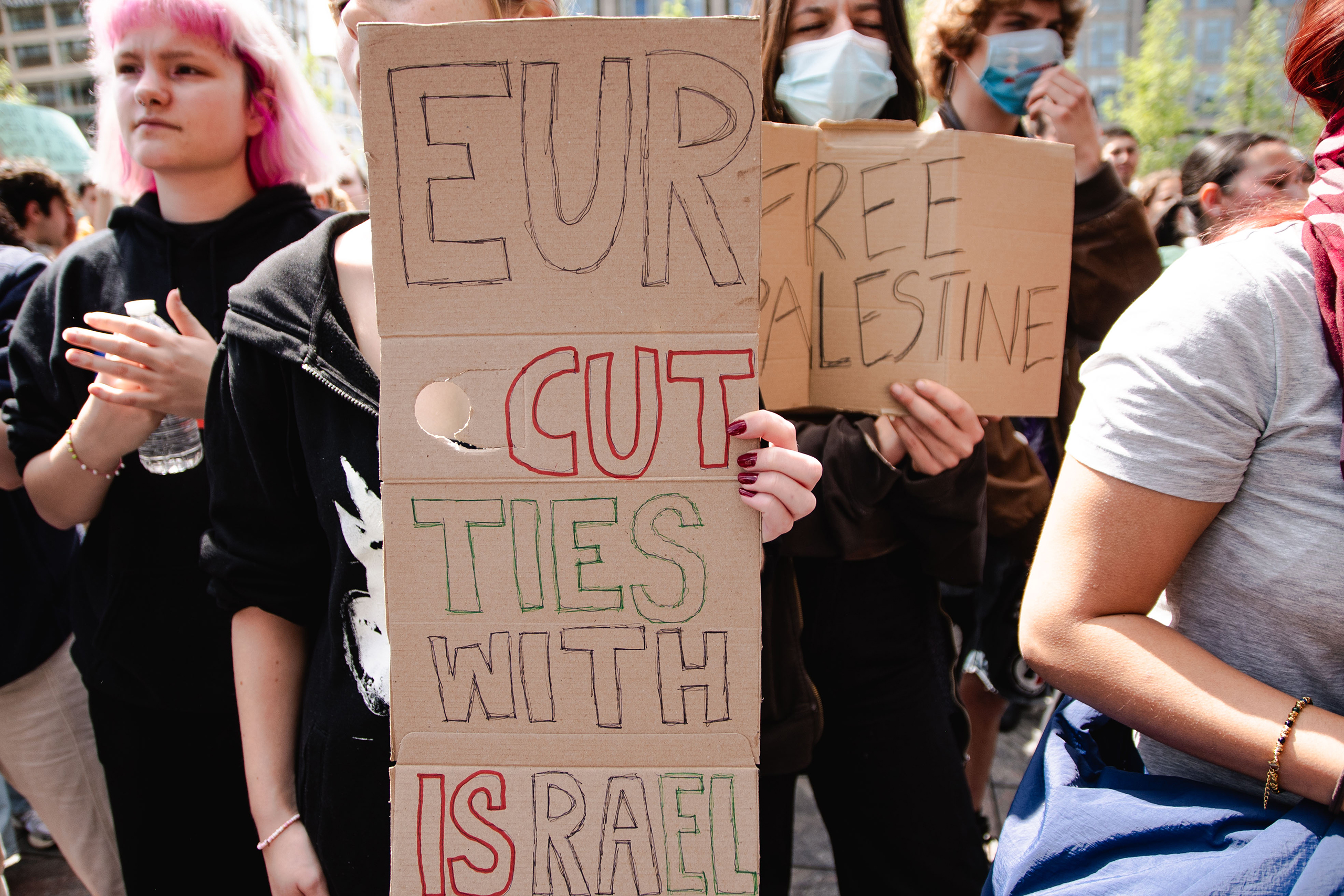
Why some of us students will not engage in dialogue (again)
Gepubliceerd op:-
Opinion
-
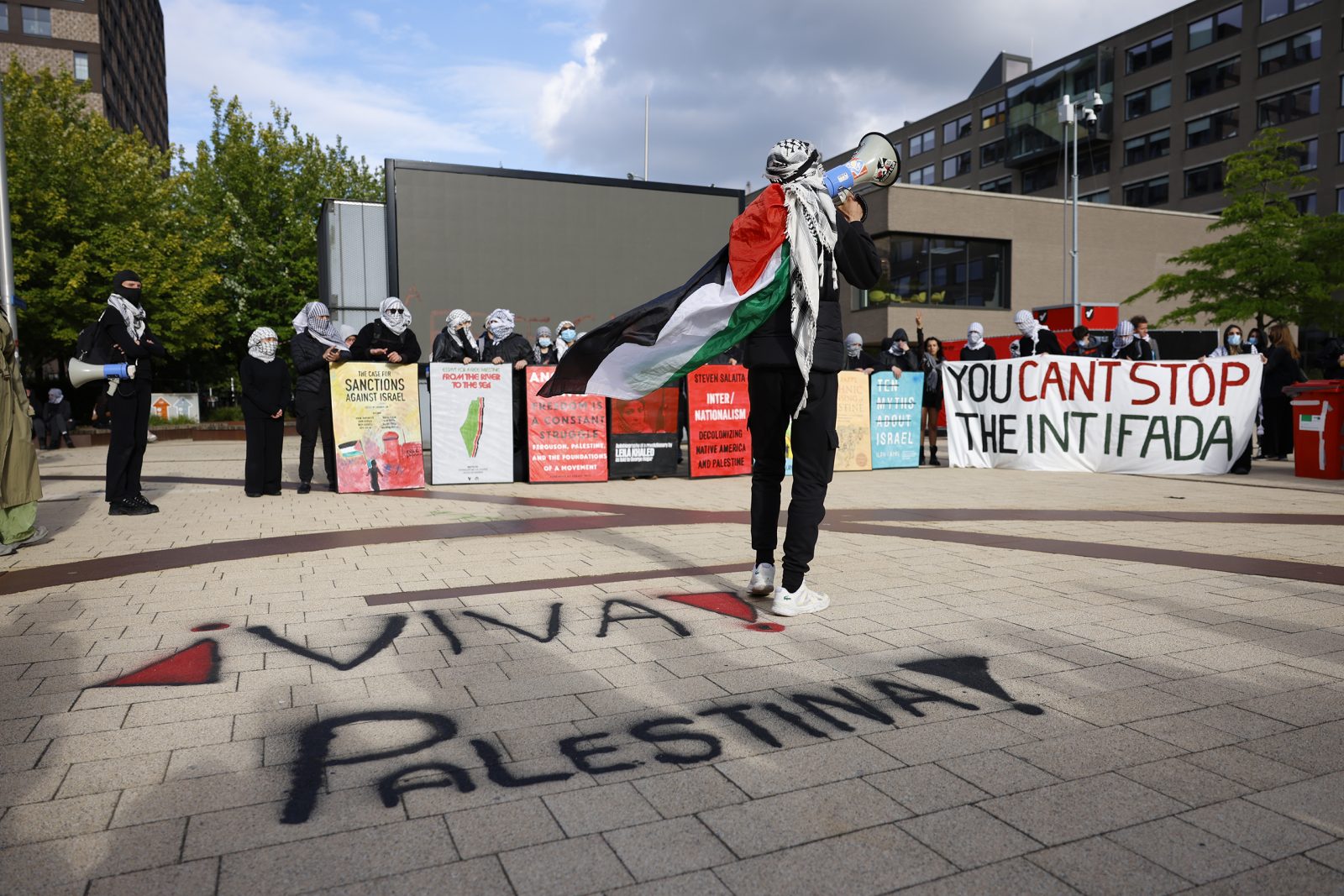
A week after the initial pro-Palestine protest outside Centraal station, several dozen students gathered in the plaza in front of the food court with tents, a first aid station and food and drinks. The demands to the Executive Board (CvB) are still the same: to make transparent all contacts and collaborations with Israeli institutions and to break those ties.
Read more
-
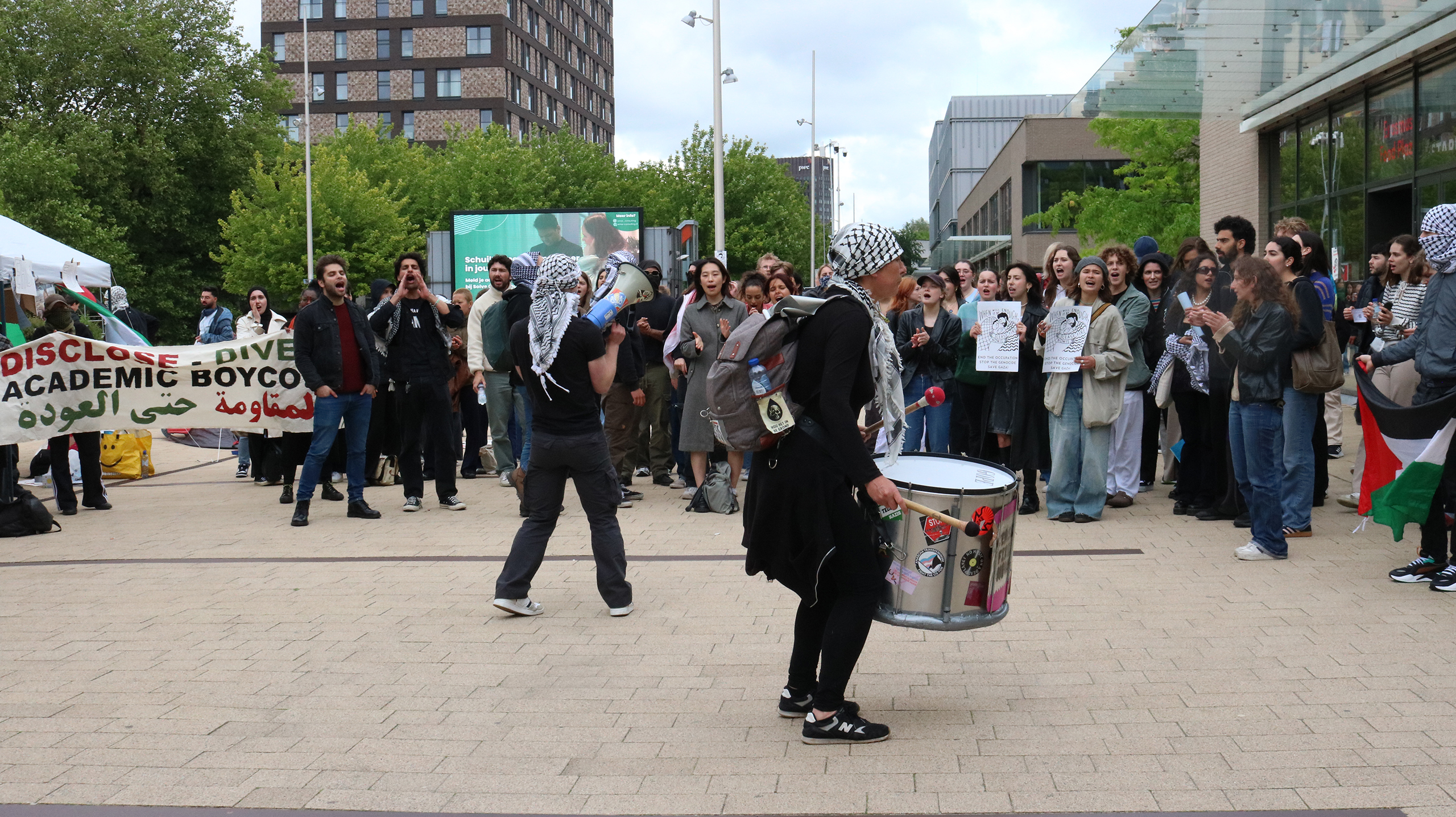
Tents, music and slogans at new Palestine protest on campus
Gepubliceerd op:-
Campus
-
The protesting students and staff who set up their tents at the plaza were allowed to stay overnight, as long as they were ‘peaceful’. The university found ‘no reason to intervene’.
Read more
-
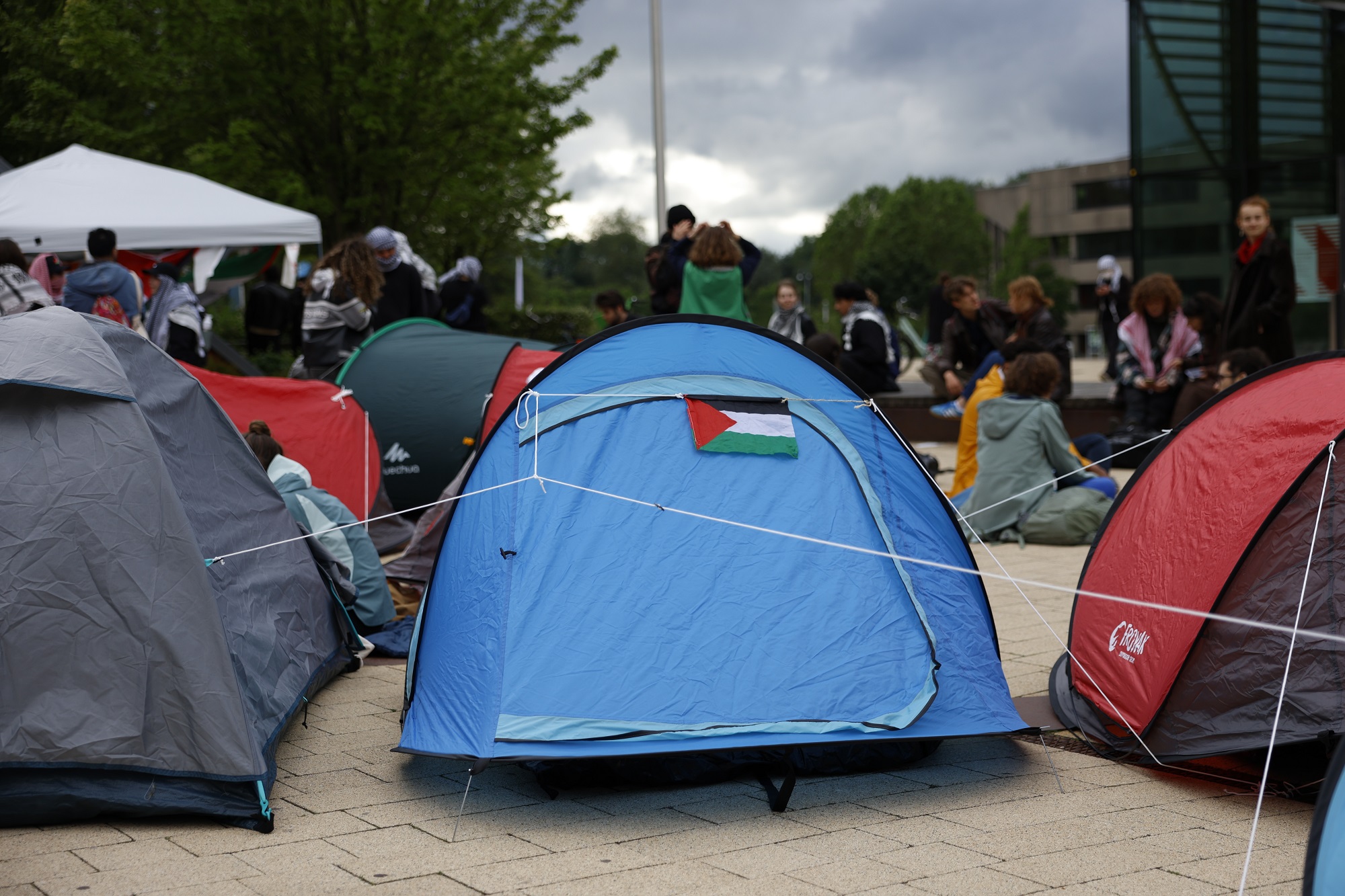
Protesters allowed to stay overnight on campus
Gepubliceerd op:-
Campus
-
Around twenty protesters stayed on campus overnight in tents outside the Food plaza. The encampment night went ‘fairly relaxed’, and the protesting students did not intend on leaving until their demands were met by the Executive Board.
Read more
-
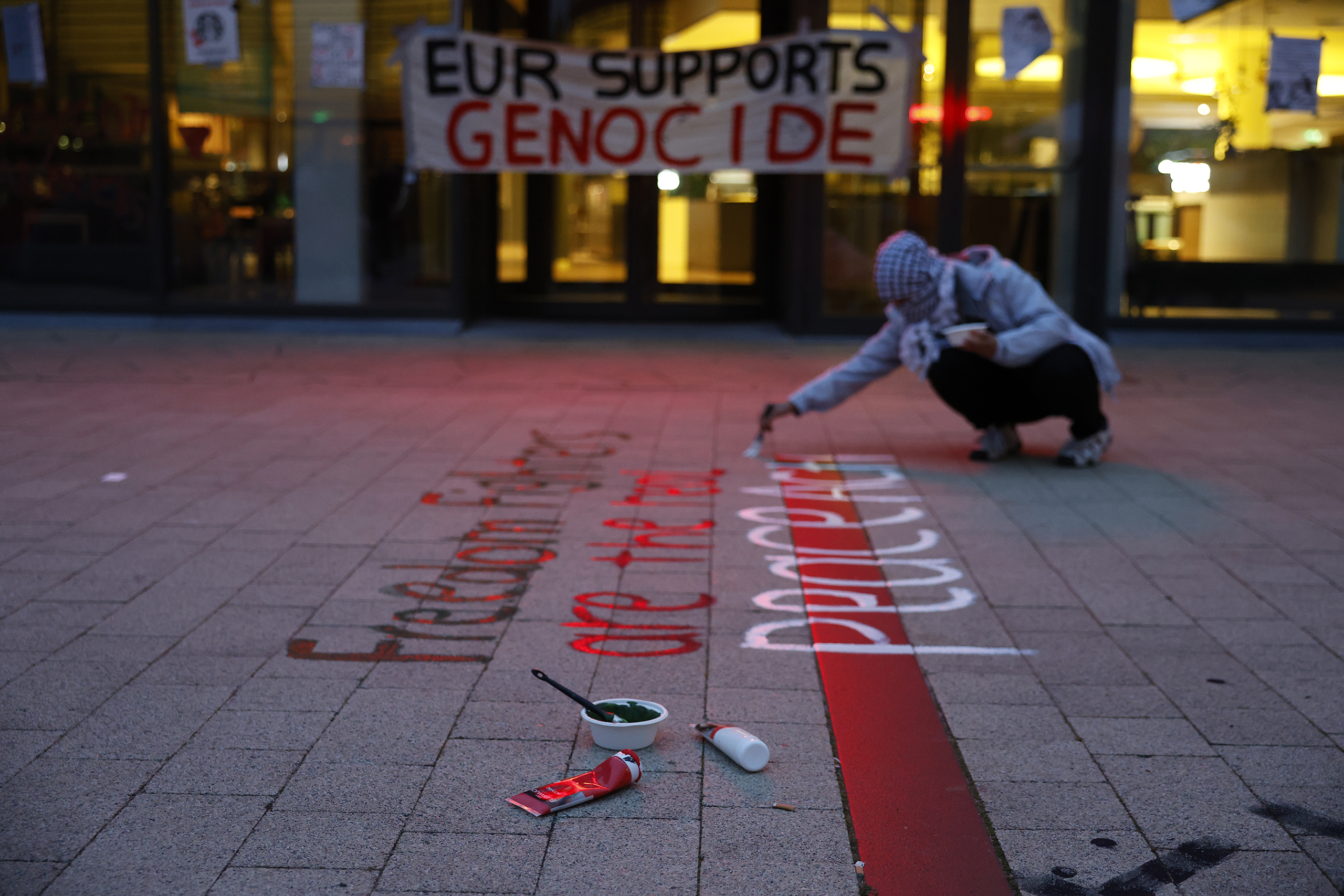
Protesters camp overnight, plan on staying ‘until university acknowledges demands’
Gepubliceerd op:-
Protest
-
The third day of the campus encampment seemed calm. However, a man carrying an Israeli flag came to the demonstration and was then chased off campus by protesters the evening before. The university strongly condemned the chase: “There is no room for anti-Semitic or Islamophobic expressions on the Woudestein campus”.
Read more
-
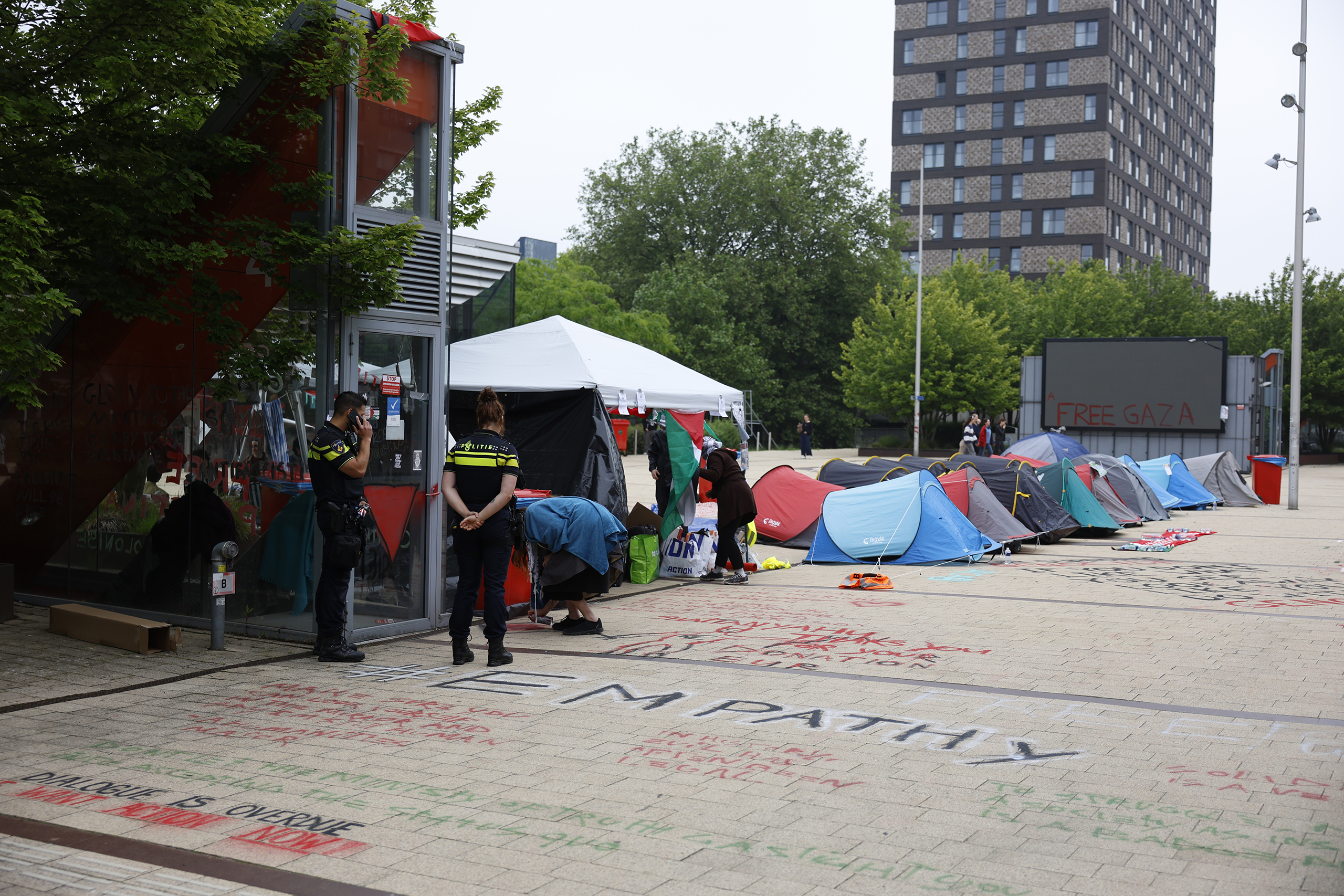
Third day encampment on campus goes quietly, following incident Friday night
Gepubliceerd op:-
Protest
-
Various universities are setting up committees to investigate the ties to Israel.
Read more
“No matter what happens, we will never cut ties with an entire country”, write the rectors of the Dutch universities in daily paper Trouw. In an opinion piece, they further state why they don’t want to cut their ties with Israeli universities just like that.
Read more
-
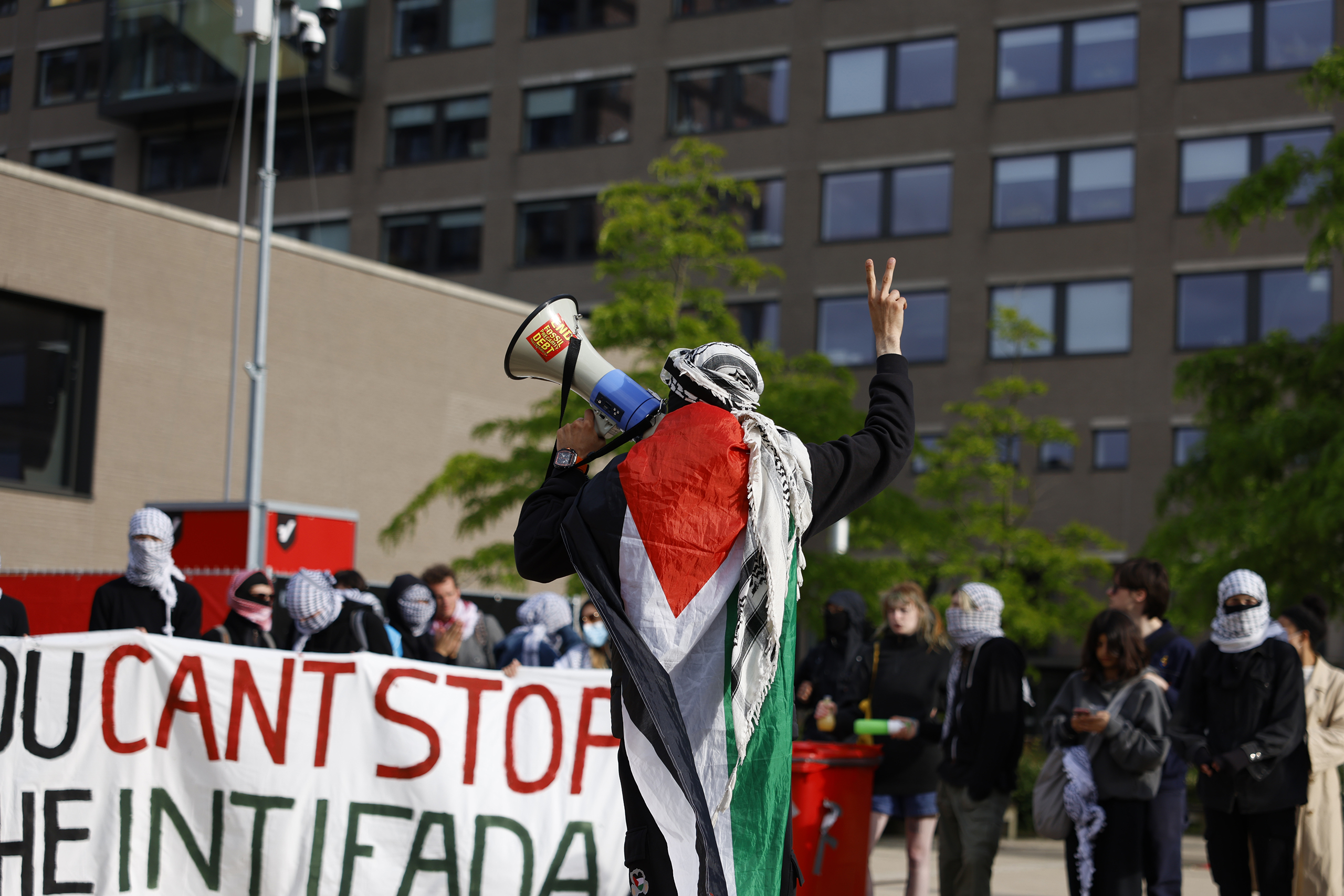
Universities don’t want to close door to Israel
Gepubliceerd op:-
Education
-
The camera poles appeared on 16 May, when a pro-Palestinian protest was scheduled to take place and all campus buildings were locked for that reason. This is because the existing campus surveillance is flawed: The cameras did not capture, for example, who sprayed graffiti on the Starbucks exterior wall, according to Ed Brinksma.
Read more
-

Mobile camera units will remain in place for at least several weeks
Gepubliceerd op:-
Security
-
A motion of no confidence against a Council member, two members angrily leaving the meeting and some expletives being hurled. The Council meeting of Tuesday 21 May blew up at the final agenda item. The trigger was an accidentally published letter about the pro-Palestine protests the week before. EM spoke to the Council members involved.
Read more
-
Emotions run high in U-Council over ‘leaked’ letter on Gaza protest
Gepubliceerd op:-
University Council
-
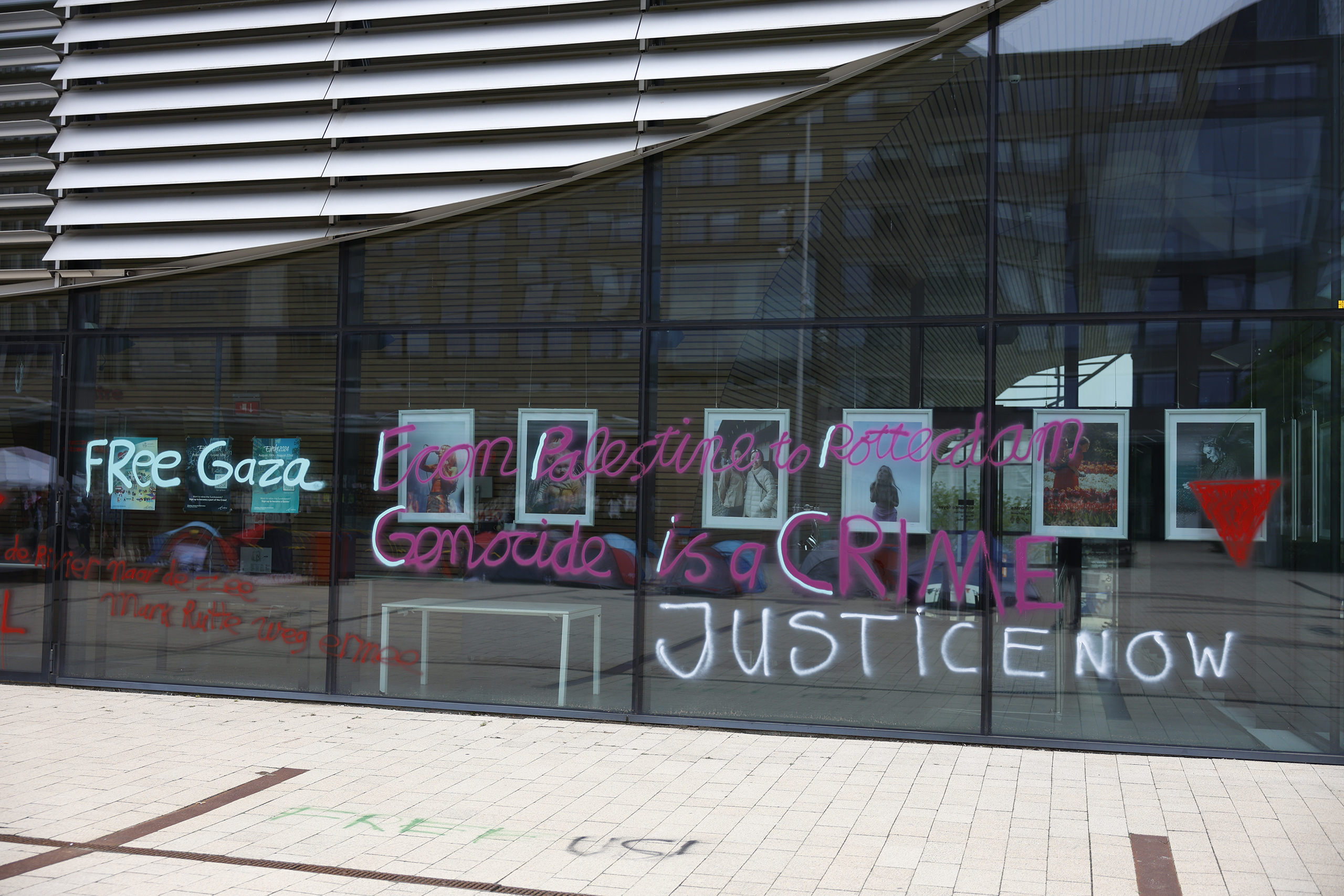
The university estimates that removing the spray-painted slogans on campus will cost over 100,000 euros. The broken LED screen on Erasmus Plaza adds another cost of at least 25,000 euros. The Executive Board is pressing charges.
Read more
-
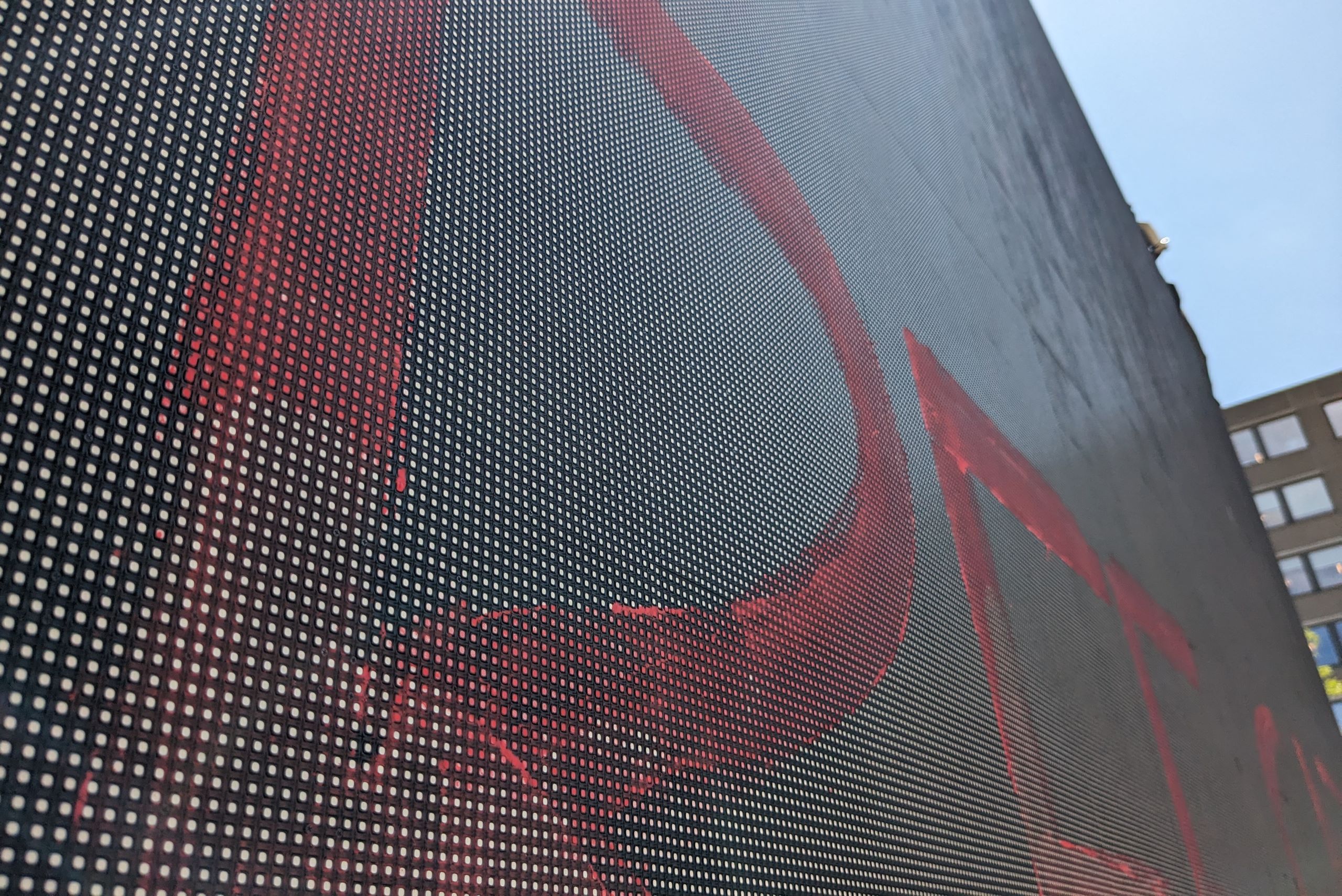
More than 100,000 euros damage from painted slogans and broken screen
Gepubliceerd op:-
Campus
-
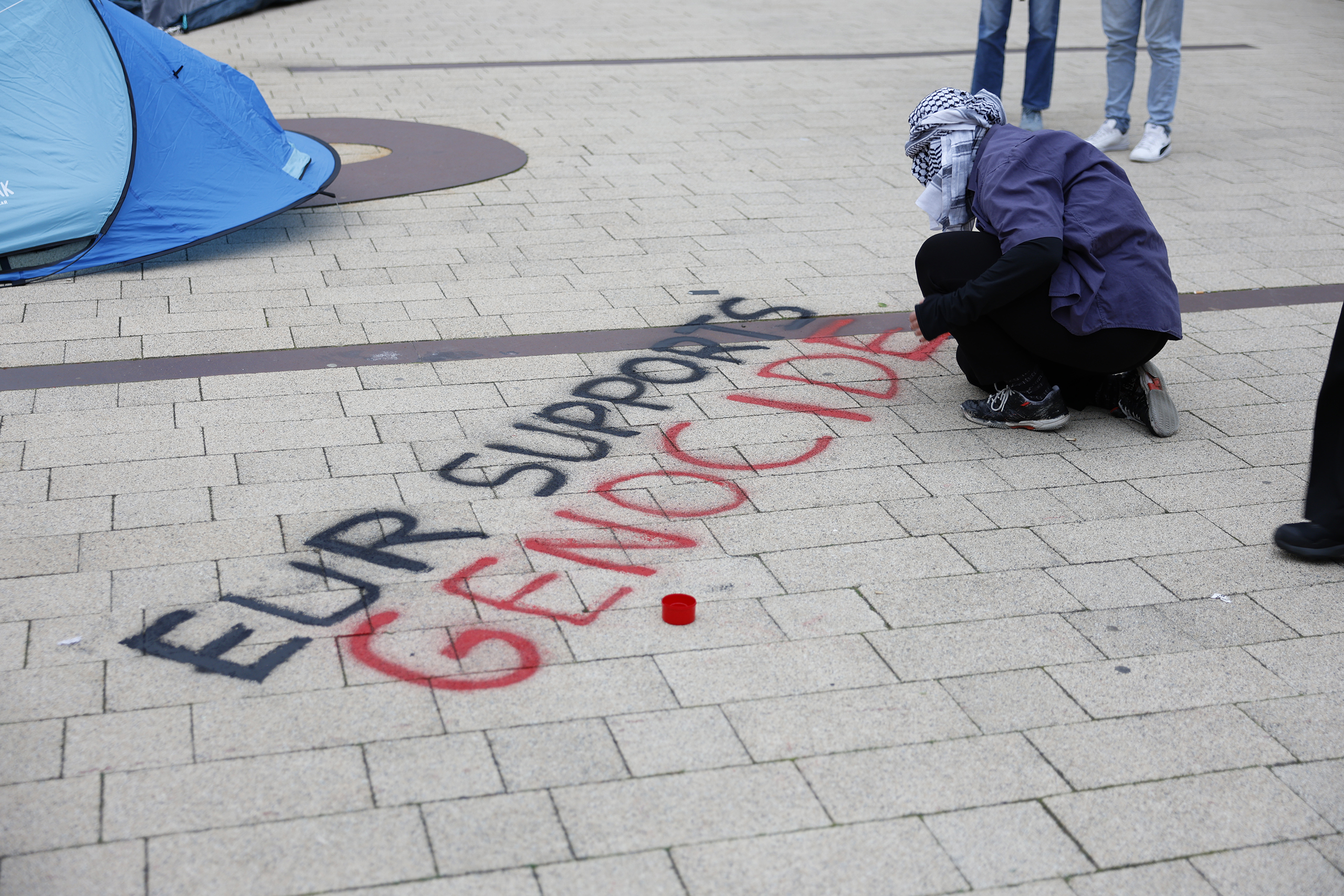
Cleaners were busy removing the graffiti from the tent camp on campus Woudestein. Protesters will no longer be allowed to add any new slogans to walls or streets. The university will immediately report any protesters that ignore this new rule to the police. The university may also decide to report two previous incidents.
Read more
-
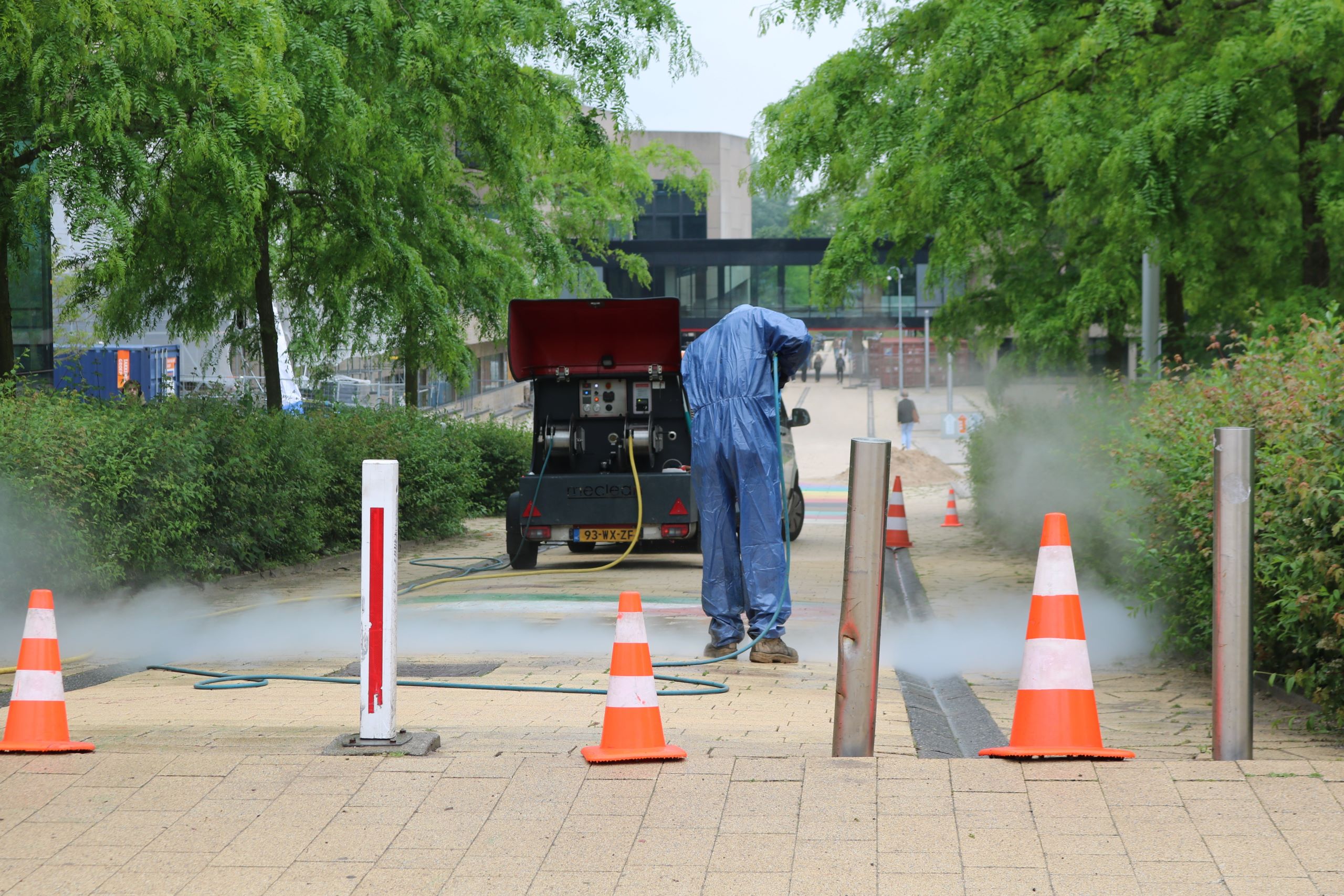
Stricter rules for encampment; two previous incidents may be reported to the police
Gepubliceerd op:-
Campus
-
The university has asked the demonstrators of the pro-Palestine protest on campus to move their tents to park Noord since the Heartbeat Festival is planned on the Erasmus Plaza where the encampment is currently located.
Read more
-
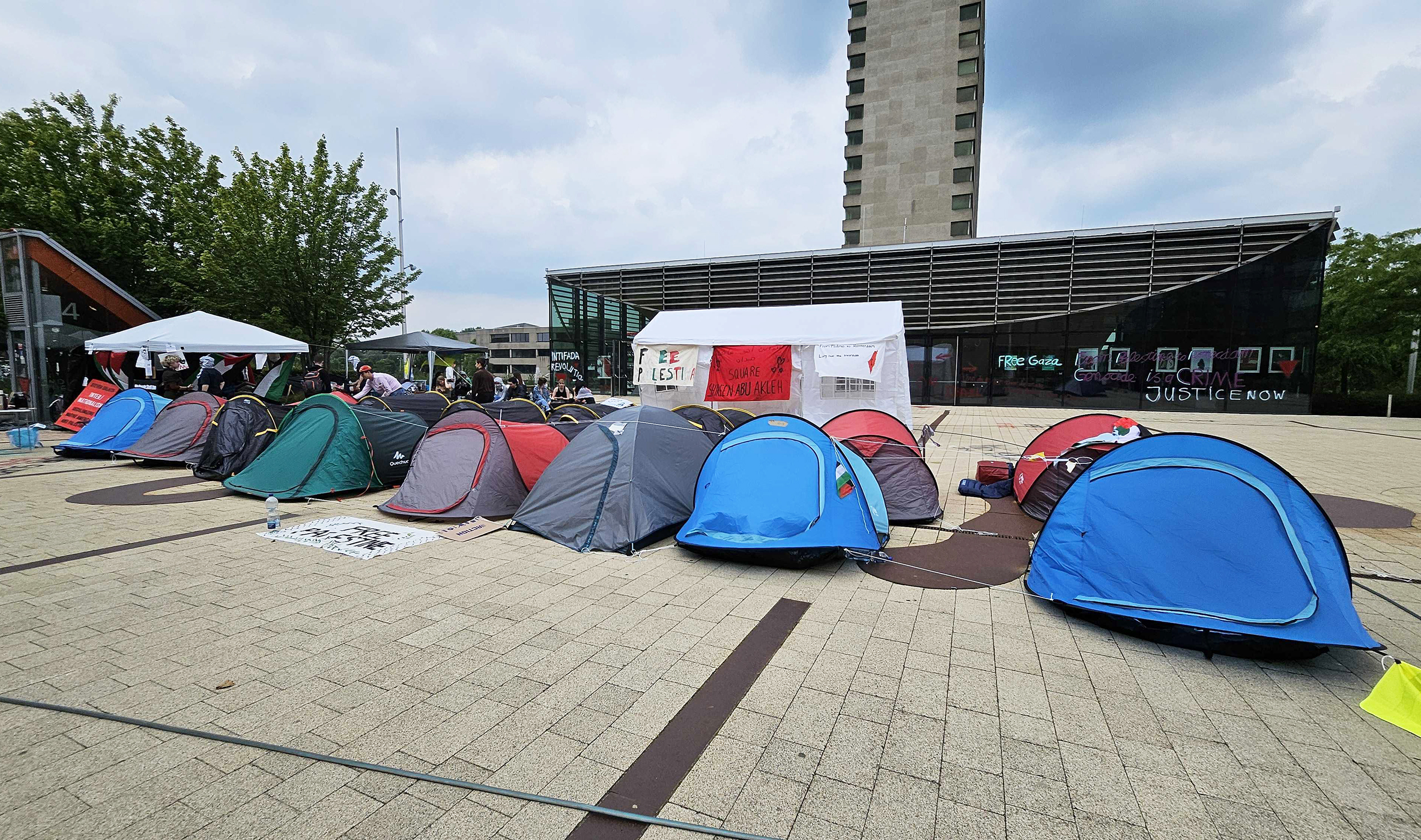
Updates pro-Palestine protest: encampment must give way to festival and dialogue with the board
Gepubliceerd op:-
Campus
-
Over 150 students and staff were present in the Pavilion auditorium for the Executive Board’s meeting on the war in Gaza. The audience voiced their displeasure with the Board’s response to the war. The Board stuck to its position: it will await the results from the Advisory Committee Sensitive Collaborations before taking further steps.
Read more
-
Critical questions to board in dialogue about Israel-Palestina
Gepubliceerd op:-
Board
-
Ruard Ganzevoort is the chairman of the newly-established Advisory Committee Sensitive Collaborations. As the first item on the agenda, the committee will review the university’s ties with Israeli and Palestinian institutions and advise the Executive Board accordingly. But how does this committee actually work and how will the committee assess such ties?
Read more
-
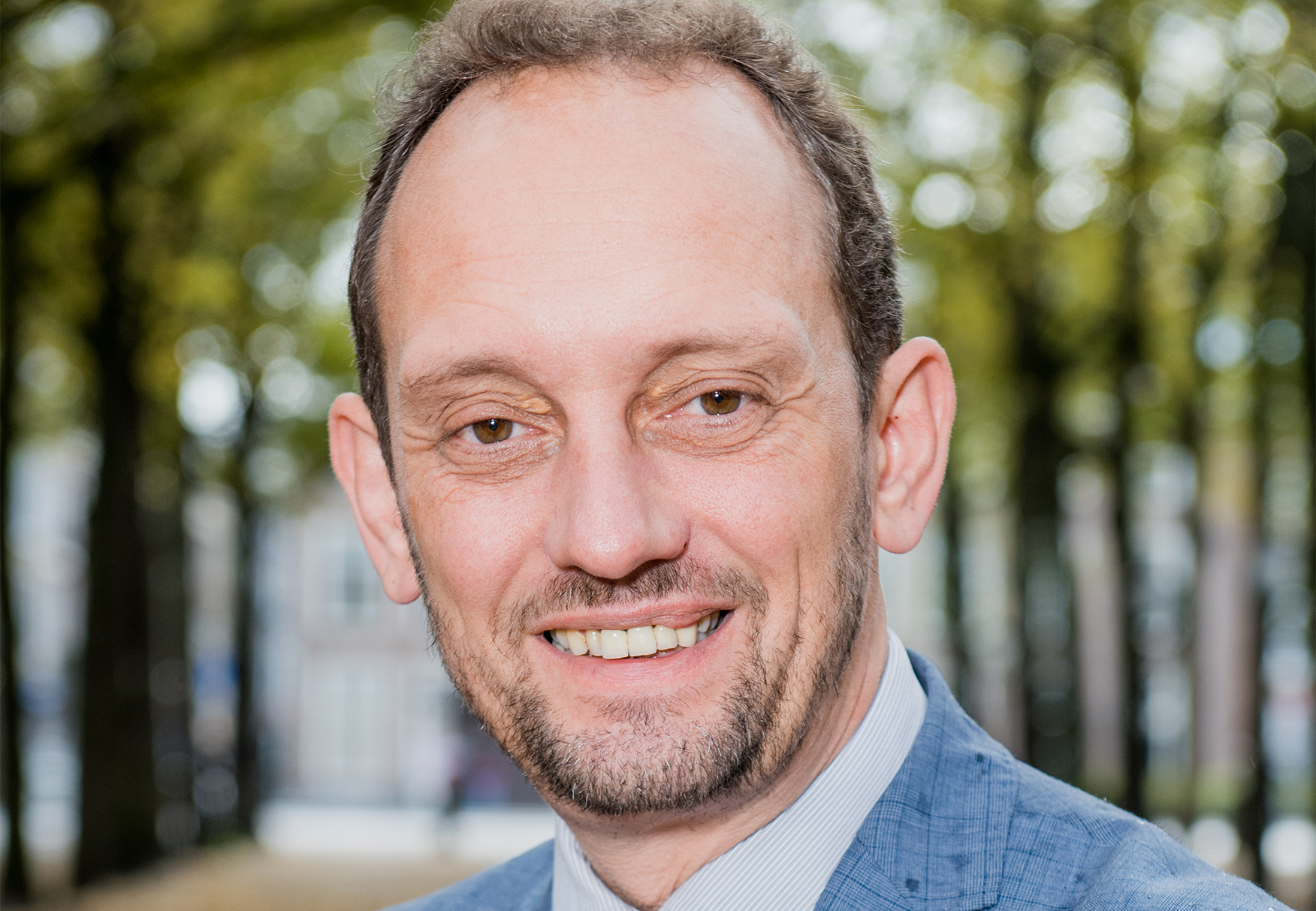
‘If you have good reasons to do so, you could still terminate all collaborations’
Gepubliceerd op:-
Science
-
About fifty people gather at a vigil organised by Rotterdam Student Encampment to remember the journalists killed in Gaza and Lebanon.
Read more
-
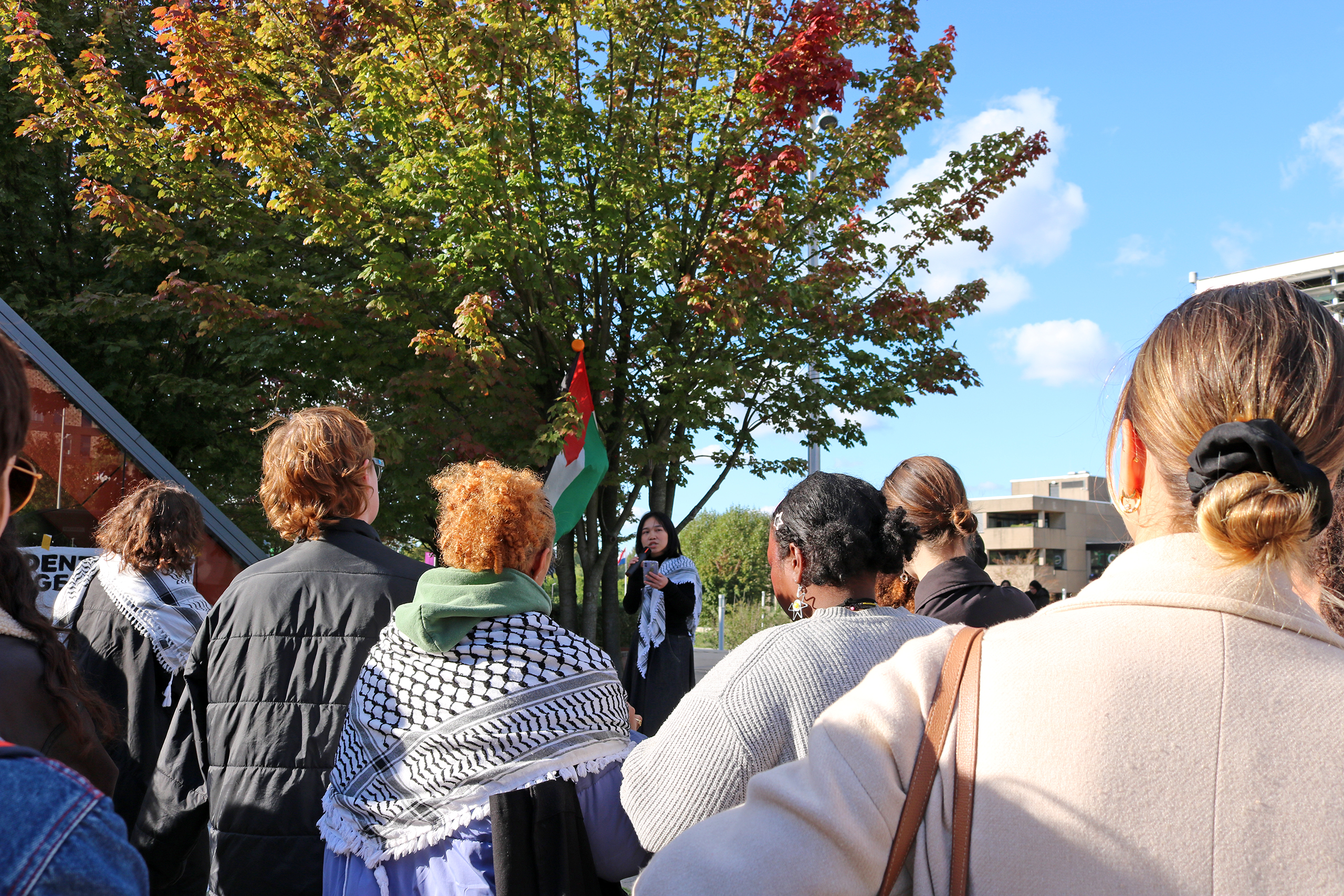
Vigil for slain journalists in Gaza and Lebanon at Erasmus Plaza: ‘It could be a little louder’
Gepubliceerd op:-
Protest
-
In three different places, staff and students come together to commemorate colleagues who were killed in Gaza and Lebanon.
Read more
-
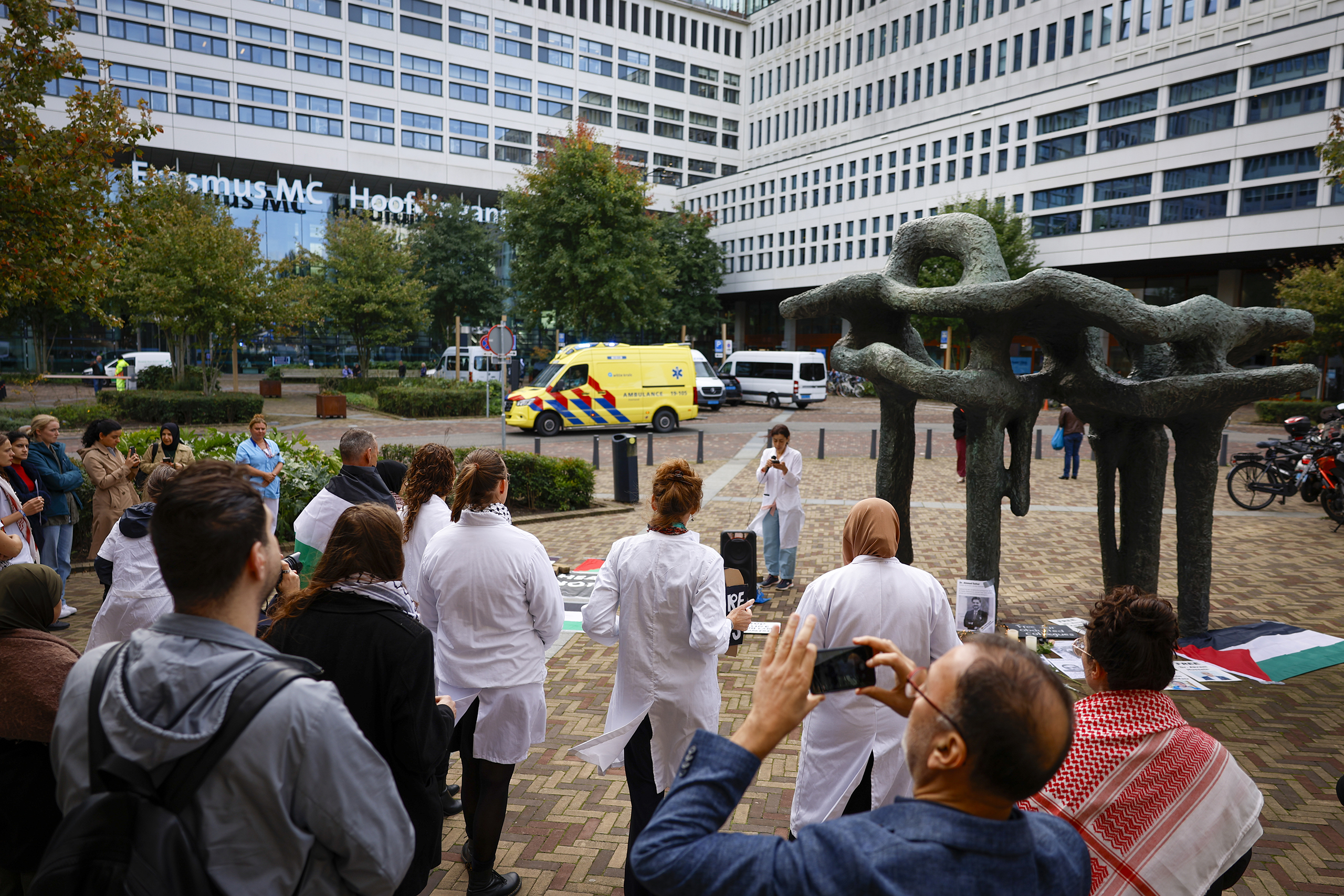
Students and staff reflect on violence in Gaza at three locations
Gepubliceerd op:-
Protest
-
At the start of the new academic year, the Executive Board announced that any new partnerships with Israeli or Palestinian institutions must first be reviewed by a newly established Advisory Committee. Existing partnerships may continue, but must also be assessed as soon as possible against the core values of Erasmus University.
Read more
In a new recommendation, the Advisory Committee on Sensitive Collaborations (ACSC) advises that no new partnerships with Israeli and Palestinian universities should be initiated for the time being, and that both existing and future collaborations should be subjected to a careful review based on ethical guidelines still to be developed. According to a group of staff closely following Israel’s assault on Gaza, freezing ties with Palestinian institutions is unjustified.
Read more
-
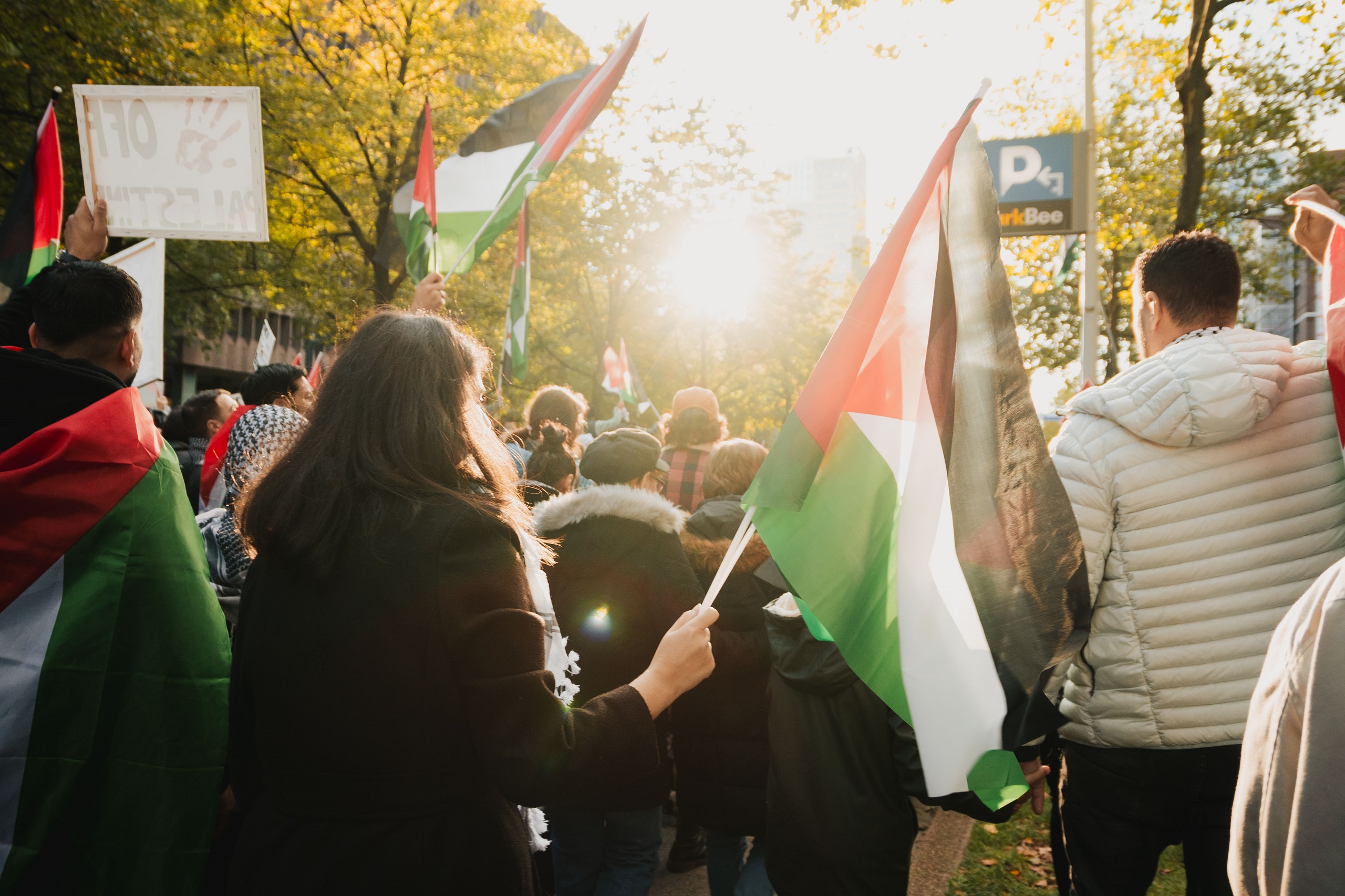
Both-siding Israel-Palestine: the provisional advice of the Committee on Sensitive Collaborations
Gepubliceerd op:-
Opinion
-
Discussions between protesters and administrators, like those at Utrecht University, often break down because activists feel unheard, while administrators cling to their rules. Although dialogue can help reduce polarisation, protests are likely to continue until both sides find the costs of further escalation greater than those of having a conversation.
Read more
-
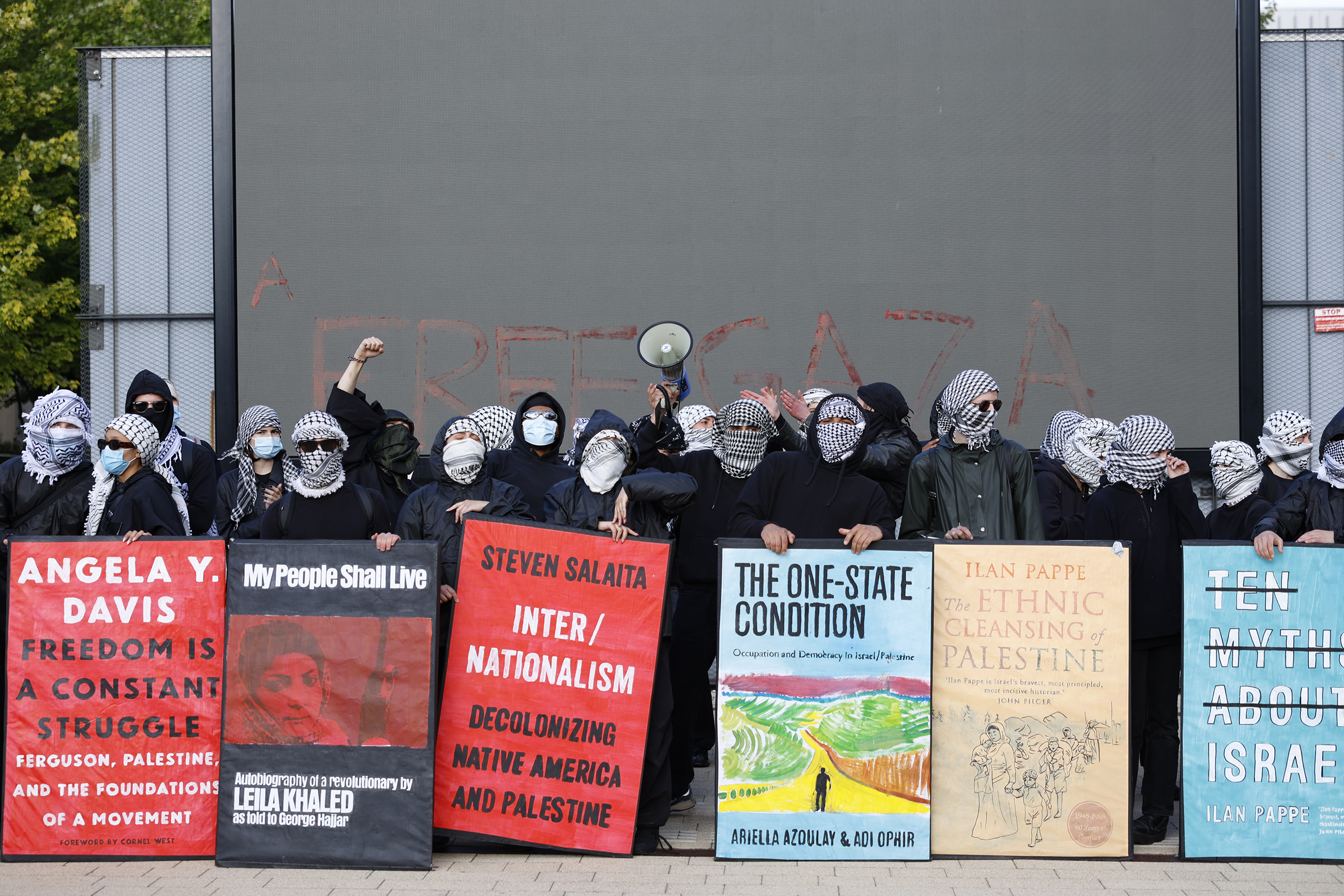
Super difficult, such a discussion between protesters and administrators
Gepubliceerd op:-
Protest
-
The Hebrew University has criticised the Dutch research institute NIAS for its decision to cease collaboration with Israel. “Discrimination”, says the rector of the Hebrew University.
Read more
-
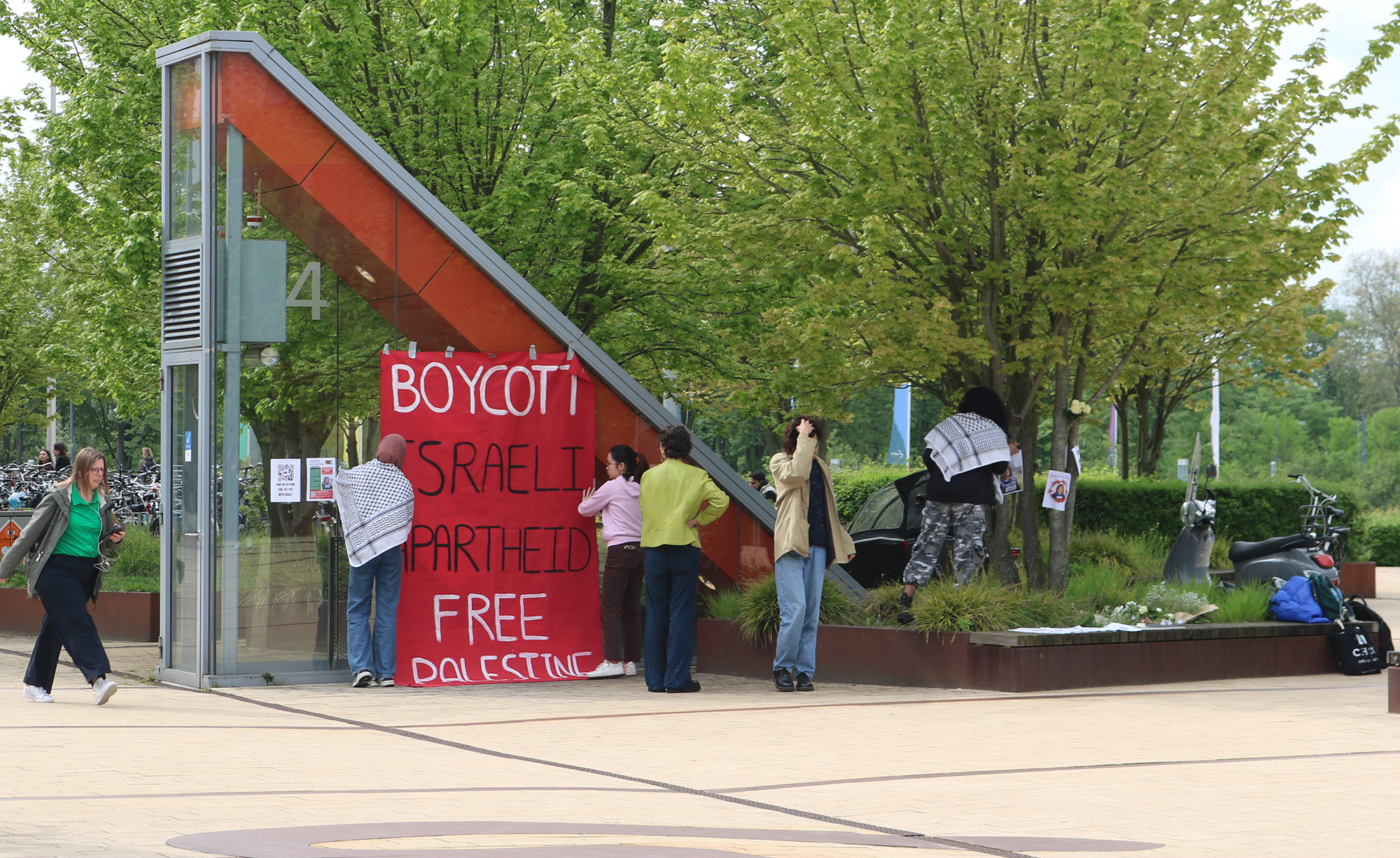
Israeli universities threaten legal action over boycott
Gepubliceerd op:-
Science
-
Read more
-
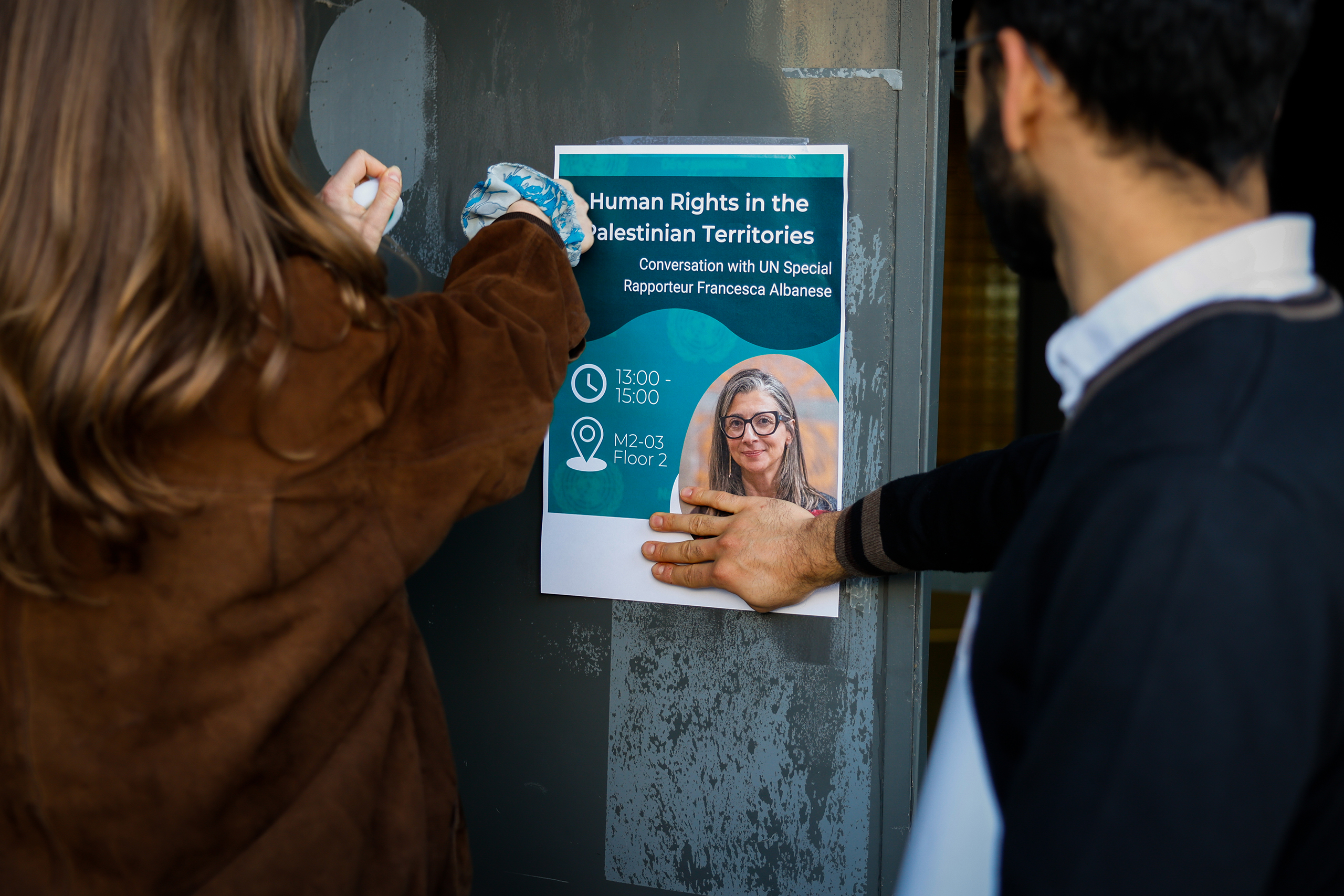
VN-rapporteur Gaza visits: ‘Do not take freedom for granted’
Gepubliceerd op:-
Campus
-
OccupyEUR protesters gathered at the Erasmus Plaza for a series of protests against the war in Gaza, fossil ties, and student debt.
Read more
-
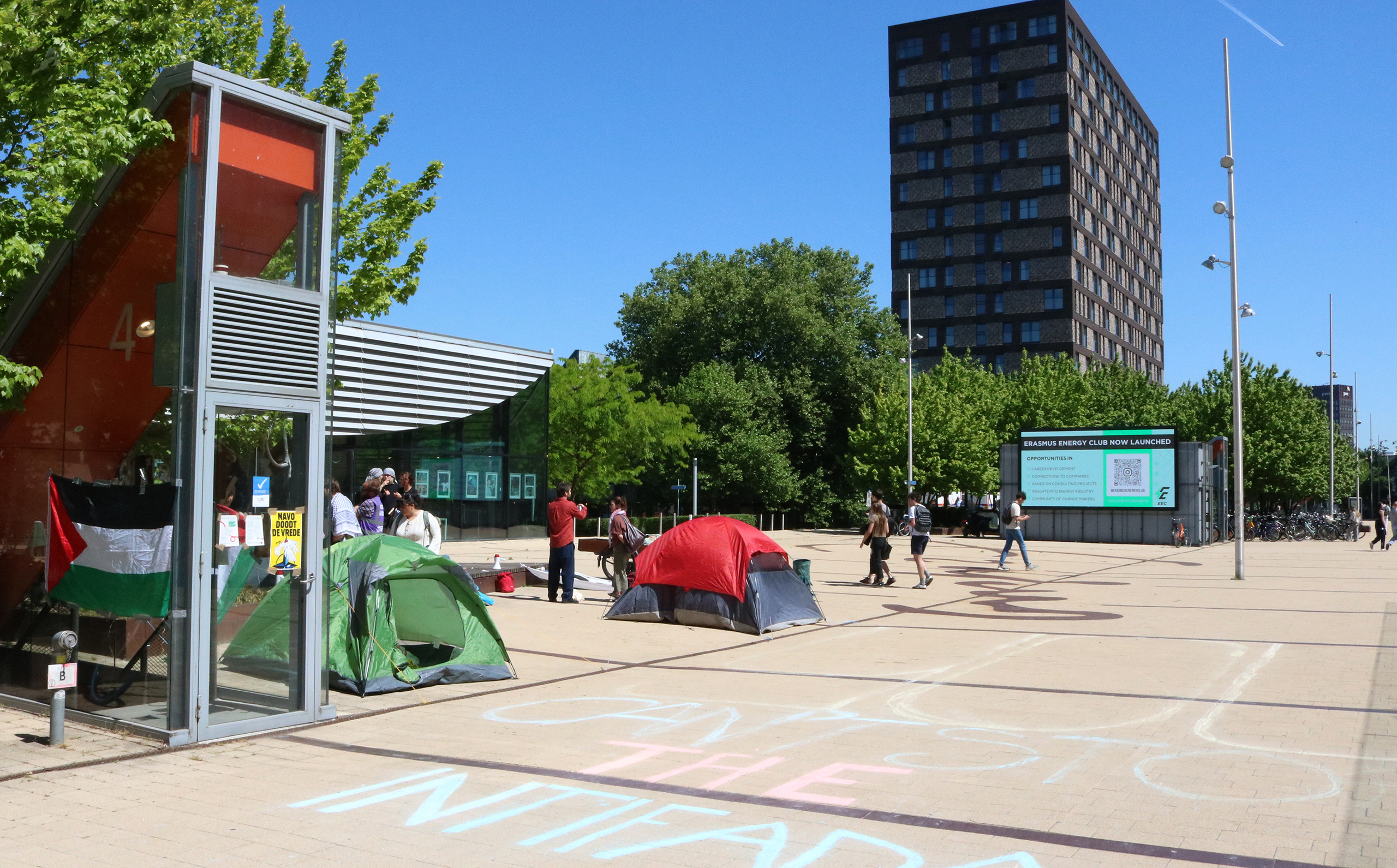
Occupy protest at Erasmus Plaza against the war in Gaza, fossil ties, student debt and more
Gepubliceerd op:-
Protest
-
On the second day that protesters were camping on the Erasmus Plaza, there were no serious disturbances during the night. Some banners had to be removed.
Read more
-
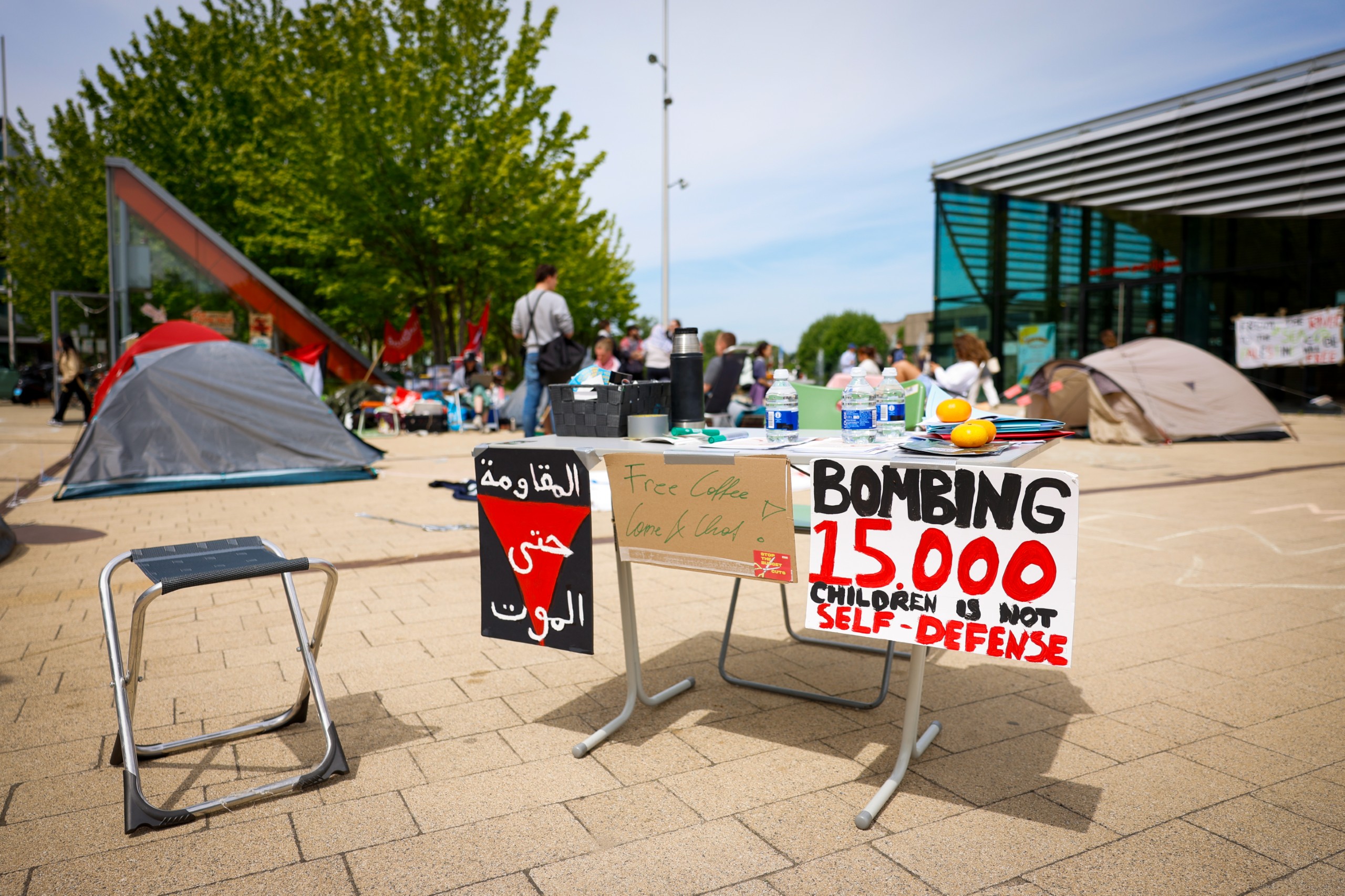
Occupy’s first night on campus mostly without incidents; ‘Death to Israel’ banner removed
Gepubliceerd op:-
Protest
-
The Advisory Committee for Sensitive Collaborations has issued its advice regarding three Israeli universities. It recommends that Erasmus University should not enter into any new partnerships or exchange programmes and should ‘minimise’ existing cooperation.
Read more
-
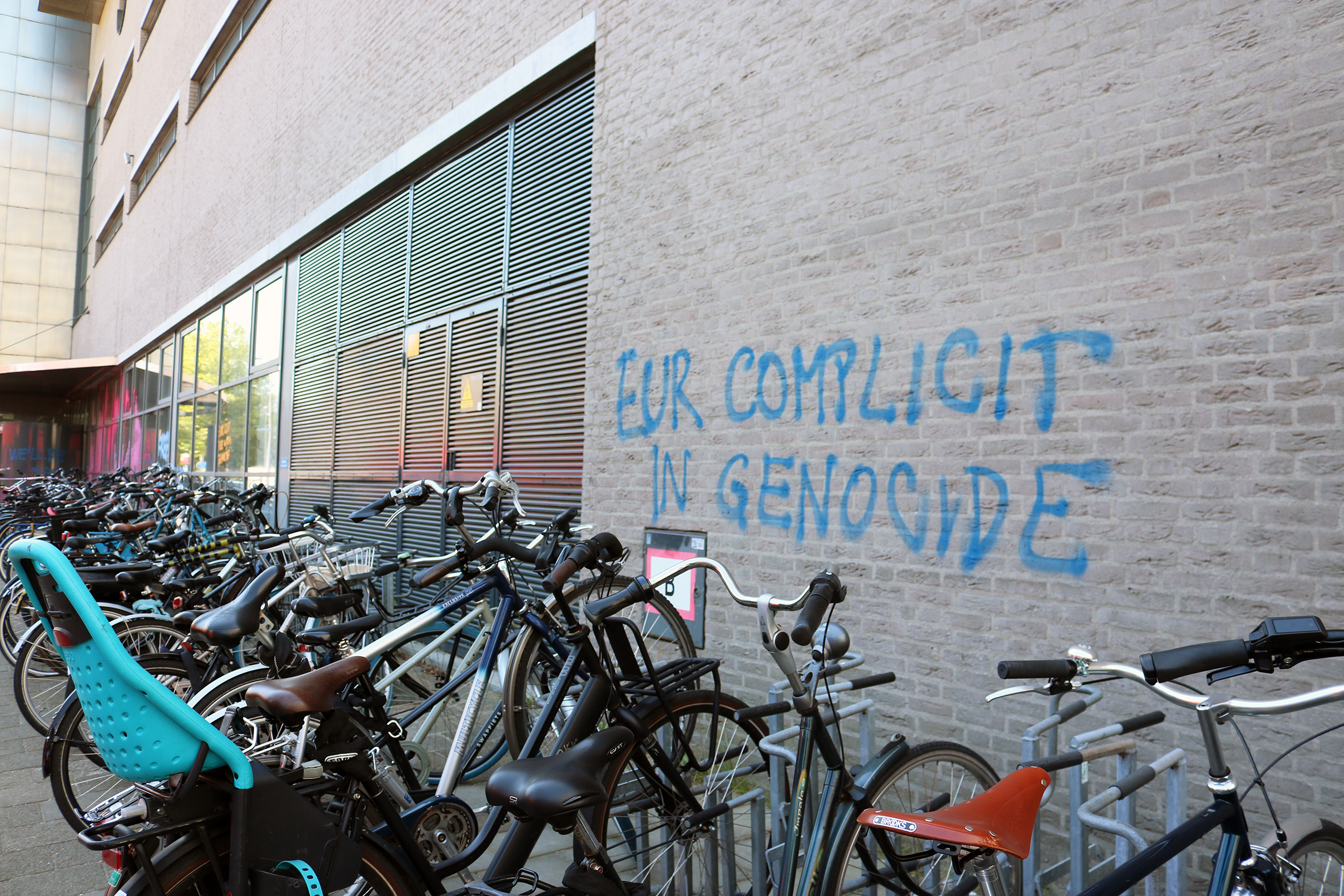
New advice: minimise existing cooperation with three Israeli universities
Gepubliceerd op:-
Safety
-
The Executive Board largely accepts the recommendations of the Advisory Committee on Sensitive Collaborations (ACSC). As a result, collaborations with some Israeli universities are immediately put on hold.
Read more
-
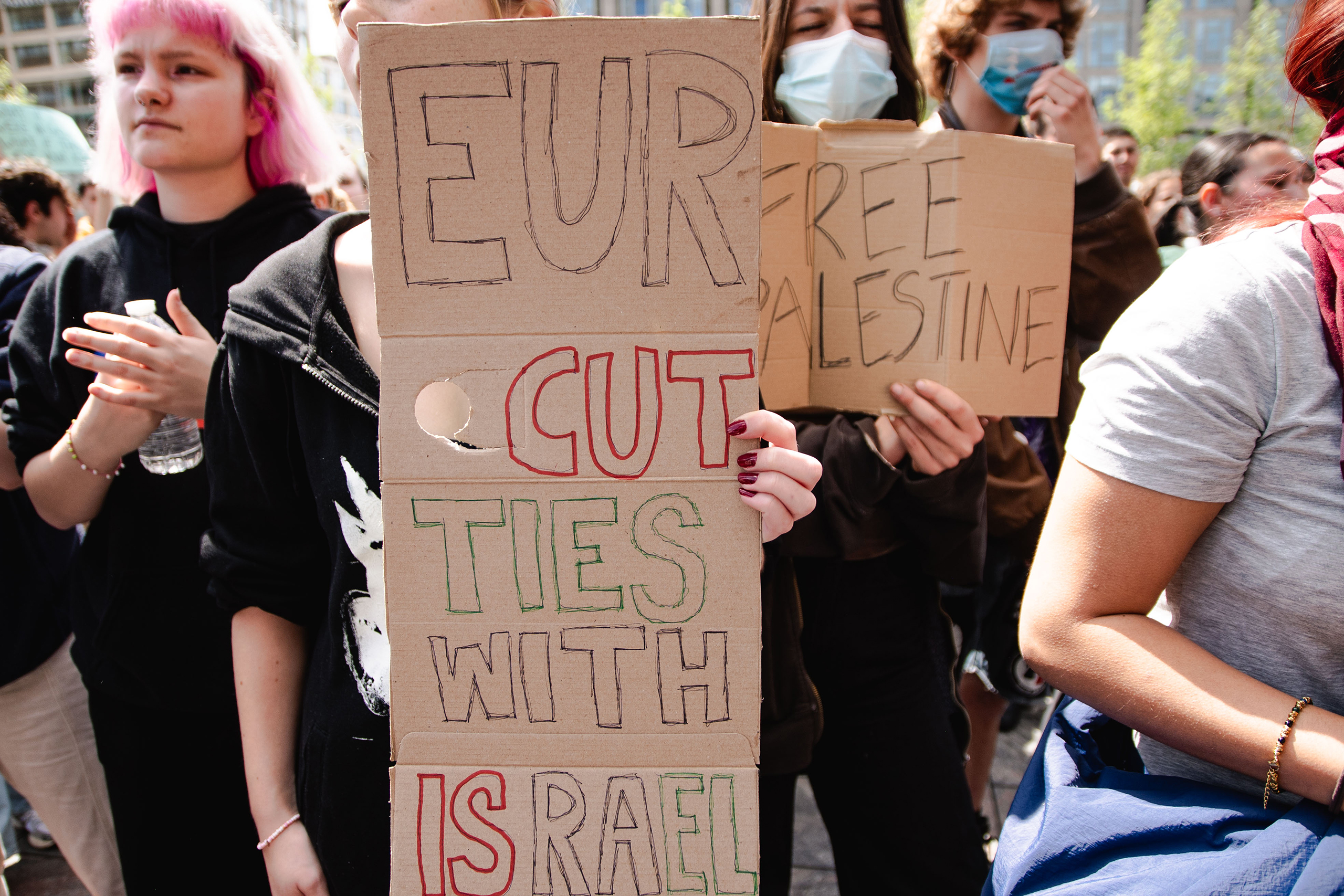
Executive Board adopts Israel advice and freezes collaborations immediately
Gepubliceerd op:-
Safety
-
In dozens of posts on platform X a professor from the Erasmus School of Law expressed ‘racist and pro-Zionist views’ about Gaza and Palestinians, according to Muslim Rights Watch Netherlands. The advocacy group has set up an ‘Erasmus University hotline’ and threatens to protest on campus.
Read more
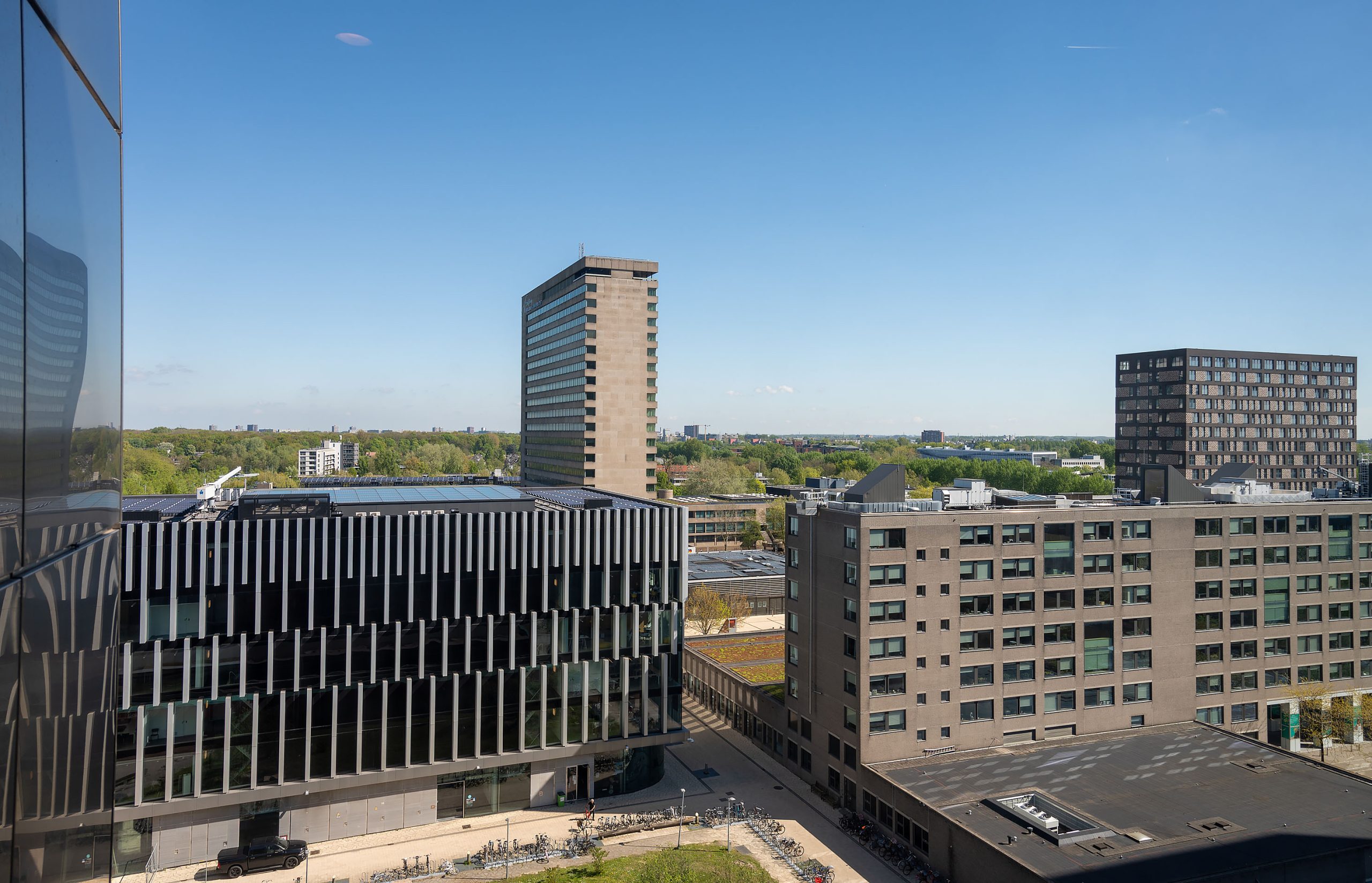
An increasing number of researchers are calling Israel’s violence in Gaza ‘genocidal’, according to the Royal Netherlands Academy of Arts and Sciences (KNAW). The country should therefore no longer be allowed to participate in the European research programme Horizon.
Read more
-
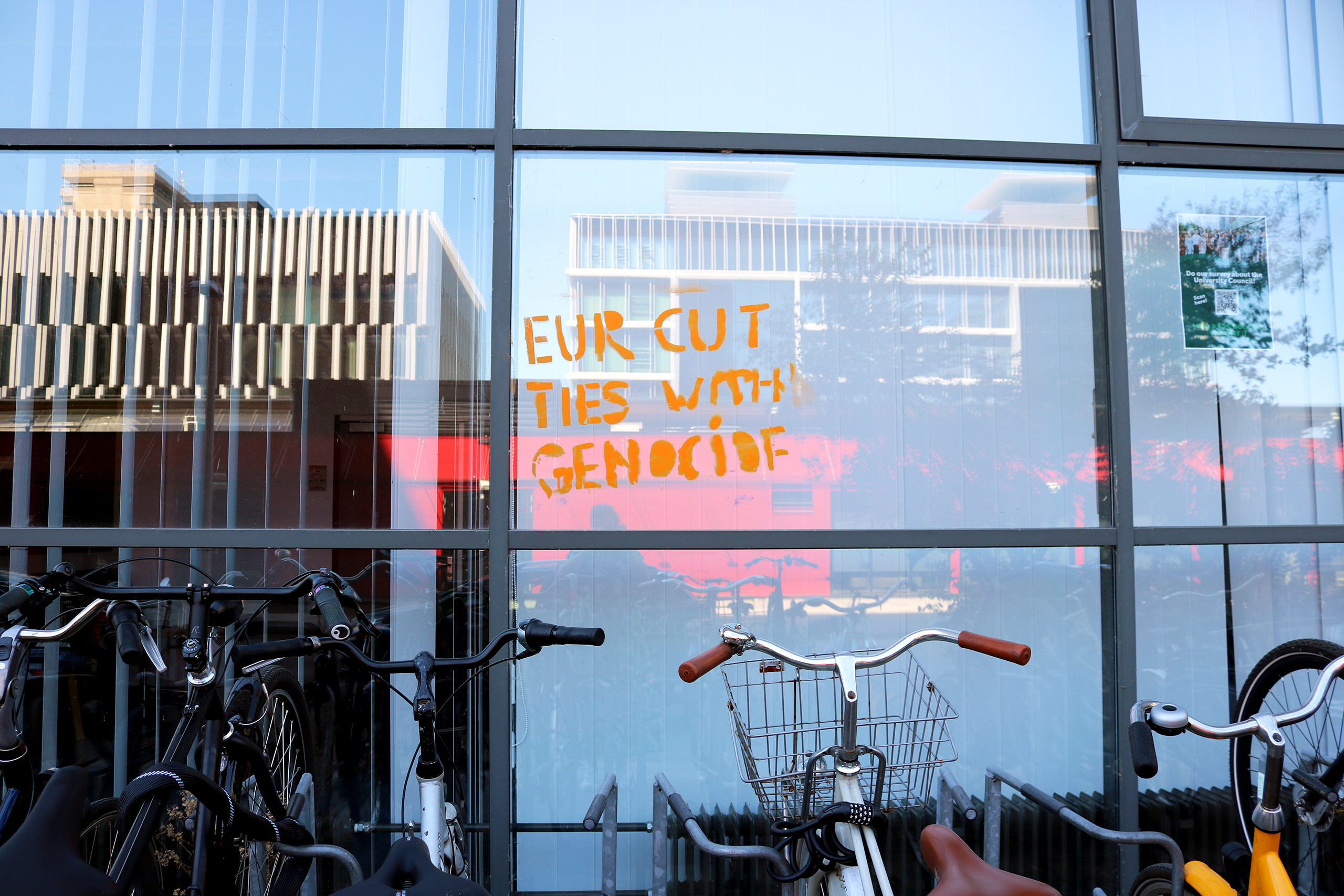
KNAW wants Israel removed from European research programme
Gepubliceerd op:-
Science
-
Not long ago, the university had its own pro-Palestinian encampment. It made an impact. The EUR froze its collaboration with three Israeli universities because the risk of becoming complicit in human rights violations was deemed too great.
Read more
-

The university has put an end to the dialogue on Israel
Gepubliceerd op:-
Column
-
In October, the protests continue with around sixty staff members and students pausing their work and study midday to draw attention to the situation in Gaza.
Read more
-
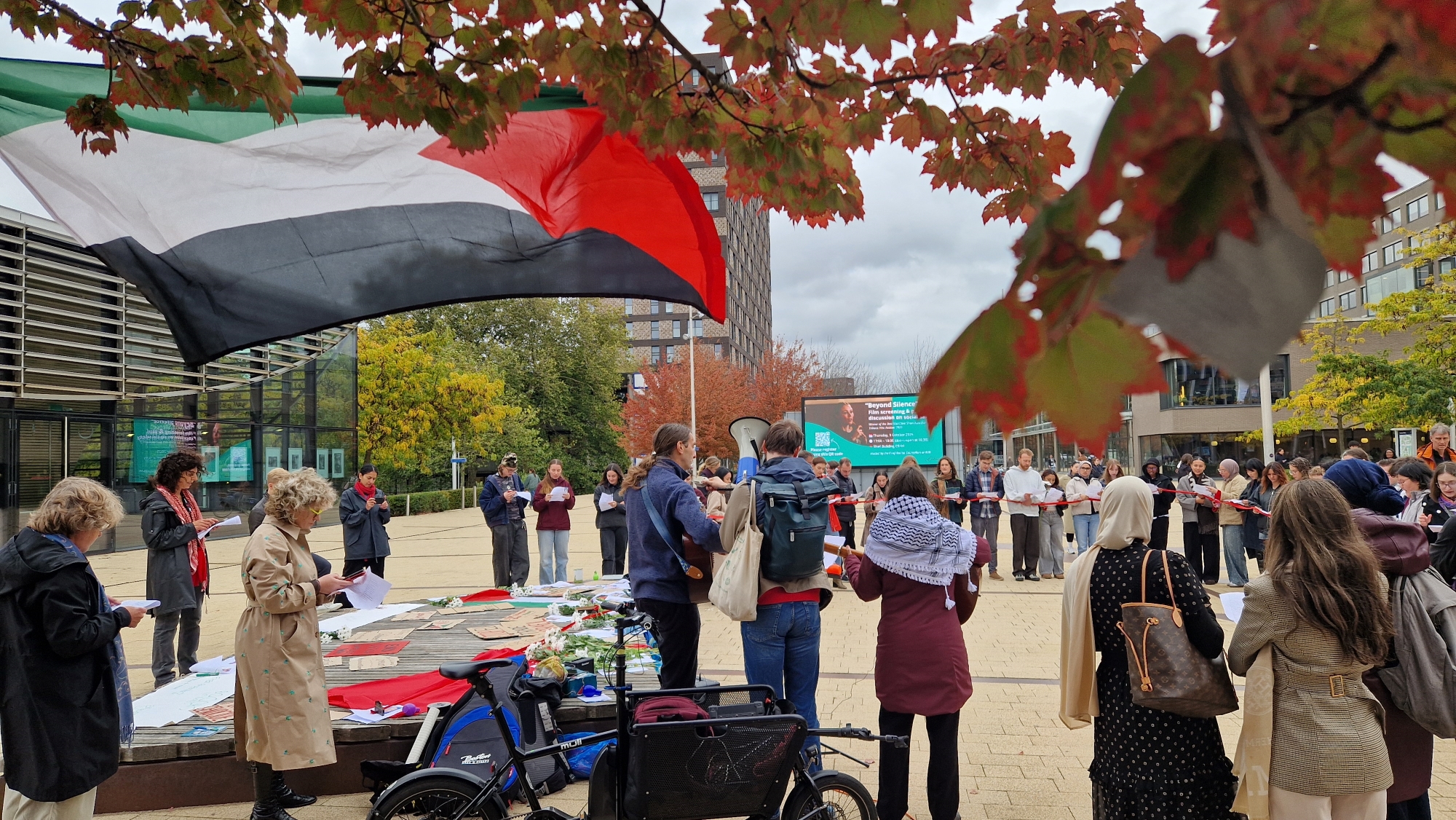
Sixty staff members and students paused work and study to draw attention to Gaza
Gepubliceerd op:-
Protest
-
A conflict concerning public statements by two professors about the war in Gaza has led to the termination of a PhD candidate’s contract at the Erasmus School of Law.
Read more
-
ESL PhD candidate loses position following conflict over Gaza statements
Gepubliceerd op:-
Staff
-
After losing his PhD position at ESL, the PhD candidate demands an interim injunction to obtain a new supervisor and regain his position at the law faculty.
Read more
-
Preliminary injunction of ESL PhD against university in Gaza case
Gepubliceerd op:-
In court
-
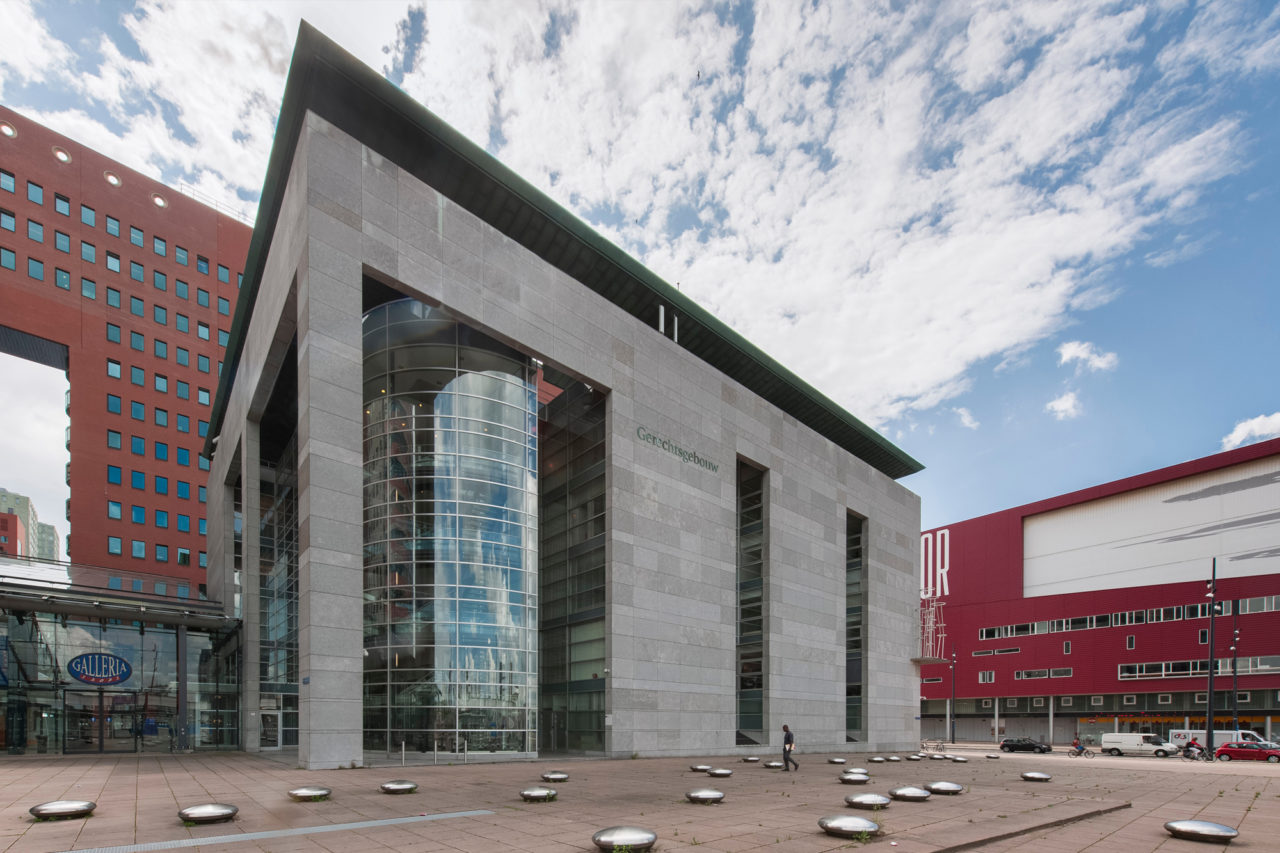
The interim injunction requested by PhD candidate Ahmed Maged is rejected, because according to the Rotterdam court there is ‘insufficient urgent interest’ to make a decision at this stage.
Read more
-
Preliminary relief for ESL PhD candidate in Gaza case rejected
Gepubliceerd op:-
In court
-
Latest news
-
Interest on student debt at highest level in 17 years
Gepubliceerd op:-
Money
-
-

Behind on repaying your student debt? DUO may soon pass the details on to your municipality
Gepubliceerd op:-
Politics
-
-

Extra funding for higher education does not keep pace with inflation
Gepubliceerd op:-
Education
-
Politics
-