Ad

Penalties for research misconduct are unfair, according to new dissertation

Young researchers are more often and more heavily penalised for research misconduct than professors, says PhD candidate Judith Zweistra-Immink. And the most serious scientific misconduct goes unreported.

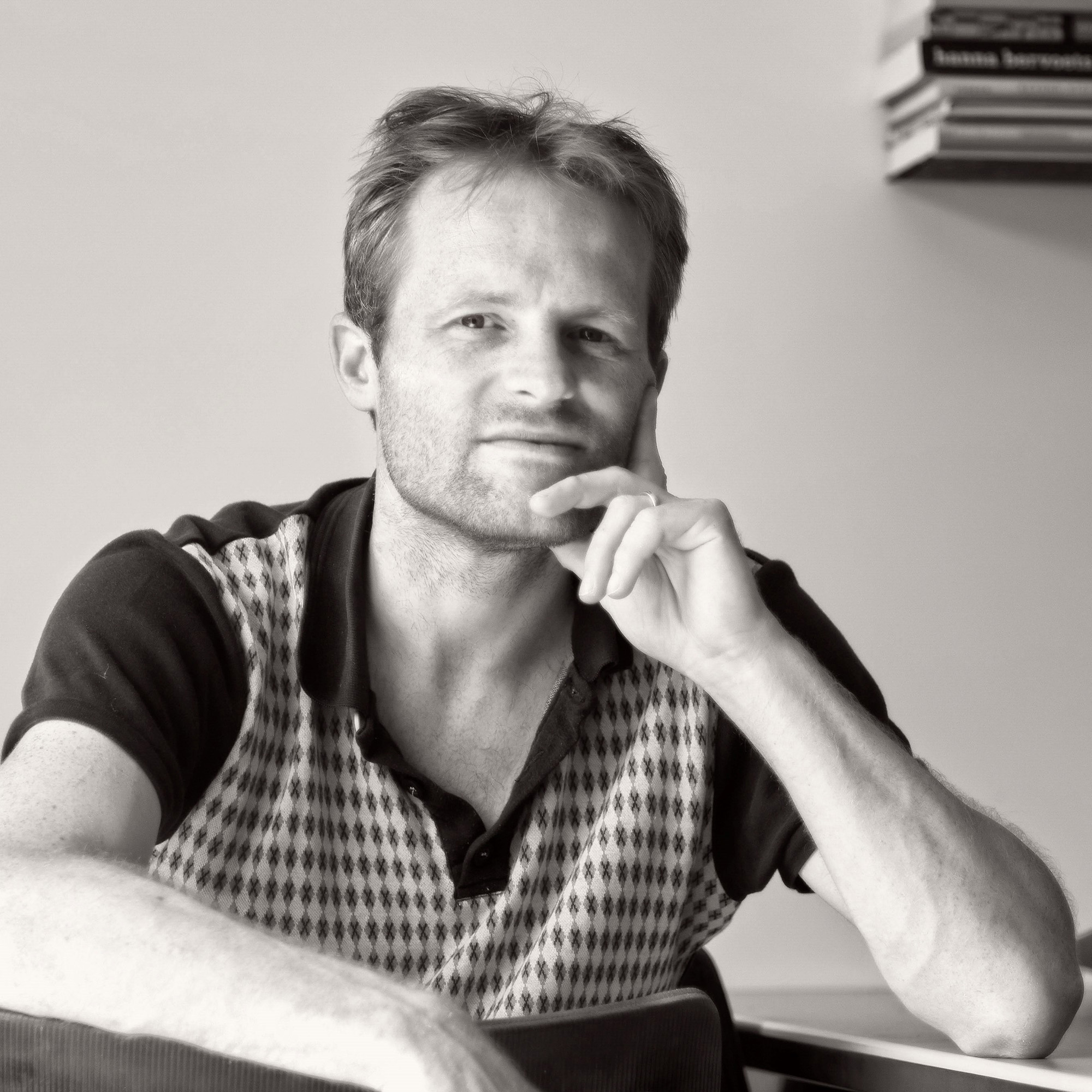
Image by: Esther Dijkstra
If you plagiarise in your research, you’re better off being a professor than a PhD candidate. The former often gets off more lightly, Judith Zweistra-Immink finds in her dissertation, which she will defend in Groningen on 23 November.
More than half of the PhD candidates caught plagiarising were no longer allowed to earn a doctorate, the lawyer counted as she went through integrity cases. By contrast, senior researchers were penalised under employment law in only about a third of plagiarism cases.
And that punishment was also milder – a formal reprimand or warning, for example. In effect, a professor gets a second chance, Zweistra-Immink says, while a PhD candidate’s academic career is nipped in the bud. After all, without a doctorate, there is no academic job to move on to. “Unjust”, she calls it on the phone.
These differences in sanctions are one of the weaknesses Zweistra-Immink identified in her research into scientific integrity procedures. “How fair is the system? And how legitimate? I tried to answer those questions.” Her conclusion: there is work to be done.

Judith Zweistra-Immink
Image by: Ebru Kesler
Zweistra-Immink was secretary of the National Board for Research Integrity (LOWI) for seven years. It handles integrity cases on appeal. Complainants or respondents can ask the LOWI for a second opinion if they are unhappy with the ruling of their institution’s research integrity committee (CWI).
The CWI is the first point of contact for people who want to make a complaint. The complaint may concern plagiarism, but also data manipulation or other forms of scientific misconduct.
You call the differences in penalties unfair.
“Yes. At least in cases of plagiarism, young researchers seem to be punished more severely than senior researchers. You would expect the opposite, because senior researchers are supposed to know the ropes. I did not see the case files, so I do not know whether the cases were comparable in seriousness. But the label ‘plagiarism’ in itself indicates that the matter is very serious.”
You saw very few cases involving the most serious breaches of integrity. Over ten years, only one complaint about fabricated data was upheld, and only five about data manipulation.
“That’s right, I saw a relatively large number of ‘minor cases’, which I also recognise from my time at the LOWI. For example, disputes over the order of authors on a scientific publication, or an incorrect title on the cover of a dissertation. It is strange that so few complaints are made about genuinely serious matters. Earlier research shows that these kinds of breaches of integrity do occur.”
What is the reason for that?
“I think an important reason is that university boards ultimately have the final say. The CWIs and the LOWI only issue an opinion: is the complaint justified or not? The boards make the final decision and may impose measures. I cannot prove this conclusively, but you can imagine that it makes people less likely to file a complaint. After all, boards have pretty much everything in their hands.”
Another barrier is that complainants and respondents sometimes know each other well, Zweistra-Immink adds. That, too, makes an integrity procedure difficult. “It can be quite intense for a young researcher to suddenly find themselves facing their professor, for example. They may have had a relationship with that person for years.”
'Boards have pretty much everything in their hands'
A recent example is the Majorana case at TU Delft, around 2021. It concerned two Nature papers in which the results of physics experiments were presented as too good to be true. The papers appeared to mark a breakthrough in the development of a quantum computer, and millions of euros were at stake. Former employees of the professor involved discovered the errors, but would rather not be complainants. The university board then took on that role.
In this case, the professor ultimately received a lighter judgement than the young researcher involved, a postdoc. In the case of the second Nature paper, the CWI found that both researchers had engaged in ‘questionable conduct’, but the Delft university board did not adopt that advice. Only the postdoc received a slap on the wrist.
Why do boards not always adopt an opinion?
“Most opinions are followed, but that does not always happen. Sometimes for good reasons, sometimes for improper ones. University boards may also take the institution’s reputation into account, for example.”
What can be done about this?
“I think people would be more likely to report suspicions of fraud if the procedure were more independent. One way to do that would be to make the opinions of the LOWI and the CWIs binding. Another option would be to set up regional integrity committees, instead of every institution having its own CWI. That would make the committees more independent of the institution concerned and would also bring greater consistency to the procedures. There are currently more than forty local sets of rules in the Netherlands.”
“Another idea is to appoint what is known as an institutional complainant, who screens reports and decides which ones should be investigated. That screening could save complainants and respondents from a long, unnecessary procedure – for example, if the issue is not actually a complaint about integrity but a disagreement in a scientific debate. An institutional complainant could also bring cases forward themselves and help set the agenda.”
A bit like in criminal cases? There, the public prosecution service acts as prosecutor, not the person who reports the offence.
“You could see it that way, yes. Although I would rather avoid comparisons with criminal law. Ultimately, integrity procedures in academia are more like a form of professional disciplinary law.”
And what happens after a case has been concluded?
“It would help if the measures for certain offences were clear in advance. For example, someone might be barred from supervising PhD candidates for a while after an offence, or receive a reprimand that goes on their personnel file. At the moment, there is usually nothing on paper, so the penalties are a black box.”
'It would be good if universities could revoke someone's doctorate'
Integrity reports are anonymous. Should that anonymity be removed?
“I think that would be a good idea, at least when breaches of scientific integrity have been established. You want serious offences to be known, at least within academia.”
That might prevent people from moving from one place to another without anyone knowing what they have done, as in the recent case of a former associate professor in Nijmegen.
“For example. It would also be good if universities could revoke someone’s doctorate in such a case. The title acts as a passport to an academic career around the world. That would require a change in the law, because at present a doctorate can only be revoked if someone has committed fraud in their dissertation.”
Should we abandon self-regulation and appoint an external watchdog, perhaps under the ministry?
“No, that seems like a bad idea to me, especially with academic freedom in mind. That freedom could come under pressure if the government decided integrity cases. Self-regulation is a great asset. That is why institutions need to professionalise their approach in this area. There is now a lot of attention on workplace culture and prevention, but less on how integrity cases are handled. Yet that is precisely what the public sees.”
60 per cent of universities of applied sciences and universities receive no integrity complaints
Between January 2012 and May 2023, twenty research institutions, mainly universities and university medical centres, handled a total of 220 complaints, according to Zweistra-Immink’s survey.
During that period, 37 of the organisations surveyed did not handle a single integrity complaint. These were mostly universities of applied sciences and small research institutes such as Utrecht’s Theological University.
Of the 220 complaints, 95 were upheld in full or in part, or 43 per cent. A third of these concerned a breach of scientific integrity – the most serious category of offence. In the other cases, the respondent was found guilty of ‘questionable conduct’ or a ‘minor shortcoming’.
In more than a third of cases where a complaint was upheld, no action or penalty followed. Where action was taken, it was usually a correction or retraction of a publication (twenty cases). Eleven people received an employment-related sanction, such as dismissal or demotion.
Een lijst met artikelen
-
New code of conduct for science emphasises ‘distinctiveness and autonomy’
Gepubliceerd op:-
Science
-
De redactie
Comments
Ad
Read more in Science
-
Mathematics turned upside down by AI: ‘Perhaps we’ll need more mathematicians after all’
Gepubliceerd op:-
Science
-
-

Student or scientist may soon pitch a groundbreaking idea to Defence
Gepubliceerd op:-
Science
-
-
Eleven countries launch their own platform to break the power of commercial scientific journals
Gepubliceerd op:-
Science
-

Leave a comment