Ad

Young people increasingly reluctant to take on board roles
Clubs, student associations and youth interest groups are struggling to find new members for their boards. Enthusiasm has dropped sharply, warns the National Youth Council.
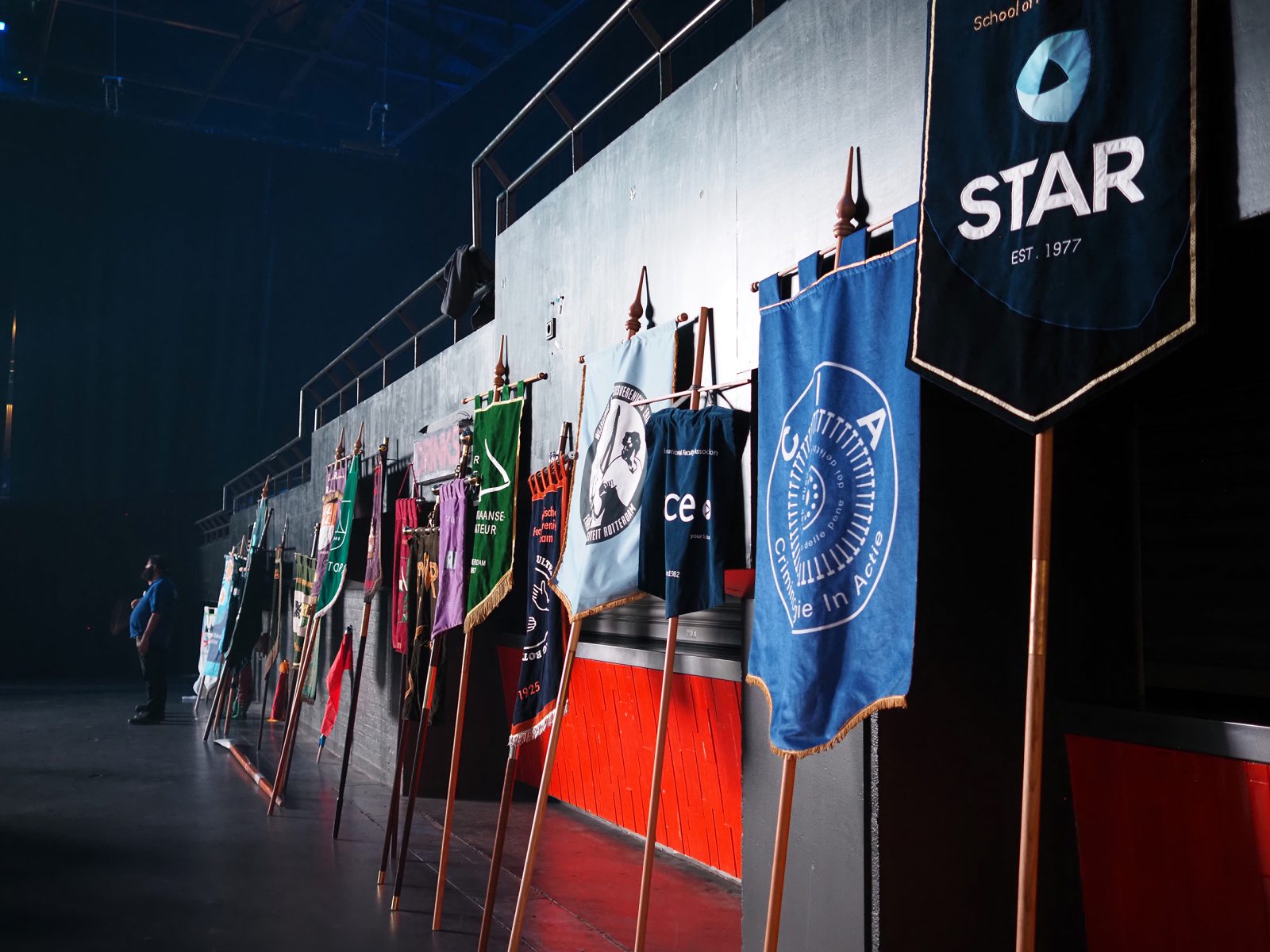
Banners of the associations at the opening of the Eurekaweek.
Image by: Tessa Hofland
Student parties, excursions, debates, sports matches, performances, introduction weeks and student representation are all organised by young board members. Without their commitment, little would happen, stresses the National Youth Council (NJR).
Yet 33 per cent of organisations are missing at least one board member. For 10 per cent, the shortage amounts to two or more board members, according to an NJR survey.
Stress
The Youth Council does have an explanation for the lack of new student board members: “Financial stress and performance pressure simply make a board year unfeasible for many young people”, says NJR chair Lotte Prins.
And according to the NJR, this is not only a loss for student life, but for society as a whole: “A board year produces capable administrators and engaged citizens”, Prins says. Prospective prime minister Rob Jetten also did board work, the press release notes, as did opposition leader Jesse Klaver.
Decline
Seven years ago, the NJR also assessed the situation. The same problems were already present then, but they have since worsened. Enthusiasm for board work is declining, the comparison shows.
Chair Sarah Evink of the Intercity Student Consultation (ISO) recognises the picture: “Every year it is uncertain whether student organisations can continue to exist, while they are so important for students’ social life and mental health”.
Last August, the ISO wrote a letter about this to the Minister of Education, which has not yet been answered. Evink hopes the new coalition will take action.
Of the young board members, 63 per cent have a part-time job to make ends meet, the NJR reports. A substantial proportion struggle financially. Not all of them receive a board grant or allowance.
As a result, student board members often have to borrow extra while facing a higher risk of study delay, says ISO chair Evink. They sometimes also have to pay tuition fees for courses they do not attend. “It is high time this changed”, she believes. “Running a board without paying tuition fees should become the norm, and the compensation for this important work must increase significantly.”
Coalition
The new minority coalition has promised to increase the basic grant for students living away from home. The agreement also states: “We encourage excellence and urge students to make the most of their time as students.” What this will mean for student life remains to be seen.
Read more
-

Four years without a complete board: declining interest in board and committee work in Rotterdam
Gepubliceerd op:-
Student life
-
De redactie
Comments
Comments are closed.
Ad
Read more in Student life
-
18-year-old student dies after ‘hazing party’ in France
Gepubliceerd op:-
Student life
-
-
Jasper has lost his carefree outlook since the attack on Erasmus MC, but the experience will make him a better doctor
Gepubliceerd op:-
Mental health
-
-
Government sets aside millions extra for student accommodation construction
Gepubliceerd op:-
Housing
-