Ad

Four years without a complete board: declining interest in board and committee work in Rotterdam
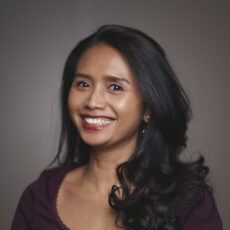
Student associations are struggling to find enough board and committee members. The problem exists everywhere: from study to sports associations. This results in incomplete boards, higher workloads and more costs to keep associations running, investigation by EM shows.

Image by: Sonja Schravesande
Student associations form an important part of student life. They organise social events, help students take their first steps on the job market, or provide support through educational activities. “Without associations, there would be far less connection between students”, said Vigo Wijers, former chair of study association STAR. “Because of the study association, I really feel at home here”, added Anna Biesiedina, secretary of Erasmus Student Network (ESN).
Due to declining interest in board positions, associations are at risk of disappearing. In August, national student organisations warned about this in an urgent letter to Eppo Bruins, who was Minister of Education at that time. The same concern is shared by board members of study associations in Rotterdam. In June, they raised the alarm about the falling interest among students in joining boards. In a letter to the Executive Board, they wrote that the situation is more pressing than ever. To reverse the trend, University Council members from OUR Erasmus argued that students who complete a board year should be awarded study credits.
Wijers was one of the authors of the letter to the Executive Board and experienced the problems first-hand. “You spend a whole year recruiting successors. Early in the year you already start talking to members to see who is interested or not”, he explained. Where normally nine board members are needed, he managed to find only eight candidates this year. “They’ll soon have to divide the work of nine among themselves”, he sighed.
Reluctant
For this investigation, EM talked to a third of all the university’s associations. Some were reluctant to share information about their situation, fearing that even fewer students will apply for board and committee roles next year. Others were more open, hoping for a long-term solution.
Thirty of the 33 board members interviewed by EM said they notice a declining interest in board and committee work. At ESN, too, it took a while to fill all the board positions this year. In the end, someone who had actually applied for a different position was asked to fill one of the positions, says secretary Anna Biesiedina. She does not want to say which position no one applied for. The same thing happened at sports association Erasmus Extreme. “There was only one candidate for a specific position, but they turned out not to be suitable. So we had to look for another candidate”, a board member wrote by email.
‘The association cannot run without the main board, so former board members made the choice to stay’
No successors
Eight of the 33 associations in this investigation are operating without a full board this academic year. Football club Antibarbari has not had a complete board for four years. This year only five new board members are fulfilling the tasks that are normally done by eight people. The club has been unable to find candidates for secretary and treasurer, even though the statutes state that chair, secretary and treasurer are mandatory positions. “The association cannot run without the main board, so former board members made the choice to stay”, explained chair Chiara Klerkx.
With fewer people, the association must outsource more tasks and bear extra costs, for example for cleaning the clubhouse. “Instead of the board arranging it, we now hire a cleaner”, said secretary Isabelle Schaap.
Another example is Faector, the association for Econometrics students at the Erasmus School of Economics. For a while, it could not find any successors at all. “So last year’s board stayed on during that period”, said a former board member. For next year, the association has found a solution. “We have opted for a different structure than a traditional board, namely a group of ten enthusiastic members who will share the organisational responsibilities of the board part-time”, he explained. “This way Faector will be able to have a normal year.”
Committees also understaffed
Study association Aeclipse, also from the Erasmus School of Economics, has managed to fill its board completely, but is struggling to recruit committee members. As a result, they have to organise events with fewer people. “In such cases, board members often step in to help with the organisation”, chair Liora de Lange wrote by email. The same problem exists at ESN. For example, the association lacked enough guides for its own introduction week, which took place right after the Eurekaweek. Active members therefore asked their friends to help out.
At squash association Tick in the Nick there has also been a decline, said secretary Matthijs Klaassen. The squash players had to merge two committees due to lack of interest. Basketball association Baros has seen a 15 per cent drop in applications for committee roles. “This makes the daily work of board members much heavier”, said chair Augustin de Menibus. According to him, this creates a vicious circle: the more intense the work is, the fewer students apply, and the bigger the problem becomes.
Board year unattractive
Lack of money and time are cited as the main causes of the problem. With sky-high rents, ever-increasing tuition fees, very weak purchasing power, only four years of student grants and public transport passes that are valid for just four to five years, extending studies is not attractive. “For example, with the threat of a slow-progress penalty last year, the government is making a board year seem unattractive”, said Schaap of Antibarbari. ESN’s Biesiedina confirms this. “I know many students whose parents only pay their rent. They have to work to support themselves. For them, a board year is impossible.”
This view is shared by Frederieke Hoitink, programme maker at Studium Generale, who keeps close contact with cultural associations. “Students find it difficult to combine board positions with working and studying. They don’t get time off from their studies, and the board year grant is so small that they still have to work on the side. Study pressure is rising, so there is little time. Some students prefer a paid job over doing voluntary work for an association.”
‘I think I’ve been working about 30 to 35 hours a week on board duties alone these past weeks, and that’s on top of my studies’
Many hours
An incomplete board leads to higher workloads for active members. The board of football club Antibarbari works part-time, but with all the extra tasks they take on, such as cooking for members, the board members are still at the club every day. With such a workload, Baros chair De Menibus understands why board positions are unattractive. “I think I’ve been working about 30 to 35 hours a week on board duties alone these past weeks, and that’s on top of my studies.”
Still, board members emphasise that a board year is a valuable experience. “You learn so many more skills during a board year than you ever would in class”, said ESN’s Biesiedina. Schaap of Antibarbari agrees. “In my role I have a lot of contact with major organisations, such as the Dutch football association KNVB. I have to hold meetings, sign contracts or secure sponsorship deals, for example. These are skills you need later as well.”
Not a problem everywhere
Not every association has to deal with the problem. At the traditional student societies the drop in interest is not so bad. Laurentius, RSC/RVSV and RSG have noticed a slight decline in applications, but have no problems filling board and committee positions. Things are also going well at Enactus and study association EFR: they actually received more applications this academic year than in previous years. Applications at B&R Beurs are also proceeding smoothly.
Why is it different at these associations? “I think we are more accessible because we offer more freedom than the average study association”, said Ewout Schulpen, chair of B&R Beurs. “Unlike most associations, which have a clear script for their annual programmes, we have carte blanche. So as a board you can shape the year according to your own creativity and capacity.”
De redactie
-
 Feba Sukmana
Editor
-
 Nora van der Schoor
Video editor
Latest news
-
TU Delft may not favour women in admissions to courses
Gepubliceerd op:-
Education
-
-

Hate campaigns and political pressure: KNAW wants legal protection for academic freedom
Gepubliceerd op:-
Science
-
-
Signing up for a Dutch course ‘feels like a race’, no more places available for now
Gepubliceerd op:-
Internationalisation
-

Comments
Comments are closed.
Ad
Read more in Student life
-
RSC/RVSV accused of poo stunt targeting student houses in Utrecht
Gepubliceerd op:-
Student life
-
-
Carolina could wake up ten minutes before her lectures
Gepubliceerd op:-
Housing
-
-
No joint introduction week for vocational, applied sciences and university students for now
Gepubliceerd op:-
Eurekaweek
-