Ad

Academics with young children were especially affected by lockdown
The first lockdown of the coronavirus crisis had a substantial impact on researchers. In particular, female researchers with young children experienced problems, according to a new report.

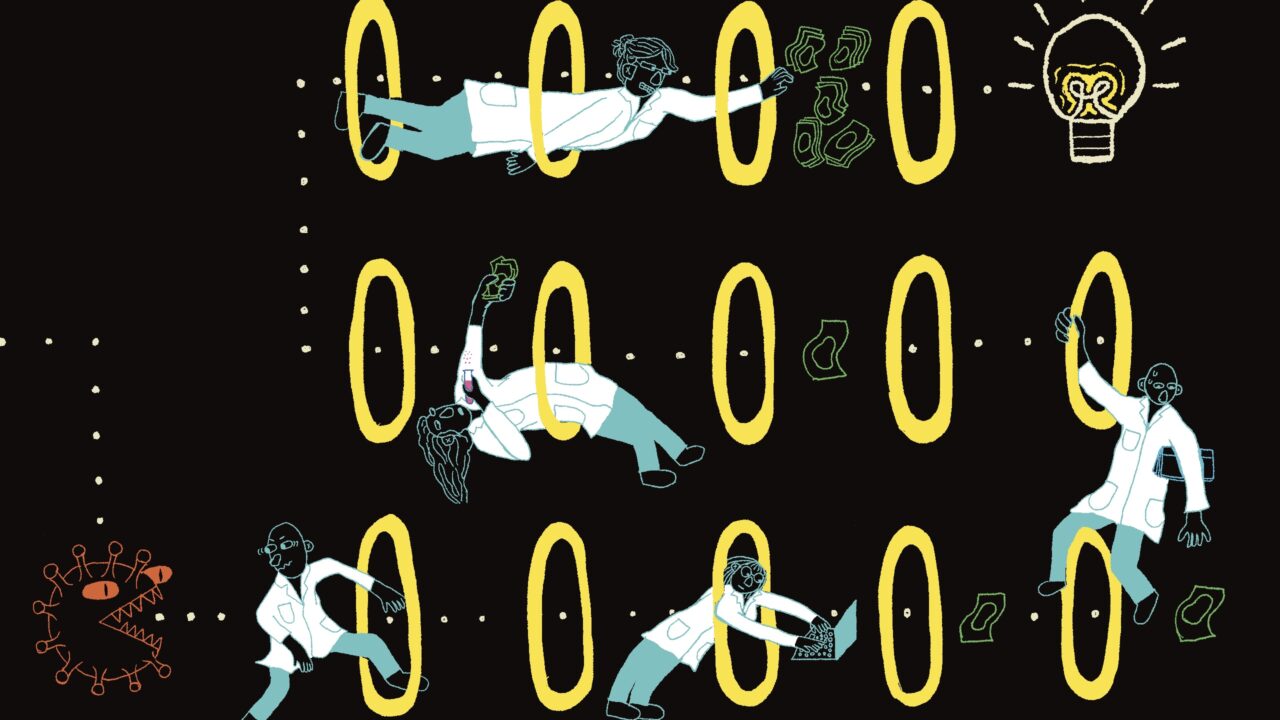
Image by: Bas van der Schot
It seems even longer ago, but the coronavirus crisis started only in March last year. Suddenly all doors were closed and teaching had to take place online. Narratives, warnings and open letters indicated that working from home did not always go well.
But researchers wanted to know more about this. What effect did the coronavirus crisis have on researchers on all steps of the career ladder?
In early September 2020, all 34,000 researchers at Dutch universities received a questionnaire aiming to survey the impact of the lockdown. More than 17 percent (5,920 researchers) completed it.
Young and female
- One in five EUR-PhD students were offered a ‘dubious contract’ last year
- ‘We want to remove the sources of stress wherever possible’
- Diversity Officer asks Minister to grant PhD students an additional year to complete their theses
The survey is from the Young Academy and the Dutch Network of Women Professors, which says something about what the pollsters suspected: mainly women and younger researchers were likely to be adversely affected by the lockdown.
And the report confirms that. Many researchers with young children had difficulty conducting adequate research from home, and that effect was even stronger among women.
The difference between men and women is not so great but the women are younger and are more likely to have a temporary contract. The impact on their career could therefore be greater, the pollsters suggest.
And there are more differences too, all of them understandable. For example, foreign researchers experienced more stress about the progress of their research than their Dutch colleagues. And more than half of the PhD students, postdocs and tenure trackers (all on a temporary contract) expected their own research to be delayed.
Recognition and reward
The conclusion is to make sure that the careers of specific groups of researchers are not damaged by problems arising from the coronavirus crisis. So don’t look only at the results of their research but also at the circumstances in which they came about. That is in line with the trend of ‘recognition and reward’ in the academic world, where assessments of researchers should be made in a less ‘statistical’ manner.
On Friday, the pollsters are going to discuss this at an online meeting of the Royal Netherlands Academy of Arts and Sciences, the second in a series of four meetings about the impact of Covid-19 on science.
De redactie
Latest news
-
‘I am Jane Doe’, say thousands of women after Cornell University rape case
Gepubliceerd op:-
Nieuws
-
-

No joint introduction week for vocational, applied sciences and university students for now
Gepubliceerd op:-
Eurekaweek
-
-
Talent strategy takes shape: plenty of ‘self-management’, freedom of choice of study remains intact
Gepubliceerd op:-
Education
-
Comments
Comments are closed.
Ad
Read more in Science
-
The emotions of science (and scientists) are palpable during theatre performance DOPE
Gepubliceerd op:-
Culture
-
Science
-
-
‘There should be a minimum age for fatbikes’
Gepubliceerd op:-
The Issue
-