Ad

The emotions of science (and scientists) are palpable during theatre performance DOPE
For the new theatre performance DOPE, scientists, a theatre company and a dance company show the impact of drug trafficking on everyday life. The result is an ’emotional and human’ story that also pushes scientists out of their comfort zone.
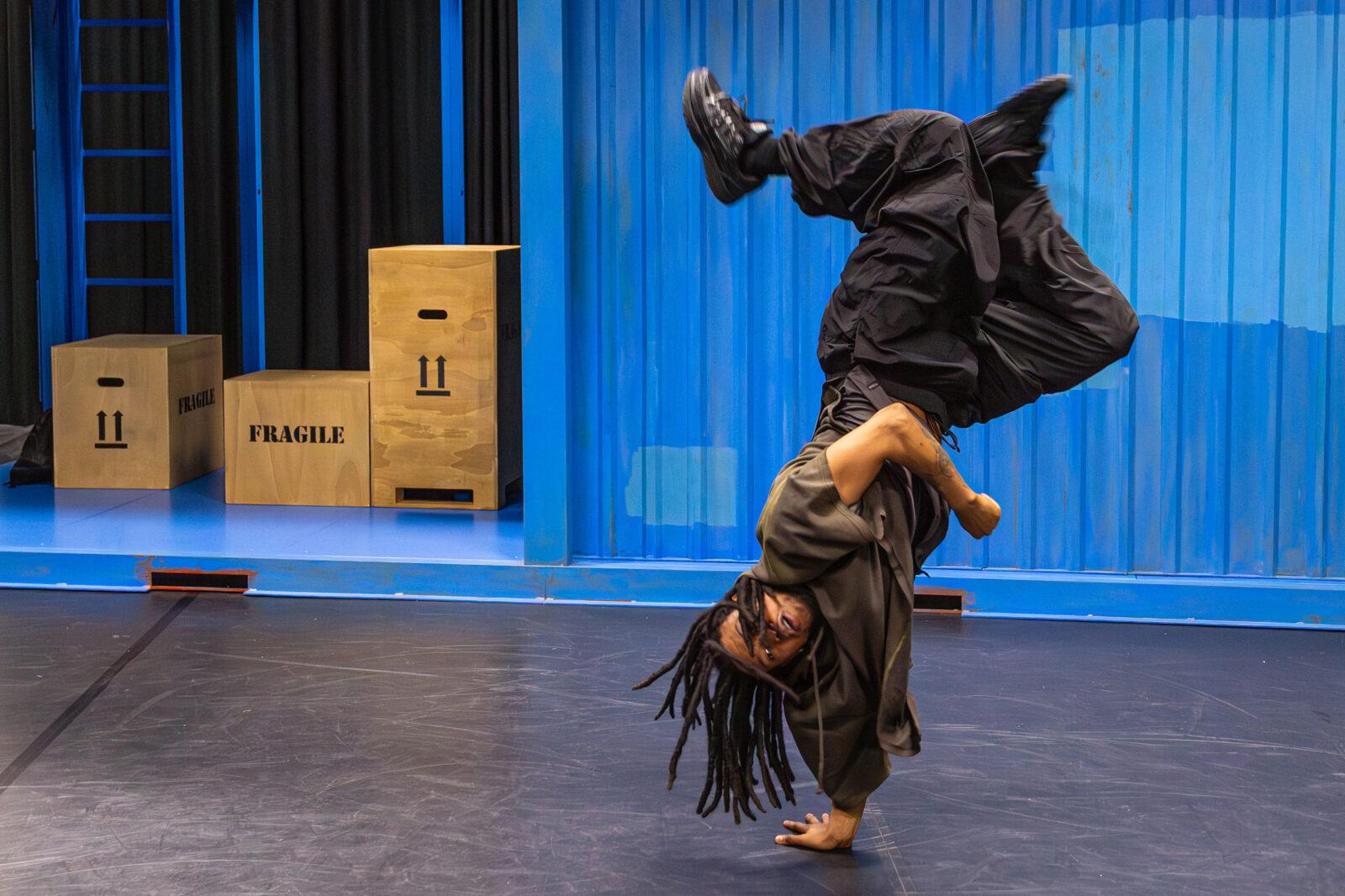
Image by: Pien Düthmann
Within seven minutes, Robby Roks raps about his research into drug crime in Rotterdam: getting ever closer to his subject, until he comes face to face with half a kilo of cocaine and asks himself whether he’s gone too far. The reality of scientific research cannot always be captured in a presentation or lecture. University research extends beyond the campus: it gets under scientists’ skin, touches people with lived experience and comes to life in the theatre.
The impact of drug trafficking
The performance DOPE premieres this week at Theater Zuidplein. Two actors and two dancers portray the impact of drug trafficking on their everyday lives as a container thief, parent, customs officer and drug user. In the foyer before each performance, researchers will share their experiences from the field. They will give short, self-created solo performances, known as container stories, in a range of forms: from a board game to an animated film or a rhyming parable. It is a collaboration between theatre company Wat We Doen, dance company Lloydscompany and the FORT-PORT research project.
FORT-PORT, short for Focusing On the Right Things in the Port Of Rotterdam, researches the impact and combat of cocaine trafficking and human smuggling. It is a collaboration between the EUR, Delft University of Technology and Utrecht University, involving scientists from criminology, mathematics, computer science and history. Eleven FORT-PORT scientists are involved in the performance DOPE.
Science on stage
Wat We Doen is a company that begins each performance with extensive research. Artistic director Floris van Delft explains his approach: “During a good creative process, I catch myself becoming aware of my own blind spots. I talk to people who represent different perspectives. Then I realise I had a strong assumption that shifts when I sit opposite someone, until I’m simply no longer sure how things really stand. I try to create that feeling for the audience too.”
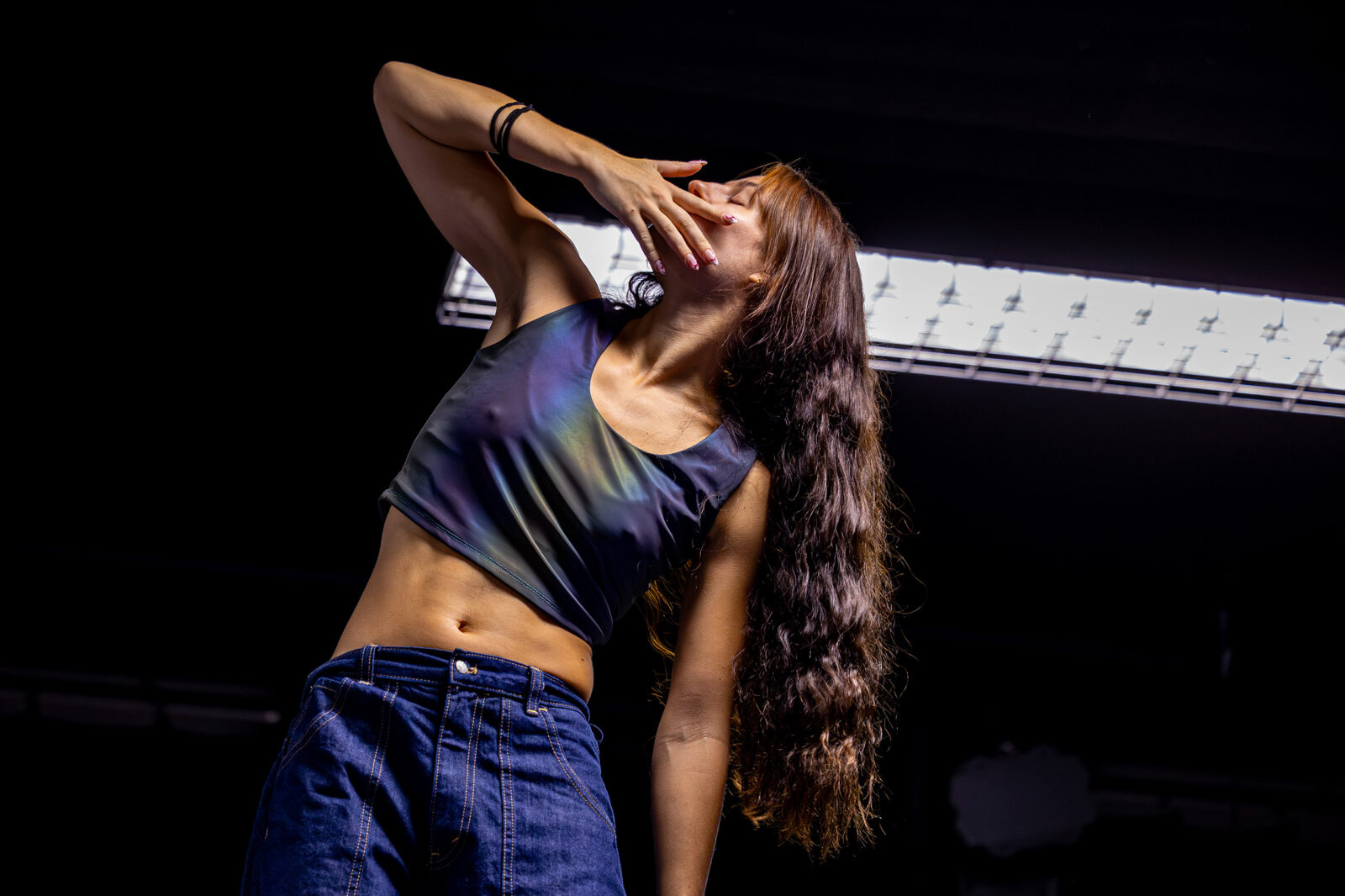
Image by: Pien Düthmann
Robby Roks was involved as a scientist in an earlier Wat We Doen performance and saw an opportunity for a collaboration between FORT-PORT and the company. “We were working on a major grant application, and as part of that you also have to think about impact: how do you translate scientific insights into forms that are accessible to a wider audience and can contribute to public debate?”
Floris van Delft made that translation. “Most of the research is hidden within the performance”, he says. “You see it above all in the complexity of the problem. It is an emotional and human story that takes you into the breadth of the subject. The characters struggle to find the right path. Of course, you can easily say: ‘Don’t take anything out of that container’, but if there’s no money at home, the situation becomes much more complicated.” Unlike a lecture packed with facts, the collaboration produced a script that makes the reality tangible. Hip-hop choreographer Lloyd Marengo worked on the performance. His dance helps give shape to that emotional complexity.
Playing with frustration
Before each performance, three or four scientists perform their container stories, followed by an opportunity for discussion. In short solos, they share professional experiences and dilemmas as scientists.
Criminologist Karin van Wingerde wrote a monologue about her frustration with the way crime is tackled. “All kinds of things are being developed: yet another project group, an offensive, a measure, task force or intervention. We call that interventionitis: a lot is happening, but it is too fragmented. No one is looking at what already exists and what really works.”
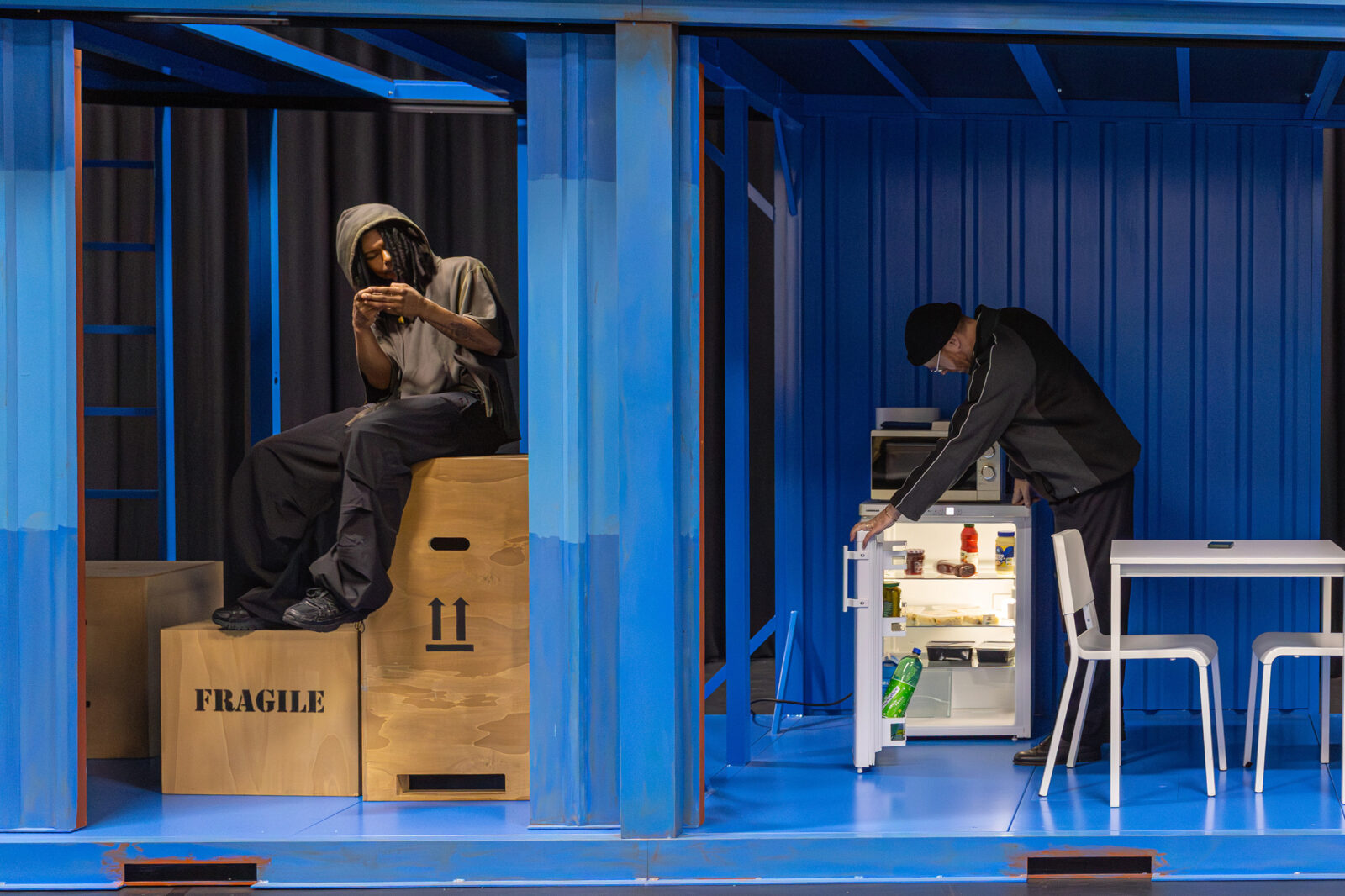
Image by: Pien Düthmann
She wrote the text herself and was supported by Van Delft while developing the solo. “It’s different from the way I normally teach a class: I’m really acting. There’s exaggeration, and I portray myself as frustrated. I cover myself in Post-it notes, as if another brainstorming session has just taken place.”
The container stories connect research with the scientists’ own experiences. Robby Roks raps about the ethical dilemmas of ethnographic research. How close can you get without putting yourself in a difficult position? “I came face to face with half a kilo of cocaine. In my rap, I reflect on the ethical dilemmas involved.” He made the track with Rotterdam rapper Winne and producer Beat Smith. “I’ve secretly always wanted to do this.”
Vulnerable impact
Both Van Wingerde and Roks had to step outside their comfort zones. As scientists, they are naturally experienced in speaking in public, but their experience with performing has put that to the test. Van Wingerde says: “There’s a lot of vulnerability in my solo. Unlike a class, it makes clear that there isn’t just one right answer. I hope students find that useful and that it makes conversations about drugs less fraught.”
DOPE premieres on 3 October at Theater Zuidplein and will then tour other theatres in Rotterdam and across the Netherlands. The performance will be staged twice at the Erasmus Pavilion on 8 December.
Een lijst met artikelen
-
With this theatre show, cybersecurity expert Bernold Nieuwesteeg hopes to finally wake everyone up
Gepubliceerd op:-
Artificial Intelligence
-
Culture
-
De redactie
-
 Giselle Maria Timmers
Columnist
Comments
Ad
Read more in Science
-
‘There should be a minimum age for fatbikes’
Gepubliceerd op:-
The Issue
-
-
Dutch people increasingly believe AI cannot help advance science
Gepubliceerd op:-
Artificial Intelligence
-
Science
-
-
‘If anyone should be thinking about the effects of AI on society, it is scientists’
Gepubliceerd op:-
Artificial Intelligence
-
Science
-
Leave a comment