Ad

Chair Chinese students association: ‘Discrimination is next level since corona’

“We Chinese people tend not to speak up”, says Jingli Gao, the president of the Chinese Student Association at EUR (CSA-EUR). “Discrimination has always existed, and the Chinese are not the only victims. But things have been ‘next level’, or even two levels worse, since the coronavirus emerged.” The student association has called on people to sign the ‘We are not viruses!’ petition and so to take a stand against racism.
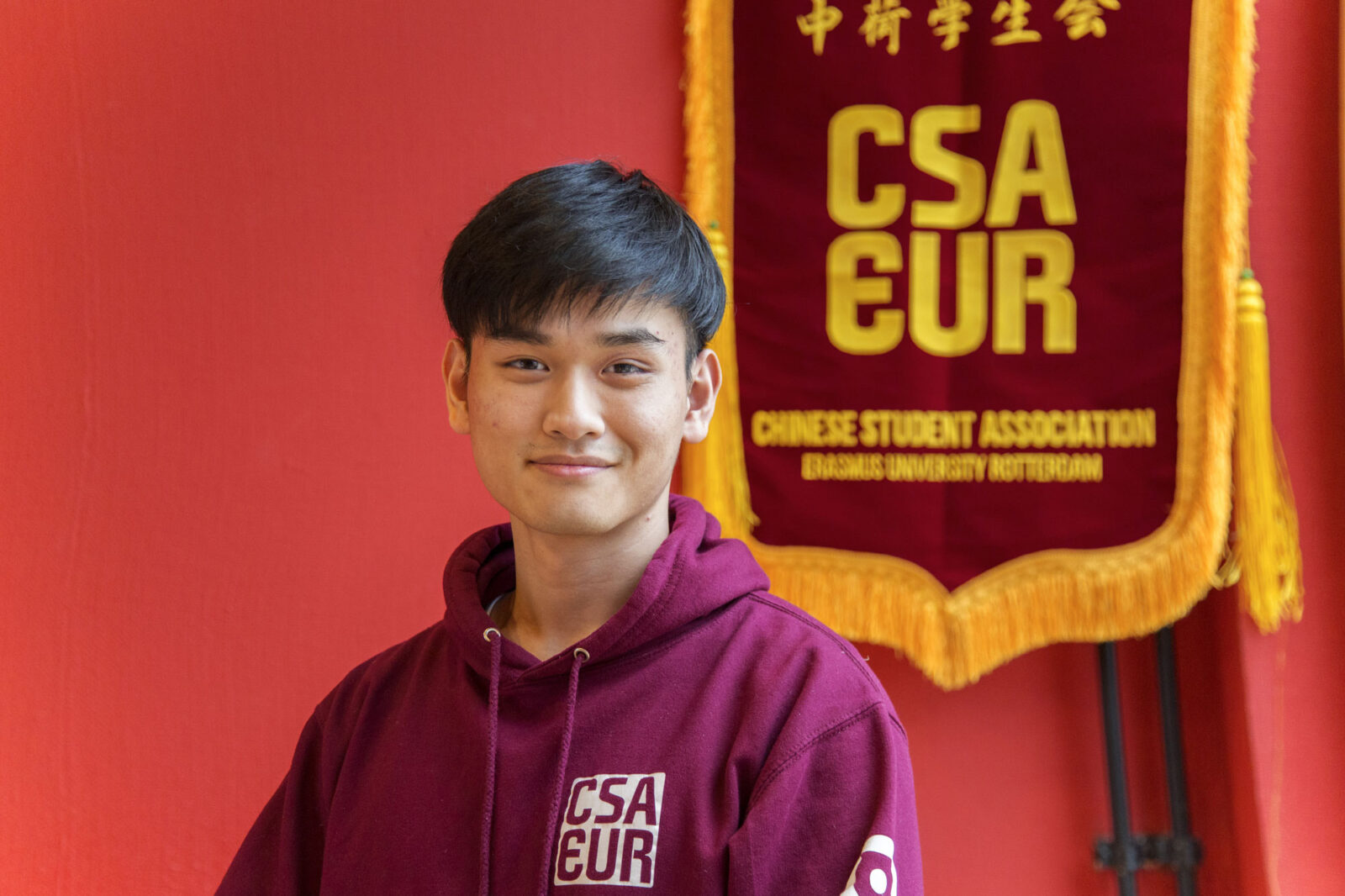
Jingli Gao
Image by: Aysha Gasanova
More about the coronavirus
- Student’s parents stuck in Corona-stricken Wuhan
- ‘We can expect more outbreaks like the coronavirus’
- University advises: do not travel to China
Gao says it hurts him to see Chinese people and other people with an Asian background encounter more and more discrimination. He thinks it would help if the media painted a less one-sided picture of the situation. According to Gao, Western news outlets are giving people the idea that the situation is extremely grave everywhere, but actually, it is not that bad everywhere. In the part of China where his family lives, life is going on as usual, but the news only shows villages where life has ground to a halt. “In China there are doctors who are working so hard on a cure that they are fainting, but the rest of the world is ‘joking’ about the Chinese and the coronavirus.”
Just stay at home
21-year-old Gao has heard quite a few stories about increasing discrimination. The student association has members in several countries, and many of them are sharing stories on WeChat. “An extreme example from the USA is a note stuck to the entrance to a restaurant: ‘No Chinese’.” Something similar happened last weekend at a student flat in Wageningen, where someone wrote ‘Die Chinese’ on the walls. Gao has not encountered anything like that at EUR. However, he is hearing a lot of stories about increased levels of racism in daily life. Members of the association have told him that people start yelling ‘corona’ whenever they board a tram. Others have been accosted by people on the metro or in supermarkets.
Gao feels less safe in Rotterdam’s streets now. Normally, he likes to go outside after dinner, but now he is avoiding the risk. “People might accost me in the street again or call me names. And I’m not the only one who feels that way.”
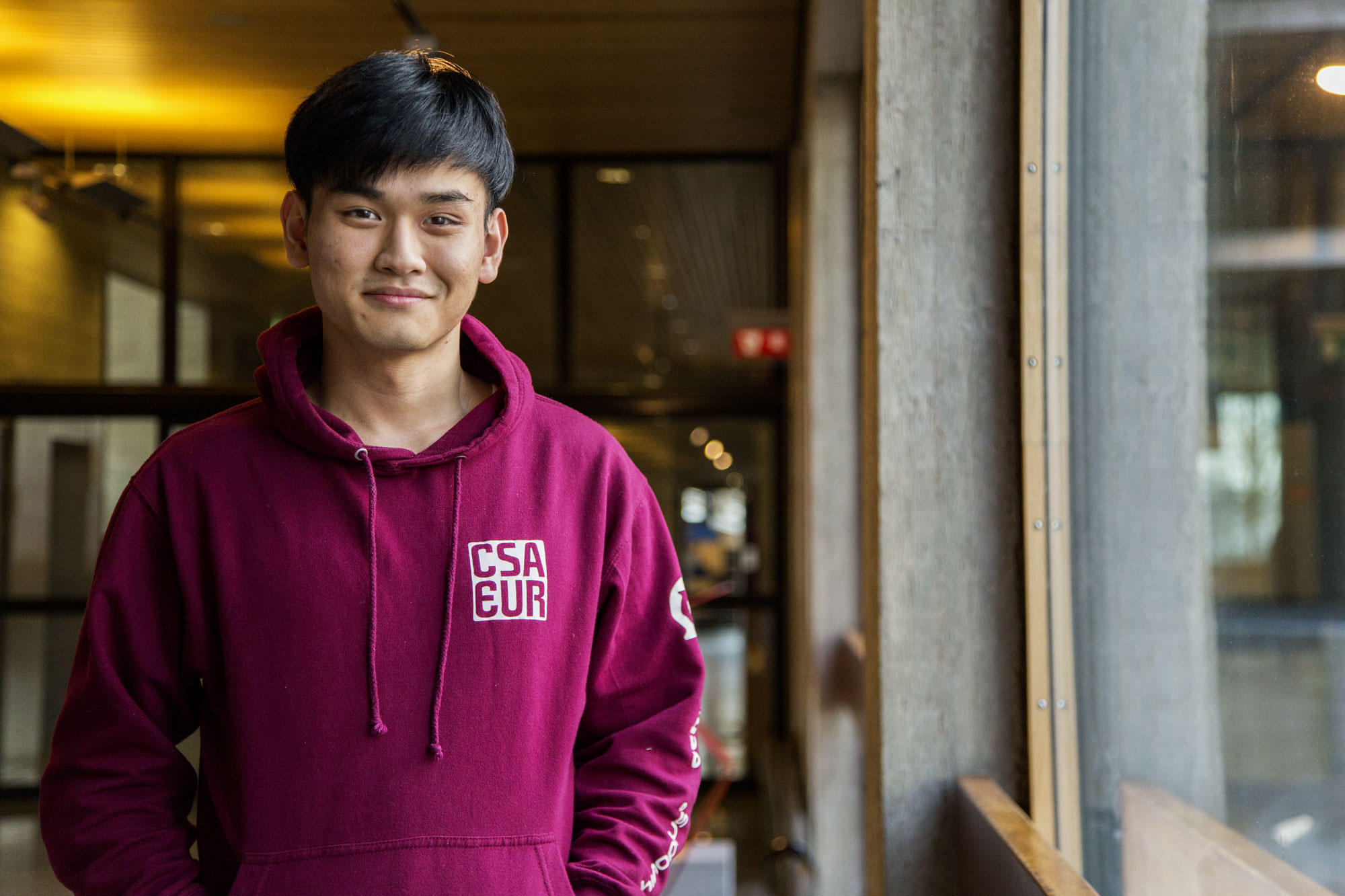
Image by: Aysha Gasanova
Worse
“I feel most of all for children who look Chinese. They are mentally not as strong yet as we adults are.” Gao tells us that he experienced a fair bit of discrimination as a child, and that he has learned not to take it to heart, but that being associated with a disease is a lot worse.
“I think that a lot of people who grew up in the Netherlands will recognise this,” says Gao, telling us about the discrimination he encountered as a child. “At primary school they’d sing this song called ‘Hanky Panky Shanghai’. I was always asked in a pseudo-Chinese accent if I wanted some chili sauce with my food, or called ‘spring roll boy’ by my classmates. Like so many of us, I thought, don’t bother arguing with them, because it’s no use telling them off.”
Read more about the coronavirus
-
Student’s parents stuck in Corona-stricken Wuhan
Gepubliceerd op:-
Internationalisation
-
De redactie
-
 Tessa Hofland
Editor
Latest news
-

New code of conduct for science emphasises ‘distinctiveness and autonomy’
Gepubliceerd op:-
Science
-
-

Executive Board regularly uses AI for speeches and LinkedIn posts
Gepubliceerd op:-
Artificial Intelligence
-
Governance
-
-
TU Delft may not favour women in admissions to courses
Gepubliceerd op:-
Education
-

Comments
1 reactie
Comments are closed.
Ad
Read more in Student life
-
RSC/RVSV accused of poo stunt targeting student houses in Utrecht
Gepubliceerd op:-
Student life
-
-
Carolina could wake up ten minutes before her lectures
Gepubliceerd op:-
Housing
-
-

No joint introduction week for vocational, applied sciences and university students for now
Gepubliceerd op:-
Eurekaweek
-

Nathan de Arriba-Sellier op 13 February 2020 om 14:23
Just wanted to wish good luck and courage to all Asian students who may be subjected to discrimination on and off campus, and particularly to Chinese students who already have to suffer from the anxiety of what is happening at home.