Ad

Why these scientists are keen to work with the Ministry of Defence
Dutch universities want to work more closely with the Ministry of Defence. For some scientists, this is controversial; for others, it is part of everyday life. How different is their work from other research, and where do they draw the line? Three scientists talk about their collaborations.
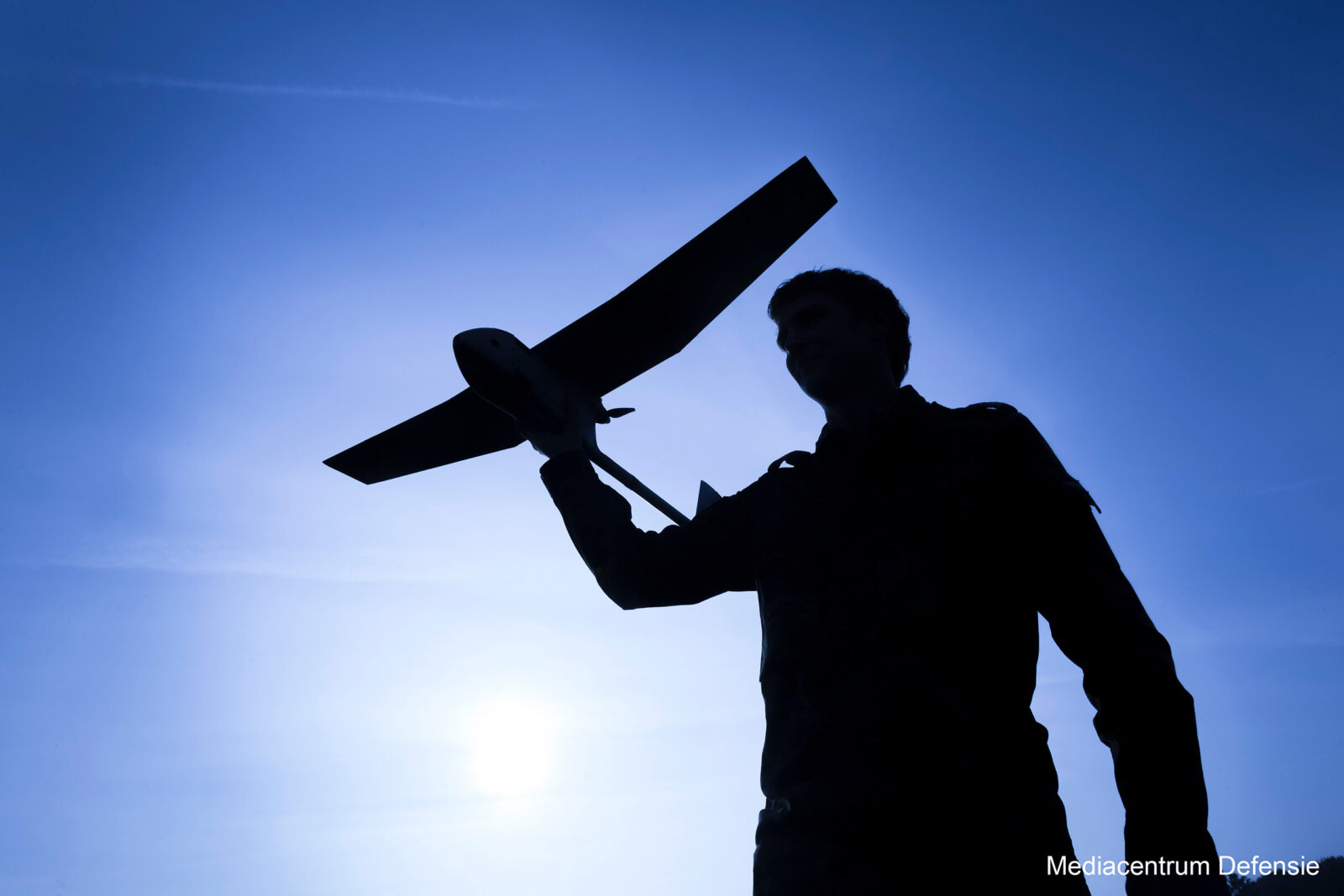
Image by: Mediacentrum Defensie
Albert Wagelmans, professor of Management science at the Erasmus School of Economics, makes no secret of it. The relationship between his field, operational research, and the Ministry of Defence goes back a long way: his discipline originated during the Second World War. “The military wanted to know how they could be 95 per cent certain that a bomb would hit its target. So scientists started throwing dummy bombs and measuring where they landed. And if you want to launch an invasion of France, how do you plan it? That involves a huge amount of logistics. Much of the knowledge gained during the war could be put to good use in business processes and logistics afterwards.”
Algorithms for air defence
The Ministry of Defence continued to play a role in the field after the war – and later in Wagelmans’s career, too. This was usually through TNO, an independent organisation that conducts a lot of research for the Ministry. “The first time I worked with TNO, it came about through a student. They went on to research the air defence systems on frigates. You may buy a system like that, but it doesn’t come ready to use. There’s no algorithm included to control it. You have to develop one yourself, because if the manufacturer gave every customer the same software, none of them would have a strategic advantage and the enemy would know exactly what you had.”
Later, a PhD project was set up in collaboration with TNO and the Netherlands Defence Academy. “Those organisations don’t have the right to award PhDs. Scientists are also often more familiar with the literature. And TNO has a scientific reputation to uphold, which working with a university helps with”, Wagelmans explains. The PhD candidate researched algorithms for reconnaissance flights using drones. Wagelmans stresses that this was about reconnaissance, not offensive drones. “The research is entirely public. We do sometimes publish the same experiment, but with different figures from those TNO receives.”
Lying during an interview
Sophie van der Zee, an assistant professor at the ESE, also regularly works with military personnel. It began with the British armed forces: in 2013, she completed her PhD at Lancaster University on lying during interviews. Her PhD was funded by a then-secret branch of the British government. She decided not to mention it on her dissertation.
She is generally free to talk about all her research, she adds immediately. “But you notice that people in that sector appreciate discretion, so you don’t post every lecture and workshop you give on LinkedIn straight away.” These are unwritten rules that Van der Zee follows.
Motion-capture suits
Van der Zee also carries out work for the Dutch Ministry of Defence. She recently gave two lectures to selection psychologists on how to spot whether someone is lying, might be vulnerable to blackmail or could pose an insider threat during interviews with recruits.
Her research into using motion-capture suits to detect lies was more sensitive. The suits are covered in sensors that precisely record the wearer’s movements. “I was looking for a way to filter out human bias in lie detection. Thanks to these suits, you can say with 80 per cent certainty in a lab whether someone is lying. It worked better than expected. And the technology isn’t complicated: the sensors you need are in your smartwatch, so it could potentially be used on a large scale. That carries societal risks.” Intelligence agencies expressed interest. “But if I pursue that, it becomes harder to publish your findings, and you have little control over what happens to them afterwards. I don’t want that.”
The research was not without controversy, as became clear during a lecture about the suits in the United States. “When I talked about them, someone in the audience got very angry. They compared my work to developing the atomic bomb. And honestly, I wouldn’t want to live in a society where this kind of lie detection is used on a large scale.
“But my research could also have desirable applications, such as in specific interview situations. How behaviour changes when you lie is also simply an interesting scientific question. By using new technology, I have contributed to answering it. We did consider protecting this kind of research with ethical licensing agreements. That would allow you to specify the purposes for which your research could be used. But who would check? In the end, we decided not to do that because it can’t be enforced.”
Willingness to fight
Michal Onderco is professor of international relations. Together with researchers from Vrije Universiteit Amsterdam, he carried out NWO-funded research into people’s willingness to fight in different countries. After a panel discussion about their research, the three researchers were introduced to staff from the Defence Academy who were in the audience. Onderco and his colleagues were already looking for more research funding. They then wrote a joint proposal to expand their research, with funding from the Ministry of Defence for scientific research.
The collaboration mainly ran through one of his colleagues. “My own contact with the Ministry of Defence was limited to having a cup of coffee to discuss the research.” According to Onderco, there were no special conditions attached. “Erasmus University has a long document setting out all the conditions for safeguarding our scientific independence. The Ministry of Defence duly signed it.” All the research findings can be shared.
A clear line
Information about people’s willingness to fight in each country may not be something that can be used directly for offensive purposes. Even so, Onderco draws a very clear line. “I won’t take part in influencing public opinion. So if the Ministry of Defence wanted to find out how to get more people ready to fight, I wouldn’t work on that.”
It may sound as if the reasons people give for not wanting to fight can easily be turned into a way of changing their minds, but according to the professor, that is not the case. “People who don’t want to fight for their country can roughly be divided into two groups: one group is too afraid and would rather someone else do it for them. The other group doesn’t trust the government and therefore doesn’t want to fight for their country. A government can’t easily persuade someone who doesn’t trust it.”
Very useful
It will come as no surprise that scientists who already work with the Ministry of Defence are fairly positive about greater investment in this area. “I see it as an opportunity”, says Wagelmans. “Especially in the hybrid warfare of today, a lot of expertise and advanced technical knowledge is needed. It can be very useful, but we do need to remain critical”, says the professor of management science. “I also wouldn’t want to do research that could be useful to a murderous regime, but that isn’t the case in the Netherlands.”
Is Wagelmans not worried that algorithms for reconnaissance drones could also be used in drone attacks? “Of course you don’t want that. But ordinary research can also be used in ways you don’t anticipate as a scientist; that has little to do with whether or not you work with the Ministry of Defence.”
A committed pacifist
Van der Zee has more mixed feelings about working with the Ministry. “It’s a complicated time. I understand the reservations; I’m a pacifist through and through myself. A government could come to power that uses your research in other ways, and you could thereby contribute indirectly to research that ultimately costs lives. But, honestly, I’m more concerned about the fact that less money is going to education and about the lack of political stability than I am about working with the Ministry of Defence.”
In her view, scientific collaboration with the Ministry of Defence has an ‘unnecessarily negative image’: her work was not subject to any secrecy, and her scientific independence remained intact.
Resilience
Onderco is generally positive about increased defence spending in most European countries. He does not think it is a bad thing if more research is funded by defence ministries as a result. “Universities do pay attention to resilience, but they take a very broad view of it. The Ministry of Defence has a somewhat narrower focus.”
Een lijst met artikelen
-

D66 in particular must tread carefully in debate on the OCW budget
Gepubliceerd op:-
Politics
-
De redactie
-
 Elmer Smaling
Deputy editor-in-chief
Comments
Ad
Read more in Science
-

Seven EUR scientists receive a Vidi grant
Gepubliceerd op:-
Science
-
-

New code of conduct for science emphasises ‘distinctiveness and autonomy’
Gepubliceerd op:-
Science
-
-

Hate campaigns and political pressure: KNAW wants legal protection for academic freedom
Gepubliceerd op:-
Science
-


Leave a comment