Ad

With these five tips, you as a lecturer can immediately improve your students’ mental wellbeing

As a lecturer, you can do more for student wellbeing than you realise, argue educational adviser Katja Tas and Robin Eijlers, project manager at Student Wellbeing. Are you teaching this academic year? If so, these experts have five tips for you and your colleagues.
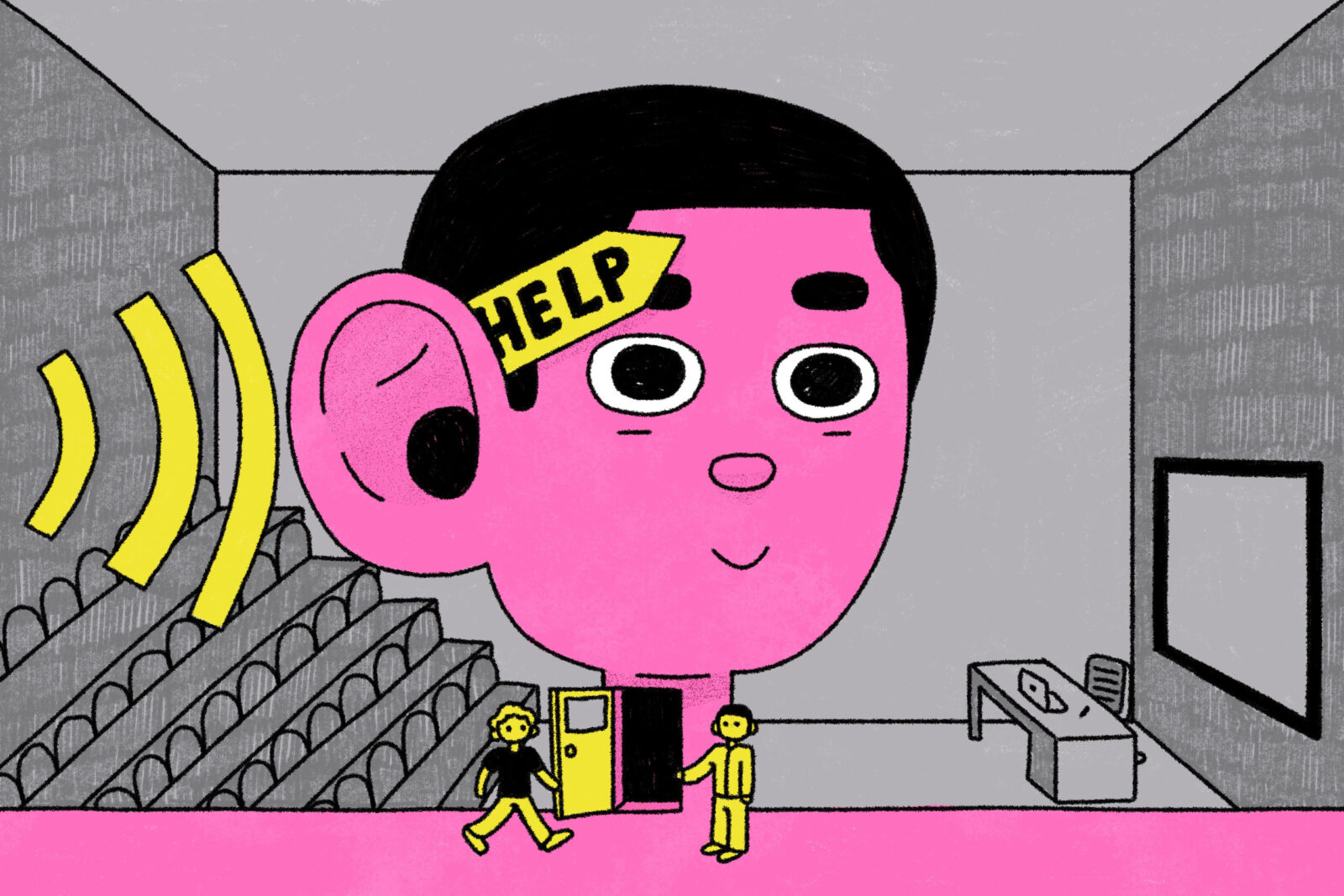
Image by: Femke Legué
Yes, you are a lecturer, not a personal psychologist for your students. Nevertheless, you can make a real difference to your students’ mental wellbeing. “As a lecturer, you’re part of the university’s entire ecosystem”, says Robin Eijlers, project manager at the Student Wellbeing Programme. “Everything in that system has an impact. As a lecturer, you can be one of the first to notice that something isn’t right.” The barrier to seek help is often high. According to Eijlers, a small comment can help break the taboo and provide an important first nudge to start addressing a situation.
1. Take the time to meet with students
“Do what suits you”, says educational adviser Katja Tas of Risbo, Erasmus University’s independent education research institute. “The key is to be present as a person. That makes it much easier for students to approach you, for example with questions about the subject matter. So the rule is: do what suits you best. I would welcome everyone at the door, look them in the eye and thereby convey: you’re at my event, so during this lecture or seminar I can also look at you and ask you to be quiet if you’re talking over me.”
“If that doesn’t suit you, or if it’s a really large group, just wait quietly at the front. Don’t try to rush in at the last minute and start the lecture straight away, and don’t sit hunched over your laptop writing that one last email. Take time to start your lesson calmly in those first few minutes of your lecture, make contact first so that both you and your students can settle in to the lesson setting. Make sure you come across as approachable and actually are. Stay around after the lecture has finished too. Make this clear in advance. Feel free to say: ‘If there are any questions, you can always ask them afterwards. I’m not leaving straight away.’”
Eijlers adds: “The results of the Student Wellbeing Monitor show that students have a strong need to be seen. They want more humanity, to spend more time in the real world. Feeling at home and feeling connected to others is important for your mental wellbeing.”
Een lijst met artikelen
-
The wellbeing of students has improved slightly
Gepubliceerd op:-
Mental health
-
2. Ensure safety in the lecture room
“One of the ways to create a safe learning environment is by stating your expectations out loud”, says Tas. “Ask your students to respect their fellow students and listen to one another. You are who you are, and you’re allowed to be who you are. And very importantly: maintain that safe atmosphere. For a safe learning environment, it must be clear what they can expect. They must also be able to trust that action will be taken if someone fails to contribute positively to this. If someone says something in a very blunt manner, you could, for example, respond by suggesting that they could phrase it more politely. Or, even more clearly: ‘No, that’s not how we treat one another in this academic world. This is a place where everyone should be able to learn, and the exchange of ideas and perspectives is central to that.’”
3. Let your students know they aren’t just a number
“Try to address students by their first names,” advises Tas. “Loneliness gets worse when you’re treated as a number rather than a person. In a small group, you can try to remember names. Of course, if you have a thousand students in front of you, that’s a lot harder. In that case, be sure to express that: ‘I’d love to learn all your names quickly, but that’s quite a challenge in a large group or with lots of new groups.’”
“Over the years, I’ve seen some good tips for addressing students as individuals. For example, by putting up name tags and asking students to bring them along each week. That way, they also learn each other’s names more quickly. With very large groups, you can make it a habit for students to say their name first before they speak or ask a question. So: ‘My name is Katja, and I wanted to ask this …’ Then it’s up to you, as the teacher, to repeat that name. For example, after giving your answer, you could ask: ‘Does that help you, Katja?’”
4. Promote: look after one another
“Students also have a responsibility of their own, but where does that begin and end?”, says Eijlers. “They still have a lot to learn. Just because you’re officially an adult doesn’t mean you suddenly possess all the necessary skills. Students can help one another with this. That’s important too, and it’s something you must – or may – learn. Many faculties or degree programmes have peer support or mentoring schemes. These are very important initiatives.”
'At this university, we want to educate people in such a way that they not only acquire knowledge, but also go on to become good colleagues'
“At this university, we want to educate people in such a way that they not only acquire knowledge, but also go on to become good colleagues”, says Tas. “That they learn to look out for others. This benefits not only the professional field, but society as a whole. And, of course, the students who are helped as a result. I would therefore say at the very first lecture of a course: look after one another.”

Image by: Femke Legué
You do need to explain that, though, says Tas. You could do it like this, for example: “Say: ‘Are you worried about a fellow student? If so, ask that person: “Are you OK?” You’re always welcome to come and see me as your lecturer. I can’t change everything, but I can help steer you in the right direction.’”
“For students to notice that another student might not be doing well, they need to be in contact with one another already,” says Tas, who sees a role for lecturers in this. “That can be difficult. It often happens that one or more students are sitting alone. You could try the following: at the start of the lecture, mention that there will be an assignment to be carried out in groups or in pairs. This means students will have to sit next to one another. It’s important, of course, that you actually set the assignment you’ve announced. Encouraging interaction doesn’t have to be limited to seminars; it can also happen in lecture theatres with a thousand students.”
5. Make it clear where students can get help
“Make your own role as a lecturer clear; say it out loud”, says Tas. “You can’t solve everything yourself, but as a member of staff you do know your way around the university. For example, at the start of a new lecture block, show the student support overview. I wouldn’t just do this at the start of the academic year. There’s power in repetition.”
“I think the Living Room is a lovely place”, says Eijlers. “You can pop in there for a chat with one of the hosts, they’re students. If you’re struggling with something, it’s so important to talk about it. At first, it doesn’t even matter so much who you talk to, but just talk about it and don’t try to sort everything out on your own. There are plenty of support options – so many, in fact, that it can feel overwhelming. The hosts at the Living Room and study advisers can help with this. They know their way around the university. Lecturers can help too, of course. So, as a lecturer, make sure to emphasise this: it’s normal to feel a bit down sometimes, but you never have to deal with it entirely on your own.”
Een lijst met artikelen
-

Why the university is responsible for student welfare
Gepubliceerd op:-
Student life
-
If you’d like to learn more – for example, about how to approach a student – you can take the How to Have an Impact on Student Wellbeing training course. This isn’t just for lecturers, but also for other staff who are in direct or indirect contact with students. The training course is offered several times a year and is led by Katja Tas and her colleagues Jana de Wit and Sascha Bol. Thanks to training funds from the Community for Learning and Innovation, staff can attend this course free of charge.
Are you a student or alumnus for whom a lecturer has made a difference? Are you a lecturer who has experienced this? EM would love to hear about these experiences. Please contact Tessa Hofland.
De redactie
-
 Tessa Hofland
Editor
Comments
Comments are closed.
Ad
Read more in Mental health
-

Jasper has lost his carefree outlook since the attack on Erasmus MC, but the experience will make him a better doctor
Gepubliceerd op:-
Mental health
-
-

A quarter of academics suffer from symptoms of depression or anxiety, particularly young researchers
Gepubliceerd op:-
Mental health
-
Staff
-
-
Open letter: students are not ‘overburdening’ education, they are being overburdened
Gepubliceerd op:-
Education
-
Mental health
-