Ad

ESL lecturers pleased with shorter academic year, students still need to get used to larger groups

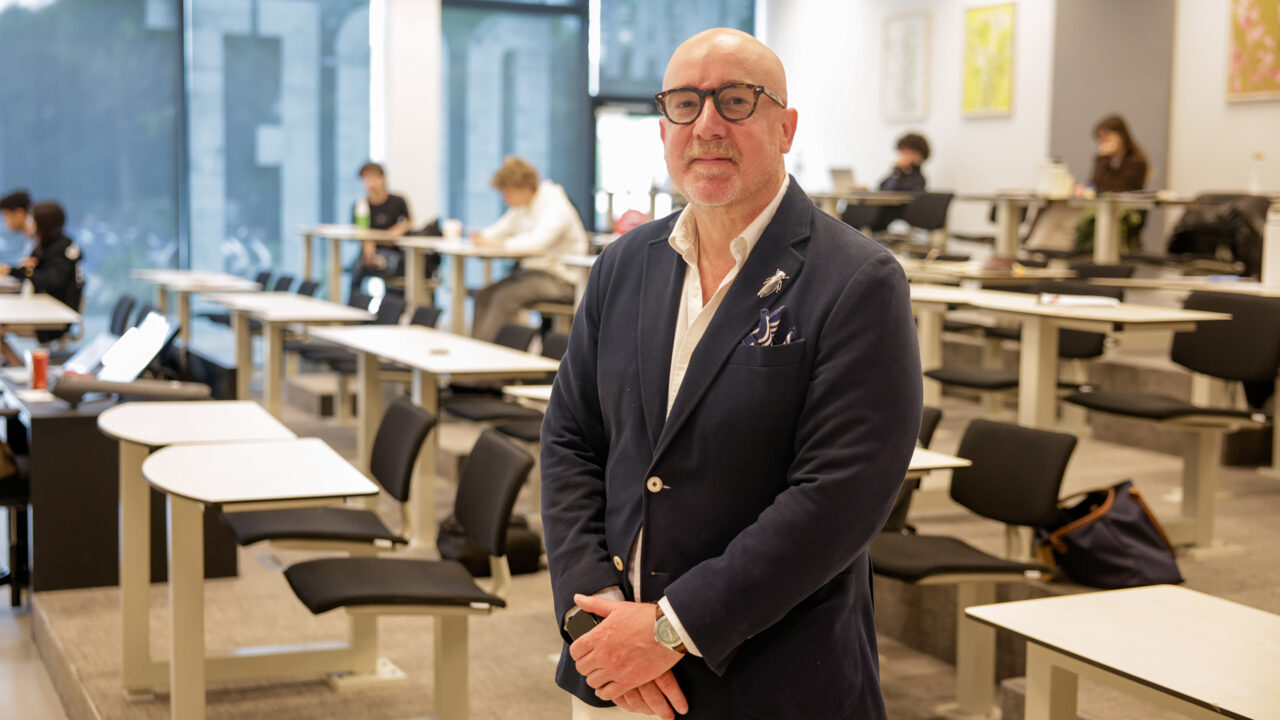
Last academic year saw the switch to a shorter academic year for the bachelor’s programmes at Erasmus School of Law (ESL). Lecturers are cautiously positive about the new system, while students still have to adapt to the changes.
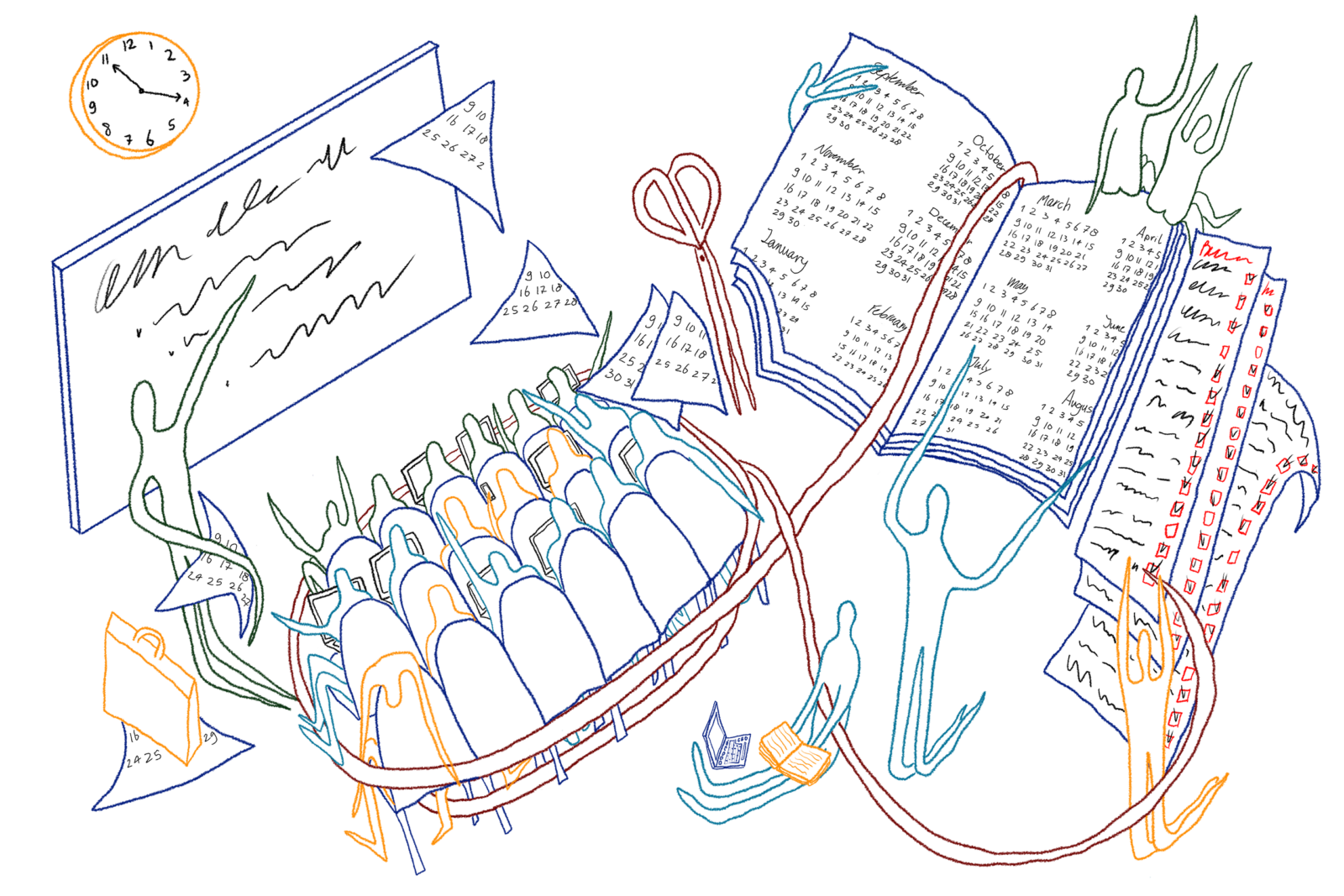
Image by: Sonja Schravesande
Lecturer Monika Glavina finds the so-called Smarter academic year ‘fantastic’. In this new model students have a shorter teaching year, which should reduce the workload for both students and lecturers. The university will switch to this model in September, but the ESL already started last academic year.
For Glavina the new system works very well. “My course was in the last term for ten years. By that time students were already tired. It ran on into July, marking continued until the end of July and even into August. It just went on and on – you never had more than two weeks’ summer holiday. Now we’re in the first term and I start in September with refreshed students. I notice it immediately in the attendance.”
Een lijst met artikelen
-
Academic year will be shorter starting 2026
Gepubliceerd op:-
Education
-
Shorter year, longer course period
According to dean Harriët Schelhaas the new system should lead to less workload and more calm in the academic calendar. Significant changes were implemented during the transition last academic year, especially in bachelor years 2 and 3.
Instead of forty weeks of teaching, the faculty now has only 32 teaching weeks. Previously the year consisted of eight course periods of five weeks, in which students took one course and a track in legal academic skills. Now a course lasts eight weeks and students follow two courses in parallel, alongside the legal skills track.
Lecturer and course coordinator in Administrative Law Hanne Kok likes the longer course period. “As a student I experienced the old system. You studied intensively during those five weeks, but afterwards you quickly forgot it again. Now students spend longer on the material, so I hope it will be retained better.”
Larger tutorial groups
Not only the structure, but also the delivery of courses has changed. Where students used to have four hours of lecture per course each week, this is now split into two-hour lectures per course. The group size has also been adjusted in bachelor years 2 and 3. Previously the faculty worked with problem-based learning, where tutors supervised groups of around fourteen students. Now a course lecturer leads tutorial groups of roughly forty students.
Wouter Scherpenisse, lecturer and course coordinator in Constitutional Law, sees advantages to this. “The new model better reflects the traditional relationship between student and lecturer. Previously, during the teaching groups students were mainly reliant on one another. Lecturers had a facilitating role, which allowed smaller-scale work with tutors”, he explains. “Now students attend work groups led by subject lecturers, so alongside independent working methods there is more room for direct interaction with and guidance from the lecturer.”
It is also more pleasant for lecturers, according to Scherpenisse. “A lecturer runs the same work group each week for different groups of students”, he explains. “That makes teaching more efficient and reduces the workload across the week: the lecturer only has to prepare one theme per week.”
Een lijst met artikelen
-
Shorter academic year is ‘not a magic wand to solve workload issues, but it will help’
Gepubliceerd op:-
Education
-
Students just as busy
Students report a different experience. The concurrent study of two courses in particular causes more stress for some students. “I liked that at first I only had one course at a time. Now there are two and that’s tough”, says a second-year Criminology student who wishes to remain anonymous because he does not want to be recognised by his lecturer and classmates. “Sometimes the courses do not always line up in content, so you really have to work twice as hard as before.”
Dean Schelhaas understands the point, although she says the difference should not be so big because the course periods are longer. “I do believe students are busy. Two courses, legal skills, and therefore two exams require a lot of planning. Students really have to work hard during the course, but this is balanced by periods of rest. After each block there is a week without classes and the Christmas and summer periods are much longer.”
Larger groups
Students also see the larger tutorial groups as a drawback. “It’s considerably busier and you don’t always get the chance to put your questions to the lecturer”, says law student Mark. Chris Grimmius, lecturer and tutor in the Law and Markets department, understands the criticism. “In larger groups there is indeed less personal attention and it is harder to keep everyone involved. That is why we often work in smaller subgroups within the course, so there is still room for targeted guidance.”
The move to larger groups was made deliberately, dean Schelhaas says. “Small-scale education is no longer financially viable”, she says. Nevertheless, the faculty is trying to create small-scale elements within large groups, for example by having students work in groups of five. Education dean Maarten Verbrugh adds that first-year students are deliberately still working in small groups. “The transition from secondary school to university is large. That is why we consider groups of fourteen important in the first year; we want them to start in a small, safe environment. In the second year that necessity is smaller. Moreover, tutorial groups of forty students, in which not all students are present, are still fairly small compared with many other programmes.”
Student feedback
Lecturer Glavina is also aware that students find the larger groups challenging. She takes student feedback into account for improvement, she says. In the European Law course she, for example, divided the student cohort into so-called expert groups. Each group was assigned part of a problem to study in depth and then share that knowledge with others.
“The idea was that students did not have to prepare the whole problem, but only their own part. In theory that sounded fantastic, but in practice students found it chaotic, especially because the groups changed every week and they constantly had to work with new people”, she says. “It remains a matter of figuring out what works. But I think that with student feedback and by continuing to improve together we can really make progress.”
'Everyone has worked hard. This year we have more busy moments, but we see this as an investment for the coming years'
No lower workload (yet)
On the question of whether the workload is decreasing, education dean Verbrugh remains cautious. “The transition has been a major operation. Everyone has worked hard. This year we have more busy moments, but we see this as an investment for the coming years.”
Lecturer Kok agrees. “Some things are taking more time at the moment, because everything had to be redeveloped.” Grimmius also expects the workload to fall eventually. “This first year required extra preparation. We had to devise new teaching methods and set everything up. That takes time, but that will be less in the coming years.”
More time in summer and winter
Both students and lecturers are enthusiastic about the quieter winter and summer periods. “I loved that I was really off at Christmas”, says second-year student Sanne. “And my last exam is already in the first week of July. Last year that still ran until the end of July.”
Kok also notices the difference. “For Administrative Law, the Christmas holiday fell in the middle of the block. That gave peace. It was nice to really be off at Christmas, without immediately having exams afterwards.” Glavina also notes that the shorter teaching year gives her more space for research. “In the summer I now really have time to write and focus fully on my research. That is a big advantage for me.”
Future
Meanwhile the faculty board is already looking ahead. “We are now determining how to apply this to the master’s next year”, says Verbrugh. “With twenty master’s programmes that is a major operation, although master teaching offers more flexibility than the bachelor’s.” For lecturer Scherpenisse one point remains central: quality. “We must ensure that the difficulty level remains the same. Change must never mean that we make it easier. The quality of the teaching comes first and must always remain paramount.”
Read more
-

‘Conditions for good education and research are gradually being eroded at the university’
Gepubliceerd op:-
Opinion
-
De redactie
-
 Feba Sukmana
Editor
Comments
Comments are closed.
Ad
Read more in Education
-
TU Delft may not favour women in admissions to courses
Gepubliceerd op:-
Education
-
-

RTL: More than half of master’s theses contain AI-generated text
Gepubliceerd op:-
Artificial Intelligence
-
Education
-
-
Education pioneer Etienne Augé: ‘Technology should give us more time for people’
Gepubliceerd op:-
Education
-