Ad

Will there be firm agreements on internationals? That remains to be seen
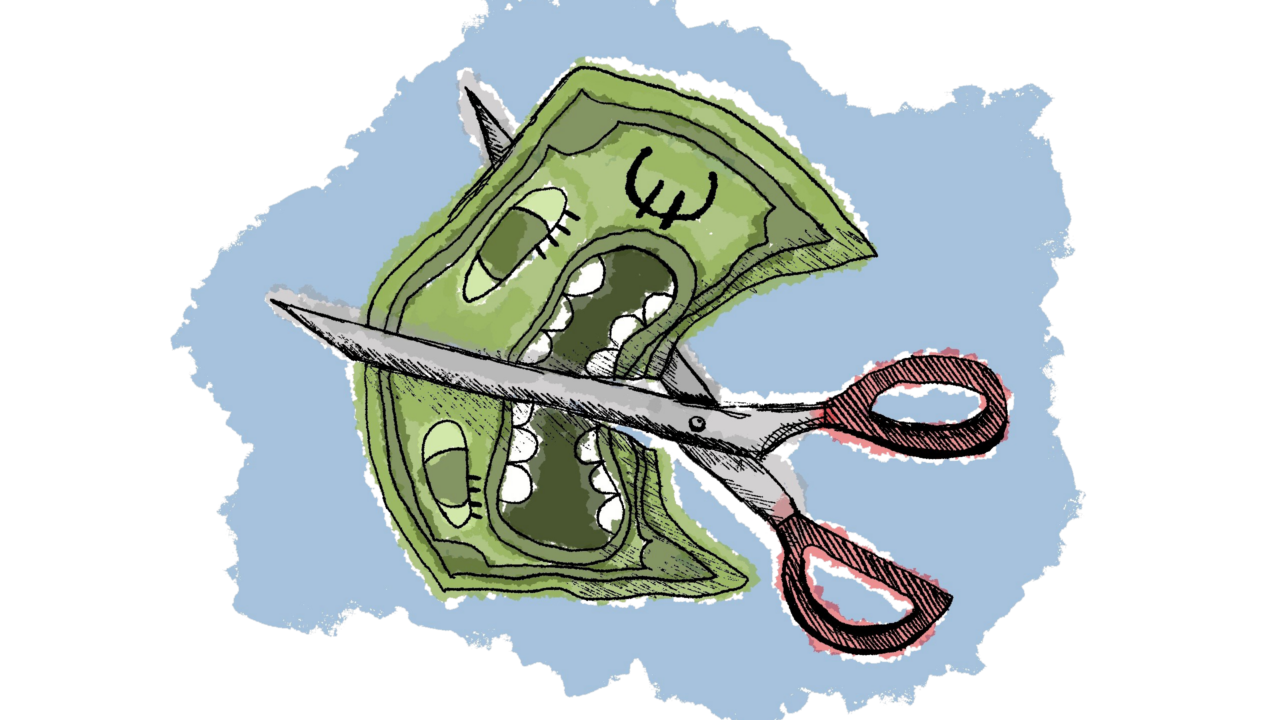
The cabinet wants to make agreements with universities of applied sciences and universities to limit the number of international bachelor’s students. But without the language test, the minister has few means of enforcement.

Image by: Josine Henneken
Less than a year ago, the Schoof cabinet was engaged in a fierce battle against the influx of international students. Former education minister Eppo Bruins wanted fewer English-language programmes and also had to make substantial cuts.
But Dutch politics changes like the weather. Earlier this year, D66, VVD and CDA presented a coalition agreement that included plans to loosen the reins again. The coalition wants to reverse the cuts and is no longer particularly concerned about English-language programmes either.
Talent
So will everything return to how it was before? No. The cabinet still wants to control the international influx. Not through rules or less funding, but through administrative agreements with educational institutions, education minister Rianne Letschert wrote to the House of Representatives a few weeks ago. But how?
The idea is that higher education will receive 154 million euros for a ‘talent strategy’. This could be used to attract international students in fields where the Netherlands needs them. The cabinet gives no examples, but technical degree programmes come to mind. More internationals in one sector would mean fewer in another.
Self-regulation watered down
The idea of arranging this through administrative agreements did not come out of nowhere. Universities and universities of applied sciences strongly protested against the previous cabinet’s plans. Strict rules for English-language education would create major uncertainty. If something really had to be done about the influx of international students, the educational institutions said, then let us handle it ourselves.
They proposed a form of ‘self-regulation’, in which they would make mutual agreements to control the influx. They believed it should be done in a nuanced and carefully considered way.
Een lijst met artikelen
-

Universities: Get rid of language test, leave internationalisation to us
Gepubliceerd op:-
Internationalisation
-
The question is what will come of it. When they presented their plans two years ago, both universities and universities of applied sciences sounded very determined about their intention to bring internationalisation ‘into balance’. But with the arrival of a ‘friendlier’ cabinet, universities and universities of applied sciences immediately watered down that self-regulation.
Psychology
University umbrella organisation UNL initially still promised to convert English-language degree programmes in psychology, economics and business administration into Dutch-language programmes. But on the day the coalition announced that the language test would be scrapped, UNL withdrew that promise.
Universities of applied sciences have not published a news release about it, but insiders say they too are removing an important part of their self-regulation plan. For example, universities of applied sciences had promised to jointly decide which new English-language HBO degree programmes would be allowed. They had even set up a new consultation structure for it. But that will not go ahead after all.
Maximum intake for universities
So what kind of agreements will minister Letschert make? What will remain in place for the time being – at least on paper – is the self-imposed ceiling on the number of international bachelor’s students at universities. Two years ago, they promised not to admit more than 16,766 students annually. A UNL spokesperson now confirms that this limit will in principle remain in place. That ceiling is eleven percent below the peak of 18,700 international bachelor’s students in 2022.
The figure of 16,766 sounds particularly precise, down to the individual student. Yet it is certainly not that strict. The thirteen universities each have their own target, says UNL, but the umbrella organisation does not want to make those figures public. So individual institutions cannot really be held accountable.
Moreover, there are no agreements whatsoever about the intake of master’s students. If fewer bachelor’s students are admitted, this may eventually affect master’s programmes too, but that is not yet certain. So far, master’s intake has risen every year.
Restrictions per programme
Universities have indeed gained more opportunities to steer the intake of international students, but these have little to do with cuts or populist politics. They had themselves been asking for them for years.
Seventeen English-language bachelor’s programmes now have an intake restriction for the non-Dutch-language track (read: English-language track). The idea is that they can specifically limit international intake without harming accessibility for Dutch students. In the past, it was ‘all or nothing’. An intake restriction always applied to the entire programme, meaning Dutch students had to compete in the selection process with students from all over the world.
Een lijst met artikelen
-

Eleven programmes to limit intake in English-language tracks
Gepubliceerd op:-
Education
-
But does this really work as a restriction? The seventeen programmes with track-specific intake restrictions together already admit almost eight thousand students (not only internationals), while there are still countless English-language programmes without restrictions. Those programmes cannot limit international intake at all: anyone with the right qualifications can apply.
It will therefore become quite complicated for universities to meet their own targets. UNL will not hold them accountable for it, says the spokesperson. If they admit too many students one year, they will try to come in slightly lower the following year.
Funding tap
The question is what role the minister will play in all this. That will have to become clear from the new administrative agreements. Without the national ‘language test’ for English-language bachelor’s programmes, she has few means of enforcement.
She can, however, just like former minister Bruins, turn off the funding tap if institutions fail to comply with their agreements. She can say: this is the amount you will receive and not a cent more. If institutions then exceed the limit anyway, they will have to bear the costs themselves.
In the longer term, the government could change the entire landscape with a new funding model. The cabinet wants higher education funding to become ‘more stable’, in other words less dependent on student numbers. Institutions would then also make less ‘profit’ from international students.
But that is still a long way off. We may already be three or four cabinets further on before a legislative proposal is introduced. Letschert can only make agreements and hope that her successor respects them.
Intake restrictions for English-language tracks remain in place almost everywhere
In December, institutions announced which English-language tracks they wanted to place intake restrictions on, and a survey shows that most are maintaining those limits. It concerns one HBO degree programme and sixteen WO degree programmes.
They are, however, maintaining very different limits: from a maximum of 75 students for the English-language physiotherapy programme at Hanze University of Applied Sciences in Groningen to a maximum of 900 students for the European Law School at Maastricht University.
Only TU Delft wants to abolish the intake restriction for the English Nanobiology programme, a spokesperson confirms. The number of enrolments there has already been below the established maximum for several years.
De redactie
Comments
Comments are closed.
Ad
Read more in Politics
-

Translator: Suspended Palestinian student did not say ‘this is me’
Gepubliceerd op:-
Politics
-
-
Knowledge institutions warn against the Netherlands’ frugal approach in Europe
Gepubliceerd op:-
Internationalisation
-
Politics
-
-
Minister sees ‘major problem’ looming: will there be too few international students soon?
Gepubliceerd op:-
Internationalisation
-
Politics
-