Ad

Let police pass on names of rioters to education sector, says House of Representatives
Are students involved in criminal offences or ‘serious public order disturbances’? If so, the police should be able to share their details with educational institutions, according to a majority in the House of Representatives. Whether this is legally permitted remains uncertain.
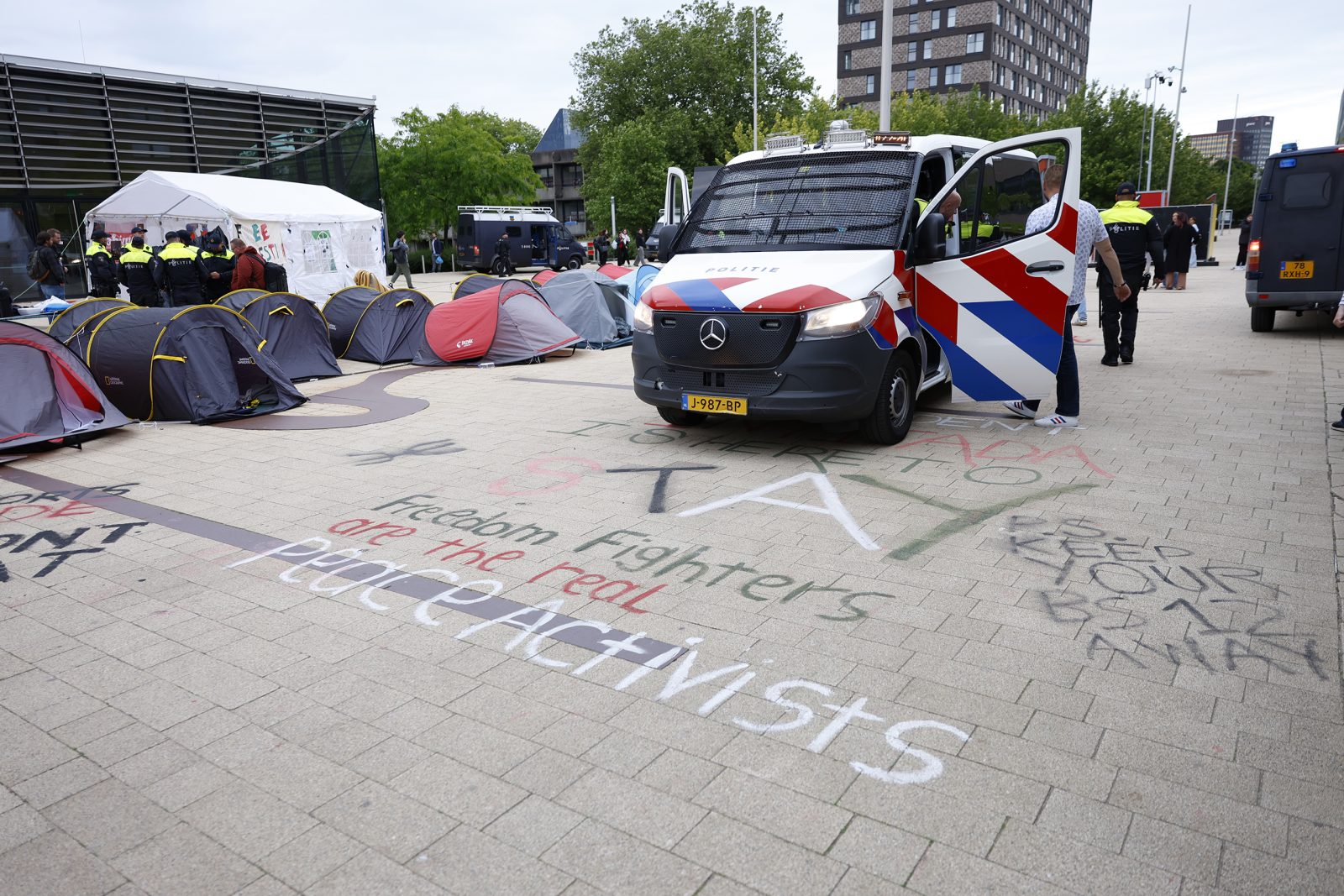
A majority in the House of Representatives thinks the police should be able to share details with educational institutions about students involved in criminal offences or serious public order disturbances.
Image by: Daan Stam
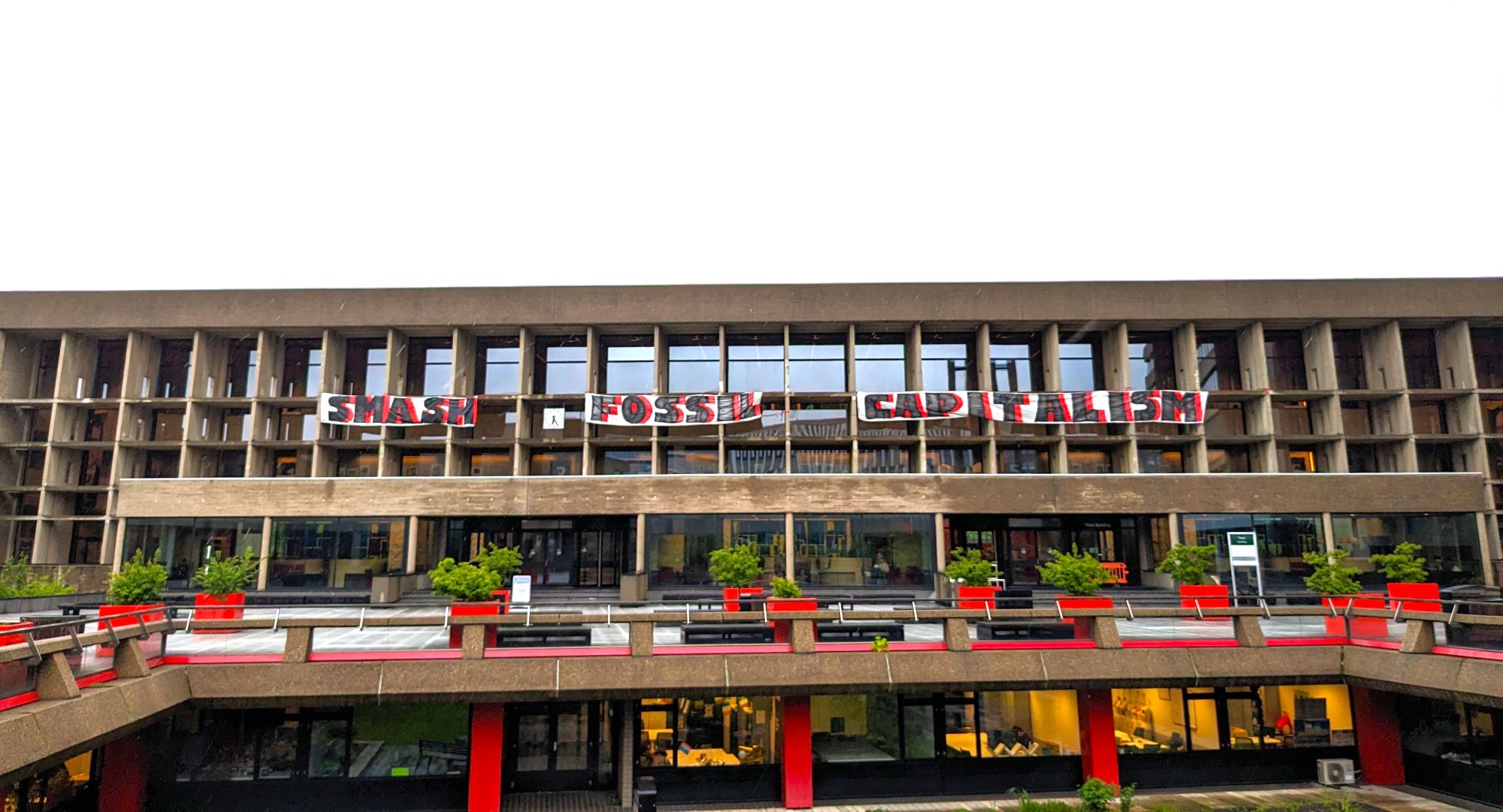
A few weeks ago, the House of Representatives debated a report by the Antisemitism Taskforce. Among other things, the report addressed the fierce demonstrations against ties with Israeli education and research institutions.
Populist parties in parliament want a tougher approach to these protests and submitted various motions to that effect. Most of those motions have now been voted down, despite support from governing party VVD.
For example, universities will not be required to state that antisemitism is unacceptable, as JA21 had proposed. In doing so, the party referred to a specific definition that makes criticism of the state of Israel more difficult. Minister Letschert advised against the motion: “We will not comment on a definition.”
Police
But another motion did gain a majority, partly because alongside the VVD, governing party CDA also supported it: the police should be able to share data more easily with educational institutions. A ‘framework for action’ should be created for this, according to SGP and JA21.
The motion is broadly formulated and targets students who are ‘involved in criminal offences or serious public order disturbances’. The proposers cite illegal demonstrations, calls for violence and ‘unsafe situations’ as reasons for their proposal.
Under the law, universities and universities of applied sciences can terminate a student’s enrolment if they cause serious disruption. However, institutions do need to know who those students are.
Is that allowed?
According to Gerard Ritsema van Eck, an IT lawyer at the University of Groningen, this is not automatically permitted. Among other things, he researches the Police Data Act, which states that the police may only share information with parties such as the Public Prosecution Service or the AIVD intelligence service.
“If the minister wants the police to share information with other parties, he must create a special arrangement for that. But this can only be done on the basis of an overriding public interest”, says Ritsema van Eck.
This rarely happens in practice, says the researcher. Moreover: “The right to demonstrate is a fundamental right, whether you do so at a university or elsewhere. Finding an overriding interest in that context will be quite difficult for the minister.”
Legal restrictions
During the debate, Minister of Justice and Security David van Weel made clear that he agrees with the motion in principle. He will include the issue in discussions with educational institutions, the police and the Public Prosecution Service.
He too warned that there are legal restrictions on sharing data. “If we encounter obstacles in that process, we will address them”, he promised.
Read more
De redactie
Comments
Comments are closed.
Ad
Read more in Politics
-

Translator: Suspended Palestinian student did not say ‘this is me’
Gepubliceerd op:-
Politics
-
-

Knowledge institutions warn against the Netherlands’ frugal approach in Europe
Gepubliceerd op:-
Internationalisation
-
Politics
-
-
Minister sees ‘major problem’ looming: will there be too few international students soon?
Gepubliceerd op:-
Internationalisation
-
Politics
-