Ad

From screen time fines to a gaming platform against loneliness: EUR students organise the Netherlands’ biggest student AI hackathon

Students from Dutch and international universities came together in Rotterdam on Monday and Tuesday for EurHackNL. In less than 24 hours they used AI tools to build various apps and prototypes. The group Homing won with a platform to combat loneliness, while Screen Time Pay impressed with an app that makes people pay when they stare at their screen for too long.
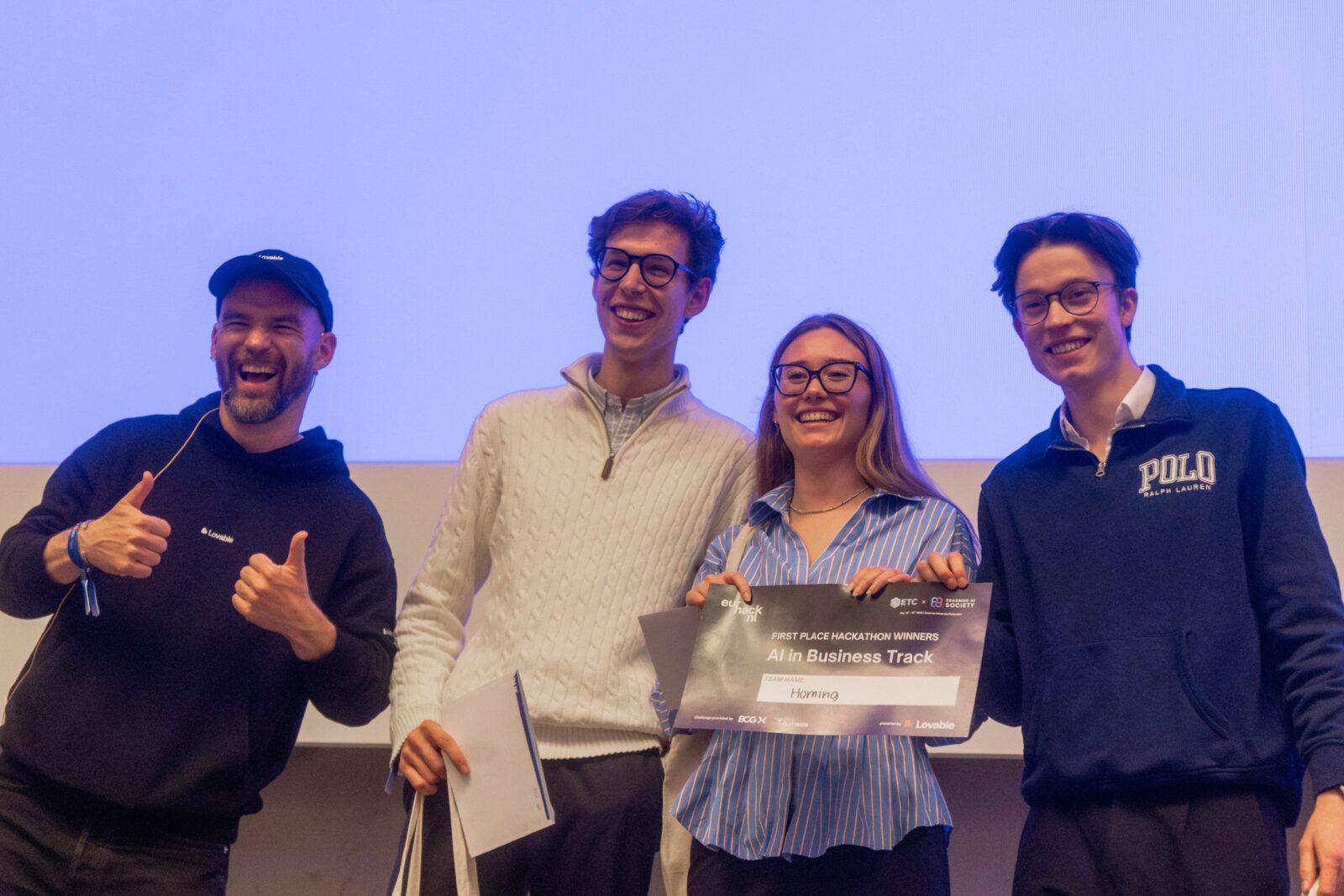
Homing, a group of IBA students, came up with a solution to reduce loneliness in the city.
Image by: Nhat Minh Bui
On Monday afternoon, the Auditorium filled up for the opening. After a brief word of welcome, several workshops followed to prepare the participants. There was no time to lose: straight afterwards they had to start building their websites, apps or other software.
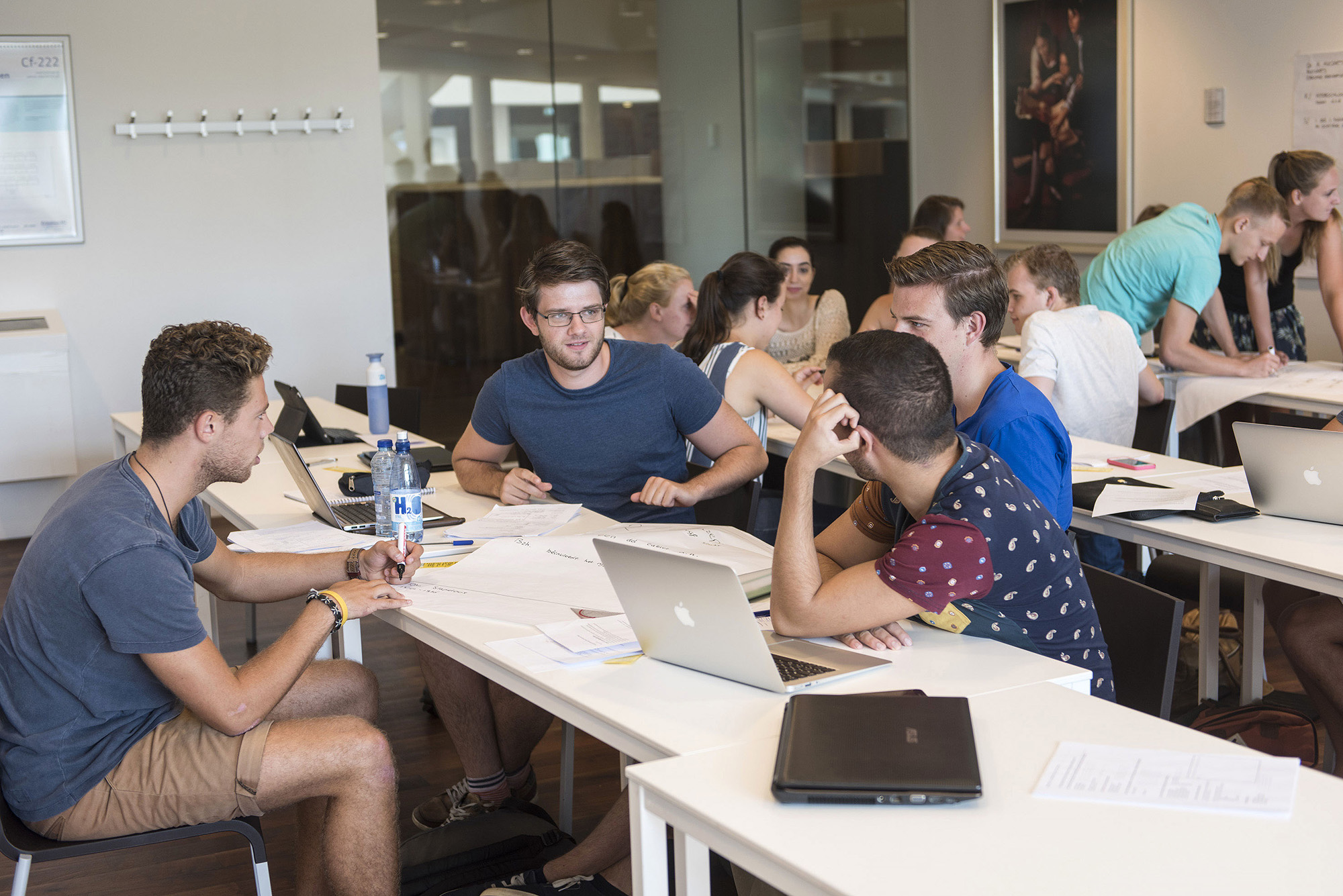
Unlike traditional hackathons, which are often more focused on programming and therefore mainly attract technical students, EurHackNL focused on vibe coding. Instead of programming themselves, students instruct chatbots which then build the software for them. This meant that all students, regardless of their programming knowledge, could take part and build something concrete.
Teams worked on four different themes: designing a solution to loneliness in the city (AI in business), reshaping entry-level jobs (finance), or making live events unforgettable (live events). A final option for students was to come up with their own solution to a problem they had identified (bring your own startup).
There were various prizes to be won in each category: from job interviews at partnering companies to places on summer training camps or a first investment.
Getting started
After the workshops, participants without a team had the chance to join one. The students of team TWIN, which later won the live events category, didn’t know each other beforehand. “We put our team together based on our different backgrounds”, says Alisha, who studies at Eindhoven University of Technology. According to her, this leads to better collaboration. “I am always about doing things, while my teammates first think carefully about how you should organise something in the first place. That way, we complement each other and this works extremely well.”
In the end, they built a software tool that makes it easier to find like-minded people during events. An AI tool analyses your conversations while simultaneously gathering information from other rooms. At the end of the day, you receive a personal summary.
Once the teams had been formed, participants went straight to work. Spread across various rooms on campus, they worked hard on their first prototypes. In one of the rooms, a team was working on a smart dashboard for the finance category, linking different financial data and then explaining it clearly to employees. In another room, one participant was working on a solution to map safety risks during demonstrations or festivals more quickly.
Tight deadlines
On Tuesday morning, students returned to campus with their laptops under their arms to continue working on their projects and put the finishing touches in place.
Some students found the schedule very tight. “Normally, for this kind of challenge, we have more time to work on solutions”, explains Ediz, a master’s student in Management. Nevertheless, he is pleased with events like this because they give him the opportunity to work on tangible AI solutions.
Pitching
In the afternoon, teams had to submit a video explaining what they had built. The jury members assessed these videos in the first selection round. They looked at different categories such as creativity, feasibility and the use of AI tools.
The best teams in each category were allowed to present their projects during the grand final on Tuesday evening. In four-minute pitches, the finalists tried to convince the jury members of their solutions. The presentation by students Dora and Manfred, creators of Screen Time Pay, an app that makes people pay if they stare at their phone screen for too long, was particularly well received in the room. Thanks in part to their convincing pitch, they eventually won in the bring your own startup category.
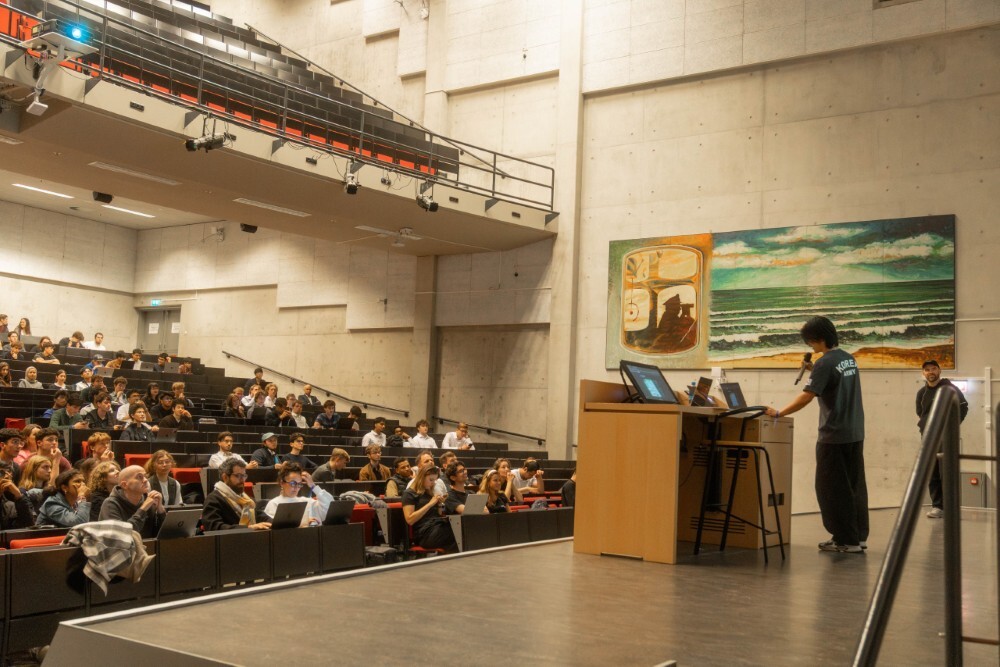
The best teams were allowed to present their projects during the grand finale.
Image by: Nhat Minh Bui
The winner in the business category was Homing. The task was to help Dutch municipalities use AI to tackle loneliness without compromising human contact. Moritz, Tom and Camille, all International Business Administration students, built a platform that brings together people in the neighbourhood who share the same gaming interests via a search and matching system. They did not see their victory coming. “We mainly wanted to learn more about how AI can be used. Winning as a team makes it extra special”, says Moritz proudly.
More than a hackathon
EurHackNL was organised by the Erasmus Tech Community and the Erasmus AI Society (EAIS). For Nils Zippelius, co-founder of EAIS, the event was not just about coming up with solutions. “We want to connect people who are excited about developments around AI and want to do something with it”, he explains. That, he says, is what makes this event special: students from a wide range of backgrounds can work together.
Yunus Noah Oberst, master’s student in Strategic Management and president of EAIS, mainly hoped that participants would become comfortable with the idea that they can build apps themselves. “We really wanted to throw participants in at the deep end and challenge them to learn something new. By the end, we hope they will have learned a lot and built something they can be proud of.”
Een lijst met artikelen
-

‘You’re basically stupid if you don’t use ChatGPT’
Gepubliceerd op:-
Artificial Intelligence
-
Comments
Comments are closed.
Ad
Read more in Campus
-
Signing up for a Dutch course ‘feels like a race’, no more places available for now
Gepubliceerd op:-
Internationalisation
-
-
Ten years of the GDPR: access to your personal data is still not routine at EUR
Gepubliceerd op:-
Privacy
-
-
RTL: More than half of master’s theses contain AI-generated text
Gepubliceerd op:-
Artificial Intelligence
-
Education
-