Ad

Students fill pews for election debate with Mirjam Bikker
More than two hundred students filled the pews of the Hoflaankerk on Wednesday evening for an election debate organised by Ichthus of the student association C.S.F.R. In a hall full of young voters, Mirjam Bikker – lead candidate of the ChristenUnie – was the undisputed main guest.
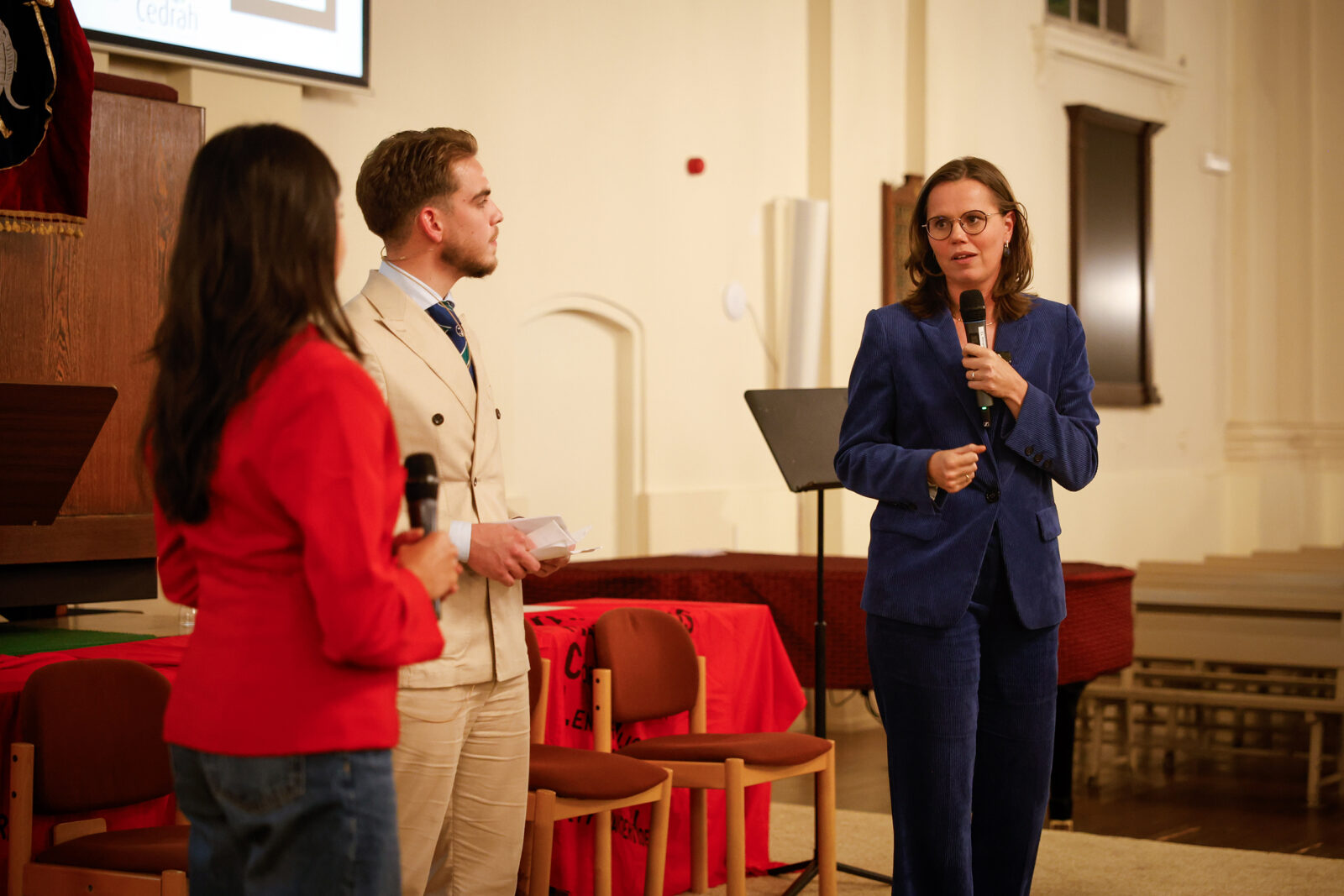
Lead candidate Mirjam Bikker of the ChristenUnie made an evening available for a student debate.
The evening began according to Ichthus’s familiar traditions: with the association song, a prayer, a scripture reading and Psalm 40. After that, election candidates from six parties took to the stage: CDA, ChristenUnie, SGP, VVD, GroenLinks-PvdA and D66. The loudest applause was for Bikker, who visibly felt at ease in the Kralingen church.
Selfie and autograph
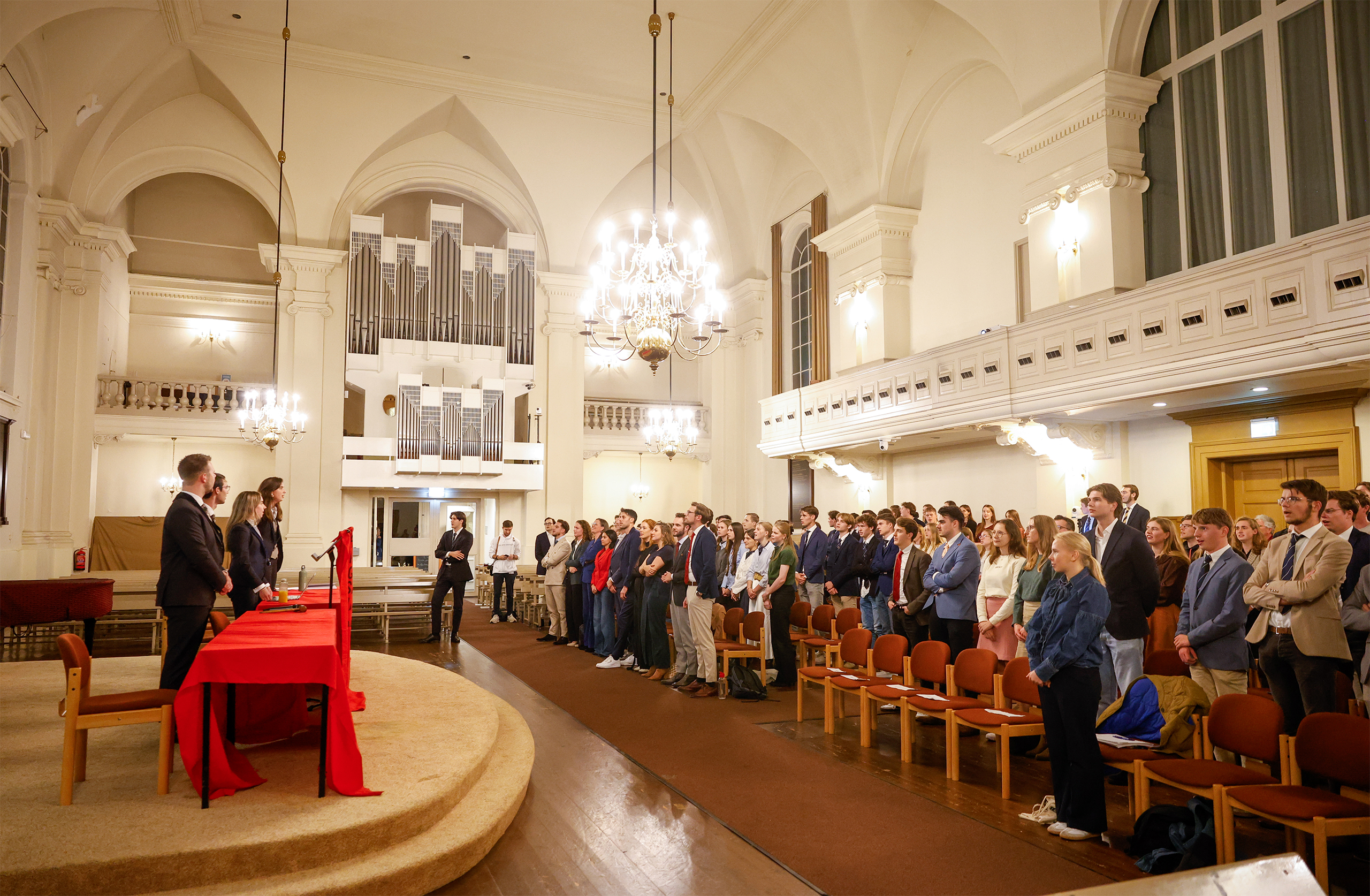
At the start, those present sang the association song.
For her it is also a form of coming home. During her student years Bikker was active within C.S.F.R., where she served a year on the board of the Utrecht dispuut Sola Scriptura. She began her remarks in a style familiar to those present, with the words ‘amicae amicique‘ – Latin for ‘friends’. That greeting is customary within the association during meetings. As the only national lead candidate she attracted a lot of attention, both on stage and during the break, where students took their chance for a selfie or an autograph.
“I asked my campaign team to make time for a student debate, and I’m glad they listened to me”, said Bikker just before the debate began. “We must continue to invest in the future of young people.” She emphasised three key points from the party programme: tackling the housing shortage, combating the penalty for studying too long, and promoting mental health. “More needs to be built so that students can find rooms again. And we must continue to focus on preventing mental health problems, because the number of young people struggling with this is growing.”
Freedom of education
The debate itself consisted of two joint debates and four one-on-one debates. The atmosphere remained congenial and respectful throughout the evening, though there were occasional moments of healthy tension. For example, Steven van Die (CDA) and Johan Roodnat (SGP) were strikingly united in advocating more frequent use of electronic ankle tags in criminal law. More heat flared in the debate between Sarah el Boujdaini (D66) and Bikker over article 23 of the Constitution. D66 wants to modernise freedom of education, among other things by obliging schools to accept all pupils regardless of background or conviction. The ChristenUnie sees no need for this and emphasises the importance of parents being able to have their children educated in line with their deepest convictions, with Christian education playing an indispensable role in their view.
In addition, issues such as mortgage interest deduction, migration and climate were discussed – themes that will play a major role in the coming elections. Especially during the migration debate it became clear that the Christian parties are strongly represented: the discussion quickly shifted from migration figures to the question of what ‘Dutch culture’ actually is, and how it can be protected.
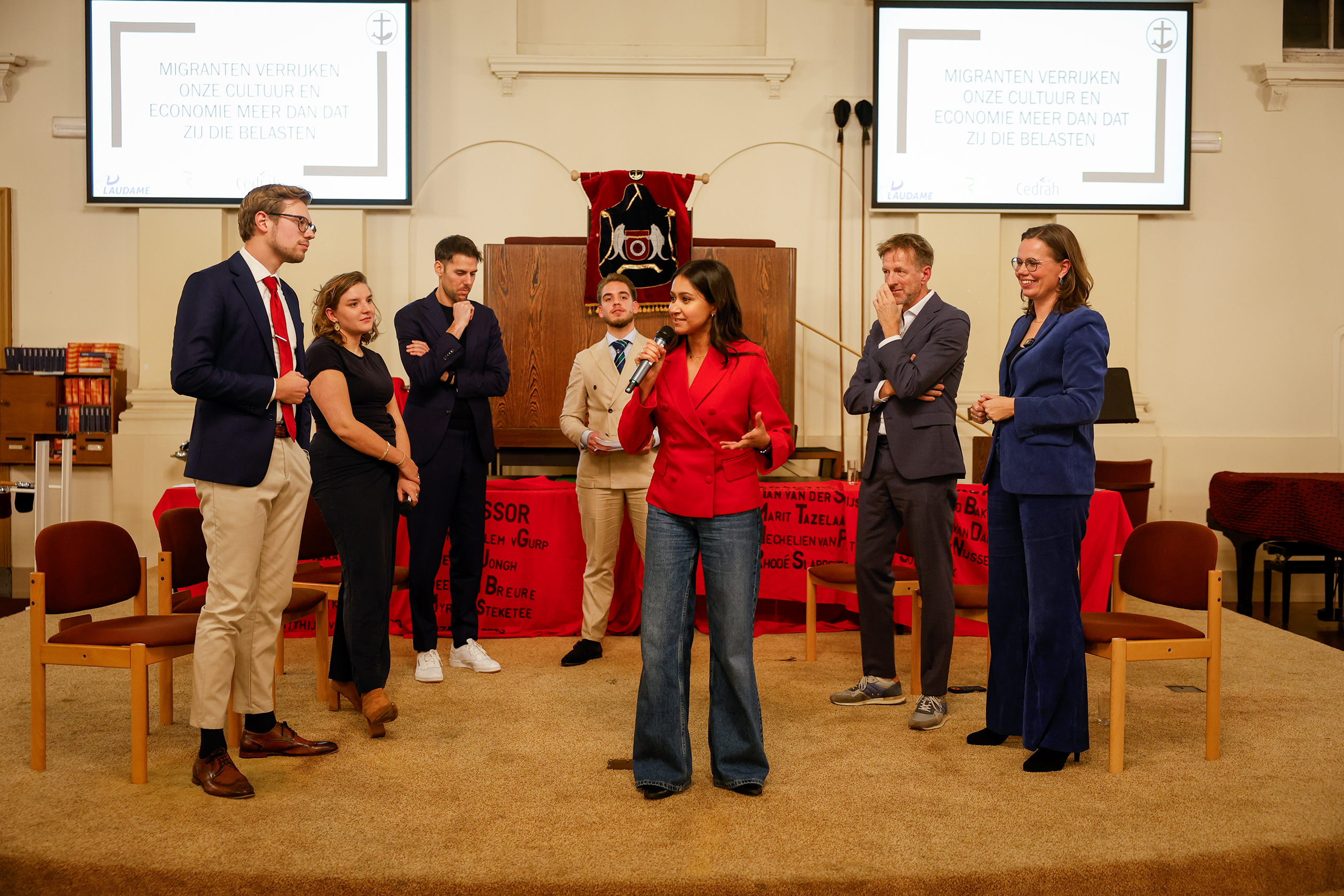
D66's Sarah el Boujdaini knows she is not speaking to a home audience.
More fireworks
Afterwards, not everyone found the tone sharp enough. Philosophy student Jasper missed depth: “I expected a bit more fireworks. The candidates stayed very friendly, while the differences are large enough if you look at the party programmes. Fortunately, questions from the audience prompted some deeper conversations.” His voting behaviour did not change during the evening: “I vote strategically, but it was certainly educational.”
Notable was the presence of the non-Christian parties. D66’s Sarah el Boujdaini and GroenLinks-PvdA’s Iris Vrolijks knew they faced a critical audience. “I know I won’t win preferential votes tonight”, Vrolijks said with a laugh. “But it is important to tell our story here too, so that these young people do not base their view of us only on what they see in the media.”
Brave
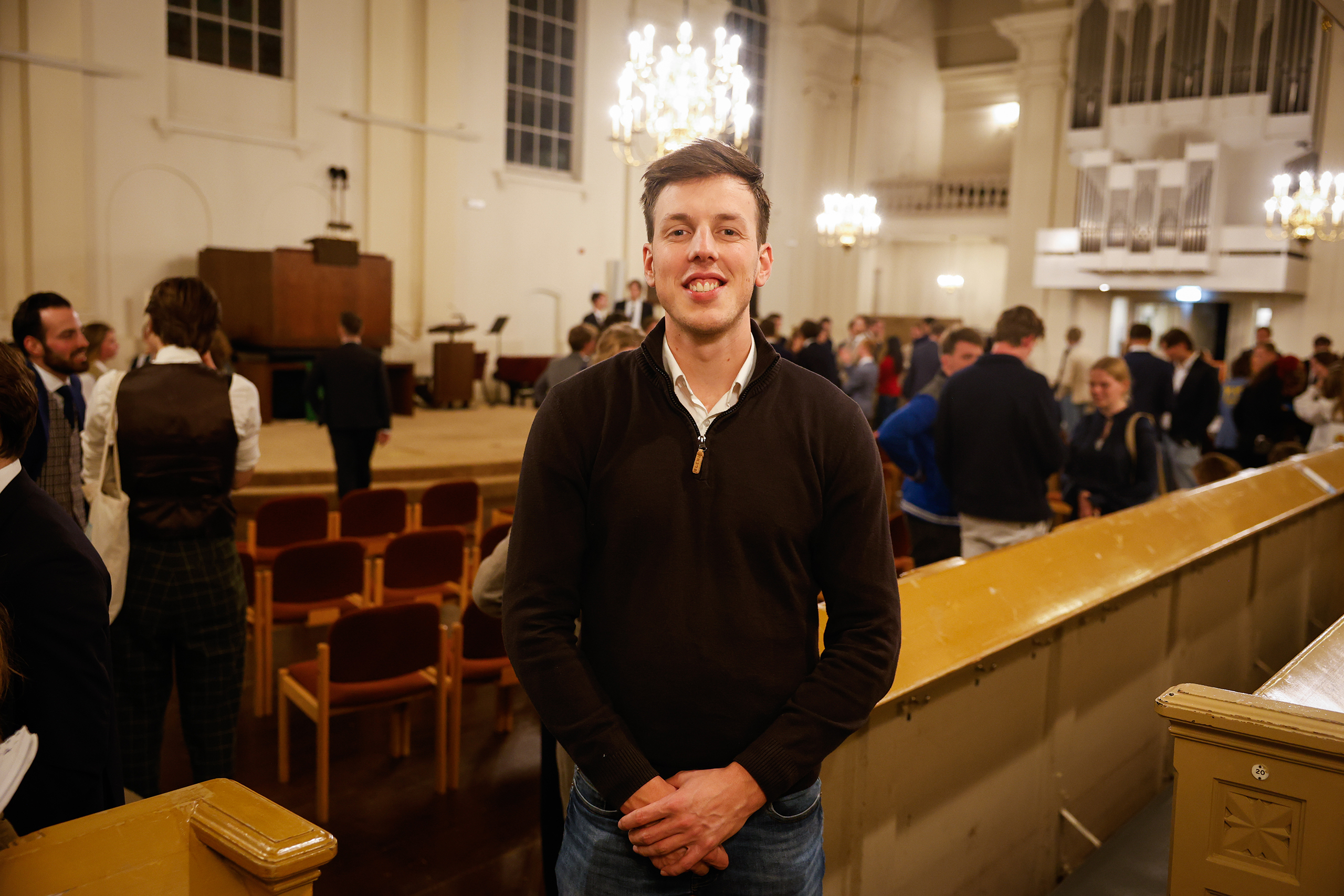
For former business administration student Rien the evening helps to better understand the differences between the Christian parties.
A short poll among those present before and after the debate showed that the ChristenUnie strengthened its position: the percentage of students who want to vote for the party has risen from 30 to 36 per cent. The CDA lost ground, from 21 to 15 per cent, while the SGP remained stable in second place with 26 per cent of the vote.
Rien Bakker, former business administration student, summed up the evening: “I found it an enriching evening. I already know I want to vote Christian, but this helps to better understand what the differences are. Tonight was a good start for me to think about that further.”
Non-Christian parties are not an option for him, but Rien nonetheless appreciated the presence of D66 and GroenLinks-PvdA: “It was brave of them to stand here, despite knowing the audience disagrees with them on many points.”
De redactie
-
 Sarah de Gruijter
Student editor
Latest news
-
Students and staff join the Pride March: ‘We must stand up for this community’
Gepubliceerd op:-
Diversity
-
-

EM TV newsflash: Too many internationals, too many information platforms and more collaboration with the military
Gepubliceerd op:Article type: Video-
EM TV
-
-

18-year-old student dies after ‘hazing party’ in France
Gepubliceerd op:-
Student life
-


Comments
Comments are closed.
Ad
Read more in Student life
-
18-year-old student dies after ‘hazing party’ in France
Gepubliceerd op:-
Student life
-
-
Jasper has lost his carefree outlook since the attack on Erasmus MC, but the experience will make him a better doctor
Gepubliceerd op:-
Mental health
-
-
Government sets aside millions extra for student accommodation construction
Gepubliceerd op:-
Housing
-