Ad

Campusrun delivers more than sporting achievements: many participants find mental peace
Hundreds of participants lined up at the start of the Campusrun on Saturday. Some were aiming for a fast time, while others simply wanted to cross the finish line or improve their mental wellbeing. “Running is sometimes the reason I get out of bed.”
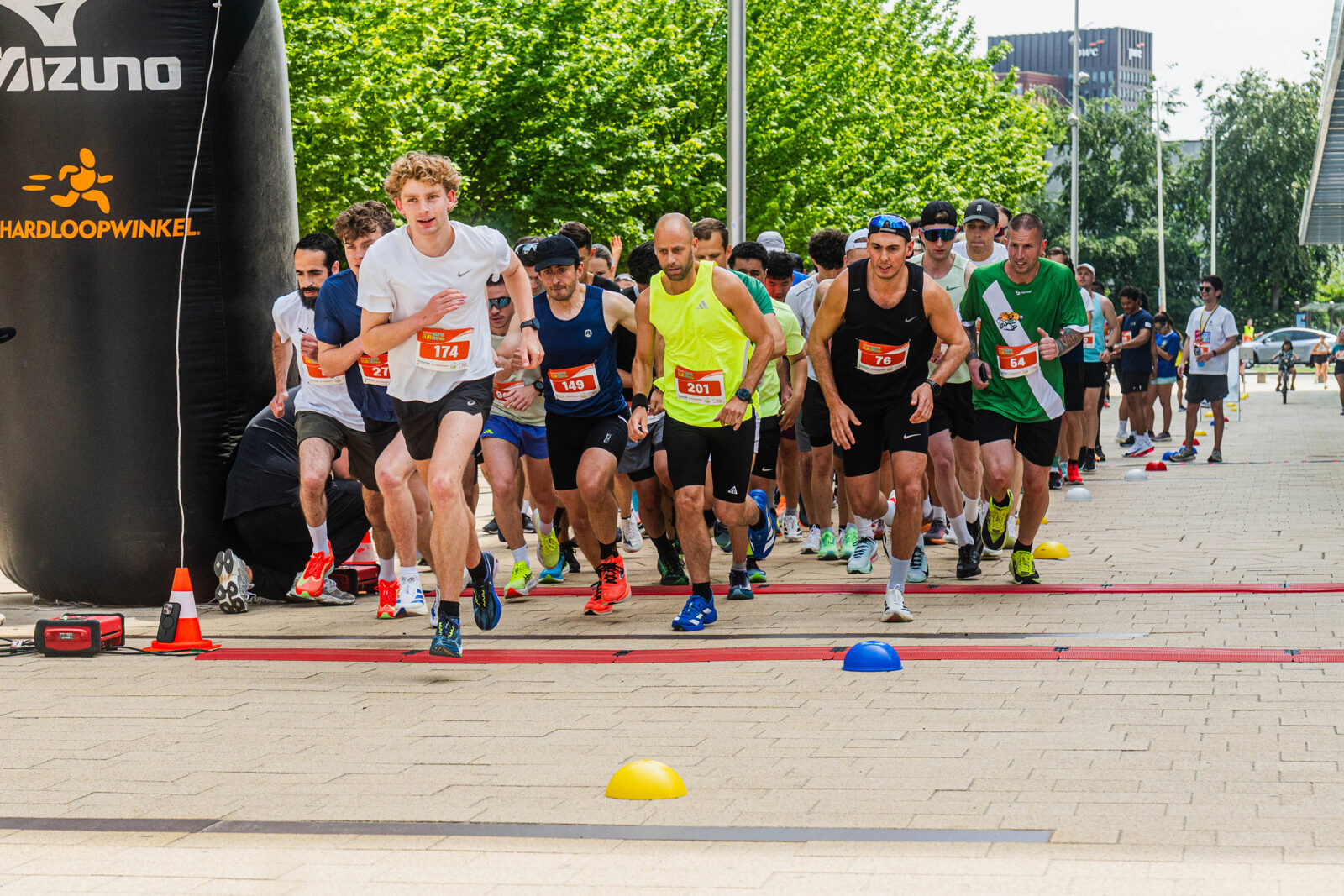
Participants on their way for the five kilometres.
Image by: Nhat Minh Bui
The tension is palpable on the square in front of Erasmus Sport shortly before the start. Some participants quickly eat a banana, while others do their final stretches. Among the dedicated runners are students taking part in a race for the first time. For them, the Campusrun is not necessarily about setting a personal best, but about taking on a challenge, running with friends or family, or escaping exam pressure for a while.
Exercise against stress
For Economics and Business Economics student Anniek, today is not about a personal best either. “I’m taking part because I wanted to do something fun with my roommate”, Anniek says. “I’d also like to improve my fitness because I run less than I would actually like to. I always feel calmer mentally after I’ve been running. After a busy day, I feel much better. That’s why I want to try to do it more often.”
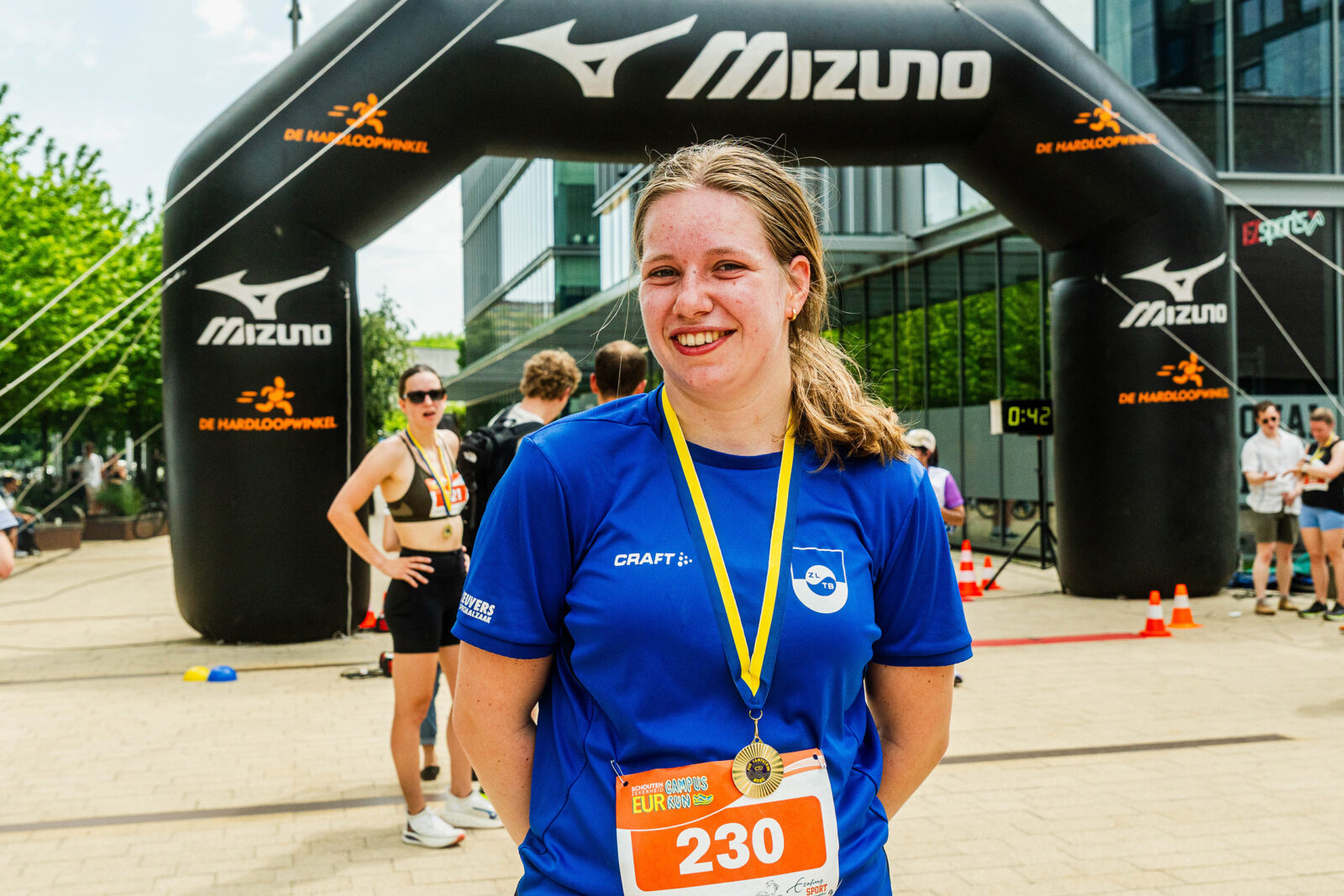
Anniek joined because she wanted to do something fun with her roommate.
Image by: Nhat Minh Bui
According to Liesbeth van Rossum, internist-endocrinologist and professor specialising in obesity and stress research, exercise can genuinely reduce feelings of stress. “Sometimes physical exertion is actually a very good way to relax”, says Van Rossum, who is herself a keen long jumper and sprinter. “During exercise, substances such as endorphins and dopamine are released, helping to regulate mood and reduce stress.”
Starting last and finishing first
The starting signal for the ten-kilometre race is given by ‘runfluencer’ Jony Oosterbos. No fewer than 172 participants cross the start line. Fellow students hold up their phones to take photos, volunteers cheer on the runners, and at the finish a line of people is ready to welcome participants with a bottle of water and a medal.
After 35 minutes, the first runner in the ten-kilometre race is already crossing the finish line. It is Oosterbos himself, who started last because he had fired the starting signal. “It feels quite strange to win this race”, says Oosterbos. “You start last and finish first, which is pretty special.”
Oosterbos is a dedicated runner and has also found that running benefits his mental health. “When I’m outside putting in some kilometres, I notice that I feel happier and calmer. I feel much more relaxed when I run. It’s a great form of distraction”, says Oosterbos.
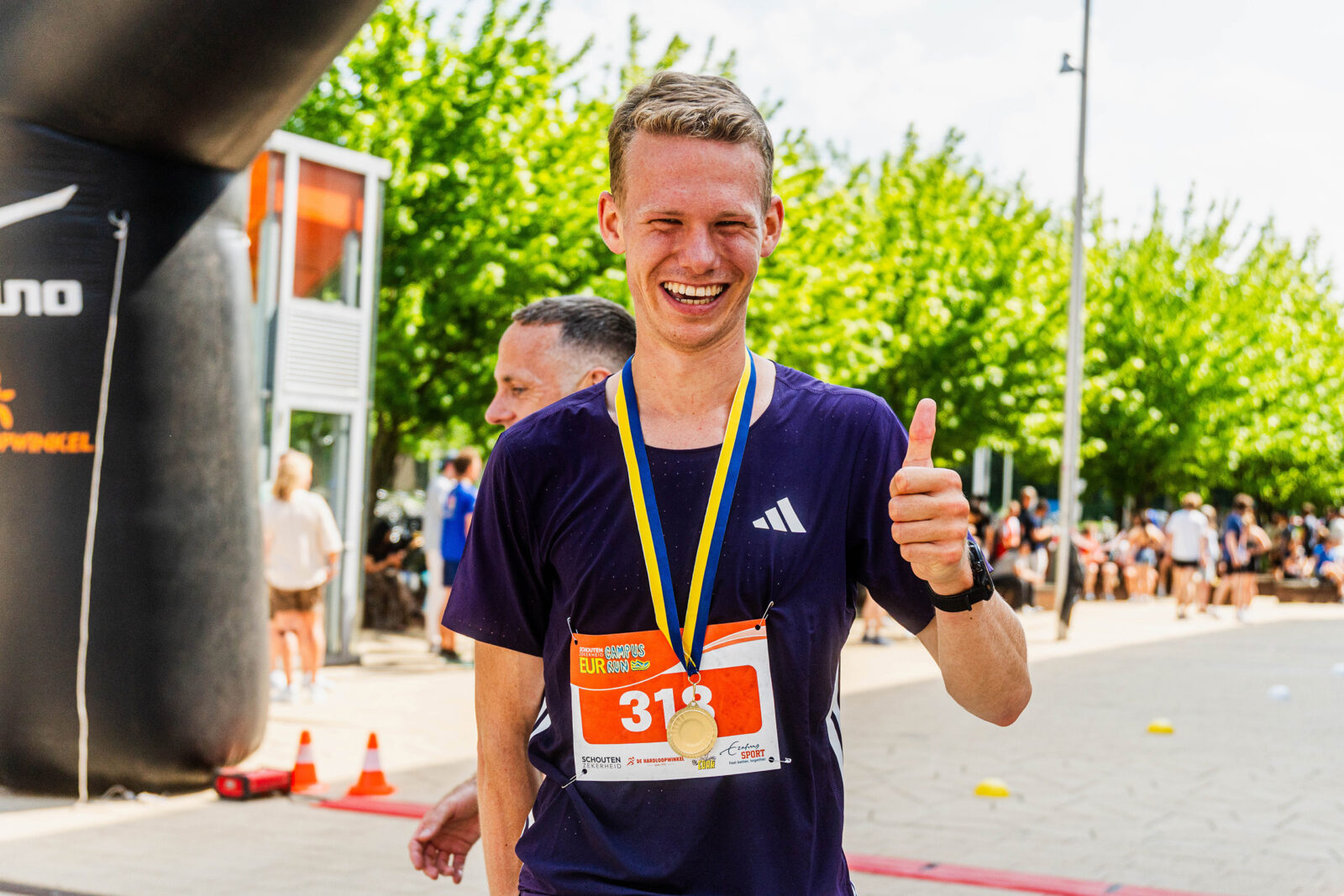
Jony Oosterbos gave the starting signal and won the ten-kilometre race.
Image by: Nhat Minh Bui
Meanwhile, more participants are crossing the finish line. They receive their medals and quickly find a place in the shade afterwards. Following the ten-kilometre race, ‘runfluencer’ Kenzie Bresser gives the starting signal for the five-kilometre race. Another 151 participants set off.
‘My bright spot in the day’
Jari Slomp, a member of the Campusrun organising committee, is also present today. He hands out bottles of water and makes sure everything runs smoothly. Besides enjoying his role on the committee, he is also an enthusiastic runner in everyday life.
Years ago, Slomp started running on the advice of both his mother and his therapist because he was struggling with depressive symptoms. He did not notice an immediate difference. “The way it was presented to me, it sounded as though I would feel better straight after every training session. It didn’t work like that for me. It was only when an injury temporarily stopped me from running that I realised how much running actually gave me”, says Slomp. “Running is now sometimes the reason I get out of bed; it’s my bright spot in the day. Sometimes it is the solution to stop myself getting stuck in my own head, while on other days I use it to run off feelings of anger or aggression.”
'It was only when an injury temporarily stopped me from running that I realised how much running actually gave me'
According to Van Rossum, exercise can indeed reduce the likelihood of depressive feelings. “Exercise can sometimes even be regarded as a form of medicine for depressive symptoms”, says the professor.
More self-confidence
By now, many runners in the five-kilometre race are crossing the finish line. International Business Administration student Michal arrives full of enthusiasm. “I’m going through a period of heartbreak. Running helps me clear my mind. While you’re running, you stop thinking about everything else and focus mainly on keeping going”, says Michal. He also finds that sport gives him greater self-confidence. “You see yourself becoming stronger, your fitness improves and you achieve goals you have set for yourself. That feels really good.”
Van Rossum confirms that people often gain more self-confidence through exercise because they feel more energetic and fitter. In addition, people sleep more deeply and better after exercising. “Good sleep, in turn, has a positive effect on mood and emotions”, says Van Rossum.
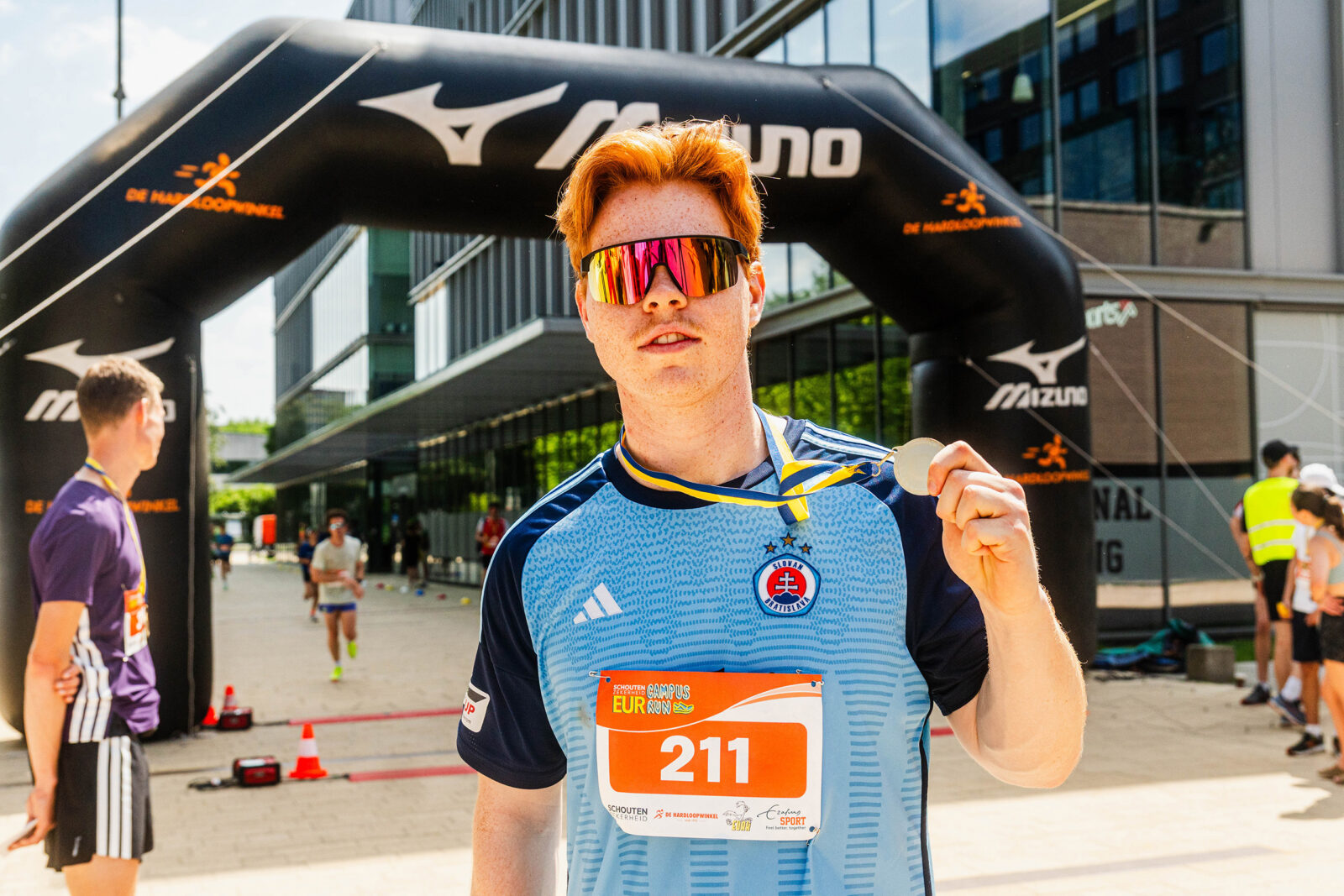
For Michal, running helps to clear his mind.
Image by: Nhat Minh Bui
The final runners are now crossing the finish line and preparations are being made for the prize-giving ceremony. This year’s winner of the five-kilometre race is Olivier Korthals Altes from Rotterdam, with a time of 16 minutes and 33 seconds.
Read more
-
Runners raise more than 27 thousand euros during Charity Run
Gepubliceerd op:-
Sport
-
De redactie
-
Roos den Hartog
Intern
Comments
Comments are closed.
Ad
Read more in Campus
-
Executive Board regularly uses AI for speeches and LinkedIn posts
Gepubliceerd op:-
Artificial Intelligence
-
Governance
-
-
Signing up for a Dutch course ‘feels like a race’, no more places available for now
Gepubliceerd op:-
Internationalisation
-
-

Ten years of the GDPR: access to your personal data is still not routine at EUR
Gepubliceerd op:-
Privacy
-