Ad

President Executive Board on new strategy: ‘We have influence, which we need to use positively. So, cynicism and doing nothing are not an option’
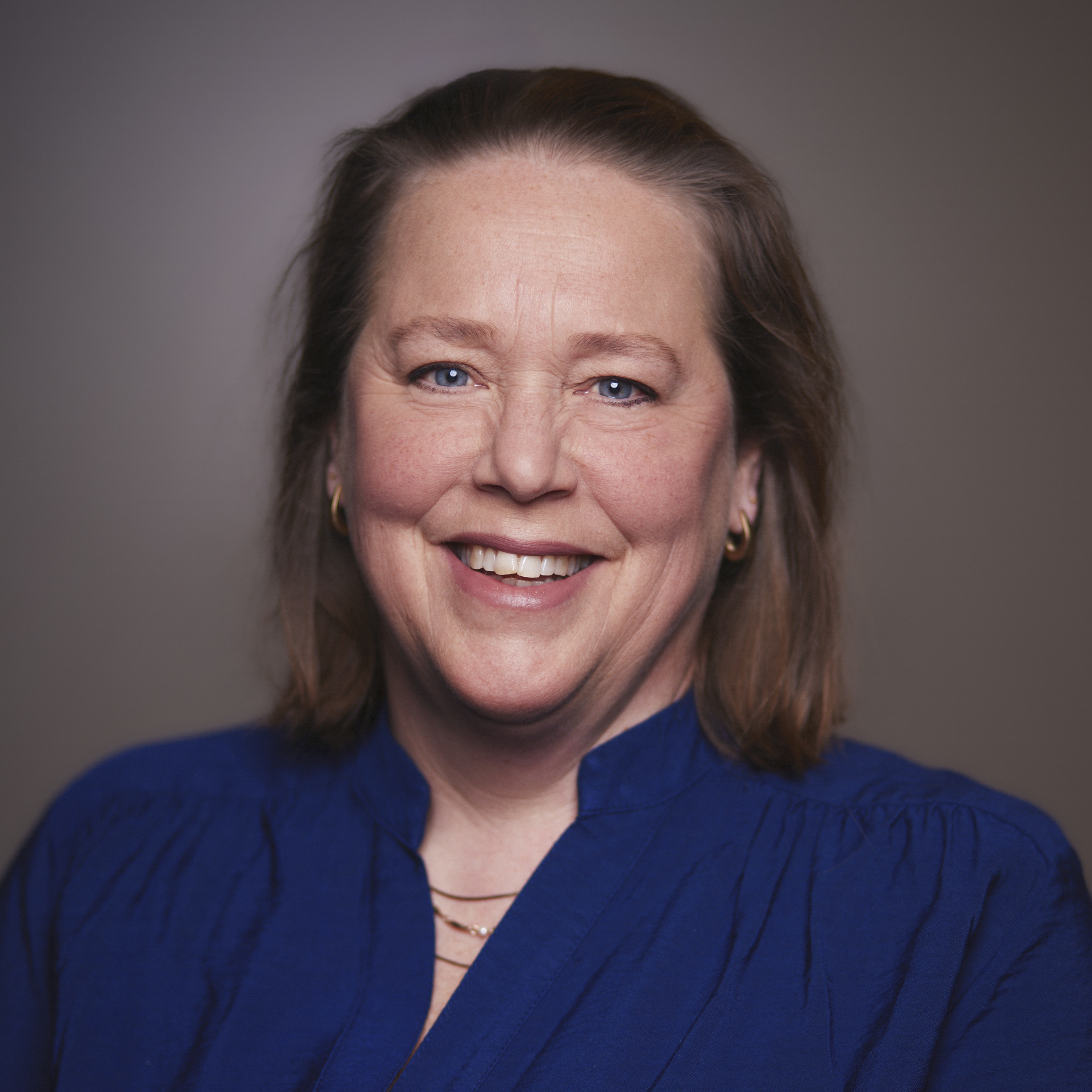
The university has a new strategy that will be presented today during the Opening of the Academic Year. Executive Board President Annelien Bredenoord will talk about the object of the new strategy and the mark she has put on it. She also has a message for the entire university community for the year ahead: “We have influence, which we need to use positively and with conviction. We owe that to our students and young people in general.”
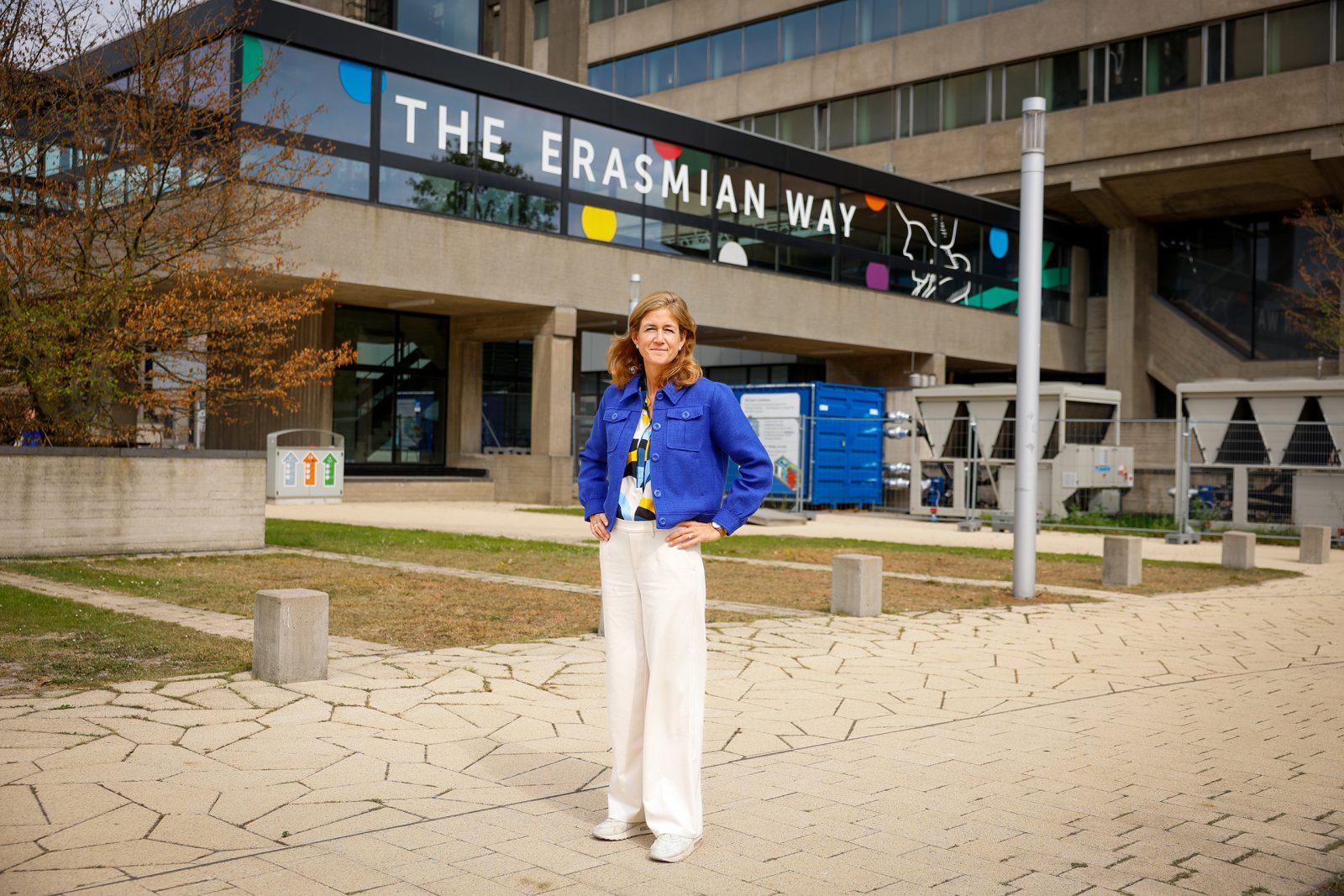
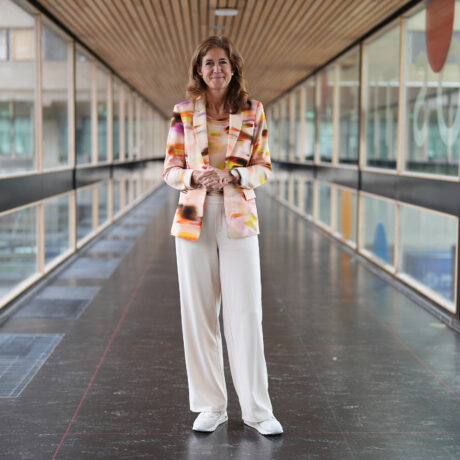
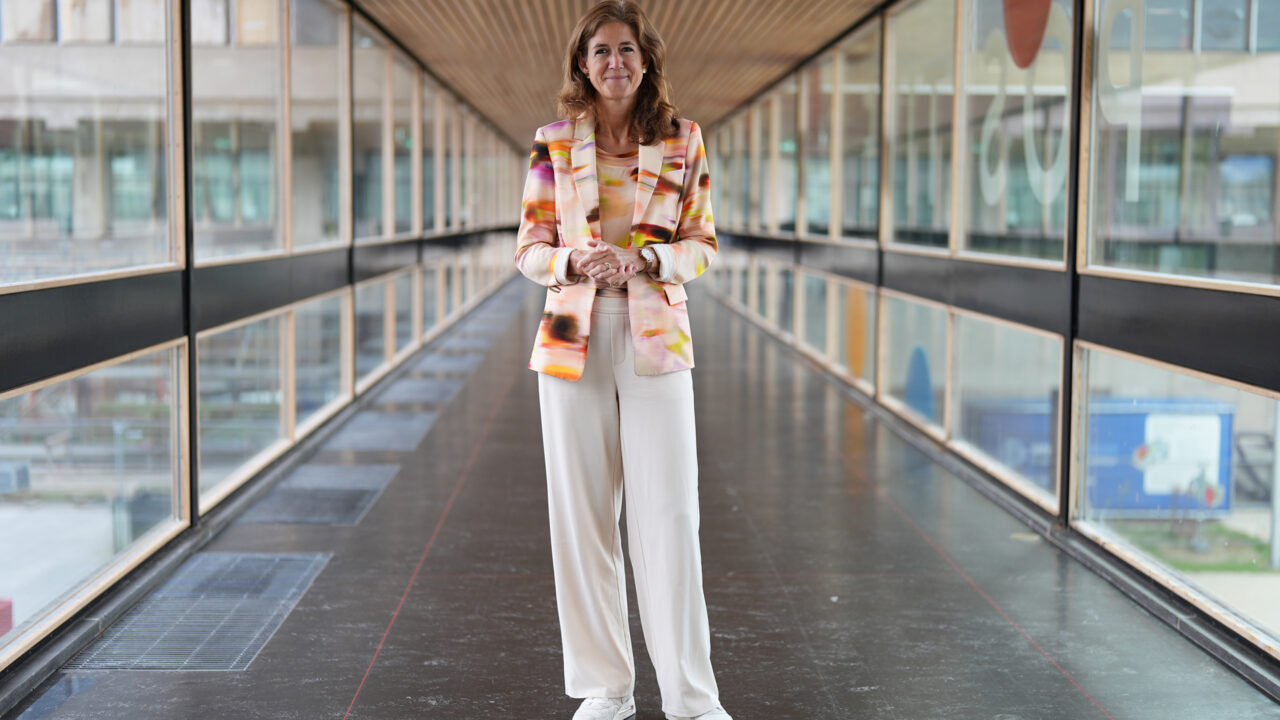
President of the Executive Board Annelien Bredenoord.
Image by: Daan Stam
A week before the Opening of the Academic Year, larger than life cardboard cutouts grace the corridor from the Theil building to the Erasmus building, with texts from the new strategy on them. Because a new strategy needs marketing and storytelling, to make sure the new course comes to life and penetrates into the very heart of the organisation. So, the big cardboard cutouts will be popping up everywhere soon and there ‘might’ be a new slogan on the footbridge in four years’ time as well. But this is not certain yet and the new strategy in itself does not detract from the slogan currently plastered on the glass in man-sized white letters: ‘Creating positive social impact the Erasmian way’. Because the new strategy is new but ‘a continuum’ too. This is how Executive Board President Annelien Bredenoord describes the new course, which will run until 2030. However, it does seem that the word ‘impact’ will need to give way to the new buzzword: ‘engaged’.
Where does that word ‘engaged’ come from?
“The ‘engaged university’ is an international term, like ‘impact’, which is used to qualify universities. It involves seeking collaboration to contribute to the big social issues of our time with the partners around you. That is what EUR does and one of the main reasons I joined this university in 2021.”
How is an engaged university different to an impact university?
“Well, engagement involves collaboration. The hallmark of the engaged university is an ecosystem in which you collaborate with knowledge partners, civil society, the municipality and the business community. Working together to achieve solutions to major social issues.
“It’s a bit of a niche discussion, but ‘impact’ is about the final outcome and ‘engaged’ is more about reciprocity and inclusiveness in respect of the partners around you.”
‘Engaged is more about reciprocity and inclusiveness in respect of the partners around you’
So, you mean it’s possible to make an impact on your own?
“Yes, and sometimes it’s not guaranteed that you’ll actually make any impact at all. We aren’t a sausagefactory that pumps out an end product that’s always a known quantity. The exciting and fun thing about science is the opportunity to experiment. Setting up a pilot, doing a design study and having the possibility to be surprised, fail and have to tweak what you’re doing. So, being ‘engaged’ is much more about an attitude in which the key words are ‘collaboration’, ‘inclusive’, ‘reciprocal’ and ‘open to experimentation’.”
Open innovation networks are another novelty in the strategy. What are they?
“An open innovation network is an ecosystem of parties with an interest in a societal mission, whether that be the affordability of health care or the energy transition in the port of Rotterdam. We already have those networks. For example, Resilient Delta, Health and Technology and the Erasmus Initiatives.
“An open innovation network like this also involves collaboration between knowledge universities and other educational institutions too. Our great collaboration with Albeda, for example. The government is on board as well – as a partner – and the business community. And organisations like patient associations too, for example.”
So no change there. What’s different about the new strategy?
“That’s right, it’s a continuation of what had already been started but we choose to focus. An important new component, I think, is our aim to focus on diversifying income from other partners via contract research and programmes for lifelong learning, for example.”
Without becoming a consultancy firm.
“It’s important to realise that no one single money stream is neutral – from the first to the fourth flow of funds. Each flow of funds has its pros and cons. And our ethical conditions are designed to preserve our independence. Because the most important thing we have is our credibility and integrity.”
So, academics need to spread the word?
“That’s where recognition and rewards come in. It’s all about team science. There’s room for the more introverted, more reclusive academics too. But only as part of a group, with a few other members of the group spreading the word. It’s a team. We definitely don’t want them to have to cover all the bases and then burn out.
“I’m convinced that EUR has struck gold: we really are a unique brand, with a unique location and unique disciplines. But that won’t always be the case; we’ll have to work hard to keep it that way.”
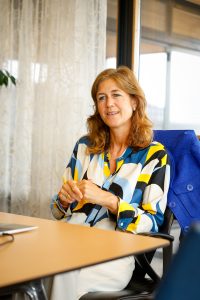
Annelien Bredenoord
Image by: Daan Stam
What mark have you put on the strategy?
“The new strategy is a team effort, but I stressed the need for us to become one connected EUR. That’s an absolute must if we are to become a recognisable knowledge institution. We also need to know make sure we always know where to find each other. Work well together. And sing off the same hymn sheet.
“I frequently used the following sentence when formulating the strategy: what can people contact Erasmus University about? It should be possible to answer this question in just one sentence.”
And the answer is?
“You can call the university about the five impact domains. These are the areas in which we have traditionally always been very strong, internationally recognisable, in both teaching and research, and in which we intend to become even more proficient in the years ahead. And these domains are … wait, I wrote them down here, so I can tell you exactly what they are: the resilience & robustness of our society, sustainable entrepreneurship and inclusive prosperity. The third is a just transition to a sustainable society. The fourth: a healthy society with accessible and affordable health care. And five, the responsible use of technology, including artificial intelligence and digitalisation. EUR needs to be people’s preferred knowledge partner where these five themes are concerned.”
Why is it important for the outside world to see the university this way?
“As a university, we no longer automatically have a licence to operate. We need to work on our support and society’s trust and confidence in us. Times have been changing for the last two years. As anthropologists so eloquently say, we are living in liminal times. The old is no more. And we haven’t invented the new yet.
“There are two natural reactions to change, one being and conservatism and the other curiosity and an awareness of opportunities, paving the way for high levels of creativity. The latter reflects the stance of our new strategy. I believe that it’s our moral duty as a university, for the 35,000 young people we are preparing for their future careers – amongst others. Our story must be one of hope, using our academic knowledge to contribute to a better world.”
The previous strategy involved the launch of all kinds of new programmes and projects; this is not the case in the new strategy. This strategy looks more restrained. Is it?
“The difference is that, in recent years, we have established a vision for education and science and we also have a vision on operational management. So, a lot of preliminary work has already been done and become an integral part of the new strategy. A distinctive feature of the new strategy is a different innovation philosophy to the previous one. In the previous strategy, many innovative projects were launched at the top of the organisation; this generated a lot of energy and a lot of good ideas. The next step is to mainstream it; to make innovation part of the organisation. And that’s the choice we are making with this strategy now.”
So this strategy is a logical extension of the previous one?
“Yes, very logical. The previous strategy was a little more innovative because it introduced a new idea. I think the previous strategy was broader: it allowed a thousand flowers to bloom. We have now selected some of these flowers and used them to create a beautiful bouquet.”
Is this also because there is less money?
“Even with more money, we would have made the same choice. We have changed from mass to focus and show the following: this is what we have to offer, this is our social added value and if that’s very fragmented, it’s just more complex.”
‘Minister Bruins’ massive cuts made last year incredibly complicated.’
I read in the strategy that the university will need to be ‘financially agile’ in the months and years ahead. What does that mean?
“University funding has been under pressure throughout the world for the last two to three years. I don’t see this changing any time soon, even though we will continue to fight education cuts to the very end.
“So, EUR had to become less dependent on money from the Ministry of Education. And gain more autonomy. One way to do this is to fulfil our earning capacity differently and this new strategy will help us find other partners, other funding streams. Either via more contract education and lifelong learning, from Brussels, or from public financiers other than the Dutch government.
“So that we become less dependent on political opinions. This has made it very difficult to keep a steady course.”
Did the second fall of the cabinet change that?
“Well, to the extent that I’m now even more convinced of the need for independence and not to rely on the government too much. The new minister will have to handle universities on top of everything else. The only advantage is that there’s a little less time for interference.
“Minister Bruins’ massive cuts made last year incredibly complicated. Every time it might have been possible to gain funding via a Spring Memorandum, etc., it didn’t materialise. So, it’s just a major disappointment.”
‘If you can dream it, you can do it’
The academic year starts today. In uncertain times, with elections around the corner and with the bare bones of a cabinet. What would you like to say to students and staff about the year ahead?
“I have a photo of my family hanging up at home. It’s a little different to the average Dutch family. We were sitting in a café abroad with my son (who was one at the time). The sentence ‘If you can dream it, you can do it’ had been painted on the wall. I often hear that the world is on fire and that these are uncertain times, but it’s ultimately up to us how we respond. We have influence, which we need to use positively and with conviction. We owe that to our students and young people in general.
“So, cynicism and sitting back and doing nothing are not an option.”
Read more
-
‘Academic freedom is not just a matter for the university, but for society as a whole’
Gepubliceerd op:-
Science
-
De redactie
-
 Wieneke Gunneweg
Editor-in-chief
Latest news
-
In memoriam Rob van der Wal
Gepubliceerd op:-
In memoriam
-
-
Lively trade in tickets for graduation ceremony: ‘Excessive prices are undesirable’
Gepubliceerd op:-
Student life
-
-
University president on powerhouses: ‘If we do nothing, we will hit a wall’
Gepubliceerd op:-
Governance
-
Comments
Comments are closed.
Ad
Read more in Governance
-
University president on powerhouses: ‘If we do nothing, we will hit a wall’
Gepubliceerd op:-
Governance
-
-
‘Academic powerhouses’ to launch by end of 2027
Gepubliceerd op:-
Governance
-
-
Criticism of academic powerhouses: ‘A university is not a power station’
Gepubliceerd op:-
Governance
-