Report: education sector unable to safeguard knowledge security

Universities lack the expertise to screen researchers and students themselves for knowledge security risks. Higher education institutions, the government and other organisations involved should share more information with one another, according to a new report.
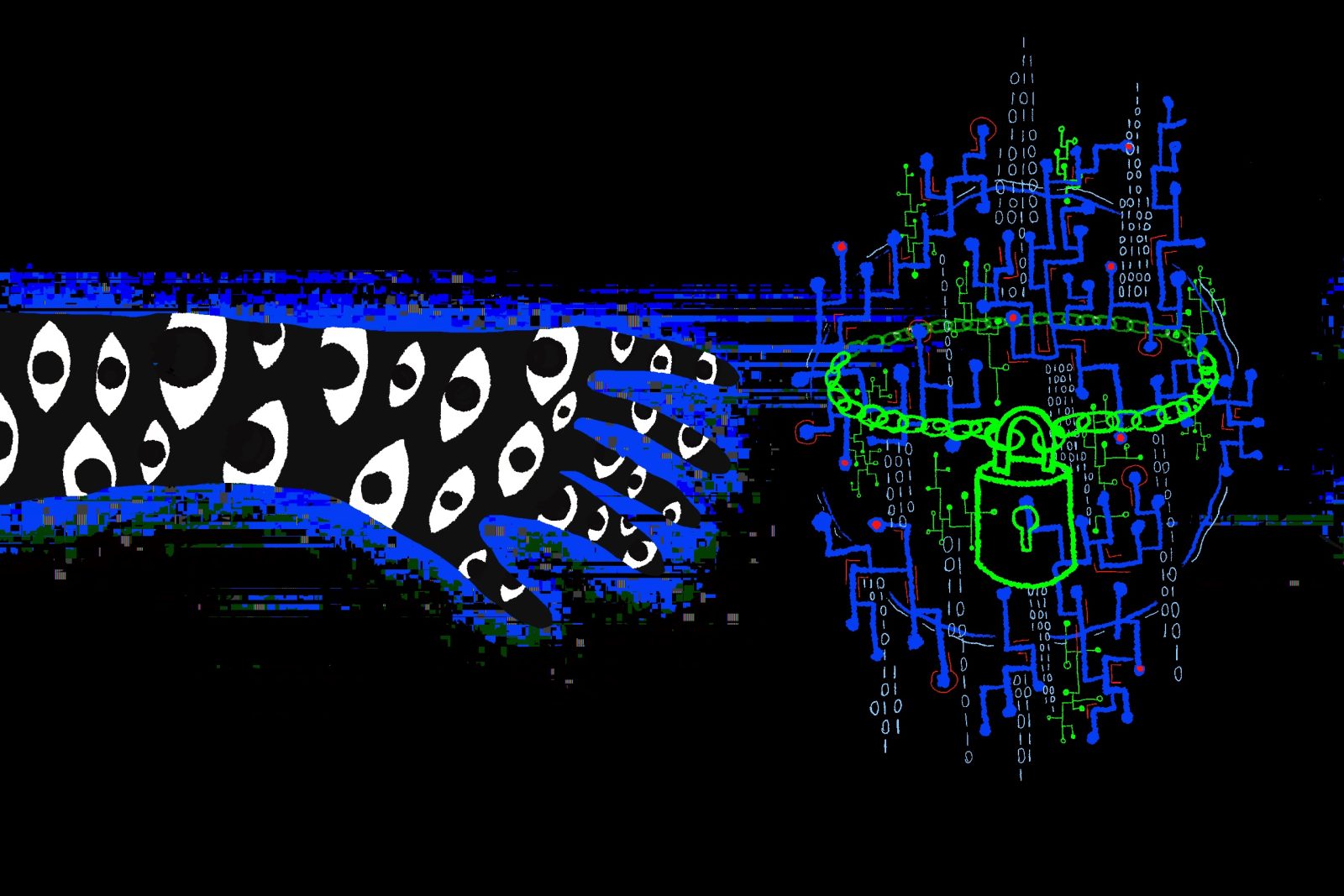
Image by: Eva Gombár-Krishnan
How can we prevent sensitive knowledge from the Netherlands falling into the wrong hands? Earlier this year, the intelligence service AIVD once again warned about espionage. China, for example, deliberately sends students and scientists here to acquire knowledge and technology.
Previous governments worked on legislation to screen researchers and master’s students in “sensitive” fields. But that is not going to happen for now: a broad screening process is ‘not feasible’, education minister Rianne Letschert said earlier this year. She is looking into whether a more limited version is possible, which might not include screening students, for example.
Fudging CVs
For now, universities and universities of applied sciences have to keep an eye on things themselves. But in a new report, research centre RAND Europe warns that this cannot be left entirely to higher education institutions. The Ministry of Education, Culture and Science commissioned the study.
Scientists and students can easily fudge their CVs, for example by failing to mention their links to certain universities or military research projects. Diplomas are sometimes forged too. The report’s authors write that this kind of fraud is difficult to detect, particularly when a foreign regime is helping.
To identify suspicious situations more quickly, higher education institutions, the government and other organisations involved should share more information with one another. Scientists and students should also be checked at different points, rather than just once. This should be done in cooperation with the rest of Europe too, so that sensitive knowledge does not leak out through other countries.
Mathematics students
Leiden University has controversial plans to bring dozens of Chinese students to the Netherlands, newspaper NRC reports. The university wants to partner with Xi’an Jiaotong University, under which Chinese students would spend a year studying for a bachelor’s degree in mathematics in Leiden. They would also receive a Leiden diploma.
Lecturers and researchers are deeply concerned about knowledge security: students sometimes work with sensitive data. The Chinese university is also said to have close ties with the military. Nevertheless, the dean wants to expand the plan to other degree programmes. The Chinese students could bring the university millions of euros each year.
The first two hundred students could arrive in Leiden in 2029. If a screening law is in place by then, it remains to be seen whether students will be covered by it.
Partnerships
This week, investigative journalism platform Follow the Money also reported on partnerships between Dutch universities and China. The article says that the Domestic Security Service, the predecessor of the AIVD, warned as early as 1990 that Dutch scientists were contributing to China’s defence industry.
FTM focused in particular on the so-called ‘Seven sons of national defence’: seven leading Chinese universities that work closely with the military. More than half of their budget goes towards research with military applications, such as developing missiles and satellites.
Eindhoven University of Technology and Maastricht University have recently severed ties with these seven universities. Other universities recognise the risks and say they are proceeding cautiously. But for now, they do not want to ban the partnerships.
Een lijst met artikelen
-

Tilburg student demands 20,000 euros after false accusation of plagiarism
Gepubliceerd op:-
Education
-
Would you rather see EM than AI generated news in your search results? Add EM as a source in Google. Or just ignore the search engines and chatbots and use our mobile app instead.
De redactie
Comments
Read more in Safety
-

University struggles to get a grip on social safety
Gepubliceerd op:-
Safety
-
Staff
-
-
Action Aletta: ‘Feeling safe is a basic need’
Gepubliceerd op:-
Safety
-
-
Significantly more reports to confidential counsellors, more complex cases as well
Gepubliceerd op:-
Safety
-

Leave a comment