Ad

University struggles to get a grip on social safety

There is still much to be done to improve social safety at Erasmus University. That is the conclusion to be drawn from warnings issued by the Labour Inspectorate and four separate reports. What is going on? An analysis.

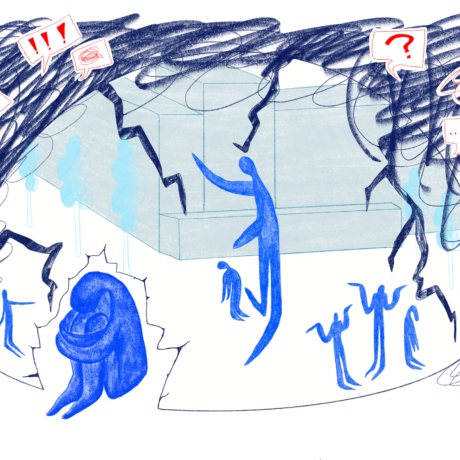
Image by: Noa Zonderland
One report after another has brought worrying – yet hardly surprising – news in recent months. More staff say they have experienced unwanted behaviour, according to the latest staff survey. The number of reports to confidential counsellors and Safe@EUR is rising, according to the confidential counsellors’ annual report and the social annual report. Yet many staff are too afraid to report incidents, the ombuds officer reported in his multi-year report. The Labour Inspectorate issued a warning because the university does not have a sufficiently clear picture of the risk factors for unwanted behaviour. As a result, it is unclear whether the policies in place are effective.
The figures on social safety have been depressing for years. In 2019, almost half of all university staff in the Netherlands said they experienced an unsafe social climate at work. This can include gossip, deliberately withholding information, intimidation, abuse of power and unequal treatment – examples that continue to feature in studies. Particularly among certain groups, researcher Alex Huang of ESSB concluded from the 2026 staff survey: “All marginalised groups score lower in most categories.”
More reports is a good thing
You could see a whole boulevard of waving red flags in these reports and figures, but more reports is also good news. To make it easier to report incidents, the network of confidential counsellors was set up in 2019. Reporting is important, said network founder Martin Blok at the time, because it makes clear where the problems lie. The current rise could be a sign that more people know where to find help.
Reporting unwanted behaviour is not as easy as it might seem in a hierarchical organisation such as a university. PhD candidates, for example, are highly dependent on their supervisors, while others rely on their managers for possible promotions. When Hanneke Takkenberg, professor of Clinical Decision Making in Cardio-Thoracic Interventions at Erasmus MC, was chair of the National Network of Women Professors, she said: “It’s very hard to report such cases, particularly for young academics. They are vulnerable and dependent on their superiors.”
Many staff do not lodge an official complaint because they fear reprisals, concludes ombuds officer Wico Verbaan. More than half of the reports he received had to remain confidential for that reason, he writes in his multi-year report. If a report is not confidential, he can act on it – for example, by holding a meeting in a department from which reports have come, or at least identifying where most of the problems are.
Can transgressive behaviour be prevented?
Prevention is better than cure. That is why various initiatives are being organised to prevent such behaviour. In 2025, for example, 37 active bystander training sessions took place. Staff learned how to address harmful and unwanted behaviour, either immediately or at a later date. The guiding principle was that ‘a socially safe workplace is a shared responsibility’.
That does not mean the university thinks the responsibility should rest with staff, said Mies Franken, an HR policy officer for social safety, in late 2025. But every bit helps, and, as she put it: “Social safety is a long-term effort.”
Confidential counsellors also have a preventive role, according to their own annual report. They work with other organisations within the university, such as the Inclusion, Diversity, Equity & Access Center and the Student Wellbeing Programme. Providing information and raising awareness about what constitutes unwanted behaviour, how to address it and where to report it remain high on the confidential counsellors’ agenda.
Can an unsafe social climate be prevented at all? If incidents are not reported, it is difficult for policymakers to identify where the problems lie and how to address them. Huang had a suggestion, something he says is rarely, if ever, done: talk to people who have experienced unwanted behaviour if you want to develop effective policies. This also helps people feel heard and safer about reporting incidents in the future.
Workload remains high
Social safety is directly linked to high workloads, Franken previously told EM. Study after study shows that workloads at universities remain high. “Social safety is also about when you send emails – on a Sunday afternoon or not? Do you call in sick or do you still come to the office half-ill? With such behaviour you are unconsciously sending a message: I expect the same from you at the weekend or when you are ill.” Social safety is about being able to be yourself, Franken explained, but also about having the courage to speak up when a boundary has been crossed.
The Erasmus University also lacks sufficient insight into persistently high workloads, according to the Labour Inspectorate. Why does this workload arise, and why does it remain so high? The causes are not clear enough, just as with the problems surrounding social safety. The Inspectorate issued a warning about this too. The university has until April 2027 to gain a clearer picture of the causes and risks. It must then demonstrate by early 2028 that its policies on these issues are effective. If it fails to do so, the Inspectorate could impose a fine.
The university subsequently told EM that it would take the Labour Inspectorate’s concerns seriously. The points raised by the Inspectorate will be used to improve staff wellbeing. The Executive Board also said it was shocked by the findings in the ombuds officer’s report. Time and again, the university has shown a willingness to improve, and has expressed shock when, for example, it emerges that many staff feel too unsafe to report unwanted behaviour. However, this has not yet led to significant improvements in the figures.
Read more
-
Significantly more reports to confidential counsellors, more complex cases as well
Gepubliceerd op:-
Safety
-
De redactie
-
 Tessa Hofland
Editor
Comments
Ad
Read more in Staff
-
Unrest in Mandeville since arrival of study associations: ‘It is the first time for staff that there’s beer in the department’
Gepubliceerd op:-
Staff
-
Student life
-
-
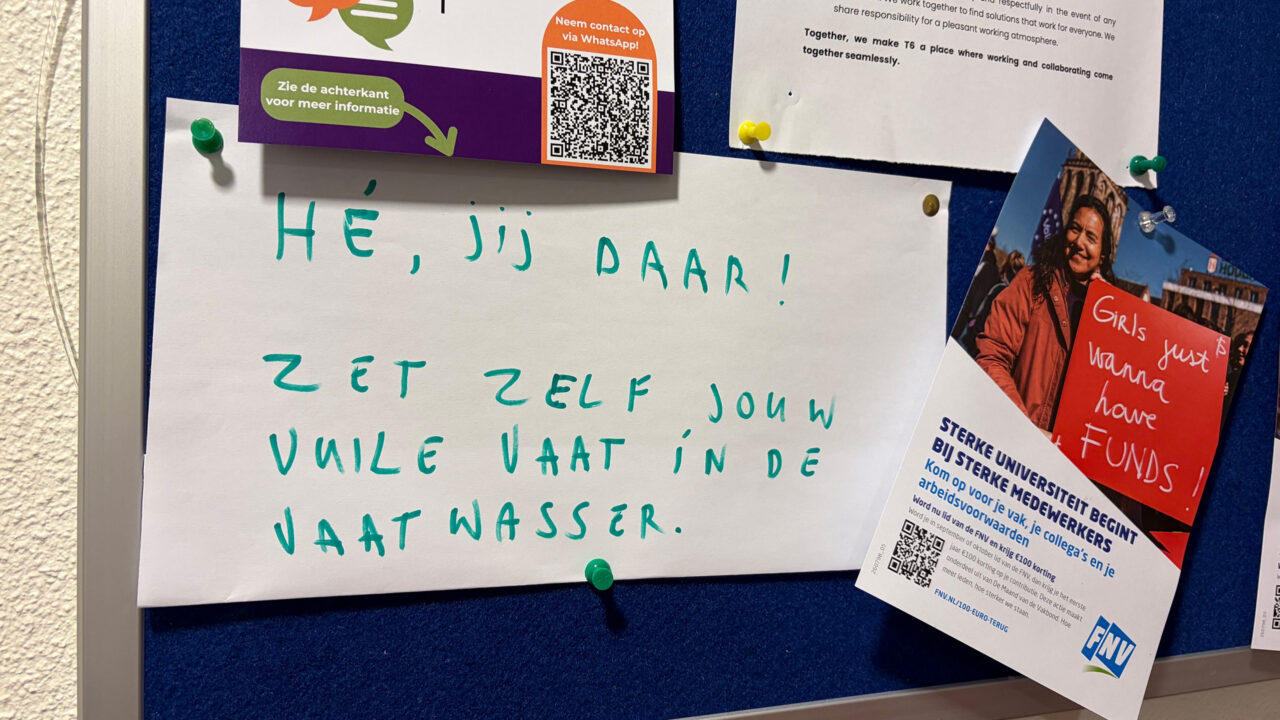
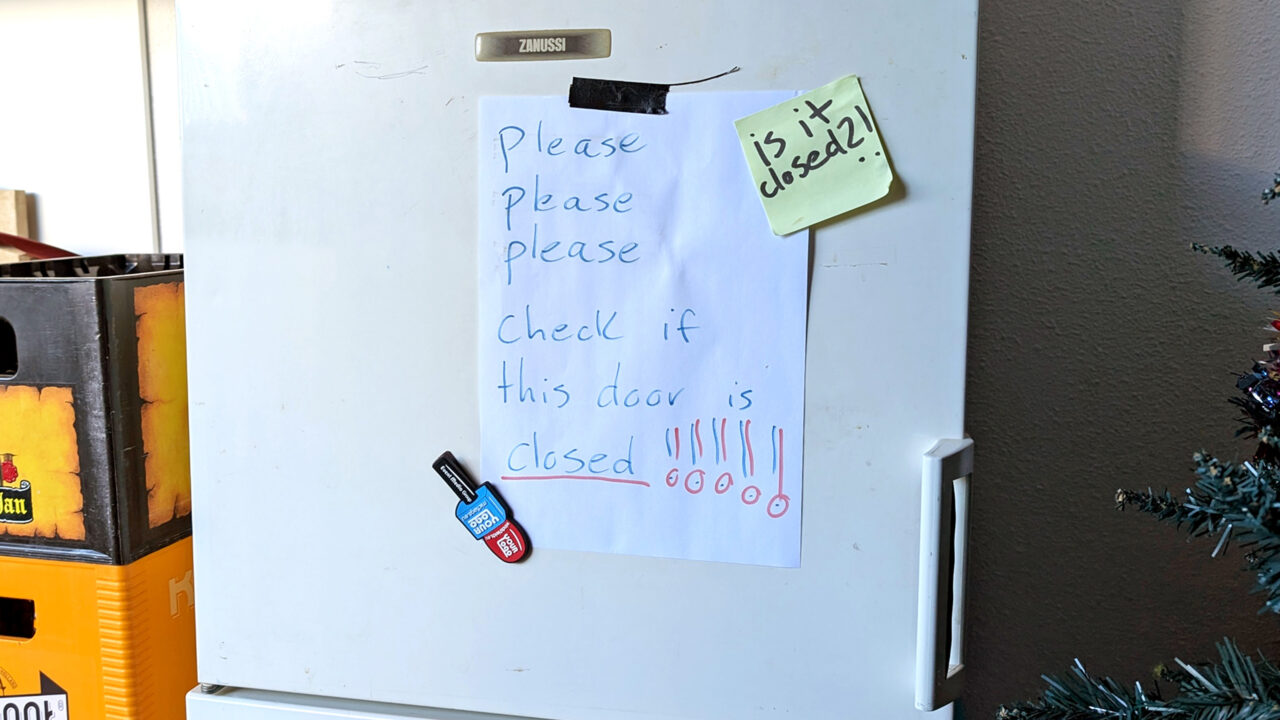
Hey, you there! Clean up. Do you have notes like that in the office too? Send them to us
Gepubliceerd op:-
Staff
-
-
University receives four warnings from Labour Inspectorate
Gepubliceerd op:-
Staff
-
Leave a comment