Ad

Spontaneous nonsense
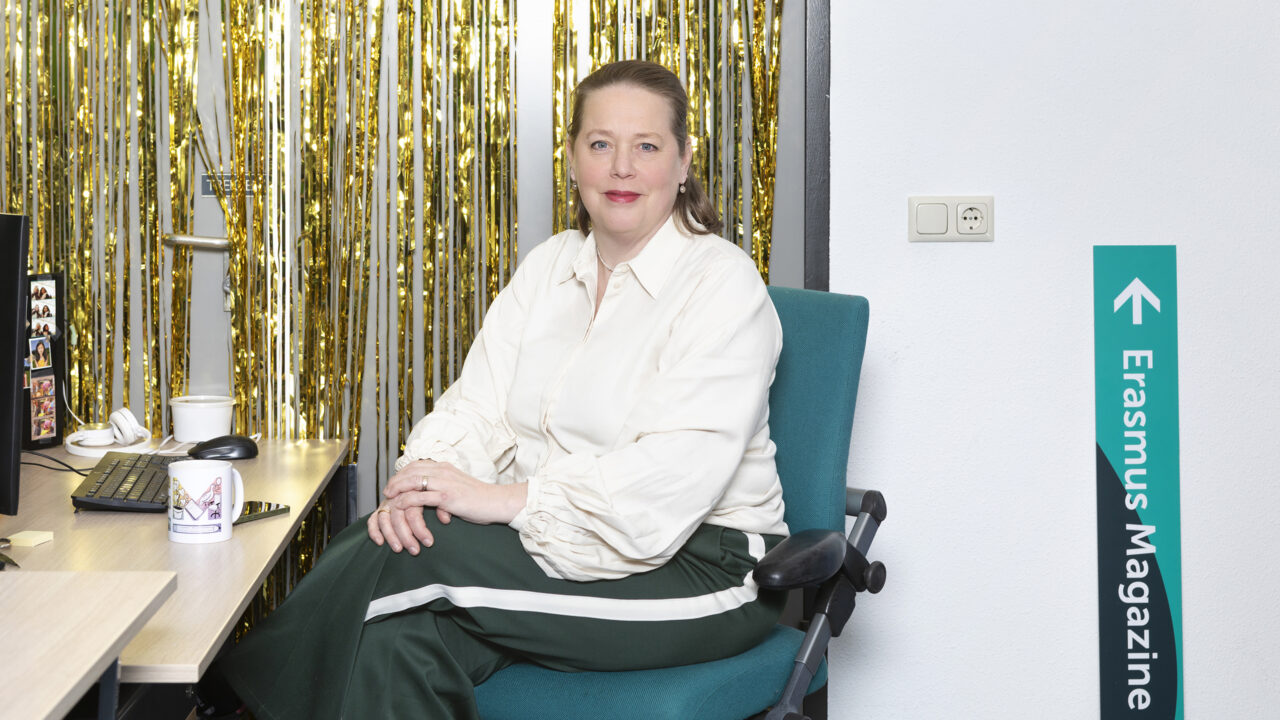
Editor-in-chief Wieneke Gunneweg rather appreciates the chair of the Executive Board's irritable response to critical questions about executives' use of AI.

Image by: Geisje van der Linden
Was it petty, or perhaps even ‘a witch hunt’, for EM to run the Executive Board’s speeches and LinkedIn posts through the AI-detection programme Pangram? Was it an easy way to get a story, or did we put our finger on a sore spot created by AI? I’ll leave that to the reader to decide, but the findings did give me food for thought.
I once spoke to a rector who told me he always came up with his speeches on his bike, on the way to the event: a few key words, a little narrative, some basic speaking skills, and he was ready.
You might say that’s no longer the way things are done. It’s true that executives, ministers and the king have been using speechwriters for a long time; that’s nothing new. But I thought the argument that, as an executive, you ‘simply don’t have time’ to write a speech yourself was a poor one.
As an executive, you are often a prominent guest at all kinds of events. People are glad you’re coming, perhaps proud that you’ve made room in your calendar, and expect you to show personal involvement in your opening remarks. No one expects Castro-style speeches, but spontaneously giving an example or sharing a personal insight seems to me to be a core part of your job. I’m afraid that outsourcing this, especially to a machine, puts an end to spontaneity, slips of the tongue, odd examples and verbal gaffes. To authenticity and being relatable.
Look, it seems obvious to me that AI is a ‘disruptive core technology’. The question is: when should you use it, and how should you – or shouldn’t you – use it? That’s something we need to teach students. Being cautious doesn’t mean being conservative; it means thinking about the pros and cons of using AI.
So I find the distinction made by chair of the Executive Board Annelien Bredenoord in response to questions from the University Council about the use of AI in the board’s speeches – that ‘using AI in communications is completely different from using it for a thesis or study assignment’ – artificial.
And the remark ‘my speeches have always been written with the help of a speechwriter, and I don’t mention that either? How is that different?’ strikes me as slightly worrying.
The University Council and I weren’t saying that you should never use AI for speeches. But if you do, why not follow academic conventions and disclose it, or at least be open about it when asked?
And the fact that speechwriters weren’t mentioned before is an oversight from the past, not a reason to keep quiet about it in the future. What’s more, let’s please continue to distinguish between help from a person and help from a machine. While we still can.
It was nice that these remarks were made spontaneously during the University Council meeting, and that we can hear from them that the chair of the Executive Board is a little irritable about the articles and critical questions from the university’s representative bodies and EM. And that she calls it a ‘nonsensical discussion’. I may not agree with her, but I do appreciate the non-machinic sincerity.
Een lijst met artikelen
-
Sheer nerve
Gepubliceerd op:-
Editorial
-
De redactie
-
 Wieneke Gunneweg
Editor-in-chief
Comments
Ad
Read more in Editorial
-
Sheer nerve
Gepubliceerd op:-
Editorial
-
-
Liminal times
Gepubliceerd op:-
Editorial
-
-
How EM ended up at an awards festival thanks to talent and teamwork
Gepubliceerd op:-
Editorial
-
Leave a comment