Significantly more reports to confidential counsellors, more complex cases as well
The number of reports to confidential counsellors rose by more than half in 2025. This is shown by the confidential counsellors’ annual report and the university’s Social Annual Report. According to the confidential counsellors, there were not only more cases, but also more complex ones.
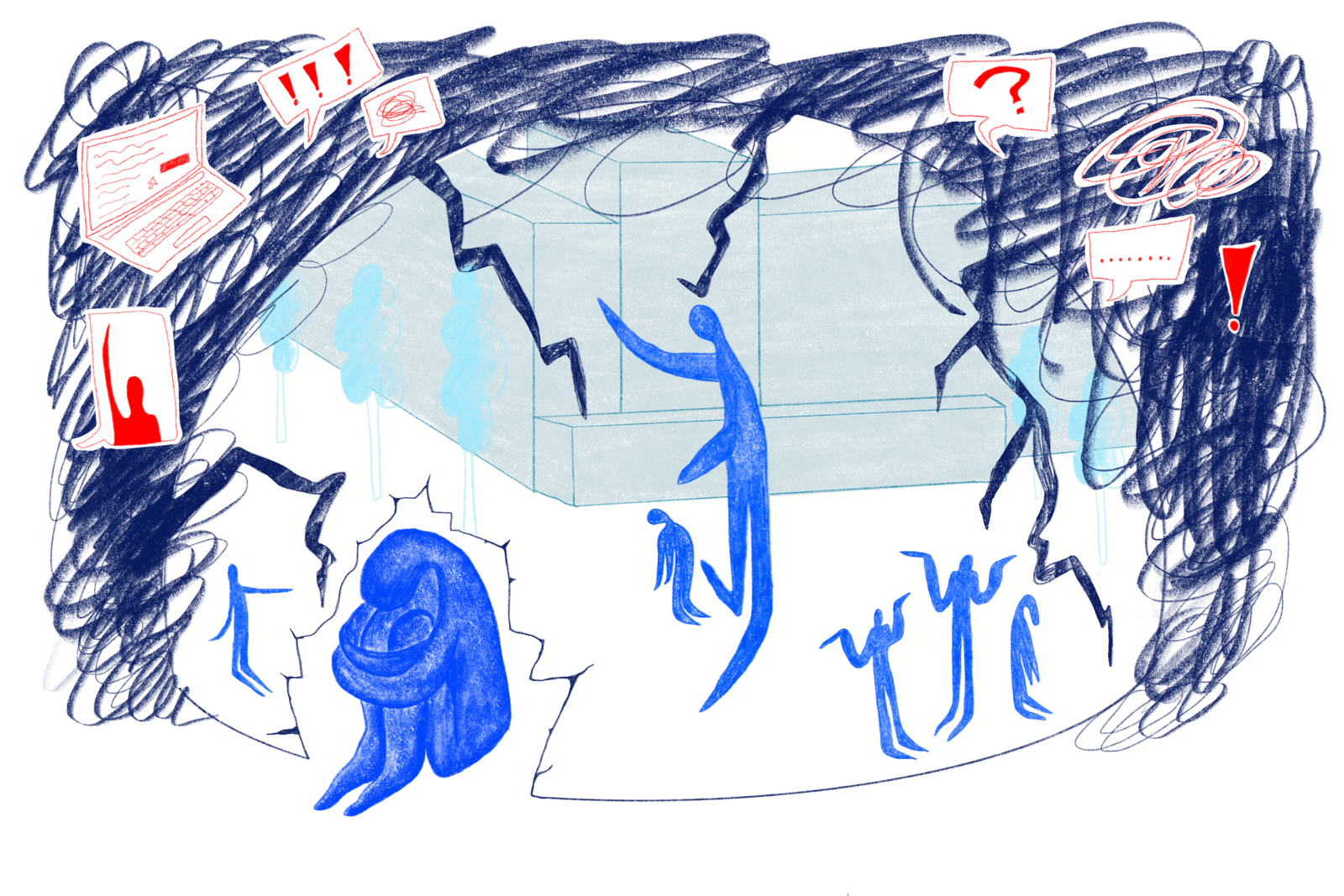
Image by: Sonja Schravesande
The number of reports to confidential counsellors rose by more than 50 per cent in 2025. In 2024, 90 members of staff went to a confidential counsellor. A year later, the figure was 140, more than three times the 46 recorded in 2020. Safe@EUR received 95 reports from members of staff. About half said they had been involved as a bystander in a concerning situation involving a student or between students.
The confidential counsellors observed that most reports in 2025 concerned more complex cases than in previous years. “People often only find their way to the confidential adviser when a situation has already escalated considerably. This is a point of attention”, the confidential counsellors’ annual report states. Both Safe@EUR and the confidential counsellors have noted this. The Social Annual Report, for example, describes how “polarisation and discrimination manifest both in concrete interpersonal situations and in more complex experiences linked to socio-political unrest.”
The more complex cases do not necessarily explain the rise in the number of reports. According to the confidential counsellors’ report, it could also be a sign that more people know which channels to turn to for support.
Een lijst met artikelen
-
More than half of staff experience work-related stress
Gepubliceerd op:-
Campus
-
Discrimination
Most reports from members of staff fell into the category of ‘cooperation and interpersonal problems’. A total of 108 members of staff reported such issues. 64 reports concerned working conditions, such as workload or an existing workplace conflict. 37 people reported bullying.
Discrimination was the subject of 12 of the reports made by the 44 students who went to a confidential counsellor. 18 members of staff reported discrimination. ‘International staff and students are strongly represented in discrimination reports’, the confidential counsellors’ annual report states. It also notes that discrimination probably occurs much more often, because “discrimination is often normalised by those it happens to, which means that students who do report may represent the situations with the greatest impact.”
PhD candidates have been a large group among those making reports for years. According to the confidential counsellors’ annual report, they are ‘structurally vulnerable because of their strong dependence on their supervisor, competition among colleagues and limited room for manoeuvre’. Last year, 42 PhD candidates went to a confidential counsellor.
Een lijst met artikelen
-
Researcher Alex Huang: The corporate world is often better for queer people of colour than this university
Gepubliceerd op:-
Diversity
-
More tailored support needed
More tailored support is needed to deal appropriately with the more complex cases, the Social Annual Report concludes. In support of this, it refers, among other things, to the confidential counsellors’ annual report: “Annual reports show that reports of worrying behaviour also regularly require more intensive counselling.”
To meet the demand for more tailored support, the Safe@EUR team has already been expanded by 0.6 FTE this year. Work is also under way on a reporting system, according to the confidential counsellors’ report: “In response to the report of the national Taskforce on Combating Antisemitism (February 2026), confidential counsellors will receive training in the autumn of 2026 aimed at recognising and dealing with reports of discrimination, including antisemitism.” The network of confidential counsellors will be further strengthened in early 2027, including through improvements to the registration system. “The ambition is to work with a uniform digital system by 2027, in line with the system used by Safe@EUR and the ombudsperson”, the confidential counsellors write.
Een lijst met artikelen
-
Staff and students do not feel safe enough to report concerns, Executive Board shocked
Gepubliceerd op:-
Safety
-
De redactie
-
 Tessa Hofland
Editor
Comments
Comments are closed.
Read more in Safety
-
No to sexual misconduct: how student societies and nightclubs want to make nightlife safer
Gepubliceerd op:-
Culture
-
Safety
-
-
Inspection intervenes at Erasmus MC intensive care unit, Gommers steps down
Gepubliceerd op:-
Safety
-
Staff
-
-
Report: education sector unable to safeguard knowledge security
Gepubliceerd op:-
Safety
-