Ad

25 years of Rotterdam Psychology: ‘In the end we made something really special’

The Psychology programme has been running for 25 years. ‘Founding father’ Henk Schmidt and founding lecturers joined students from the first cohort to share memories. “Henk was the favourite and everyone was in love with Peter.”
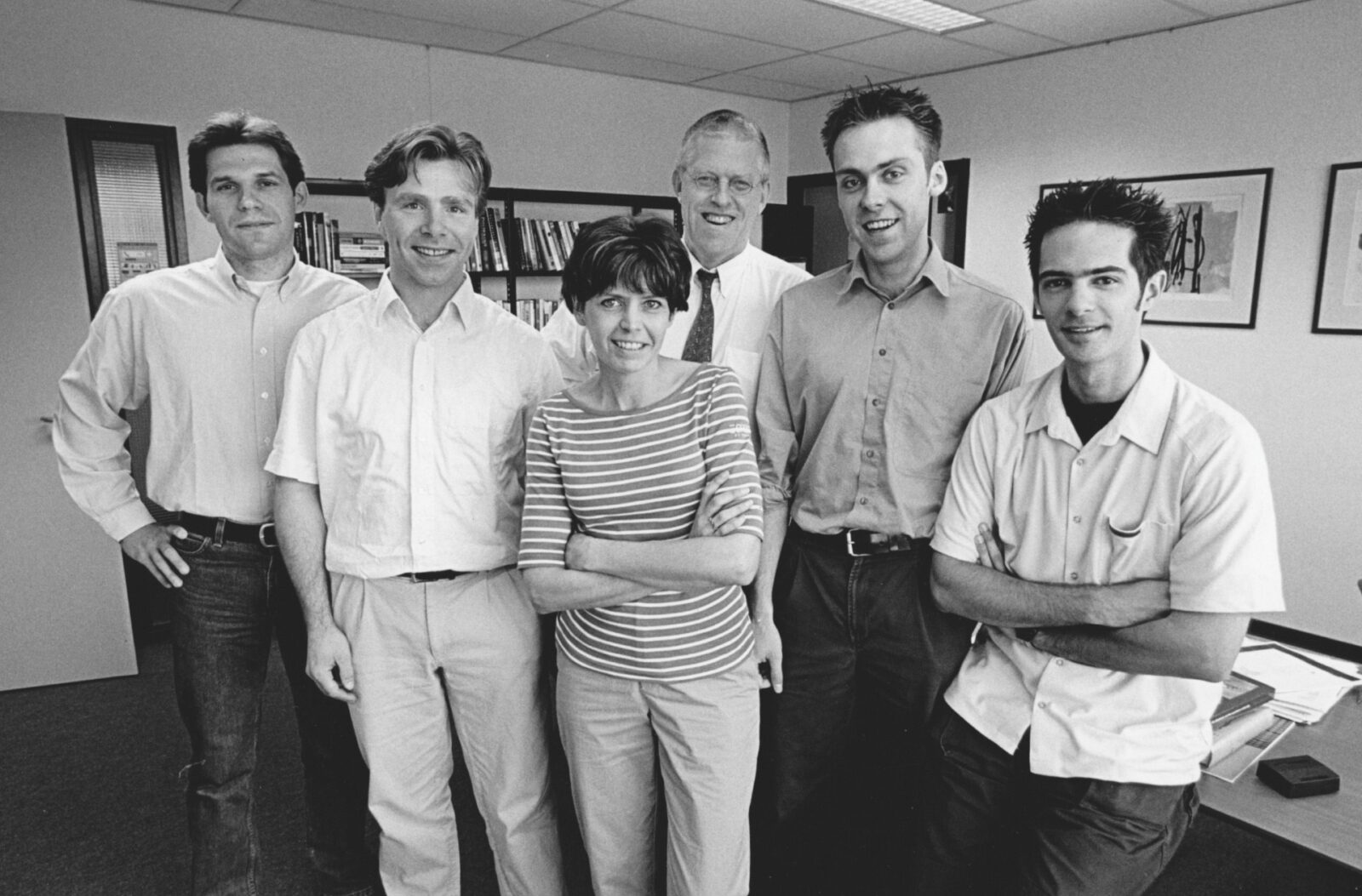
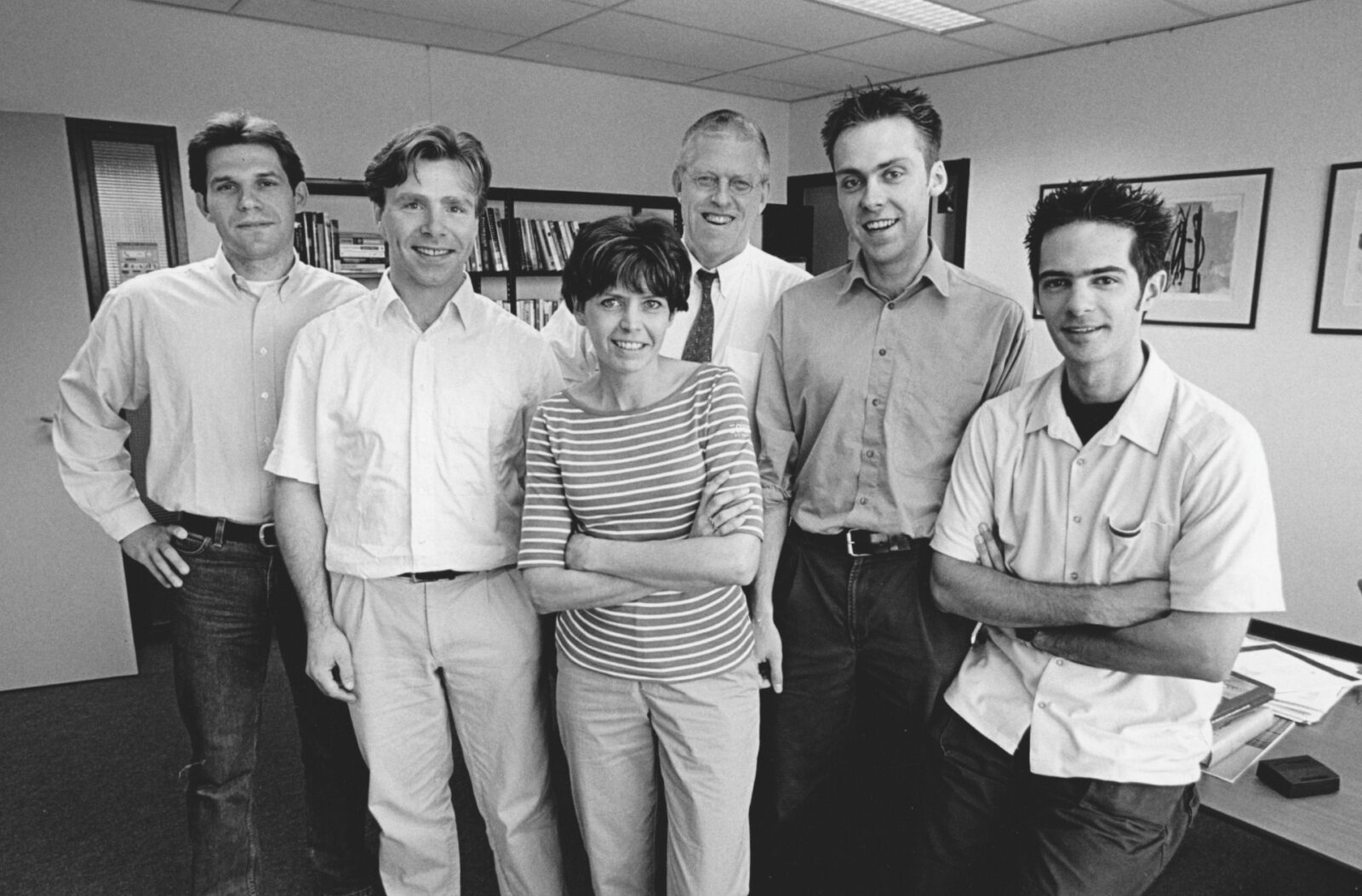
Henk Schmidt and his very young colleagues from Maastricht in 2001. From left to right: Remy Rikers, Wilco te Winkel, Evelien Osseweijer, Henk Schmidt, Peter Verkoeijen and Gino Camp.
Image by: Henk Schmidt
In the basement of the Erasmus building, cakes and lemonade are ready on Friday afternoon. On the cocktail tables lie black-and-white photos of the first Psychology lecturers and students from 2001. Former student Frank Groosjohan is studying on a group photo. “I can’t locate myself”, he says. He looks at the blurred faces on the print in front of him. A moment later: “Oh, there I am. At the back on the stairs.”
From Maastricht
Around thirty people come together on Friday afternoon to reminisce about the early days of the programme. In 2001, Psychology professor Henk Schmidt moved from Maastricht to Rotterdam to build a new psychology programme from the ground up. “I lived in Limburg, in Epen, a lovely little village. But I also wanted to live in a big city at least once, so I could cycle to the cinema.” That dream came true. From his home in Kralingen he could take his bike to Cinerama.
Schmidt did not come to Rotterdam all by himself. He brought four very young colleagues with him. Peter Verkoeijen was part of that group, along with Wilco te Winkel, Gino Camp and Remy Rikers. Some of them ended up living in Crooswijk. “And we were immediately confronted with big-city charm. At one point, I think there was even a junk urinating against Wilco and Remy’s front window. It was a huge glass façade. We were initiated straight away”, laughs Peter Verkoeijen. “It was an introduction to the real city. We were still a bit used to the provincial atmosphere of Maastricht.”
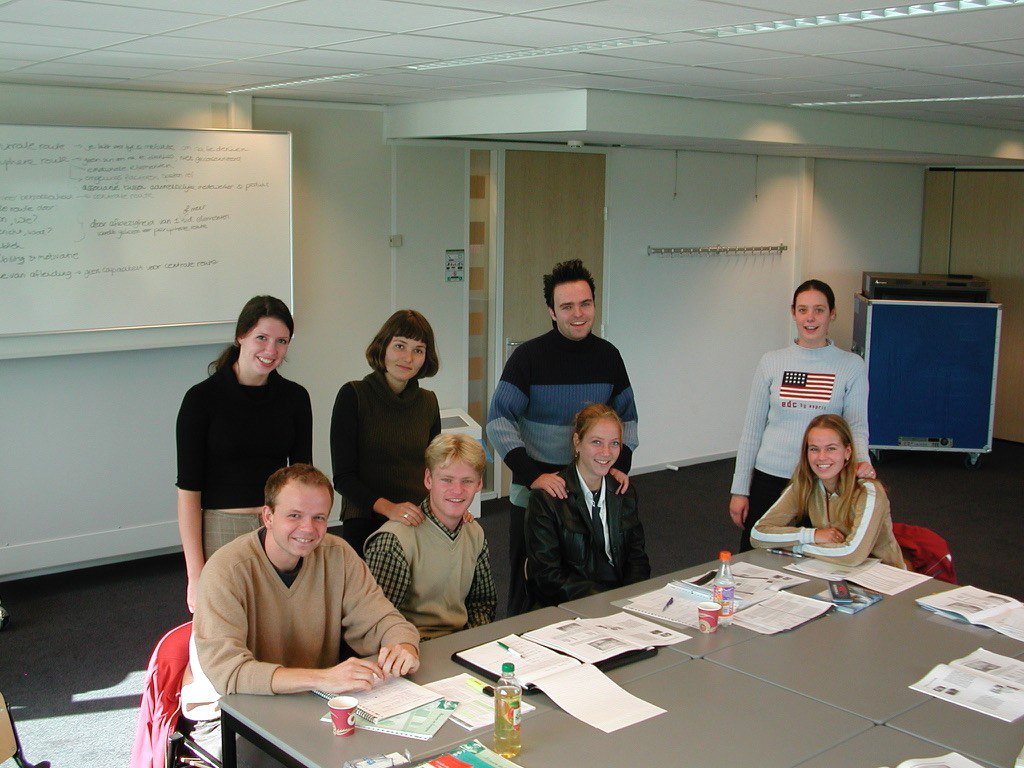
The first Psychology students in 2001.
Image by: Collection Psychology Faculty
The first students
The Maastricht lecturers arrived in January and by August 2001 the programme had already started with its first cohort of students. “I was interviewed by Rotterdam’s Algemeen Dagblad and told them that a new programme was starting”, Schmidt says. “And on the open day, I think about a hundred students turned up.” In the end, ninety students started on the programme.
These first students also look back on their study years with great affection. “I have always felt very much at home”, says former student Wim Labree. “The programme was small, so you knew everyone. The lecturers were young, which made it very easy to approach them.”
'Henk Schmidt is everyone’s favourite. And everyone was secretly in love with Peter Verkoeijen'
One of the things that has stayed with him was a study trip to Vienna. They followed in the footsteps of Sigmund Freud, the Austrian founder of psychoanalysis, although there was little of Freud himself to see. “We spent half an hour in the Freud museum. That was it”, he laughs.
Former student Dirk-Jan Bierenbroodspot has fond memories of a barbecue by the Kralingse Plas. “I believe we always did that to kick off the academic year.” His favourite lecturer? Henk Schmidt. “But Henk Schmidt is everyone’s favourite, he’s a born storyteller. And, don’t tell anyone, but everyone was secretly in love with Peter Verkoeijen.”
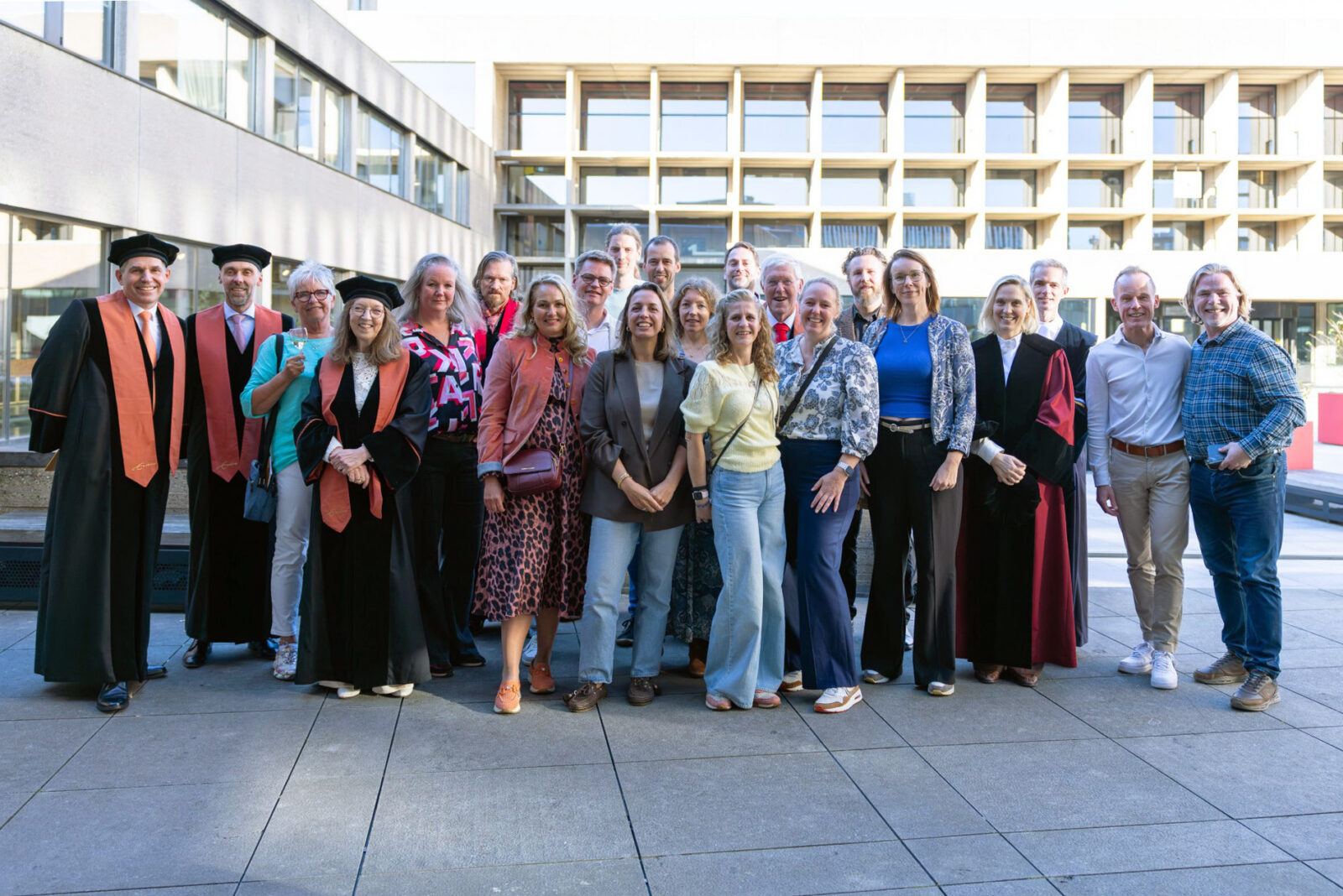
The former students and the founders of the programme reminisce together in the Erasmus Building.
Image by: Rhalda Jansen
Straight to number one
After the first year, the programme went straight to number one in Elsevier’s Keuzegids. For twelve years in a row, the degree was rated the best psychology programme in the Netherlands.
“That was always celebrated in style”, Schmidt says. “I remember at one point I had to be picked up off the floor by Wilco”, he laughs. Champagne played an important role in that. “We drank it on an empty stomach.”
Problem-based learning
What made the programme popular, according to the lecturers, were the principles of problem-based learning. That teaching method was still new at the time: students worked in small groups and mainly learned by actively engaging with the course material themselves.
Marise Born, who joined the programme in April 2001 and is today saying goodbye as a professor, is a firm believer in the power of problem-based learning. “Alongside subject knowledge, in small groups you also learn how to work together.” As an occupational psychologist, Born sees great value in that. “People who are introverted, or extremely dominant, learn in such a group to take each other into account. You only learn those kinds of skills in small groups.”
'Those five years I spent in the programme were, professionally and personally, the best years of my life'
Scaling up
From the first ninety students, the programme has now grown to almost six hundred students. Schmidt views this with mixed feelings. “I have a strong belief in relatively small programmes with a limited staff. Then, contact between students and lecturers is much easier.”
Verkoeijen, who is still attached to the programme as an endowed professor, also regrets that problem-based learning has disappeared. “It coincided with scaling up”, he says.
The financial pressure on universities plays an important role, according to Born. “For all higher education institutions, it has become increasingly difficult financially. The amount you receive per diploma has steadily declined over time. One way of dealing with that was simply to admit more students.”
Een lijst van afbeeldingen
The best years
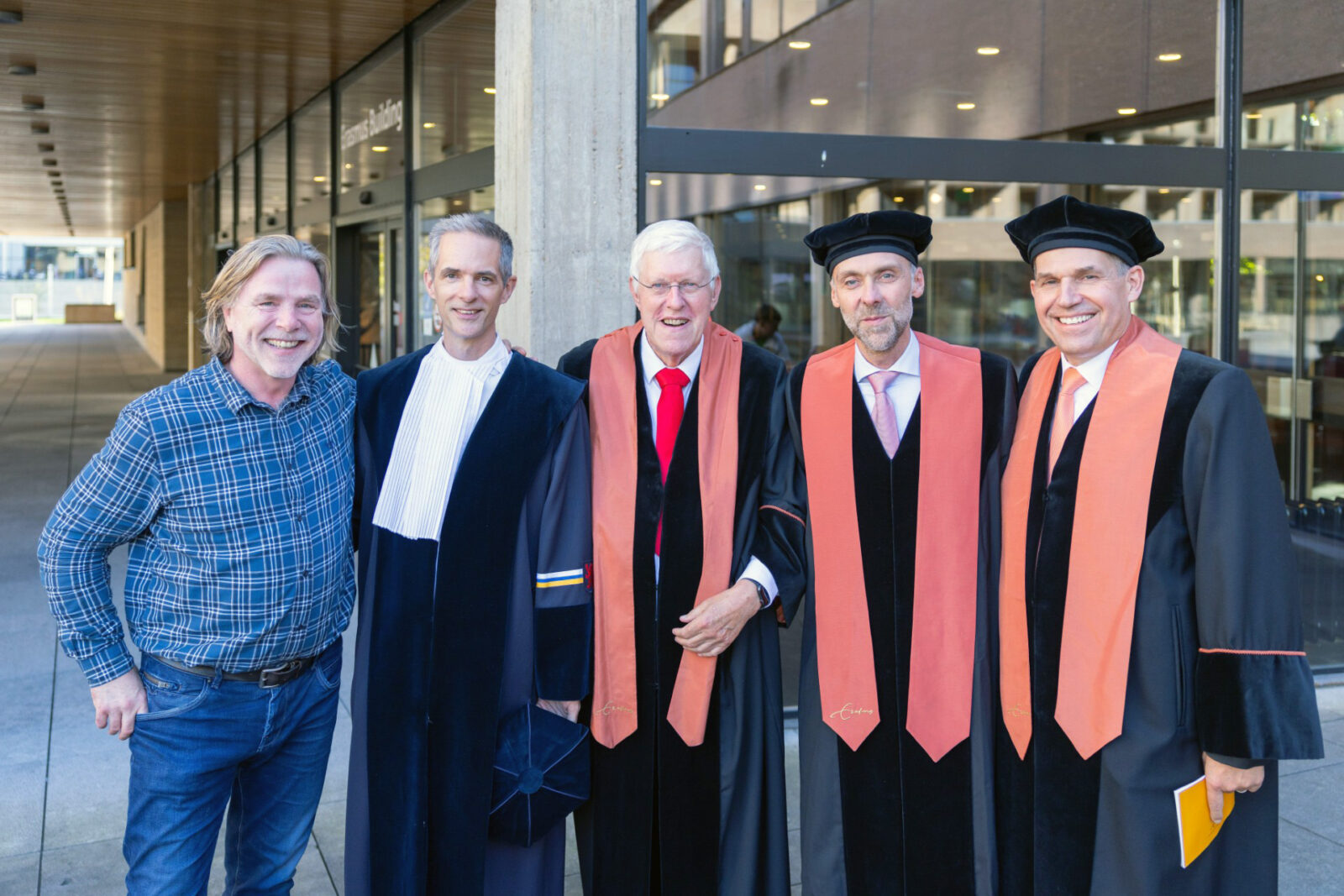
Schmidt looks at the old photos on the cocktail table once more and smiles. “I still look back on that time with so much pleasure. And when I see these photos again, I think: yes, in the end we made something really special of it.”
For him, pride is what dominates his feelings. “When I look back, I think of those five years in which I was with the programme.” He later became dean of the faculty and rector of the university. “But those five years were, professionally and personally, the best years of my life.”
Een lijst met artikelen
-
International Psychology programme must halve intake
Gepubliceerd op:-
Internationalisation
-
De redactie
-
 Feba Sukmana
Editor
Comments
Ad
Read more in History
-
EUR anniversary: eleven decades of university life in eleven photos
Gepubliceerd op:-
History
-
In Pictures
-
-
Cora Boele’s departure from EUR will cause the university to suffer ‘memory loss’
Gepubliceerd op:-
History
-
Leave a comment