Ad

Two-million-year-old fossils found during drilling on campus: ‘This proves there was once a sea at Woudestein’

Fossils around two million years old have been found during drilling to a depth of nearly 250 metres on Woudestein campus. Bram Langeveld, curator at the Natural History Museum Rotterdam, spent hours sieving tiny shells and marine animals that came up with the mud.
U kunt deze ingesloten inhoud bekijken nadat u akkoord bent gegaan met cookies van YouTube.
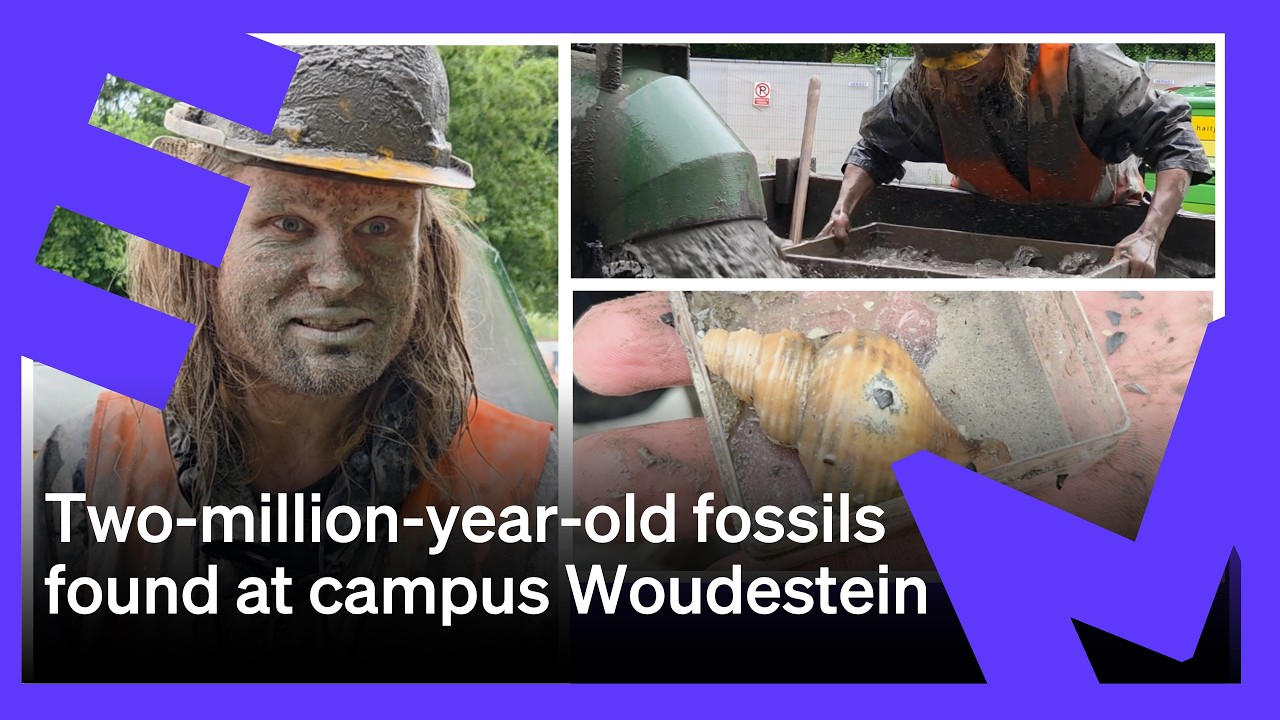
“Look, this is the finest sample I’ve brought up”, beams Bram Langeveld. He is standing near the Kralingse Zoom entrance, where a company is installing a heating and cooling system for the Tinbergen Building. Langeveld pulls a small transparent container out of a bag full of mud and grit. It holds his favourite finds. Inside is the approximately five-centimetre shell of a whelk. “Today you only find these far out in the North Sea, or further towards the Arctic”, says Langeveld, who is covered in mud from head to toe. The specimen resting in his hand is around two million years old.
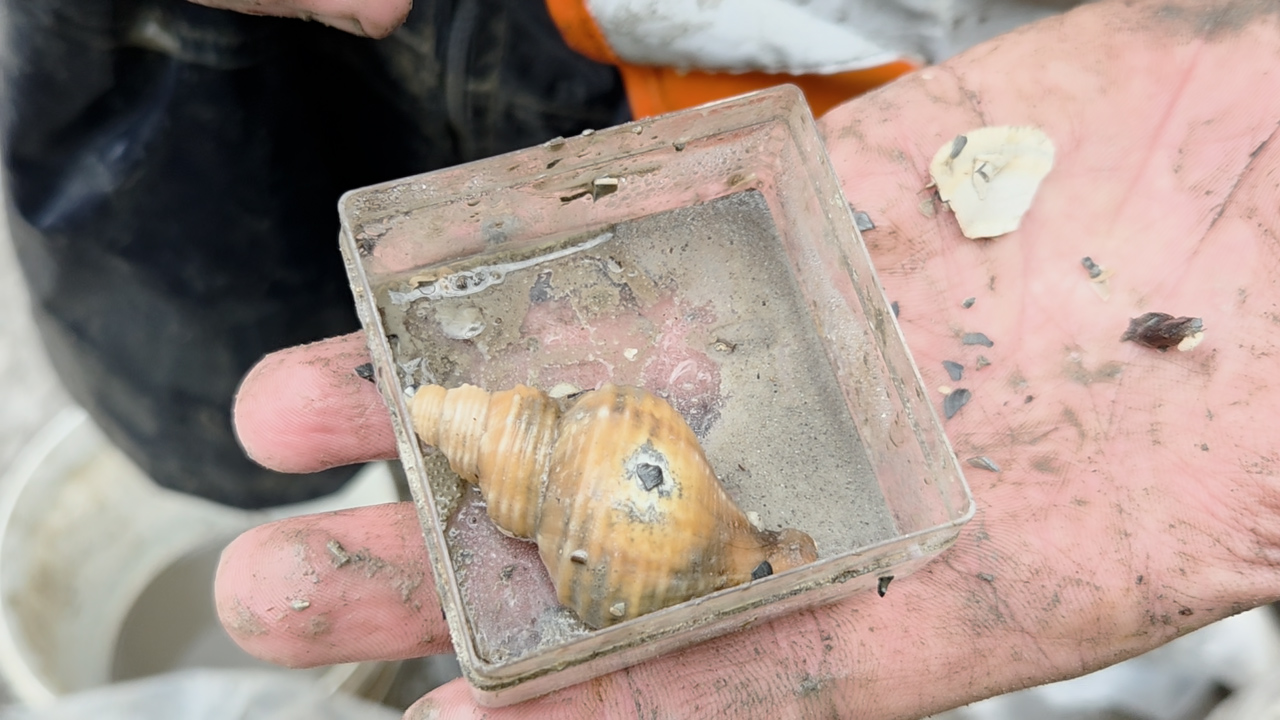
The two-million-year-old whelk has been safely preserved.
It is one of the pieces of evidence proving that the site where Woudestein campus now stands was once covered by the sea. It also points to a climate very different from the one we know today. Langeveld sees the fossils he finds as pieces of a puzzle: “By putting together pieces from all kinds of drillings across the Netherlands, we get an increasingly complete picture of what once lived here. These shells help us place ourselves in a broader context.”
Drilling into the past
The Tinbergen Building is getting a new heating and cooling system. This sustainable technology uses deep underground energy storage to heat and cool a building in a CO2-neutral way. Drilling took place last week near the Kralingse Zoom entrance. Langeveld heard about the plans and immediately contacted the drilling company. “I basically talked my way in”, he says. Now he spends day after day sieving the enormous stream of mud for shells brought to the surface by the drilling.
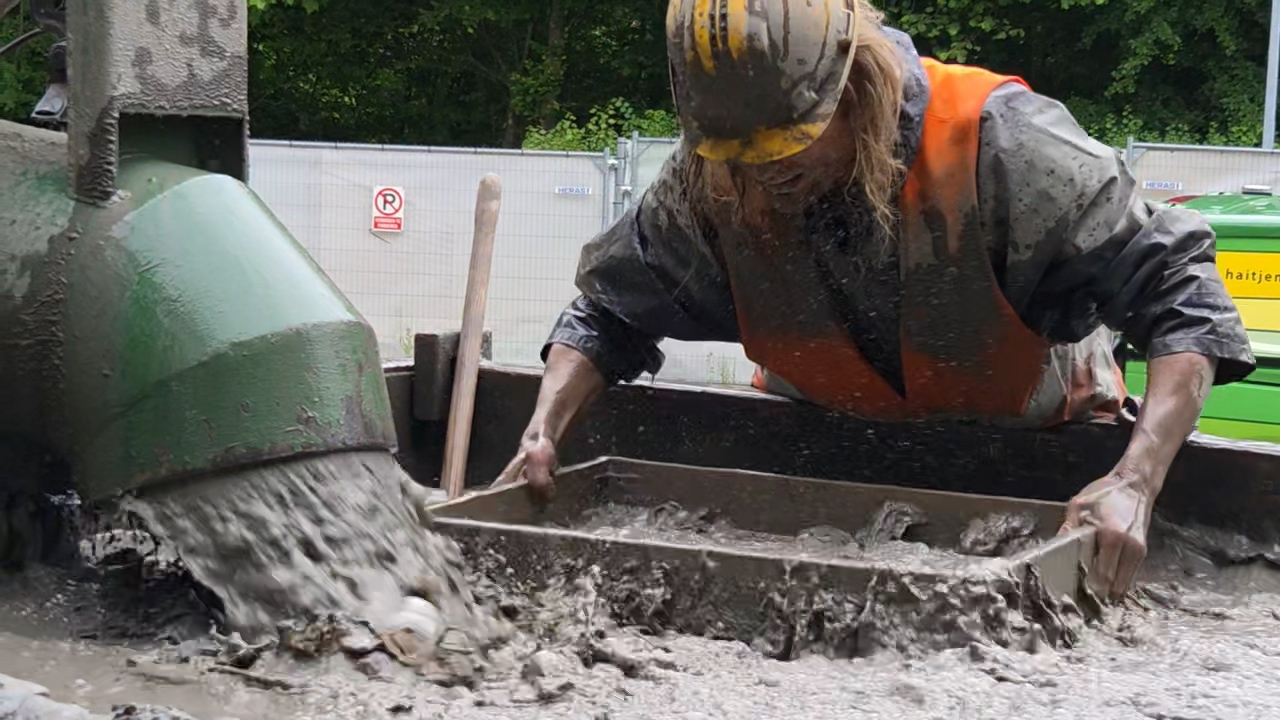
Curator Langeveld spends hours sieving for tiny shells and fossils carried to the surface in the stream of mud from the drilling.
Image by: Nora van der Schoor
“You do need to be able to cope with a bit of mud”, laughs Langeveld, his face black with dirt. “And with a sore back.” But for Langeveld, it is all worthwhile. The Natural History Museum Rotterdam focuses on the region’s present-day and past natural history. Local drilling projects like this one are therefore especially valuable to the curator: “For me, this is the most enjoyable fieldwork there is.”
Collect, collect, collect
The fieldwork is only the first step. “Now, I need to collect, collect, collect”, Langeveld explains. The next stage is cleaning and sorting the finds. “Only then can the real research begin, and that can take years.” With the help of fellow experts, museum volunteers and citizen scientists, Langeveld hopes to work through wheelbarrow after wheelbarrow of bags full of shells over the coming years.
“My dream is to find another piece of a dolphin’s vertebra through this drilling”, says Langeveld. During an earlier search for fossils elsewhere on campus, he found a tiny fragment of such a bone. He is optimistic that this drilling will produce a similar discovery. “That captures the imagination a bit more than these shells”, he says. Laughing, he adds: “To get genuinely excited about this, you do need to have a bit of a congenital obsession, like me.”
Een lijst met artikelen
De redactie
-
 Nora van der Schoor
Video editor
Comments
Comments are closed.
Ad
Read more in EM TV
-

Come for the events, stay for the people. Students join associations despite study pressure
Gepubliceerd op:Article type: Video-
EM TV
-
-

EM TV newsflash: two years wait for medical internship, lay-offs at RSM and shortage of 20,000 student rooms.
Gepubliceerd op:Article type: Video-
EM TV
-
-

I Love Hobbies: For Florian, playing the piano is existential
Gepubliceerd op:Article type: Video-
EM TV
-