Ad

U-council: tension over personnel policy, sensitive collaborations and the Canvas hack
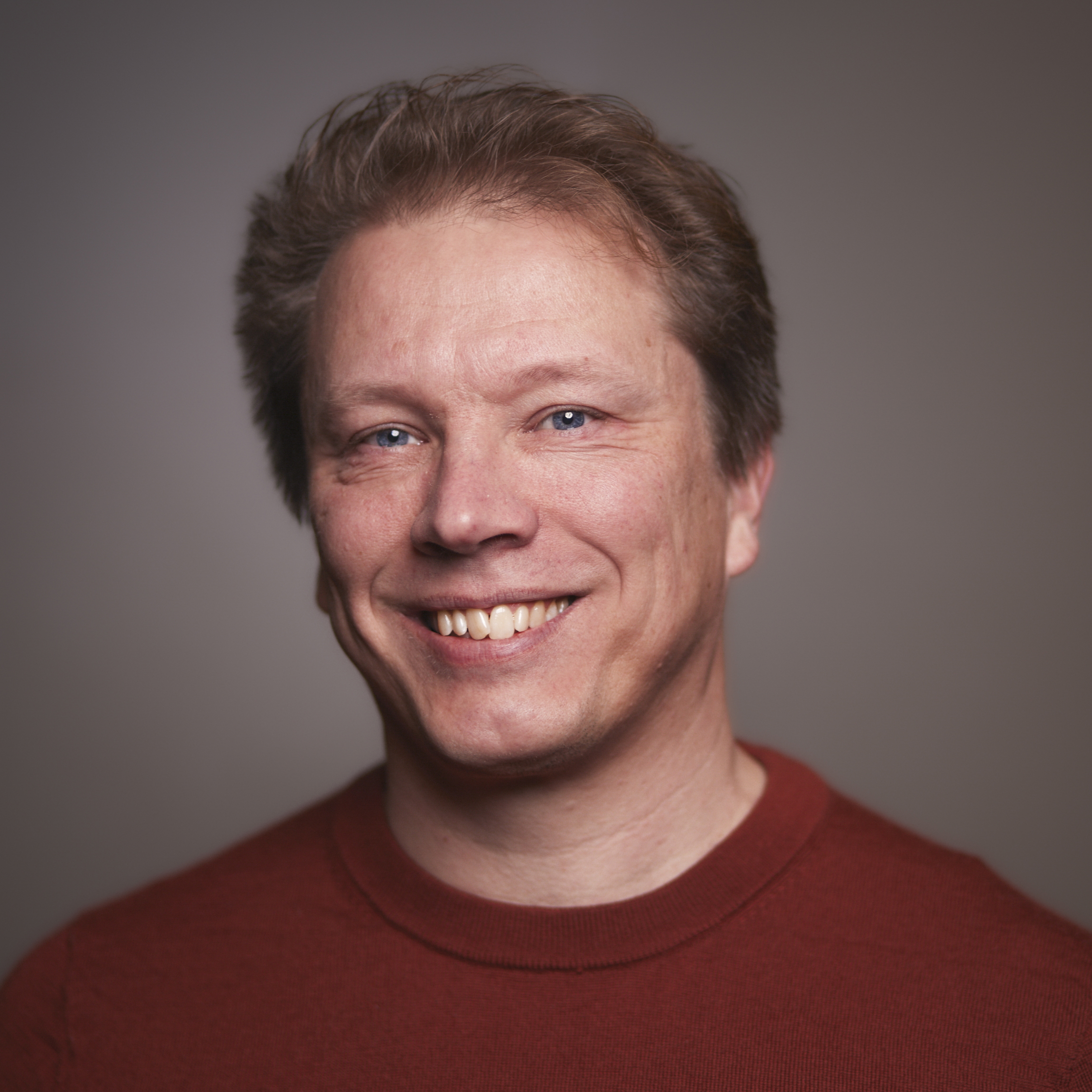
Twelve students and twelve staff members put the screws on the three members of the Executive Board every six weeks during the University Council’s ‘consultation meeting’. EM is present and keeps a finger on the pulse of university democracy.

Image by: Ami Rinn
Last Tuesday the discussion included concerns about the strategy, sensitive collaborations and the Canvas hack.
While rain lashes down outside, Polak 1.23 is pleasantly busy on Tuesday afternoon. After everyone has grabbed a piece of fruit, a mini Tony’s Chocolonely and a cup of coffee, University Council chair Luca Hellings opens the meeting. Executive Board chair Annelien Bredenoord starts with cheerful news. “Normally we don’t pay much attention to rankings, but we do like this one. We have been chosen as the third best employer in the public sector.” The room applauds.
Item 2.02 the relocation of security
A year and a half ago campus security was moved from Real Estate Services to the General Management Directorate. Council members believe this organisational change should have been discussed with the University Council and the service councils, but that never happened. “We have the right to be informed”, a council member tells responsible executive Ellen van Schoten.
The Executive Board’s vice-chair apologises. “At that time we had major problems with safety on campus. Security was not adequately organised, so something had to change. We discussed that with the director of the department, and we had the impression that she had involved the service council. That didn’t happen, and that wasn’t the intention. It will not happen again.”
The University Council consists of twelve students and twelve staff. The students are organised into parties and are elected each year by the student community. The staff represent each faculty or department and are elected every two years. The council advises the Executive Board, solicited and unsolicited, on university-wide matters and has consent rights on, for example, the main lines of the budget. Because the council likes to speak with one voice externally, the names of the council members have been omitted.
Item 2.03 strategic personnel planning
There is great anxiety among academic staff about the strategic personnel planning (SPP), a council member explains to rector magnificus Jantine Schuit. This means deans try to align the composition and expertise of their academic staff with the strategic direction of the university. “We worry that academic freedom could be limited by this”, a council member tells Schuit. Another council member: “Some people have already left for this reason.”
It concerns researchers’ fear that their field of research will not fit the strategy’s picture, another council member explains. “A strategy runs for five years; as a researcher you can’t change your research that quickly.”
According to Schuit, those fears are unfounded. “Firstly, as a manager you need to ensure your department is sufficiently aligned with the strategy, not so much every individual researcher. It’s also not the case that we radically overturn the strategy every five years; we always build on the previous one.”
The staff members on the council are not entirely reassured. “Grants and promotions are still individual. Will they not choose the researcher who does work with AI instead, because that aligns better with the strategy?”, one of them asks. Another council member agrees: “Maybe managers should focus more on how we can fit existing staff into the strategy. Then next year we might still be the third best employer, instead of 51st”, he says teasingly. The Executive Board members laugh heartily at that too.
Item 5.01 Advisory Committee Sensitive Collaborations
The Executive Board actually wanted to disband the Advisory Committee Sensitive Collaborations as of 1 June, but that will be postponed for now, says Bredenoord. The commission, which advised on collaboration with Israeli universities for example, will therefore continue for a while longer.
An evaluation on the first one and a half year has already been carried out. Bredenoord: “It was one of the first committees of its kind in the Netherlands, and it did very good work. But more and more is being asked of the committee, while it consists of four academics who spend 95 percent of their time on other matters. So it became clear that in this form it is not sustainable. We want to make it more robust, and we underestimated how much time it takes to shape that.”
Een lijst met artikelen
-
‘If you have good reasons to do so, you could still terminate all collaborations’
Gepubliceerd op:-
Science
-
That is why it is taking a little longer. Also because not everyone agrees on how to proceed. “There is consensus that more manpower is needed, that there must remain a mechanism to assess sensitive collaborations. But on all other aspects we have not yet reached agreement.”
This disagreement is immediately confirmed by the response of the council: one member wonders why the Executive Board is considering a programme coordinator as the leader of the new body rather than an academic. “Such advice should always be academic, because academics know how to approach this thoroughly and analytically”, she argues. There should, in her view, also be continuity and therefore a core of permanent scholars, not just a large pool of experts from which three are selected per case. Another council member disagrees with that.
Someone else stresses that it is important for the advice to be published and asks why that has not happened with all of the advices from the committee. Bredenoord disputes that. “All formal advices have been made public.” A fourth council member suggests themes to address: “They should also look at collaboration with defence and at data sovereignty.” The Executive Board uses the managerial classic: we will come back to that later.
Item 5.03 Canvas hack
A few weeks ago the teaching platform Canvas was hacked. A council member wants to know from Van Schoten what the university will do to be less vulnerable to future hacks. “Instructure (the owner of Canvas, ed.) has paid the ransom to the hackers, so those hackers have a good business case”, Van Schoten says cynically (it is not known whether the company actually paid a ransom, only that a deal was made, ed.). “So we expect this to happen more often. That is why we are now writing business continuity plans to protect our key software applications. For that we also look to other universities: the VU, for example, had an alternative ready for Canvas. Making those plans does take some time.” The council member asks whether the Executive Board is also looking at European alternatives so the university becomes less dependent on Big Tech. “Those are two different matters”, Van Schoten replies. “One is about security, the other about data sovereignty. We are of course also working on that.”
The University Council and the Executive Board will convene again on Tuesday 7 July.
Een lijst met artikelen
-
Data of EUR students and staff stolen following cyberattack on Canvas
Gepubliceerd op:-
Privacy
-
De redactie
-
 Elmer Smaling
Deputy editor-in-chief
Comments
Comments are closed.
Ad