Ad

Do rectors want academic freedom? Then they need to listen better
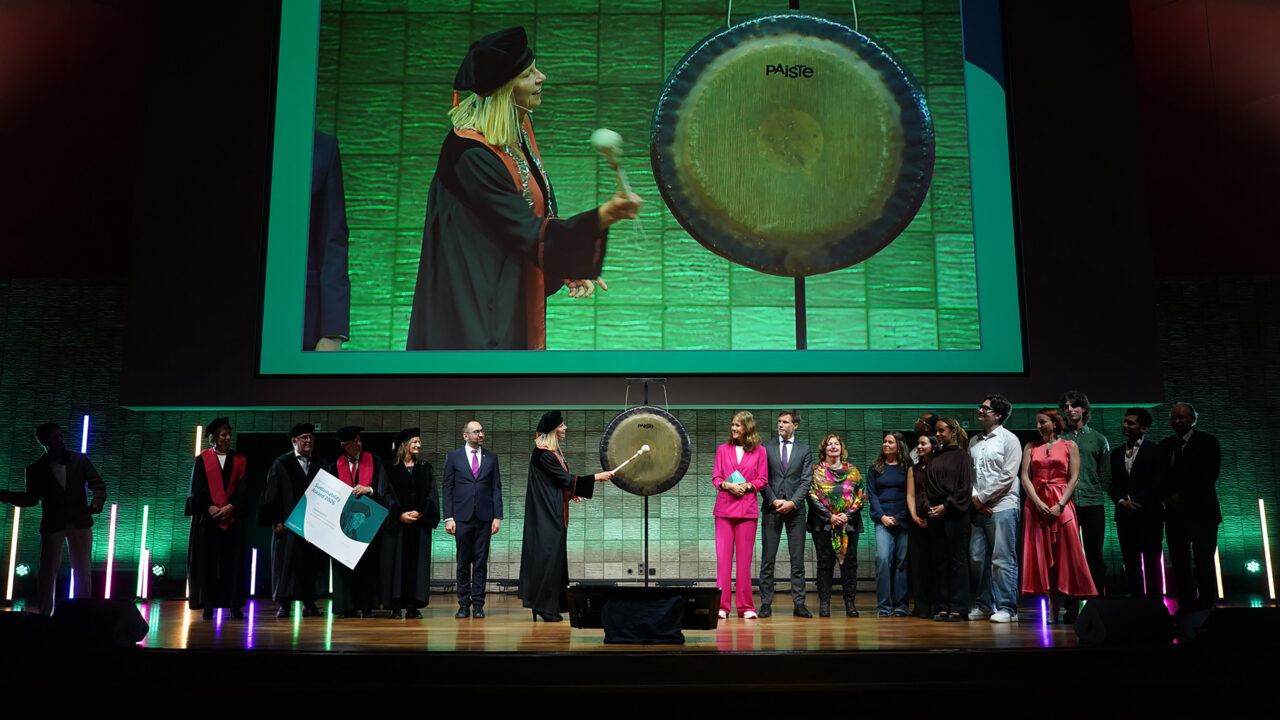
To protect academic freedom, universities should become more democratic. That was the recurring theme at a national meeting on the issue, attended by all universities.
Image by: Pauline Wiersema
Around eighty policymakers, administrators, rectors and other academics gather on a Friday morning in a dark theatre hall at Vrije Universiteit Amsterdam. They are there to discuss academic freedom.
A year ago, university rectors warned in a letter that academic freedom was under pressure. They wanted to spark a ‘national dialogue’ on the subject. Since then, meetings on academic freedom have been held at all universities.
This is the first national gathering. Here in the theatre hall, delegations from across the country present the outcomes from their own universities on posters. What do they see as threats to academic freedom? How can it be strengthened?
Intimidation
Academic freedom is, in short, the freedom to research and teach what you want. People must be able to disagree and remain open to each other’s arguments. In practice, that freedom is always limited, for example by funding. But there are other threats too, such as intimidation, censorship and populism.
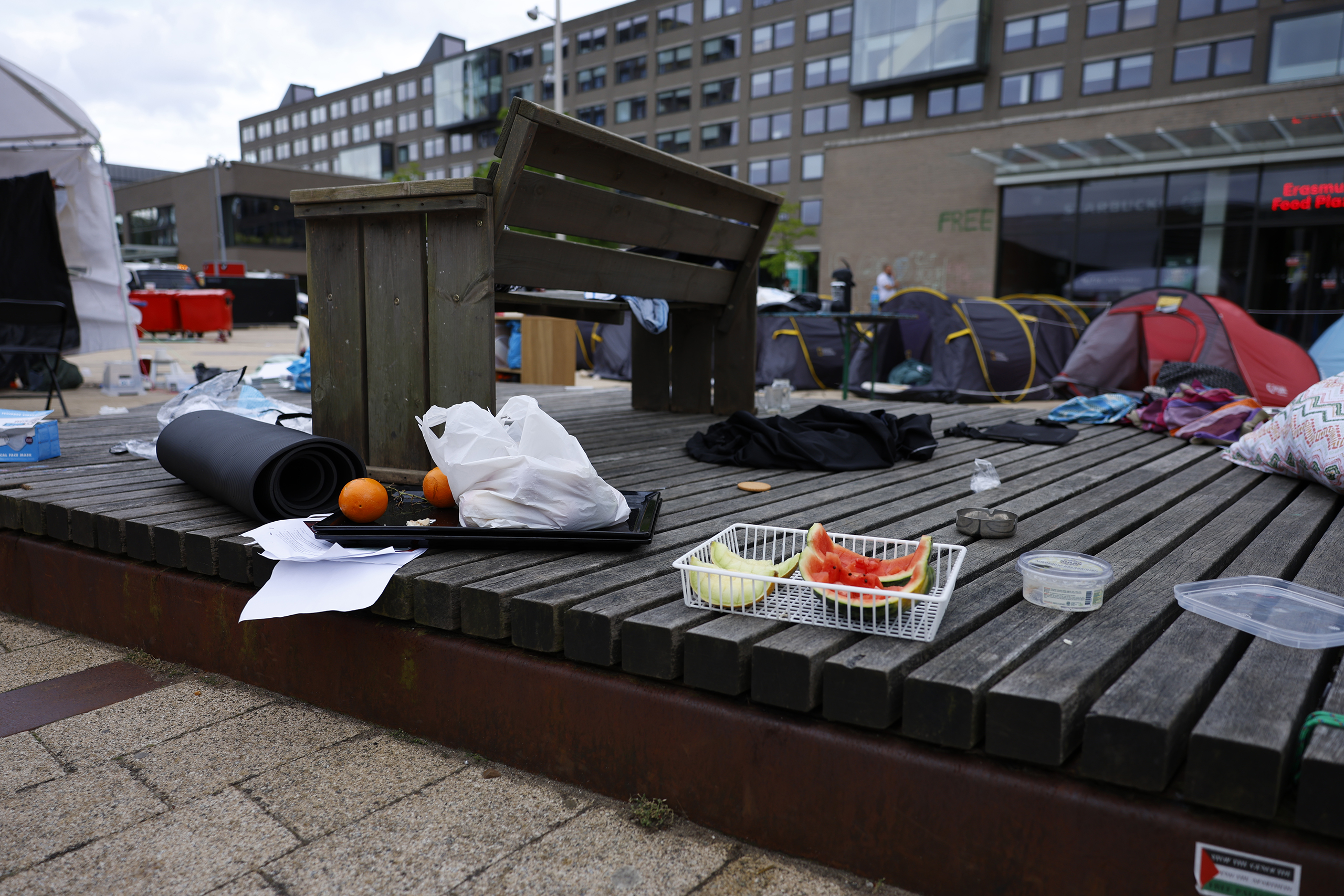
The student protests and occupations of recent months have also left their mark. Many posters therefore stress the importance of learning how to deal with differences of opinion. We should be able to disagree, but it must remain “respectful” (writes Eindhoven University of Technology) or “safe” (University of Groningen).
Israel is not mentioned by name, but Tilburg University does state: “Researchers should be able to decide for themselves (with the right support) which international partners they collaborate with.” “We need to learn how to have difficult conversations about academic freedom”, says the poster from Delft University of Technology.
Een lijst met artikelen
-
Dutch university rectors have issued a threat to academic freedom
Gepubliceerd op:-
Opinion
-
Curiosity
Funding also comes up, naturally. Wageningen University wants more funding for curiosity-driven research, according to its poster. The rectors also made a similar point in their letter, pushing back against the idea of ‘you ask, we deliver’: “The development of knowledge serves society best when it stems from an independent drive for understanding.”
But that too sparks debate. In a short speech, Sicco de Knecht of the National Expertise Centre for Science and Society criticises that one ‘defining’ sentence from the rectors. Is it not paternalistic to tell the public: stay out of it, this is what serves you best? Who decides that the curiosity of scientists is more valuable than the curiosity of citizens, De Knecht asks.
Not democratic enough
All these kinds of discussions (who do you work with, what do you want to research, what do you teach?) keep coming back to one question: who actually decides? And many attendees believe universities need to take a hard look at themselves.
At several tables, participants speak with one another. Big ideas are discussed, about how academic freedom strengthens democracy (because science provides independent and reliable information), but there are also warnings against complacency (academic freedom is funded by taxpayers, so society is entitled to have some say).
But again and again, the conversation returns to democracy within universities. Several attendees believe that too is under pressure. Administrators do as they please. In Utrecht, for example, the Executive Board scrapped an English-language degree track without consulting – or even informing – the bachelor’s programme itself. “We’re not that democratic”, says one attendee.
Een lijst met artikelen
-
‘Academic freedom is not just a matter for the university, but for society as a whole’
Gepubliceerd op:-
Science
-
One administrator, who – like others – prefers to remain anonymous in order to speak freely, explains that she does not actually have that much power. “We have to discuss every decision with everyone”, she says.
That makes little impression on the others. Several attendees feel administrators no longer understand what is happening on the ground. They have lost touch with students. And students themselves, some say, could do with a lesson in democracy too. “Shouldn’t we be teaching citizenship at university”, someone from Utrecht asks.
‘Group therapy’
Leiden university historian Pieter Slaman understands why a dialogue on academic freedom keeps circling back to internal democracy. He is here not only as a researcher, but also as Leiden University’s ‘theme lead for academic freedom’. Democracy and academic freedom belong together, he explains afterwards.
“Academic freedom is also about the ability to shape your own community and the right to criticise your own institution”, says Slaman. “But since the 1990s universities have increasingly started to resemble companies, and as a result those who want change run into a wall. At the same time, if you want to be a democracy, you also have to learn to live with conflicting views. Universities in particular never operate on the basis of one single truth.”
Today’s dialogue does not lead to a clear conclusion, but Slaman does not think that is the only goal. To some extent it is “navel-gazing”, he says, “but tensions within universities have risen so sharply in recent months that right now we first need group therapy.”
De redactie
Comments
Comments are closed.
Ad
Read more in Science
-

‘With gadgets like Meta Glasses, we pay to be surveilled’
Gepubliceerd op:-
The Issue
-
-
Opening of the academic year: ‘Beware of arrogant tech optimism, but also of doom-thinking’
Gepubliceerd op:-
Science
-