Ad

Humour and provocation caused cracks in the menstruation taboo, Maria Carmen Punzi discovered

Now that menstruation is more visible than ever, the taboo has largely been broken, concludes researcher Maria Carmen Punzi. At the end of January, she obtained her PhD on the role of social enterprises in that process. In the meantime, she took up the gauntlet herself with her Instagram account Periods with Maria Carmen.
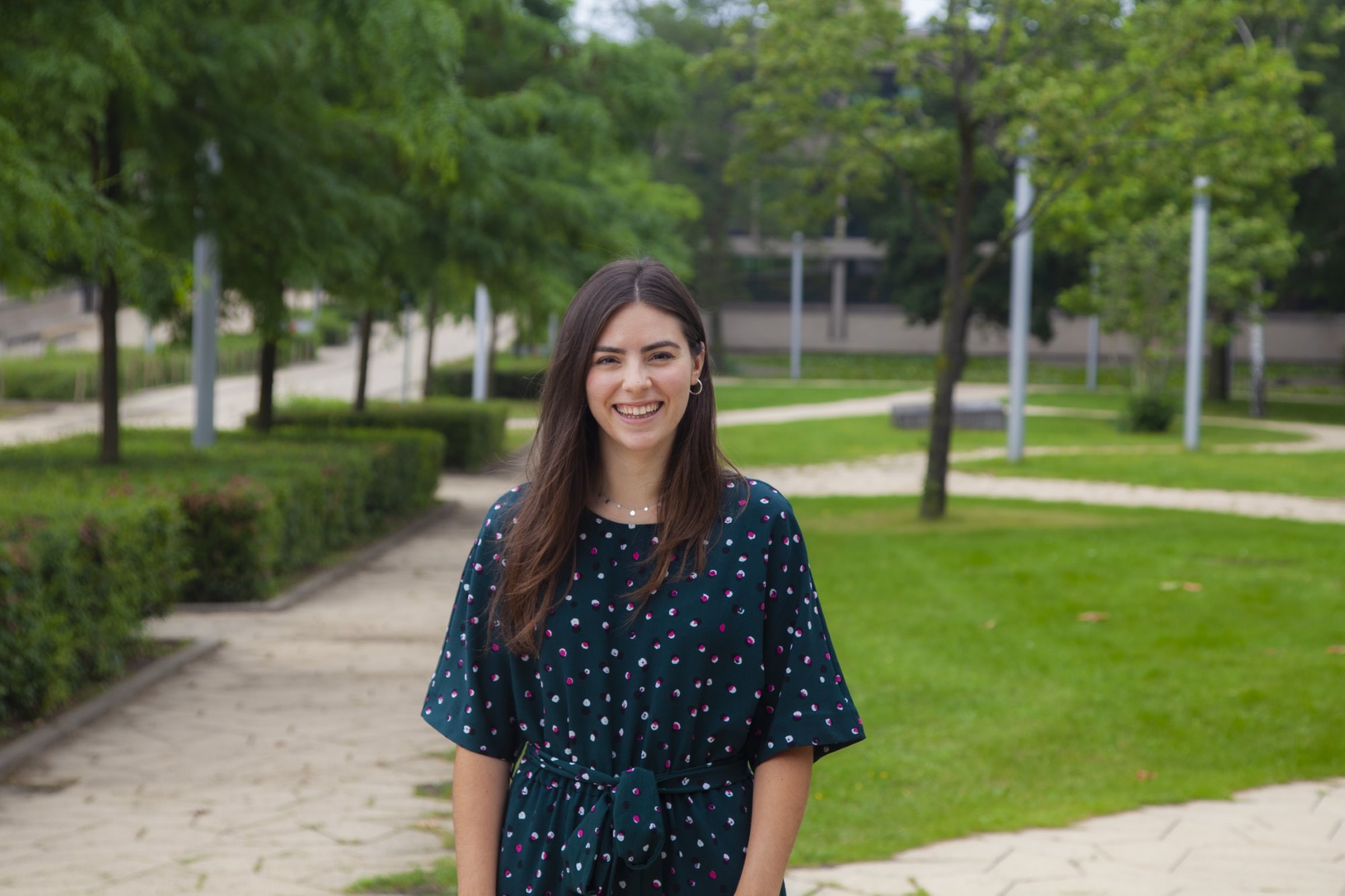
At the end of January, Maria Carmen Punzi obtained her PhD for her research on menstruation taboos and social enterprises.
Image by: Pien Düthmann
Friends, acquaintances, even complete strangers share intimate details about their menstruation with Maria Carmen Punzi. “That’s how little we know”, she concludes from that. “That you’d rather ask a stranger than your doctor or a loved one.” She believes everyone should learn about menstruation. “Because we all have to deal with it. If you don’t menstruate yourself, then your mother, a good friend or colleagues do.” On her Instagram account Periods with Maria Carmen, she shares a lot of information, for example about exercising during your period and menstrual products.
Een lijst met artikelen
-
‘There are so many barriers on the road to equity, menstruation should not be one of them’
Gepubliceerd op:-
Science
-
According to Punzi, one of the reasons people are reluctant to talk about menstruation is that it is rarely portrayed accurately. For years, adverts for menstrual pads and tampons featured happy women doing cartwheels. There was never a drop of blood to be seen, just a blue liquid. “You never see people on their period in films or series either. In books? Hardly ever”, says Punzi. “I have faith in the next generation of creators; they will change this – they are already doing so.”
For years, major suppliers of menstrual products played a major role in perpetuating the stigma surrounding menstruation, Punzi concludes in her doctoral research. It was something that had to remain hidden and unspoken. The research shows that smaller, social enterprises helped break that taboo. In addition to menstruation, these companies also talk about hormones, cycles, vaginal health and other aspects of the health of menstruating people, thereby contributing to more public knowledge, according to Punzi.
Slow change
The social enterprises that Punzi researched use humour and provocation to make menstruation discussable. “That combination proved crucial”, she says. “It broke the ice of the taboo.” A well-known campaign is the one from 2014 by the Dutch company Yoni, a manufacturer of menstrual products such as organic cotton pads and tampons and menstrual cups. The slogan ‘chemicals are not for pussies’ sparked a conversation about vaginal health.
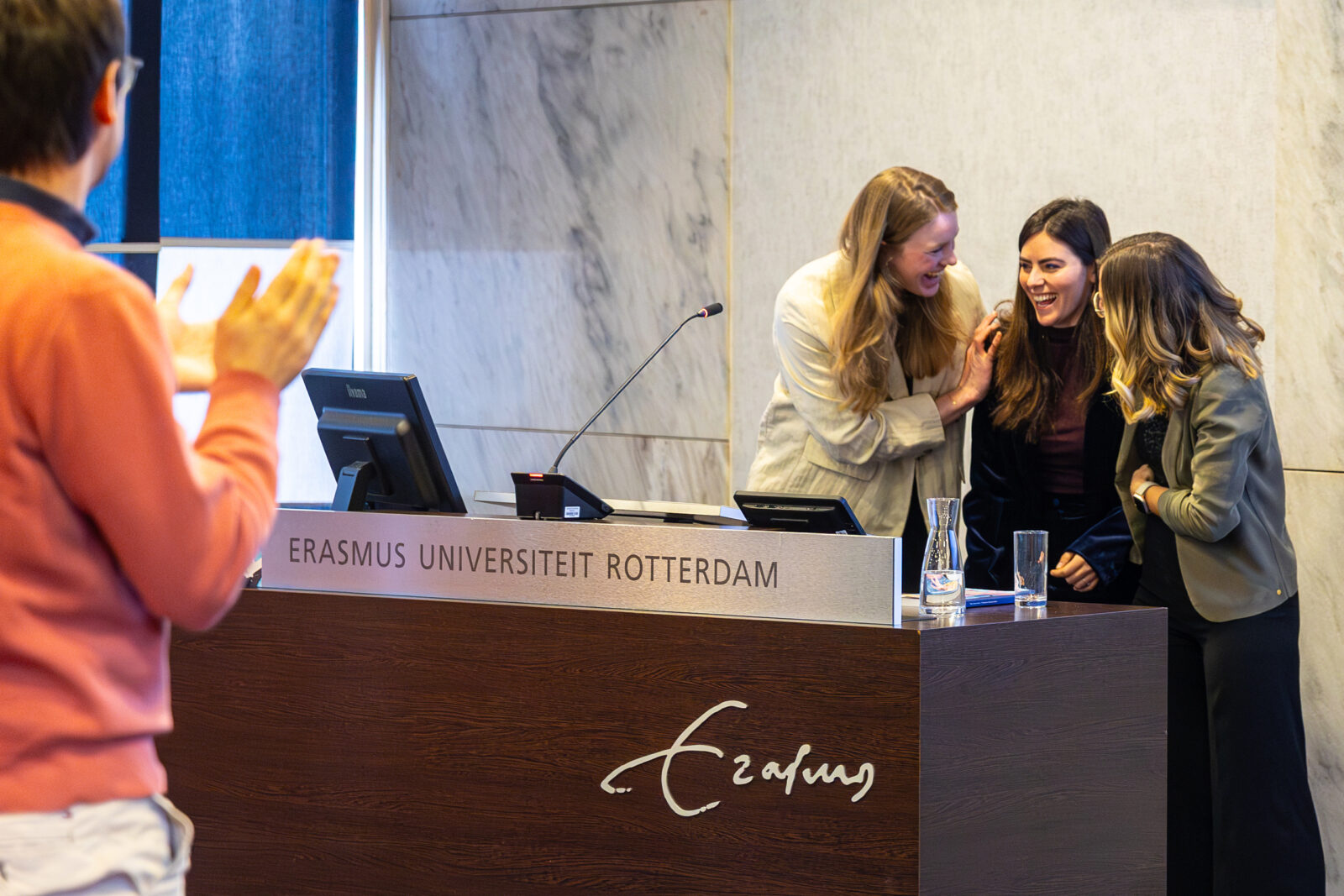
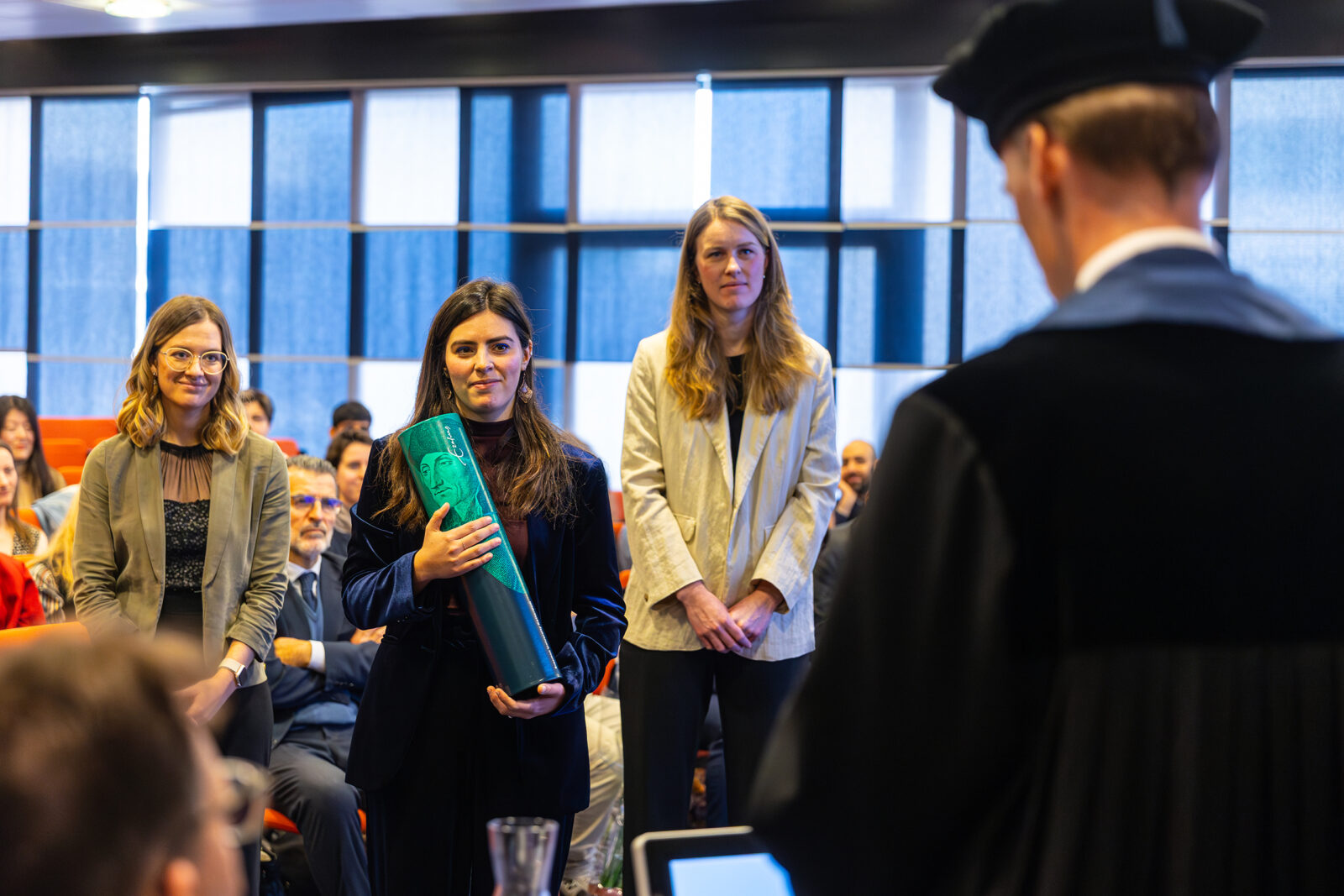
After obtaining her doctorate, Punzi is congratulated by her paranymphs.
Image by: Pien Düthmann
Since the beginning of this century, there has been an increase in social enterprises, as Punzi describes them. She is referring to companies that put the social mission at the core of their business, for example donating one product to someone experiencing period poverty for every product sold, or donating money to organisations that support women’s financial and social wellbeing. “They build on menstruation activism that is much older. A slow change that started fifty to thirty years ago and has been accelerating since 2015. 2015 is also known as the year of menstruation, because the drummer and activist Madame Gandhi ‘free-bled’ while running the London marathon, meaning that she did not wear any menstrual product, to raise awareness about period poverty. The images of her crossing the line with blood on her clothes sparked a lot of discussion.”
Punzi says that social enterprises have sprung up all over the world. “They participate in the market, but their core mission revolves around social change. For example, they are committed to making high quality menstrual products accessible and affordable, which is not yet the case everywhere.”
It’s about your health
It is now important to continue to make this topic more discussable, says Punzi. She is also committed to this herself through her Instagram channel. “During the past decade of working on this topic, I have become somewhat of a social entrepreneur myself”, she says, describing her public engagement, her consultancy work for organizations like the European Parliament and the Gates Foundation and her online activism. Everyone can contribute, Punzi believes: “If you don’t menstruate, read up on it or talk to loved ones who do. What are their experiences and what can help them?”
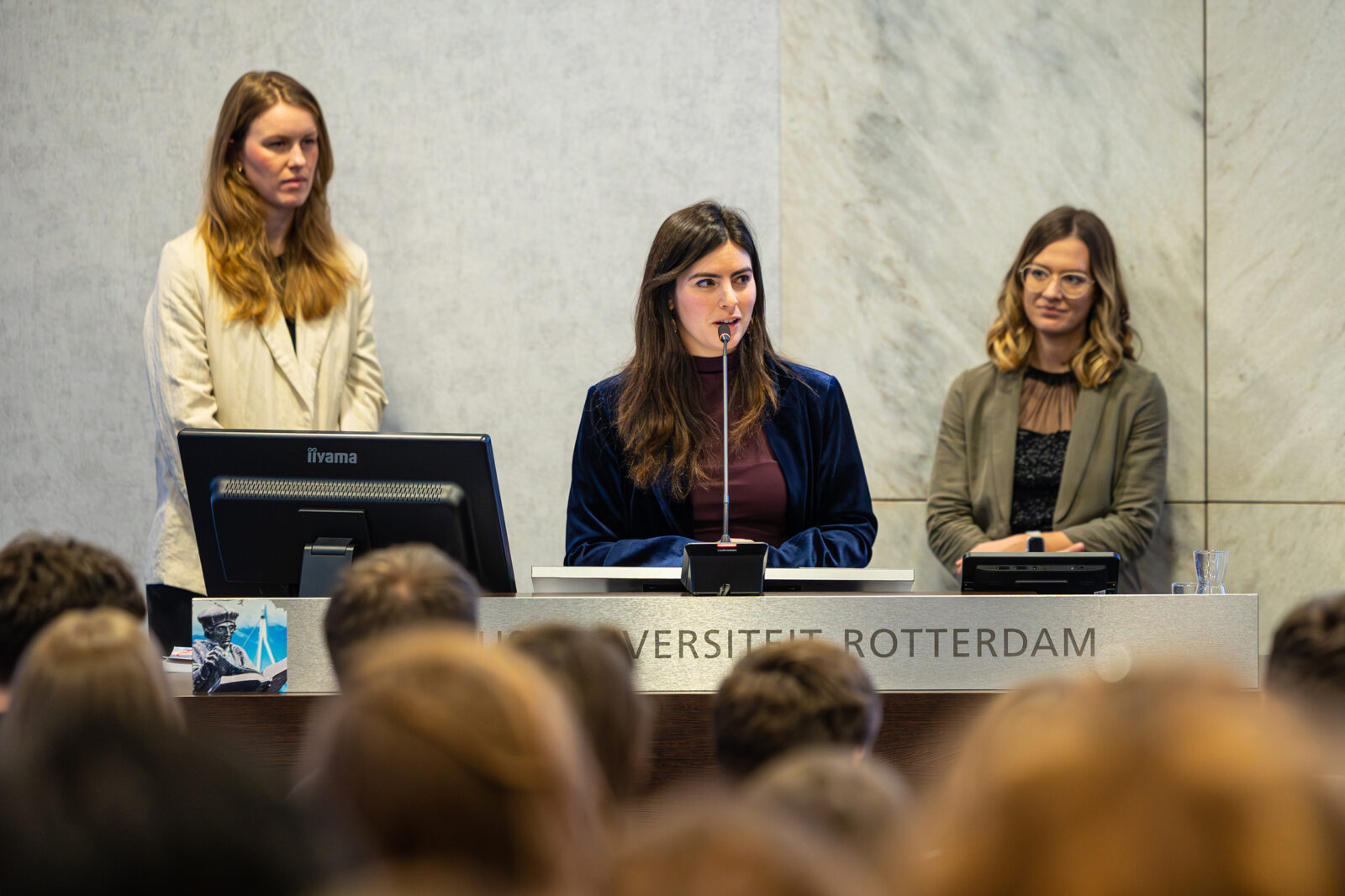
“Menstruation says a lot about your health, Punzi emphasises”, says Punzi.
Image by: Pien Düthmann
People who menstruate can also contribute to further breaking down existing taboos surrounding menstruation. Punzi says: “Think about how you talk and think about this subject. We’ve all heard it before: “You’re so cranky, are you on your period or something?” Have you come to believe that others who are having a bad day are on their period? And where does that come from?’ Menstruation says a lot about your health, Punzi emphasises. For example, if it suddenly stops, it is usually a sign that you are experiencing unusual stress or that you are not eating enough calories and therefore your body lacks the energy and safety to ovulate. “Many people don’t know this, which is another reason why it’s important to talk about this topic.”
Menstruation is also a topic for the workplace, Punzi believes. “As a manager, make it clear to your team that these issues can be discussed – but that they don’t have to be. You also have a right to privacy; you don’t have to share everything.” It’s about health, and it should be possible to talk about that at work.
'This should be classified under sick leave rather than menstrual leave'
Punzi is somewhat cautious about menstrual leave. “Not everyone needs the same thing. Some people barely notice they are menstruating and don’t want to have to take time off, but there are others who are in so much pain that they can’t work comfortably in the office or for full days. This should be classified under sick leave rather than menstrual leave. The most important thing is that you have the knowledge, the language and the social safety to indicate what you need. Working from home on the first day of your period so you can lie down in between, for example.” Don’t make policy based on the wishes of one person, she says, but look at what everyone needs.
Master’s thesis, PhD and now postdoc
After ten years of research into menstruation, Punzi is not yet done with the topic. In fact, she dreams of leading an interdisciplinary research centre on menstruation, because there is still so much to learn. “From medicine to product innovation to film studies to so much more, all fields of research can be included in that research centre.”
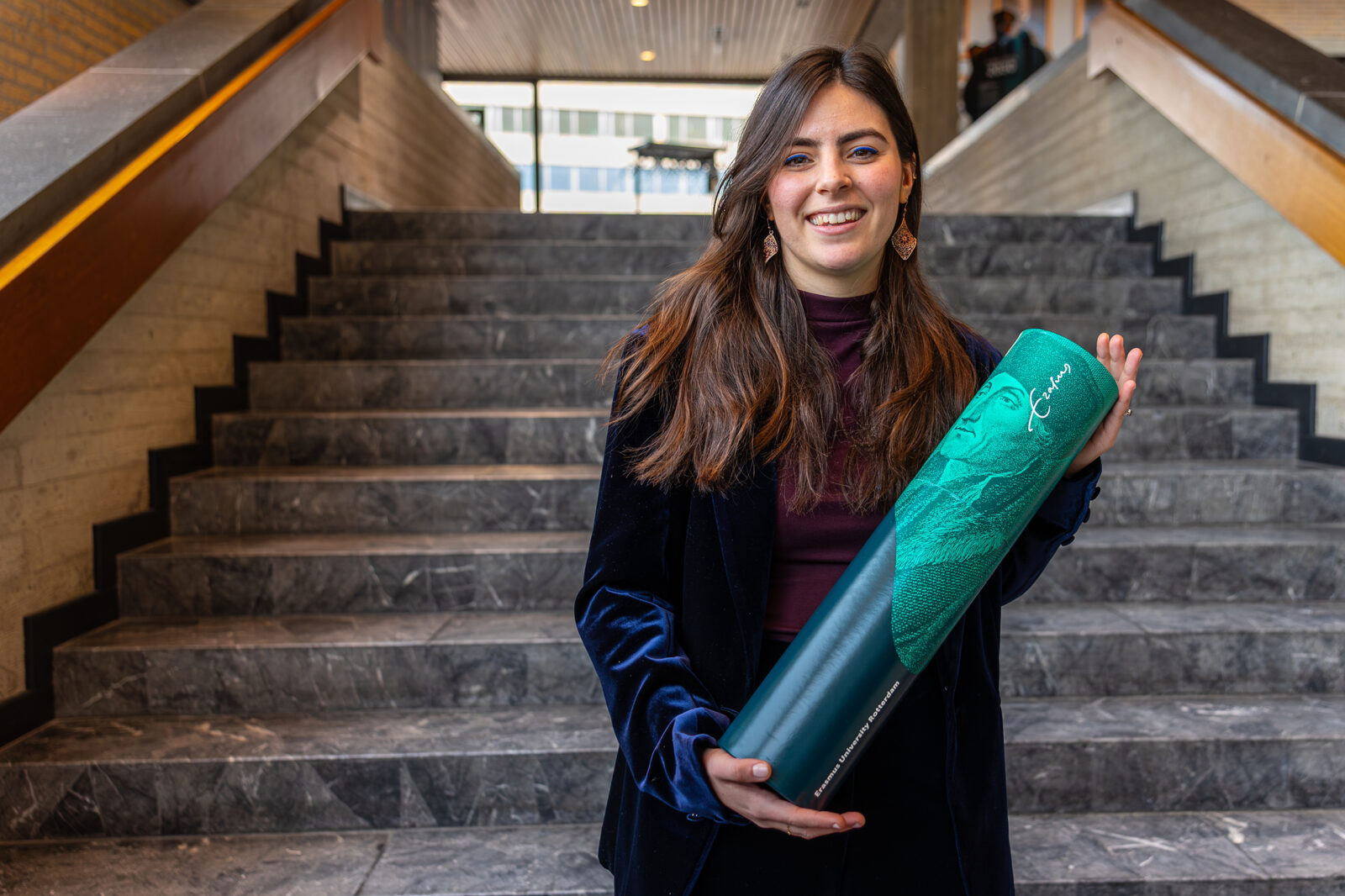
Maria Carmen Punzi works at VU University Amsterdam and continues to conduct research related to menstruation.
Image by: Pien Düthmann
That’s not reality yet. However, Punzi has received a grant to conduct research at VU University Amsterdam together with her colleague Tamara Thuis into the ethics of AI-driven menstrual trackers. People enter a lot of personal information into these mobile applications and receive prompts and information from the apps. “As more companies start to capitalise on this precious and sensitive health data, we ask the question: is it possible to develop and use these apps responsibly? What is the impact of these apps, and the organisations behind them, on users and society? We are looking forward to sharing the findings of this research with users, companies and medical professionals.”
Read more
De redactie
-
 Tessa Hofland
Editor
Comments
Comments are closed.
Ad
Read more in Science
-
Did your parents know what your sex life was like when you were eighteen?
Gepubliceerd op:-
Eureka!
-
-
Universities must demonstrate their economic value, says House of Representatives
Gepubliceerd op:-
Politics
-
Science
-
-
Leaving money to a university? Many people do not know it is possible
Gepubliceerd op:-
Science
-