Ad

OECD: Relatively many Dutch students have study delays


Image by: Ronald van den Heerik
In some countries it is much more common for students to stay exactly on schedule. Two thirds of all Irish and British bachelor students obtain their degree within the prescribed time. Especially in Ireland there are almost no students with delays.
That is different in the Netherlands. Only 30 percent graduate on time, 25 percent need up to one extra year and 18 percent experience even more delay, states the report Education at a Glance 2025 of the OECD, an economic co-operation organisation of 38 predominantly affluent countries.
Counterbalancing the slower pace of Dutch bachelor students is that they graduate more often than elsewhere. Ultimately more than 73 percent of bachelor students obtain the diploma, compared with 70 percent on average in OECD countries.
Staying longer
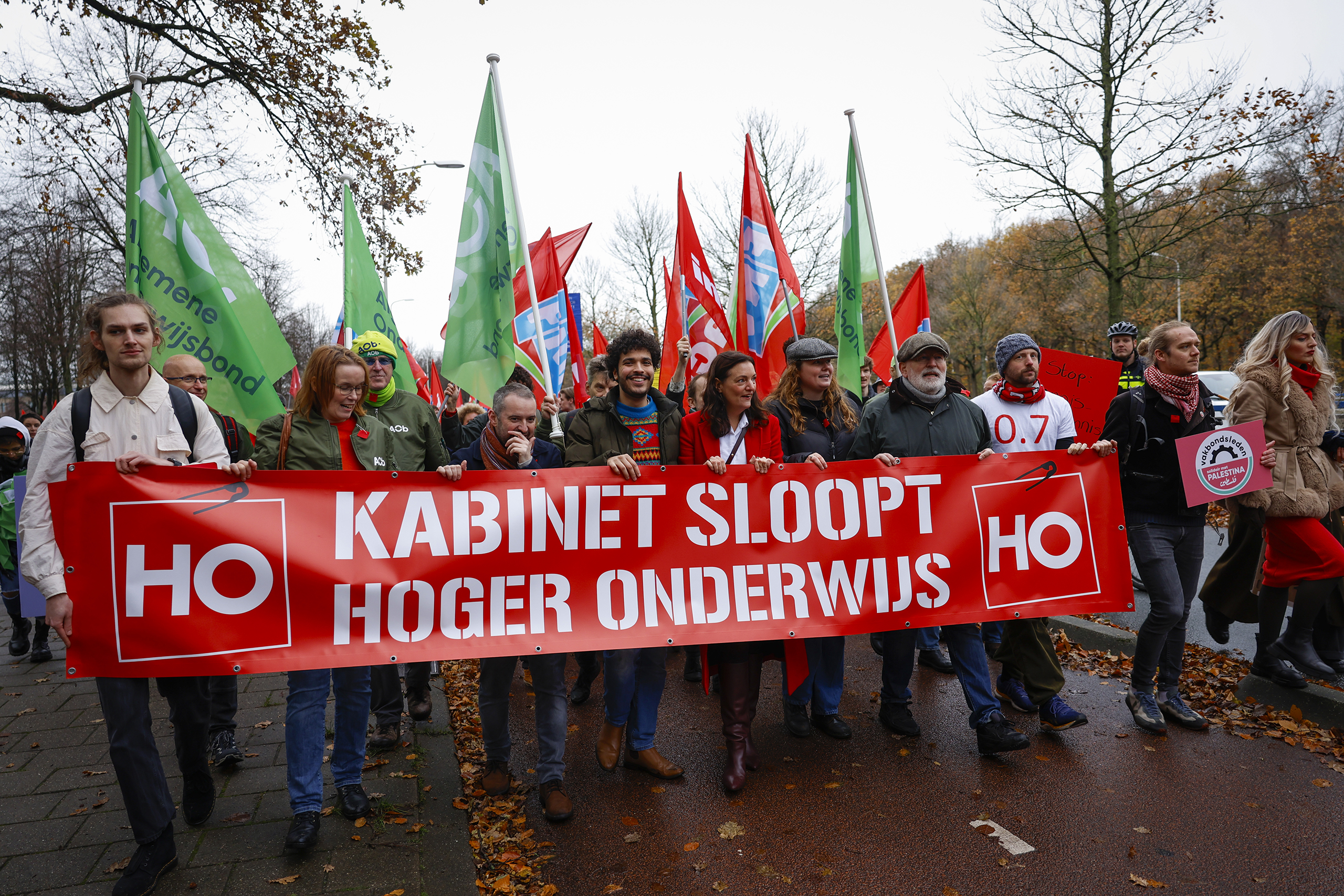
The cabinet, which has since fallen twice, wanted to introduce a slow-progress penalty for slow students: they would have to pay 3,000 euros extra tuition if they were more than a year behind schedule. That plan was met with huge resistance and was ultimately not implemented.
In the new election manifestos, only the BBB still advocates some kind of slow-progress penalty. The VVD wants a bonus for students who graduate on time. It doesn’t say where the money for this bonus will come from.
Men and women
Worldwide, women perform better in education than men, the report shows once again, but the differences are not the same everywhere. The gap between men and women is larger here than average. After six years (at a research university) or seven years (at a university of applied sciences), 80 percent of the women have obtained at least a bachelor’s degree, compared to 65 percent of men: a difference of 15 percentage points.
Countries with a wider gap than the Netherlands include Poland, Estonia, Sweden and Finland. The OECD average is 12 percentage points, so slightly lower than here. In the United Kingdom both women and men exceed 80 percent. Nowhere is the difference so small.
OECD
Each year,the OECD compiles figures on education to enable international comparison. Countries are often unable to provide all requested data. For example, the United States are absent from these figures on the study success of bachelor students.And the data are always somewhat delayed. In this report, for example, it concerns the reference year 2023. These students all studied during the coronavirus crisis, when education was disrupted by lockdowns.
Parents
The education level of someone’s parents makes a difference in all countries. OECD education experts looked at how many young people without highly educated parents obtain a diploma at a university, compared with young people who do have at least one highly educated parent. In the Netherlands there is a gap of 22 percentage points between those two groups (and even 41 percentage points if both parents have a low level of education), which is slightly smaller than the OECD average.
Read more
-
Slow-progress penalty cancelled, but most budget cuts remain
Gepubliceerd op:-
Politics
-
De redactie
Latest news
-

Students and staff join the Pride March: ‘We must stand up for this community’
Gepubliceerd op:-
Diversity
-
-

EM TV newsflash: Too many internationals, too many information platforms and more collaboration with the military
Gepubliceerd op:Article type: Video-
EM TV
-
-

18-year-old student dies after ‘hazing party’ in France
Gepubliceerd op:-
Student life
-



Comments
Comments are closed.
Ad
Read more in Education
-
Solution for students who have to wait more than 50 weeks for medical internships
Gepubliceerd op:-
Education
-
-

National budget: extra money education and research, no unexpected cuts
Gepubliceerd op:-
Education
-
Politics
-
-

Long waiting times for medical internships also affect other cities
Gepubliceerd op:-
Education
-