Ad

Support programme for aspiring professors now also available to people with a migration background

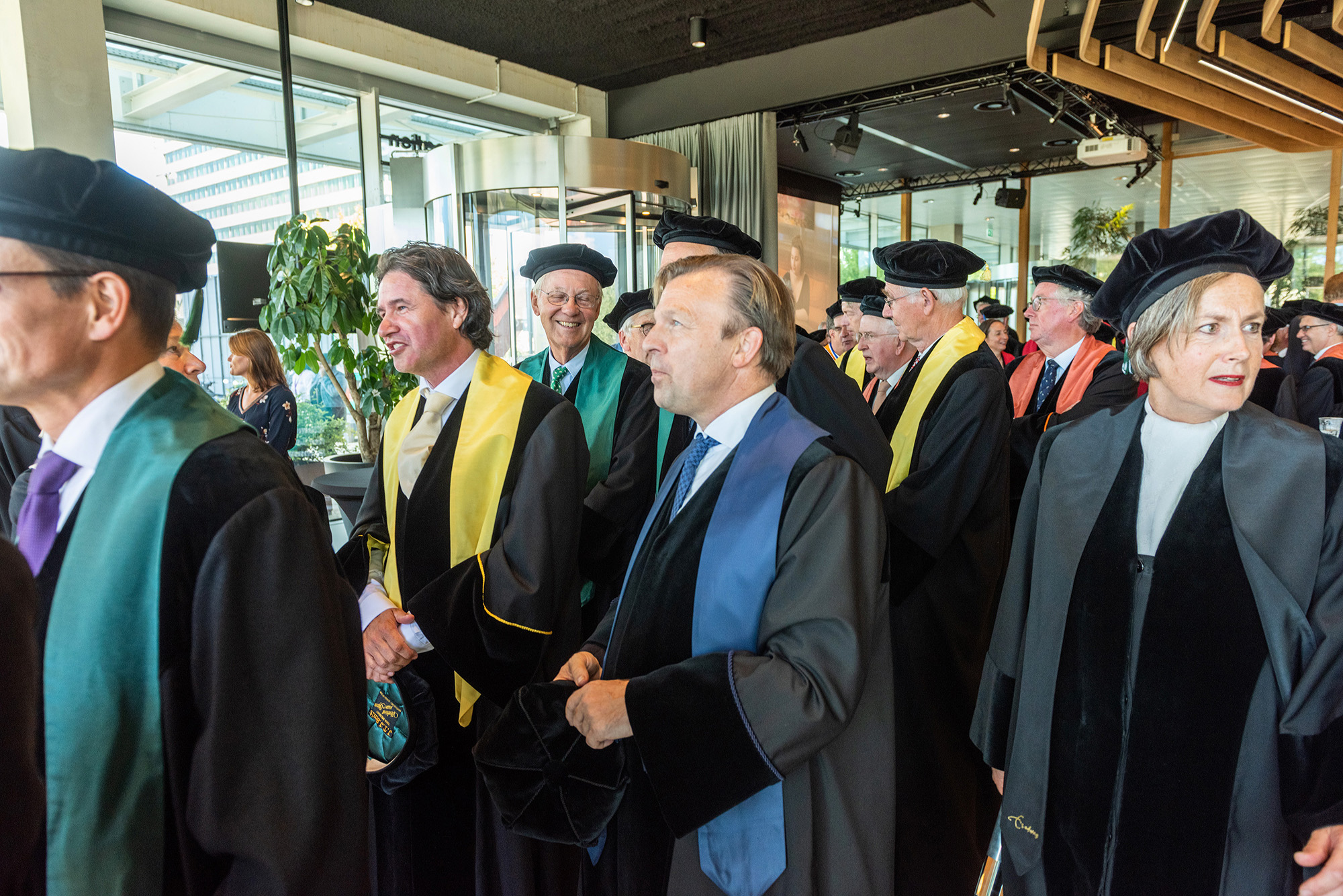
Through the Beyond 25/25: Towards inclusive academia programme, EUR provides support to assistant and associate professors who are looking for promotion. This year, for the first time, as well as women, people from a migration background were also able to sign up for the programme.

Image by: Jowan de Haan
In 2019, the university launched a support programme to help female assistant and associate professors take the next step towards a professorship. The target was to have at least 25 per cent female professors by 2025.
“The programme was specifically focused on gender diversity because the number of female professors was very low”, says Rector Annelien Bredenoord. Now that the target of 25 per cent female professors has been achieved, the university is opening the programme up to people with a migration background too.
Read more
-

Success of diversity policy can only be measured by monitoring
Gepubliceerd op:-
Diversity
-
Broadening the focus
In order to address the cultural diversity of its staff, the university took part in Statistics Netherlands’ Cultural Diversity Barometer. “It was clear from the survey that, the higher the level of the position, the lower the representation of people of non-Dutch origin”, says Chief Diversity Officer Semiha Denktaş. “That was what prompted us to add this diversity dimension to Beyond 25/25. This programme is important for staff who encounter barriers to obtaining more senior academic roles due to their ethnic background.” Bredenoord adds, “Through this programme, we want to break down structural prejudices around gender and ethnic background.”
‘The new target is for 35 per cent of professors to be female by 2025’
Moreover, according to Bredenoord, it is logical that the focus of the programme should be broadened to include cultural diversity. “As a university in a city like Rotterdam, we must reflect the diversity of society. Half of the people who live in Rotterdam have a migration background, and we want to see this reflected better in more senior academic roles at EUR”, she says. She also emphasises that, despite this broadening of the programme, gender diversity is still on the agenda. The new target is for 35 per cent of professors to be female by 2025.
Anonymity
This year, 64 people have signed up for the programme, which includes a year of workshops and support from mentors. In addition, participants put together a portfolio and receive feedback from an independent committee. They may also be eligible for a financial allowance. “They can use the money for research, for example, or to stop teaching for a while”, explains Denktaş.
‘We want to provide participants with a safe space to give direction to their careers in peace’
Academics can participate in the programme anonymously. “It is up to them whether they decide to tell their manager and colleagues”, says Denktaş. “We do this to ensure that we provide participants with a safe space to give direction to their careers in peace.”
The programme has clear goals. Denktaş: “We want to help people as much as we possibly can to find their place within this organisation. At the same time, we are scrutinising promotion criteria and processes, so we can identify and resolve barriers in the system.”
Read more
-
NWO finances study into quotas for diversity in academia
Gepubliceerd op:-
Diversity
-
It works
According to Denktaş and Bredenoord, the programme works well. Of the 100 participants who started on the programme in 2019, 33 women ultimately submitted a portfolio and received confidential advice on it. Eighteen academics received financial support for their research, and eighteen other participants were given academic projects to help further their careers. In addition, nine women were promoted.
Of all the participants, five left the university to take up a better position elsewhere. “This is somewhat disappointing, of course; evidently, the university was not able to retain this talent”, replies Denktaş. Bredenoord adds, “It is a lesson for us about retaining top talent, but mobility is also part of an academic career, so if it is a positive result for the participant, then it is still a success for the programme.”
De redactie
-
 Feba Sukmana
Editor
Latest news
-
Speech from the Throne: ‘There must be room for international students and knowledge workers’
Gepubliceerd op:-
Nieuws
-
-

Students will still be allowed to occupy a building, but perhaps not while masked
Gepubliceerd op:-
Politics
-
Protest
-
-
Education minister Rianne Letschert also used AI in speech
Gepubliceerd op:-
Artificial Intelligence
-
Comments
Comments are closed.
Ad
Read more in Diversity
-
‘Broederliefde and the kapsalon are the cultural heritage of the future’
Gepubliceerd op:-
Diversity
-
Staff
-
-

Researcher Alex Huang: The corporate world is often better for queer people of colour than this university
Gepubliceerd op:-
Diversity
-
-
More female professors, but advance appears to stall
Gepubliceerd op:-
Diversity
-