Protest at Sanders Building
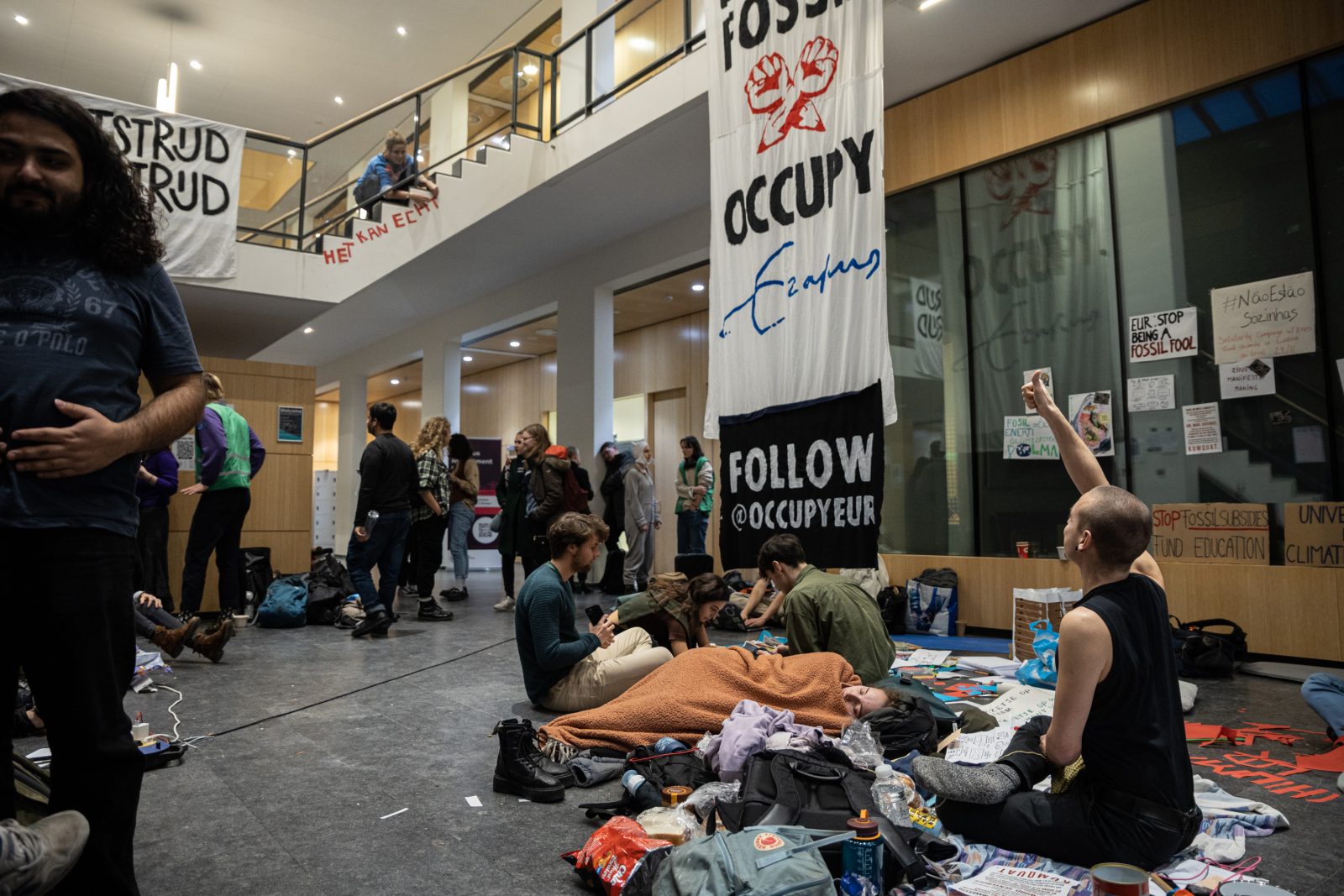
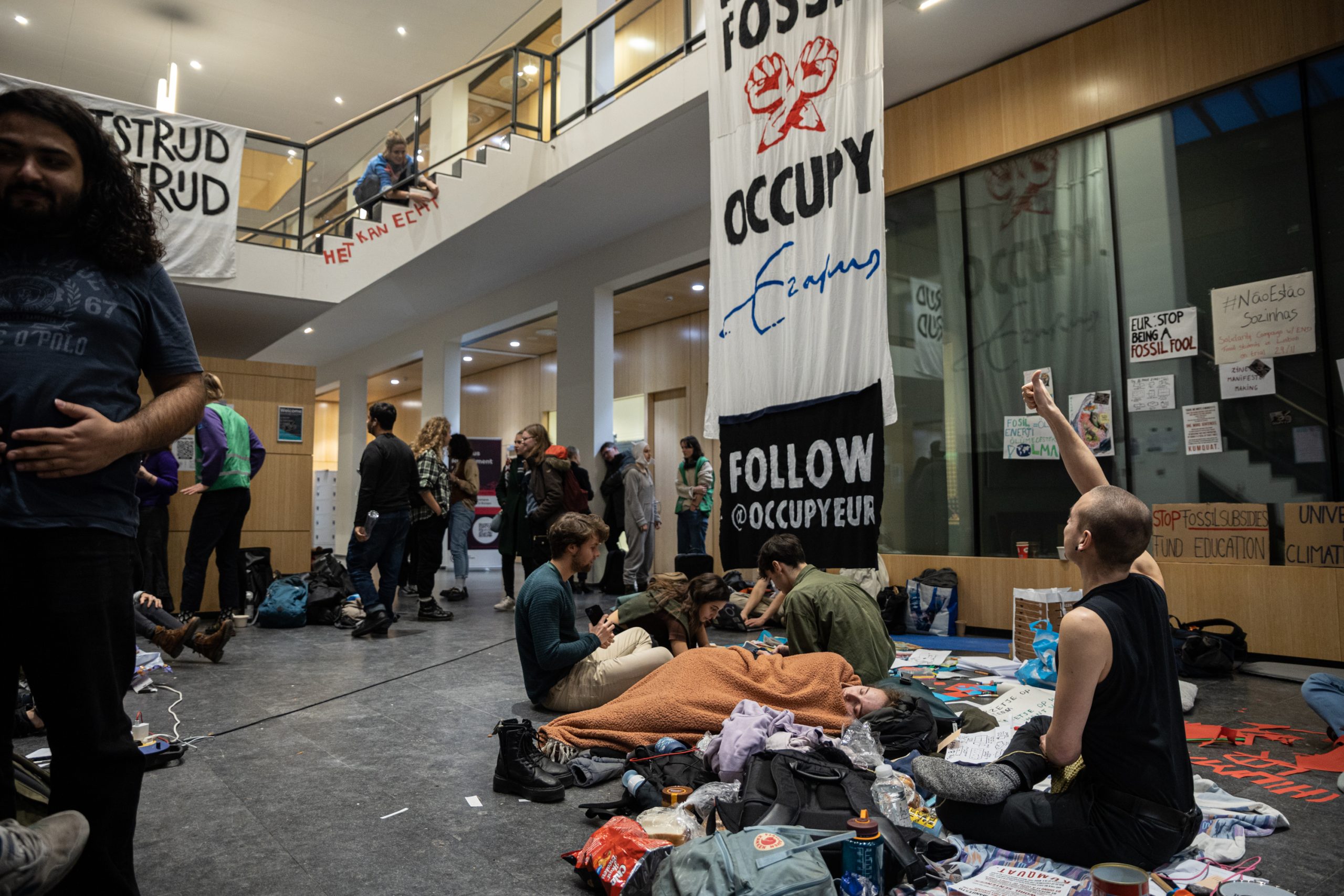
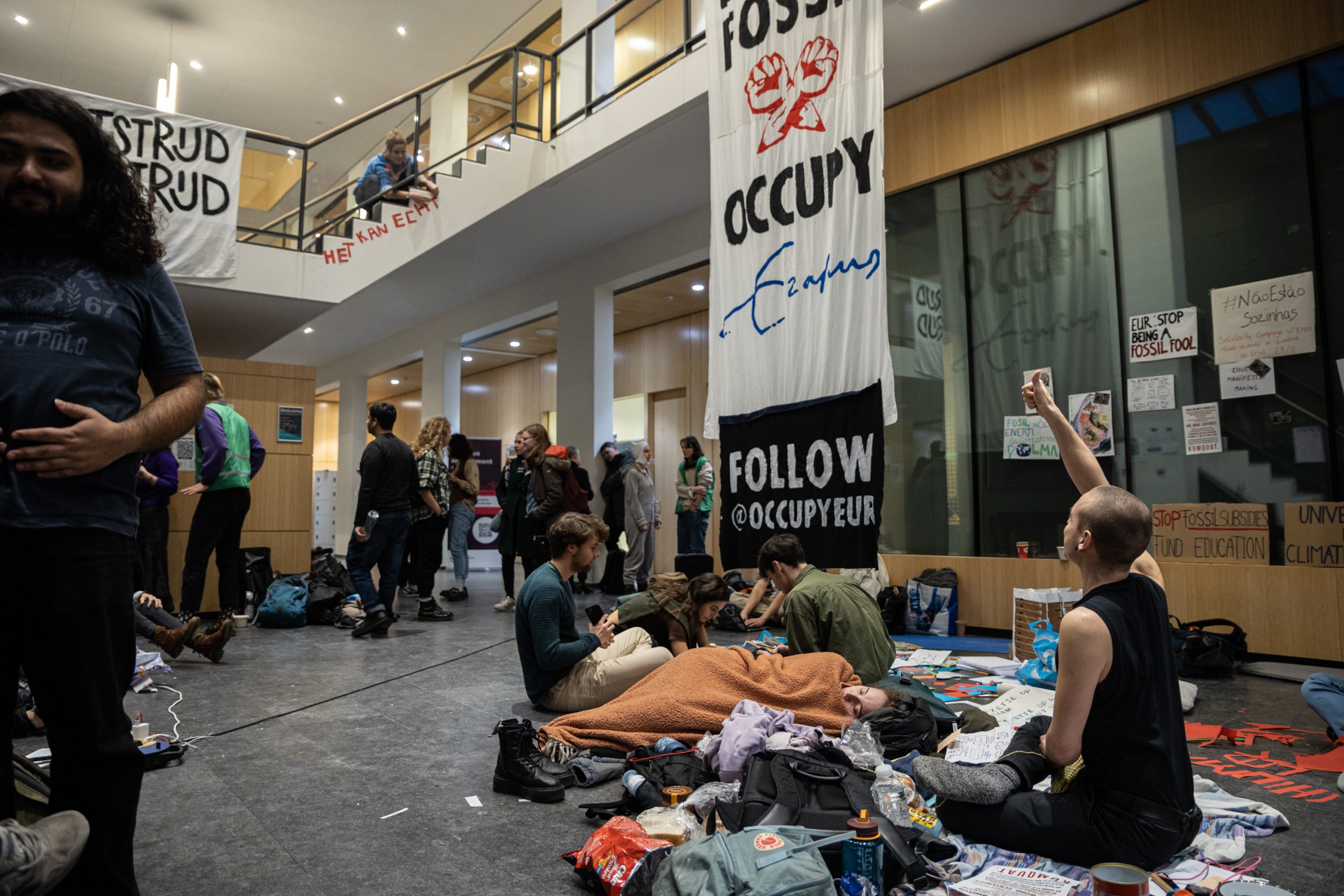
On Monday, November 28, students occupied the Sanders building on the Woudestein campus. The OccupyEUR activists made several demands, for example that the university cut ties with the fossil fuel industry. The university responded by sending police forces who evacuated the building. Read about the whole development of the incident here.
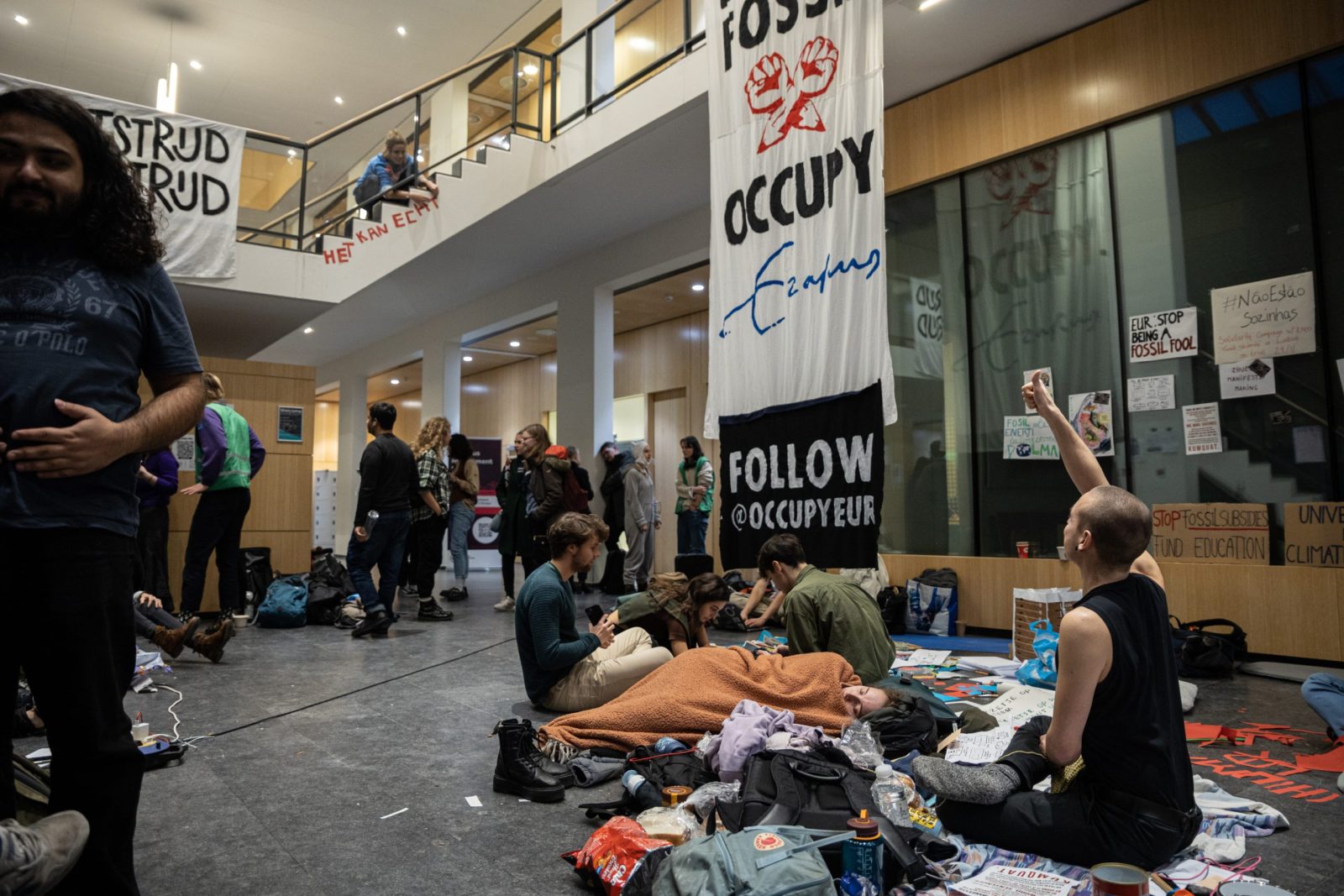
The occupation began on Monday morning. The OccupyEUR group, consisting of students, staff and external climate activists, demands that the university cuts ties with fossil fuel companies, end ‘precarisation’, an end to all student debt and accessibility for everyone.
Read more
-
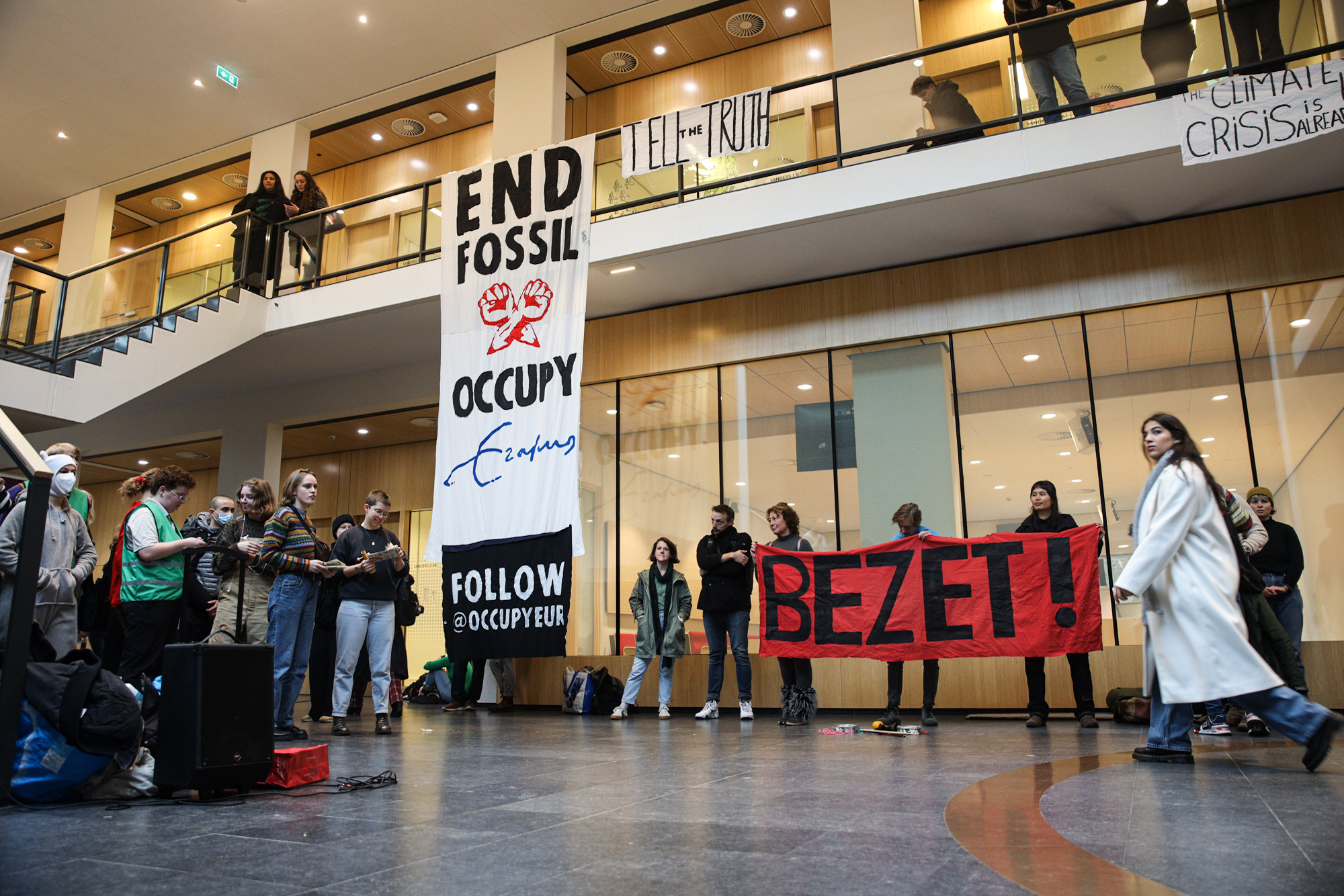
Activists occupy Sanders building Erasmus University
Gepubliceerd op:-
Campus
-
The Executive Board said to agree to enter into dialogue with the activists in the Sanders building, the university administration announced on Monday morning. OccupyEUR, the group of students and staff who occupied the building, were willing to do so and proposed a meeting on Monday night.
Read more
-
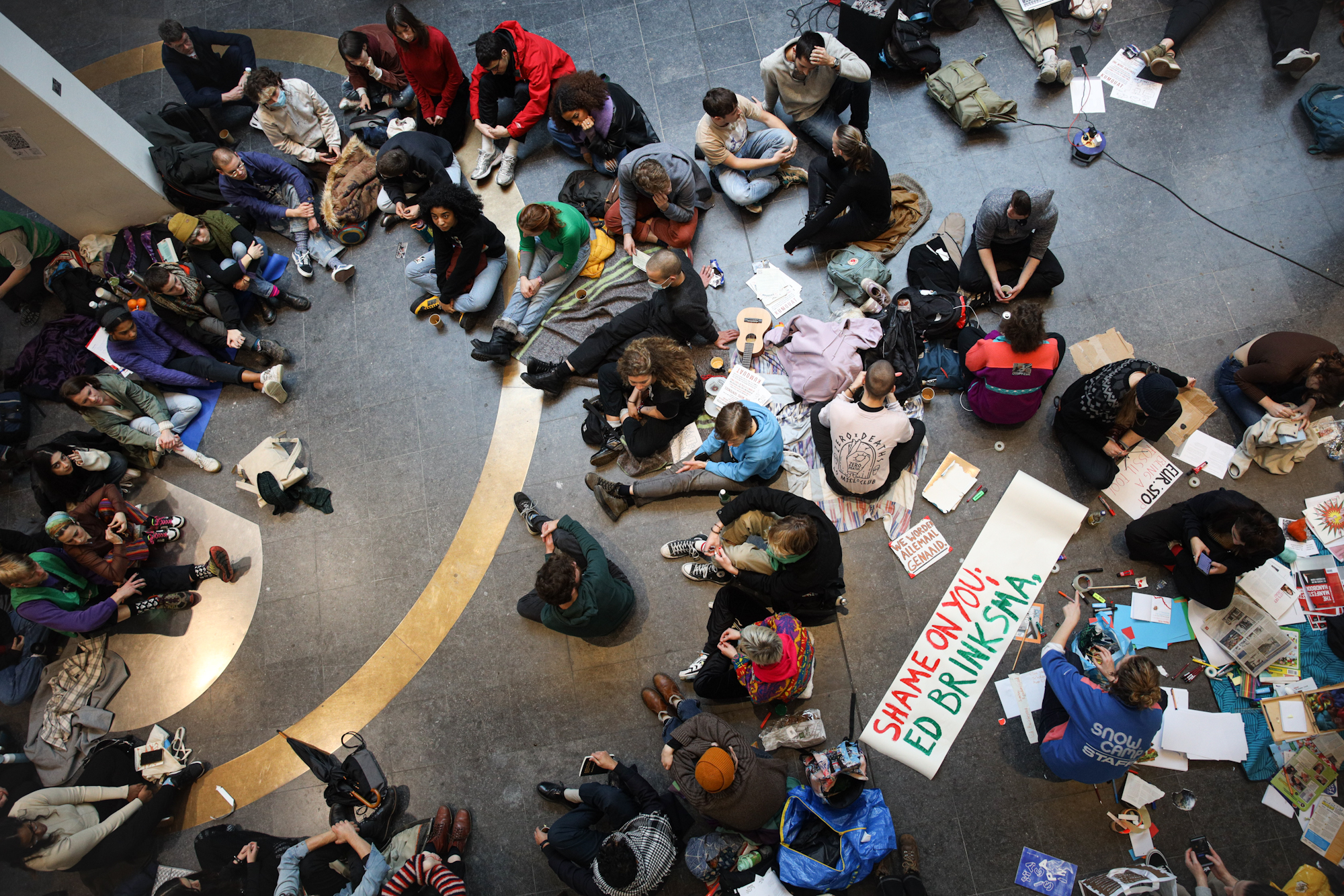
Executive Board and OccupyEUR willing to engage in conversation
Gepubliceerd op:-
Protest
-
In this video, the protesters tell they are angry about the university’s ties with the fossil fuel industry and are worried the ties won’t be cut.
Read more
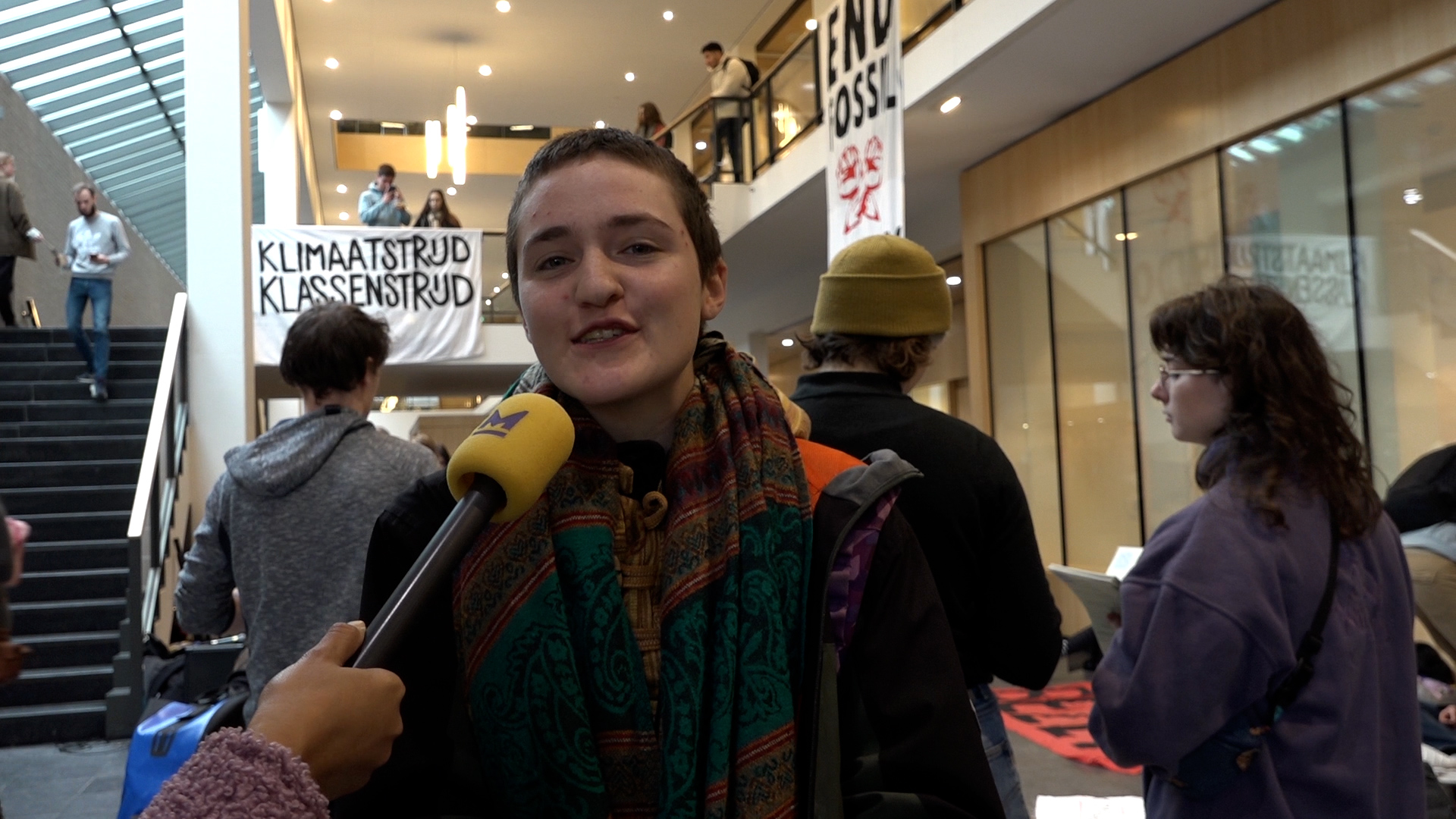
However, the Executive Board didn’t appear at the agreed meeting but asked police forces to intervene instead, who ended the occupation. All buildings on Woudestein campus were shut down on that evening, lectures were cancelled. Read about the police evacuation below:
Read more
-
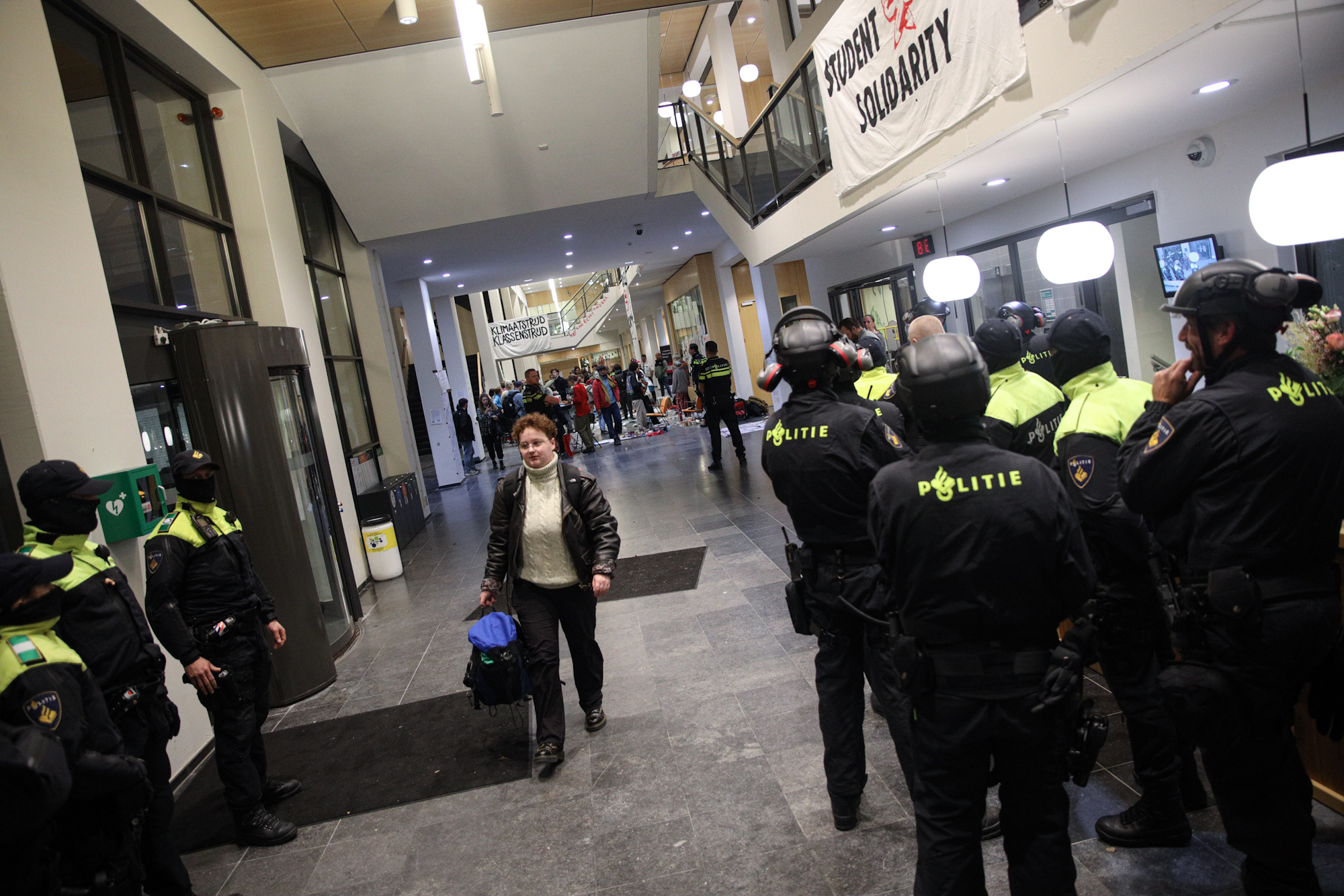
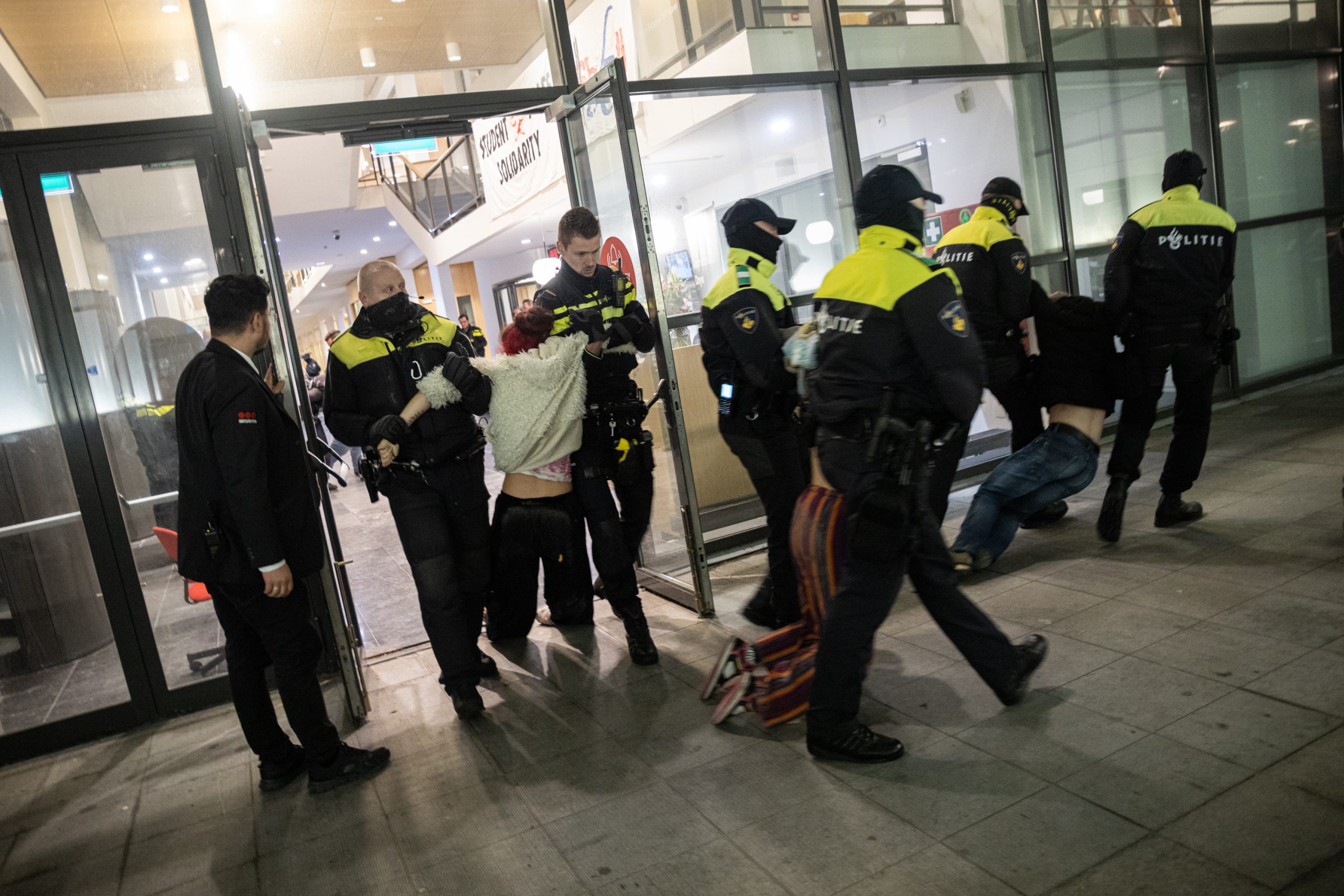
Police clear Sanders building, about ten protesters led away
Gepubliceerd op:-
Protest
-
EM reporter Wouter Sterrenburg summarised the happenings and demands of the activists.
Read more
The police stated that the evacuation of the Sanders building came at the request of Erasmus University itself. An important consideration was the fact that groups such as Extinction Rebellion, Occupy and Greenpeace were involved, said a police spokesperson.
Read more
-
‘Police evacuate Sanders building at the university’s request’
Gepubliceerd op:-
Protest
-
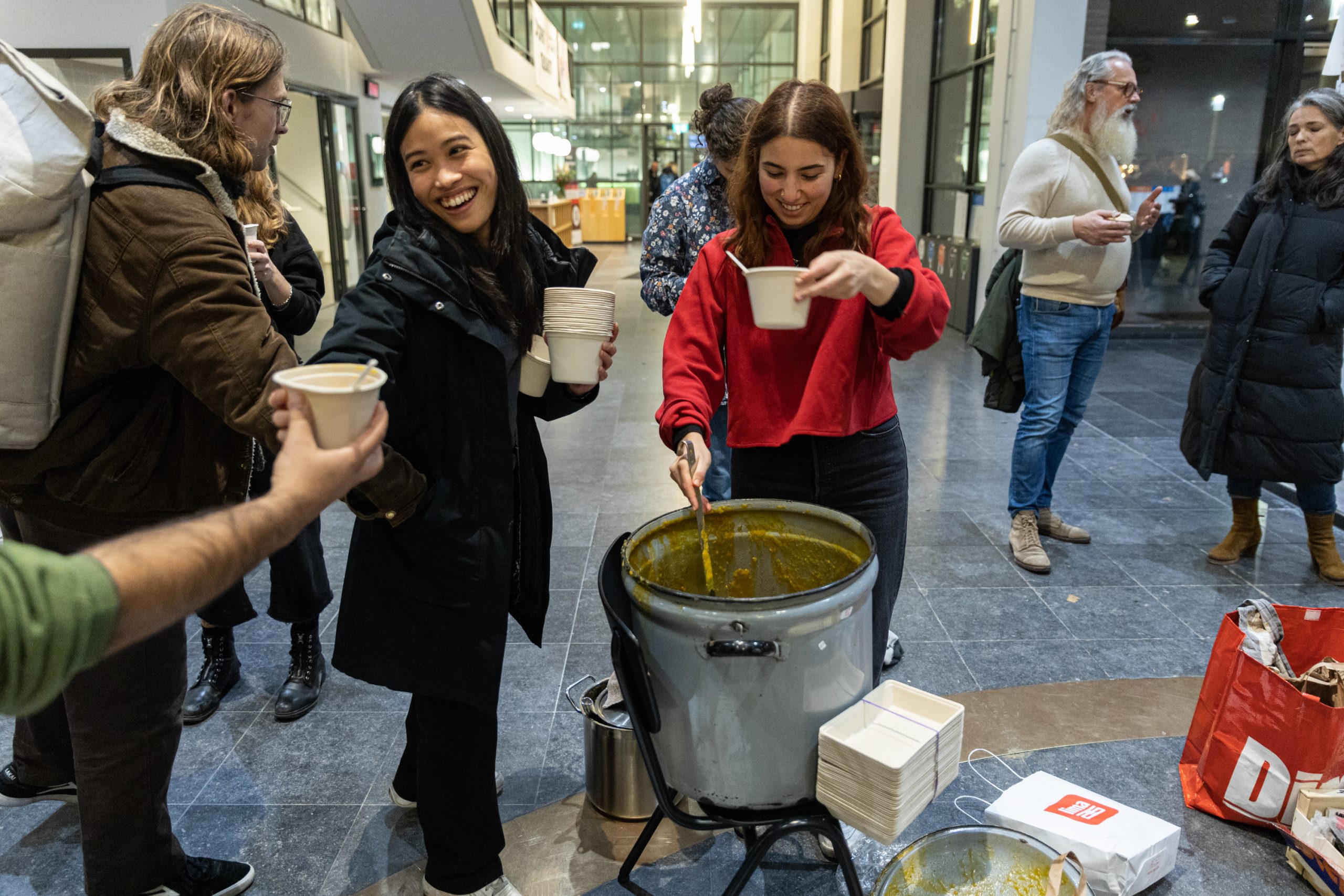
Those present at the protest describe the atmosphere during the occupation as ‘easy going’ and regard the university’s claims that the activists posed a security threat as ‘total rubbish’. “They were all very friendly and civil too.”, says Derk Loorbach, professor of Socio-economic Transitions at the EUR.
Read more
-
‘I was hoping the Executive Board would come and speak with the campaigners over a bowl of soup’
Gepubliceerd op:-
Protest
-
In an interview with EM, President Ed Brinksma explains why the Executive Board took the decision to call the police instead of talking with the protestors: “We had information about people from elsewhere who were planning to come and we had no clear view of their intentions”. Those groups from elsewhere never materialised, however. Brinksma tries to re-open the dialogue with the protesters and invites them for a new meeting.
Read more
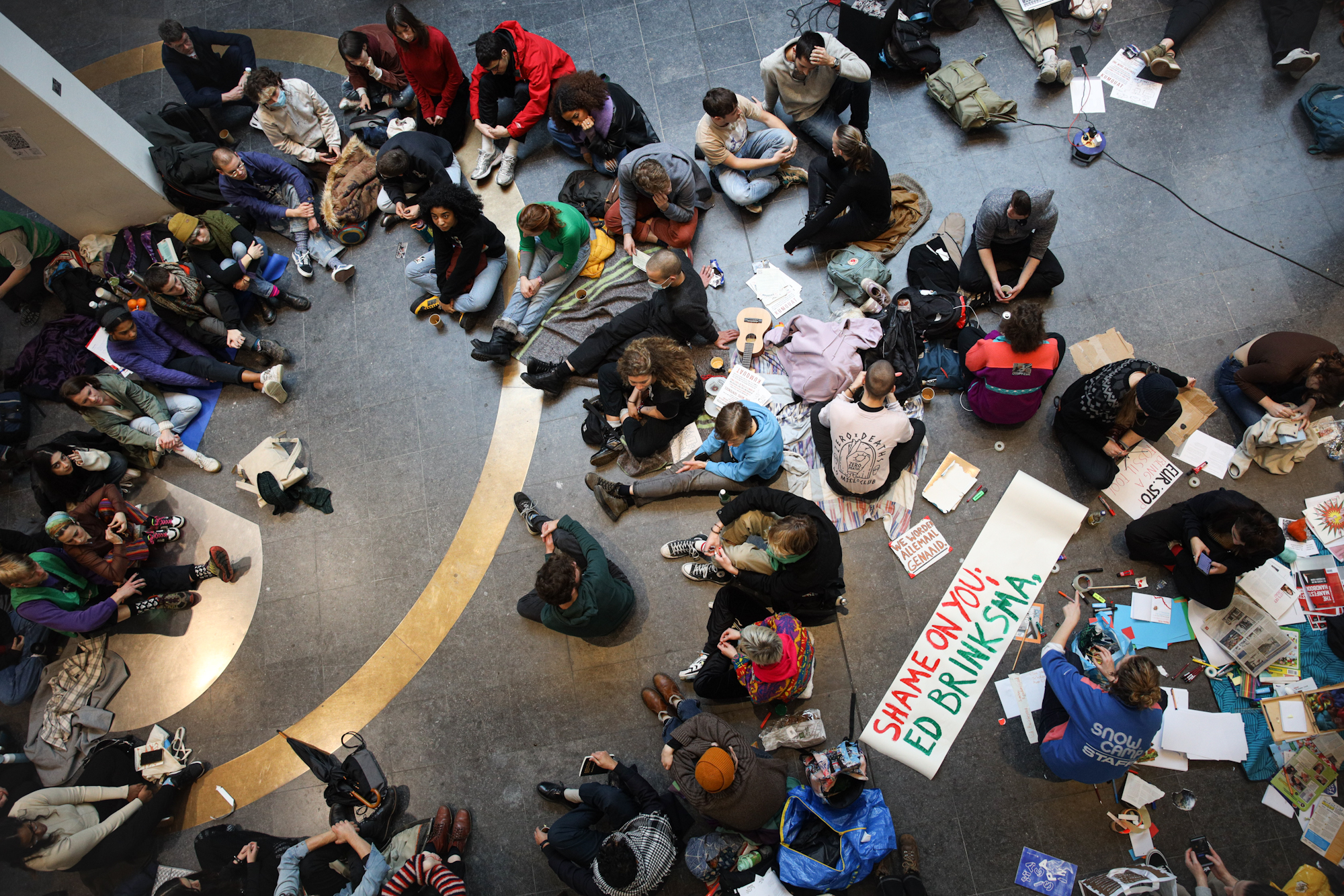
The Executive Board’s decision to have the Sanders building cleared by the police is ‘a shocking violation of the right of students and employees to protest’, a group of staff members wrote in an opinion piece. Jess Bier, Jiska Engelbert, Zouhair Hammana, Vatan Hüzeir, Irene van Oorschot, Willem Schinkel and Rogier van Reekum raised their voice about the protests and the university’s reaction.
Read more
-
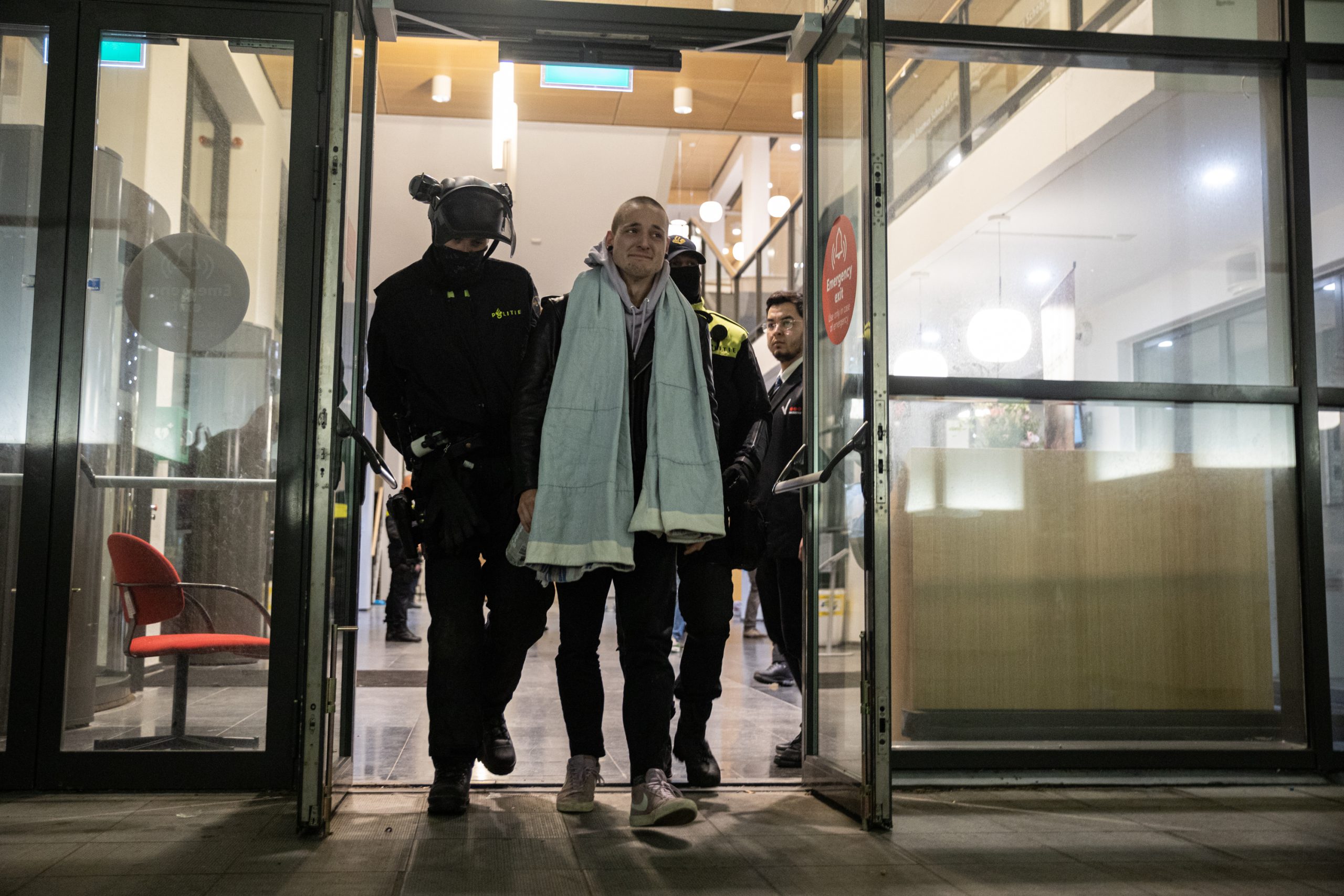
‘The CvB chooses violence against students: what does that teach us?’
Gepubliceerd op:-
Opinion
-
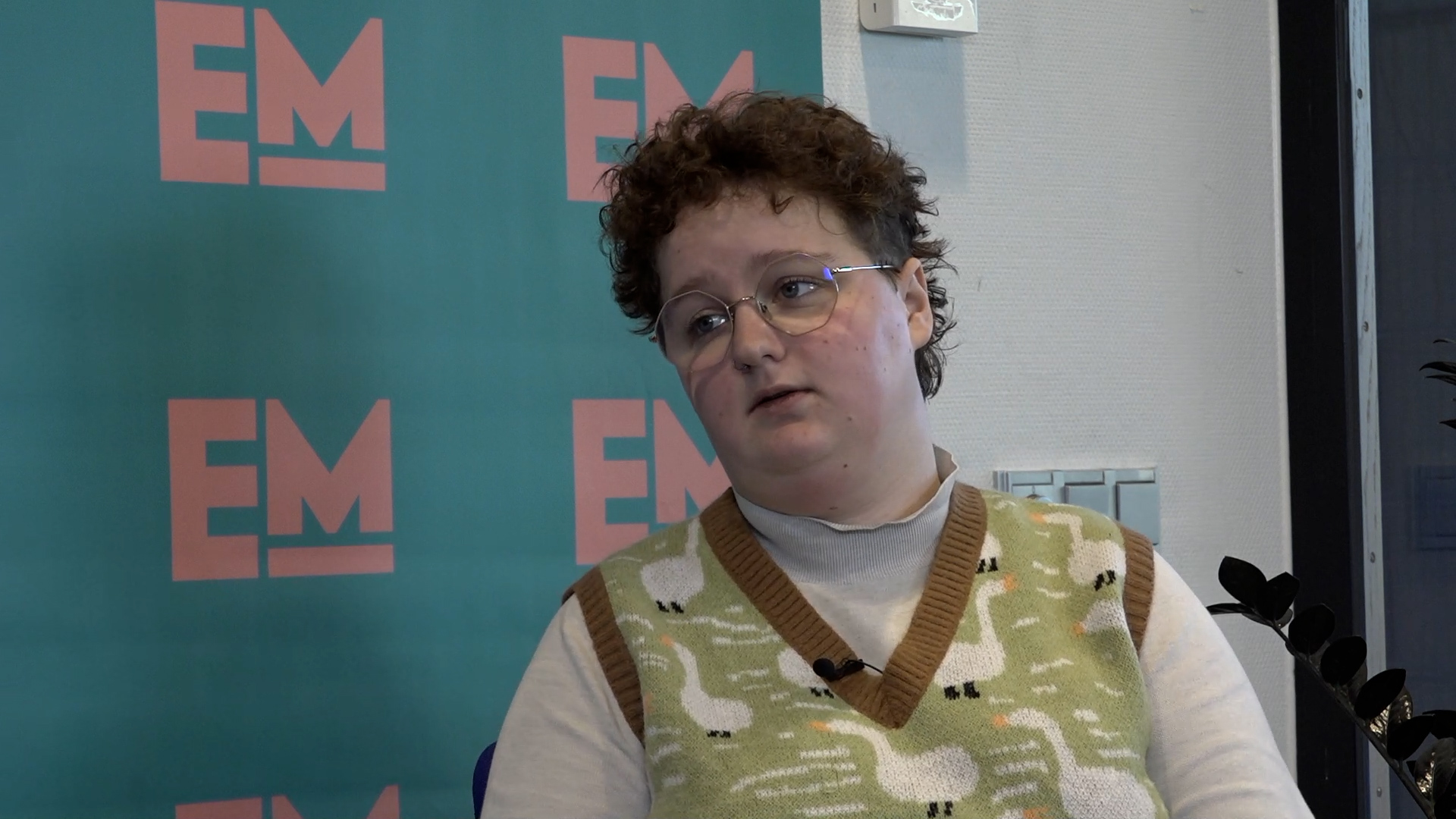
Students and staff were completely surprised by the appearance of the police. Psychology student Charlie, spokesperson for the protesters, explains in EM TV what happened when the building was cleared.
Read more
On Thursday, the offer by Brinksma to open the conversation is rejected by the protesters. “As the Executive Board can imagine, few students are willing to sit around the table with the people who sent the riot police to deal with them during a peaceful demonstration two days ago”, wrote the activist movement.
Read more
-
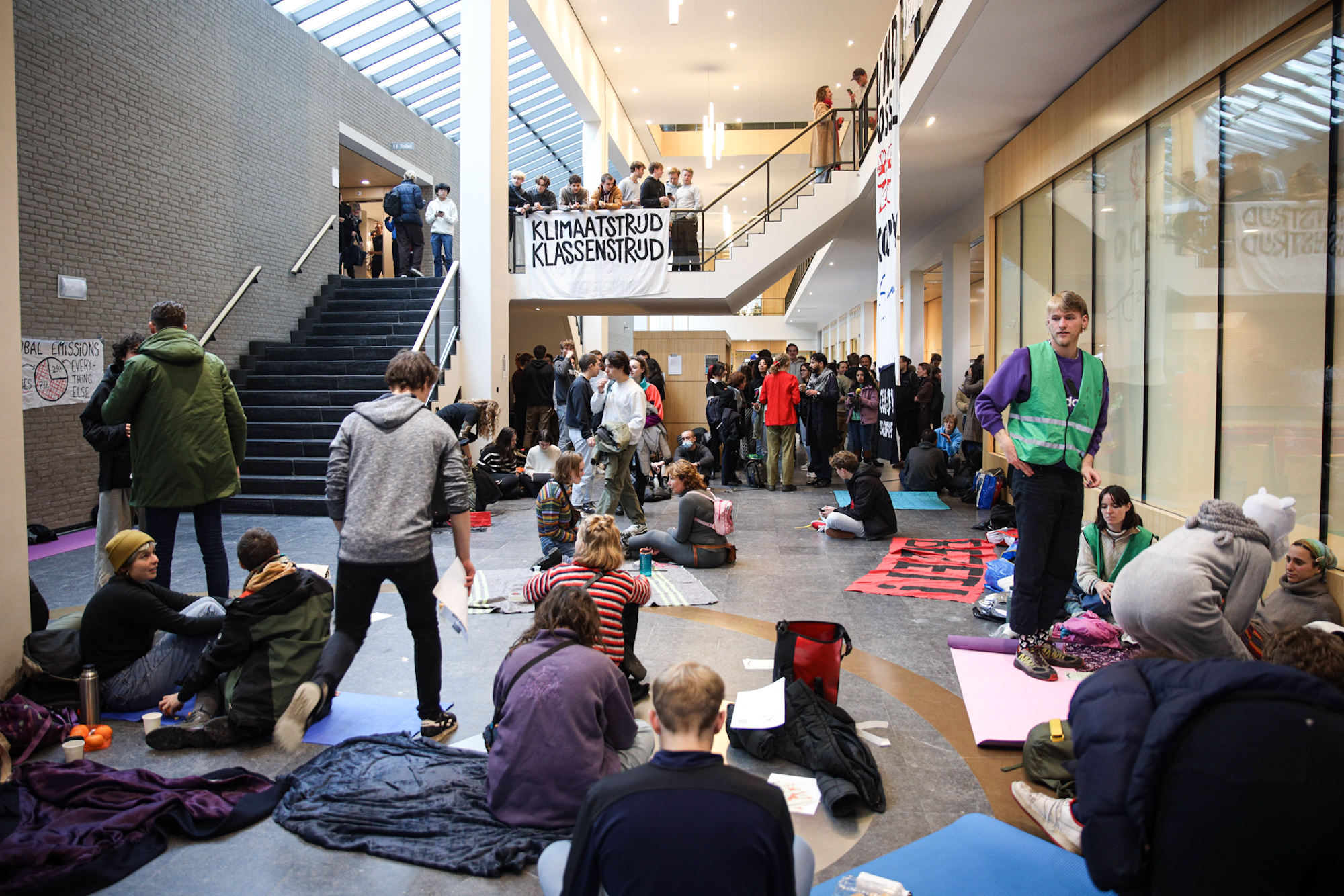
OccupyEUR rejects offer to talk to university board
Gepubliceerd op:-
Protest
-
In his EM column, professor of Erasmian Values and former MP Ronald van Raak tries to redirect the discussion away from the protest and back to the original issue: the ties of the universities with fossile fuel companies, ‘Shell in particular’.
Read more
-
It’s not the protests that are the problem, it’s our relationship with Shell
Gepubliceerd op:-
Column
-
Four days after ten protesters were arrested, the Executive Board issued a statement, saying they ‘are sorry that it turned out this way’. “We acted in consultation with the police because of an external security threat, but were unable to think through sufficiently what the impact on the EUR community would be. We regret that.”
Read more
-
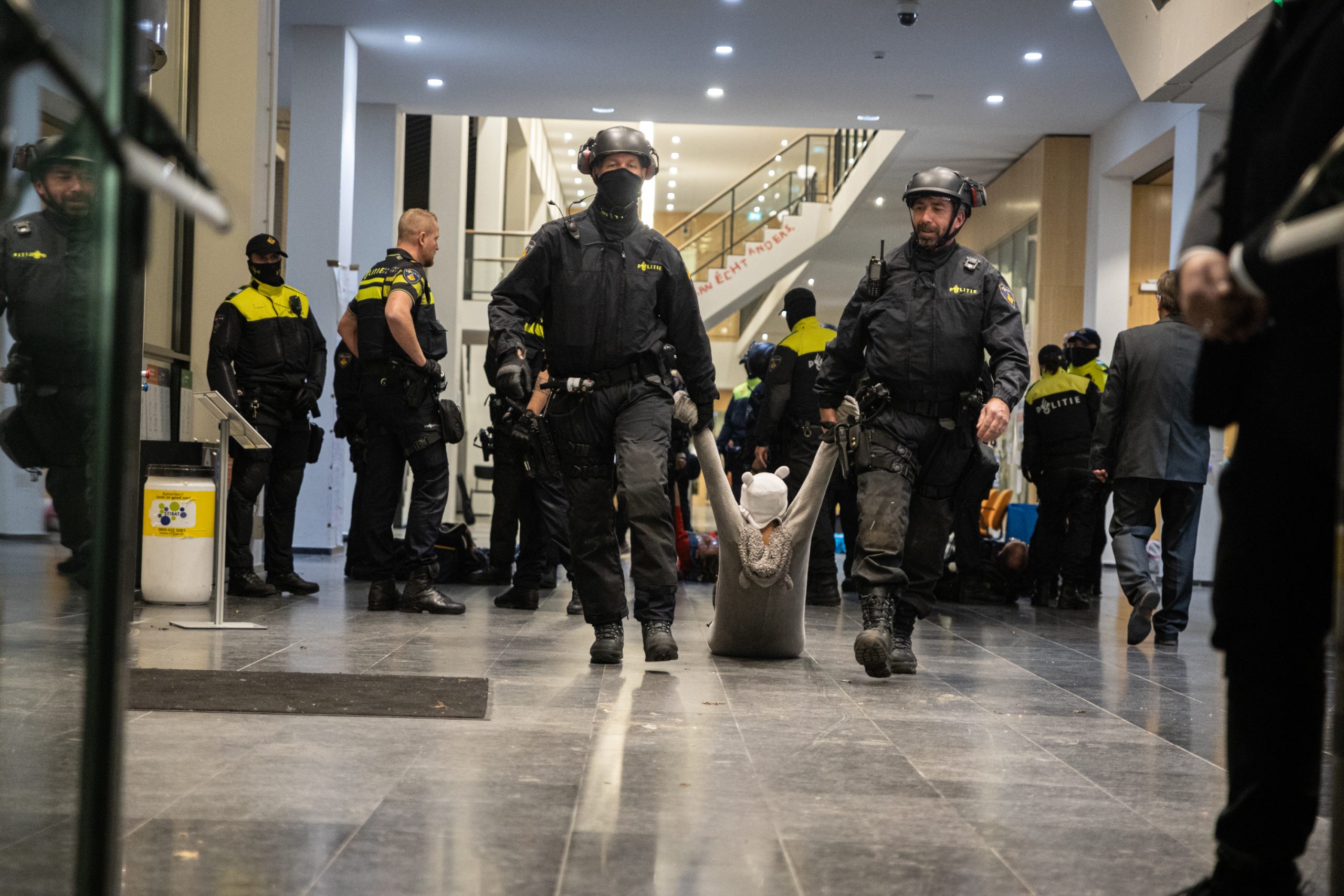
Executive Board expresses regret for police intervention occupation
Gepubliceerd op:-
Protest
-
What is it OccupyEUR wants exactly, and how is the university doing in those areas? OccupyEUR laid out four demands, and in this article it is laid out what the university is already doing and what not.
Read more
-
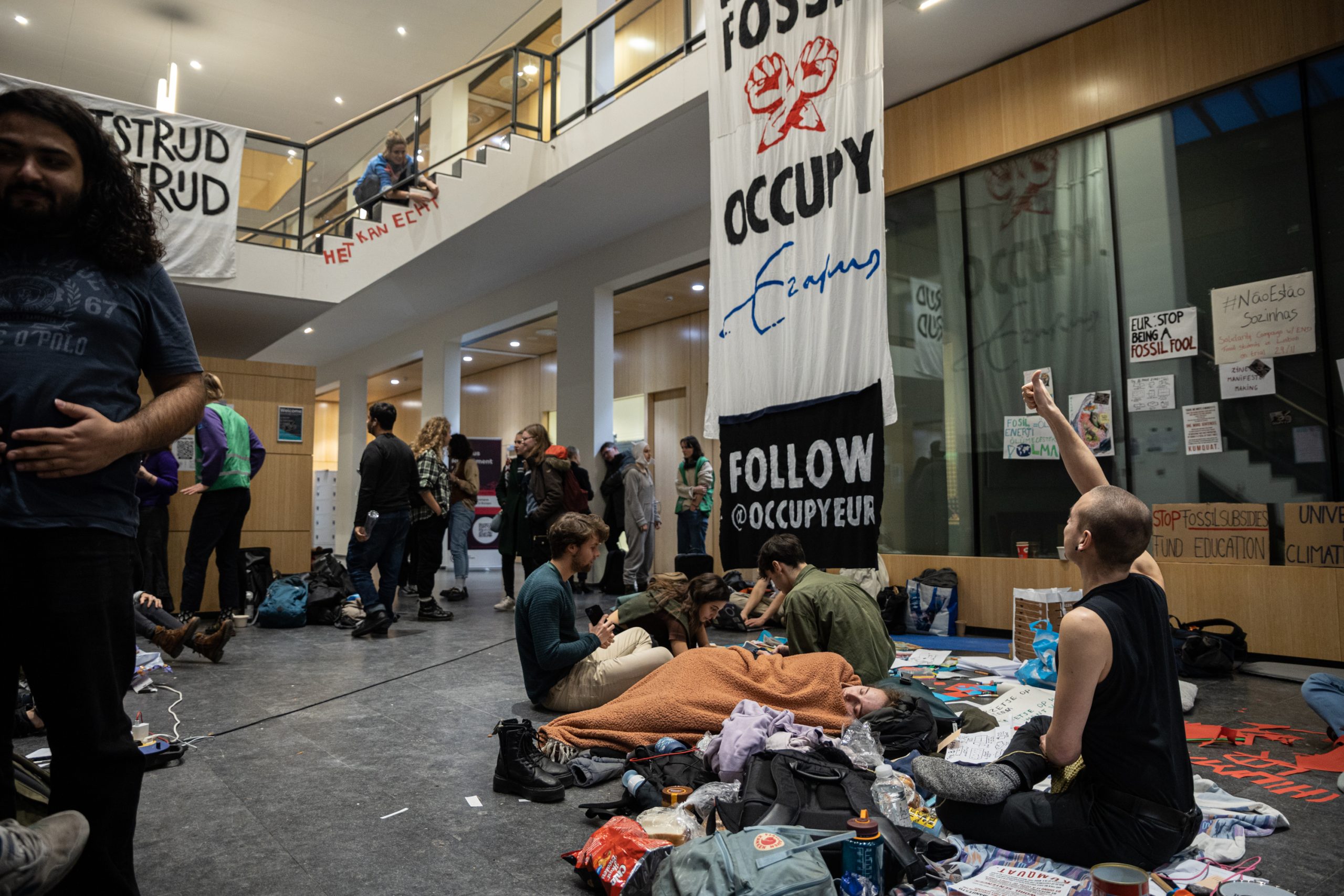
Analysis: EUR is a long way from meeting OccupyEUR’s demands
Gepubliceerd op:-
Analysis
-
At the insistence of university employees, the Executive Board comes out with a new statement on 9 December, saying it feels ‘miserable’ over the events in the Sanders building. The Board announces roundtable discussions, psychological help and and an evaluation of the police’s actions.
Read more
-
Board feels ‘miserable’ about police raid in Sanders
Gepubliceerd op:-
Campus
-
Three students who were arrested at the protests tell their stories at EM. They recount what happened from the moment they were dragged away by the ME. “I was trying to turn round so I wouldn’t choke, but they saw that as an act of resistance”, said one.
Read more
-
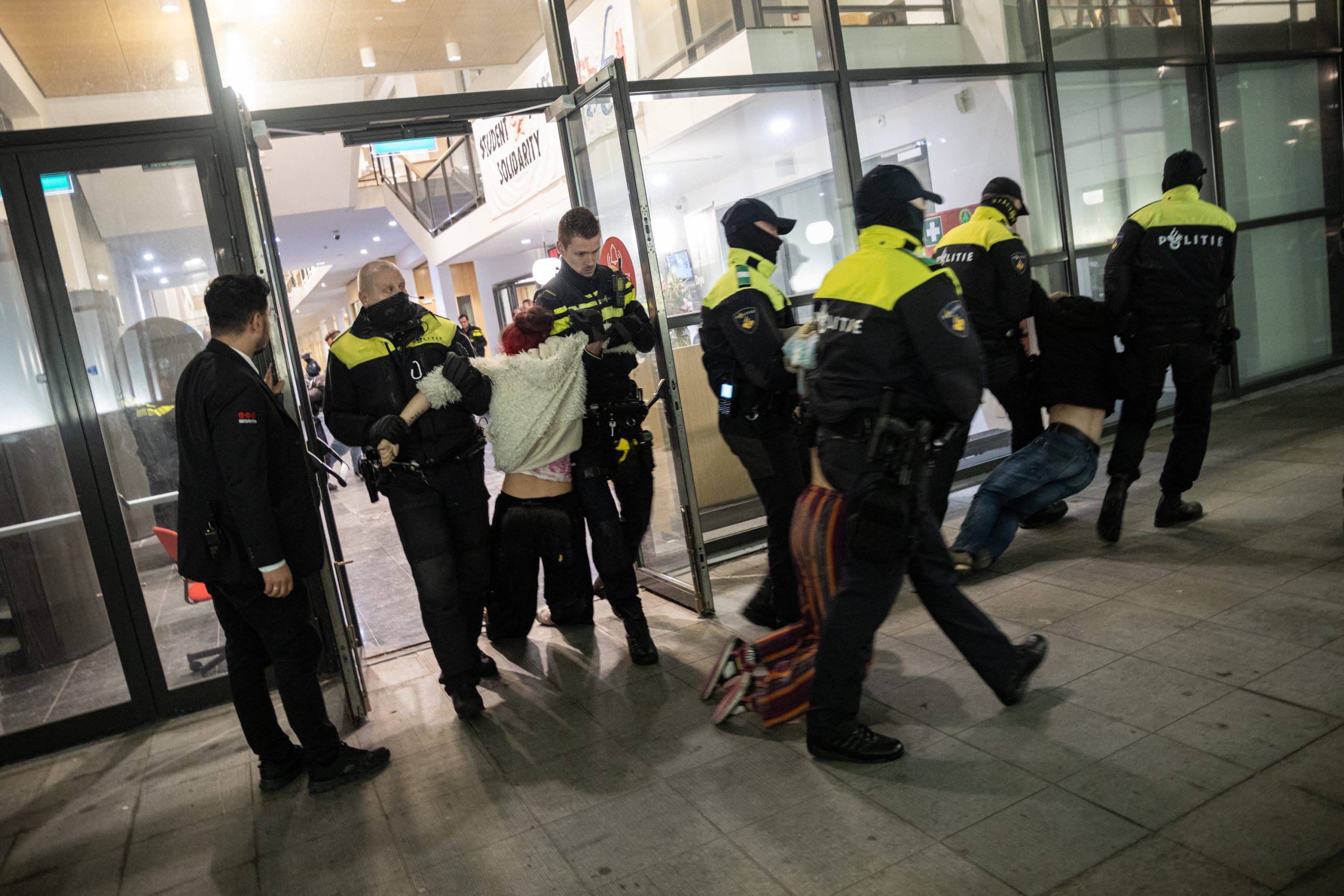
Arrested students: ‘I was trying not to choke, but the police saw that as an act of resistance’
Gepubliceerd op:-
Student life
-
The Pavilion is hosting its first roundtable meeting on 16 December to discuss links with the fossil industry. The heated meeting also talks a lot about the actions by the Board during the occupation.
Read more
-
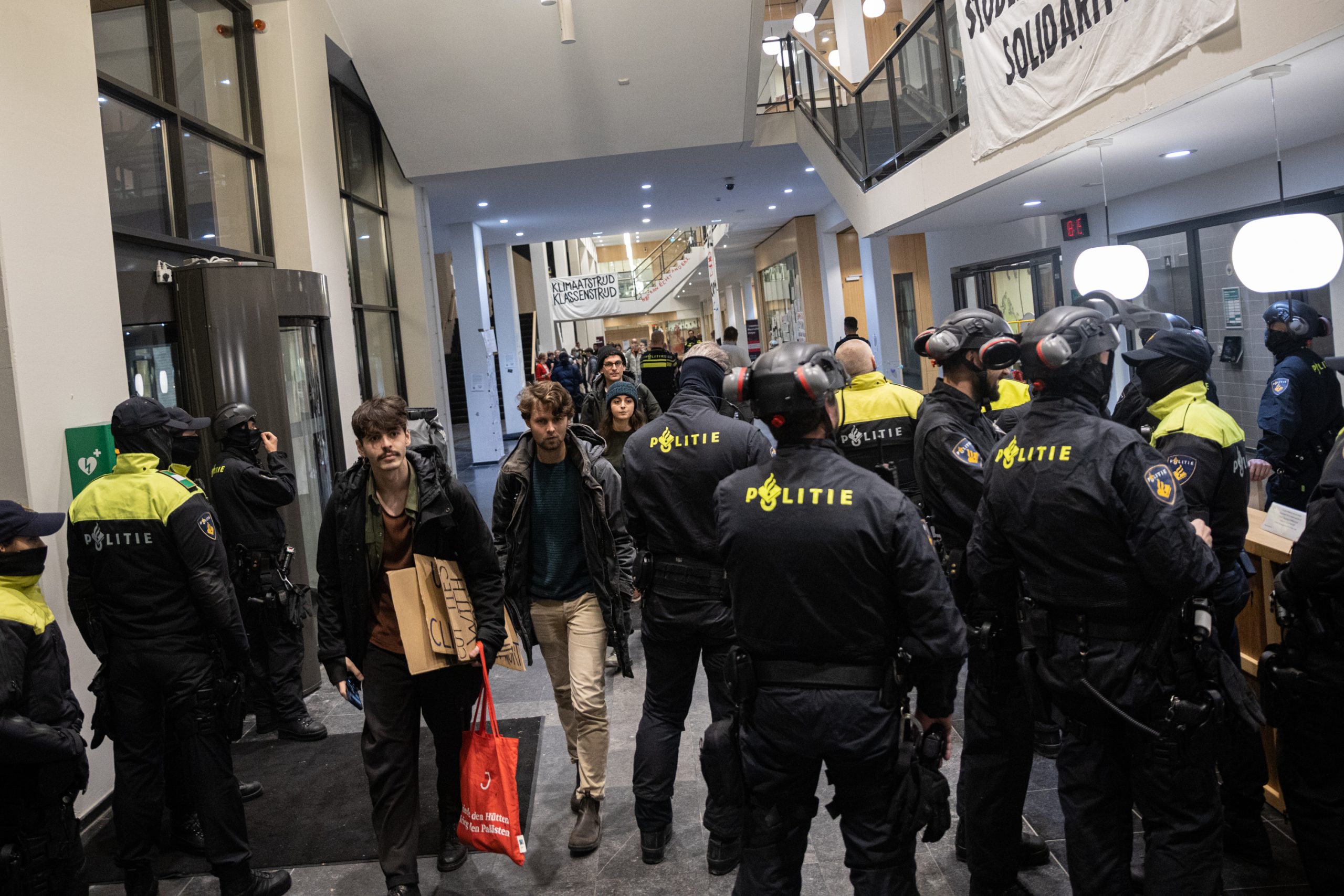
First meeting following Sanders Building occupation: ‘More emotion and humour, less Shell’
Gepubliceerd op:-
Debate
-
Cutting ties with the fossil fuels industry is just a way to pretend that we’re not part of the problem, postdoctoral researcher Melissa Vergara Fernández argues. “Instead, we’re better off cajoling it into supporting our efforts.”
Read more
-

‘Efforts to cut ties with the fossil fuels industry are misguided’
Gepubliceerd op:-
Opinion
-
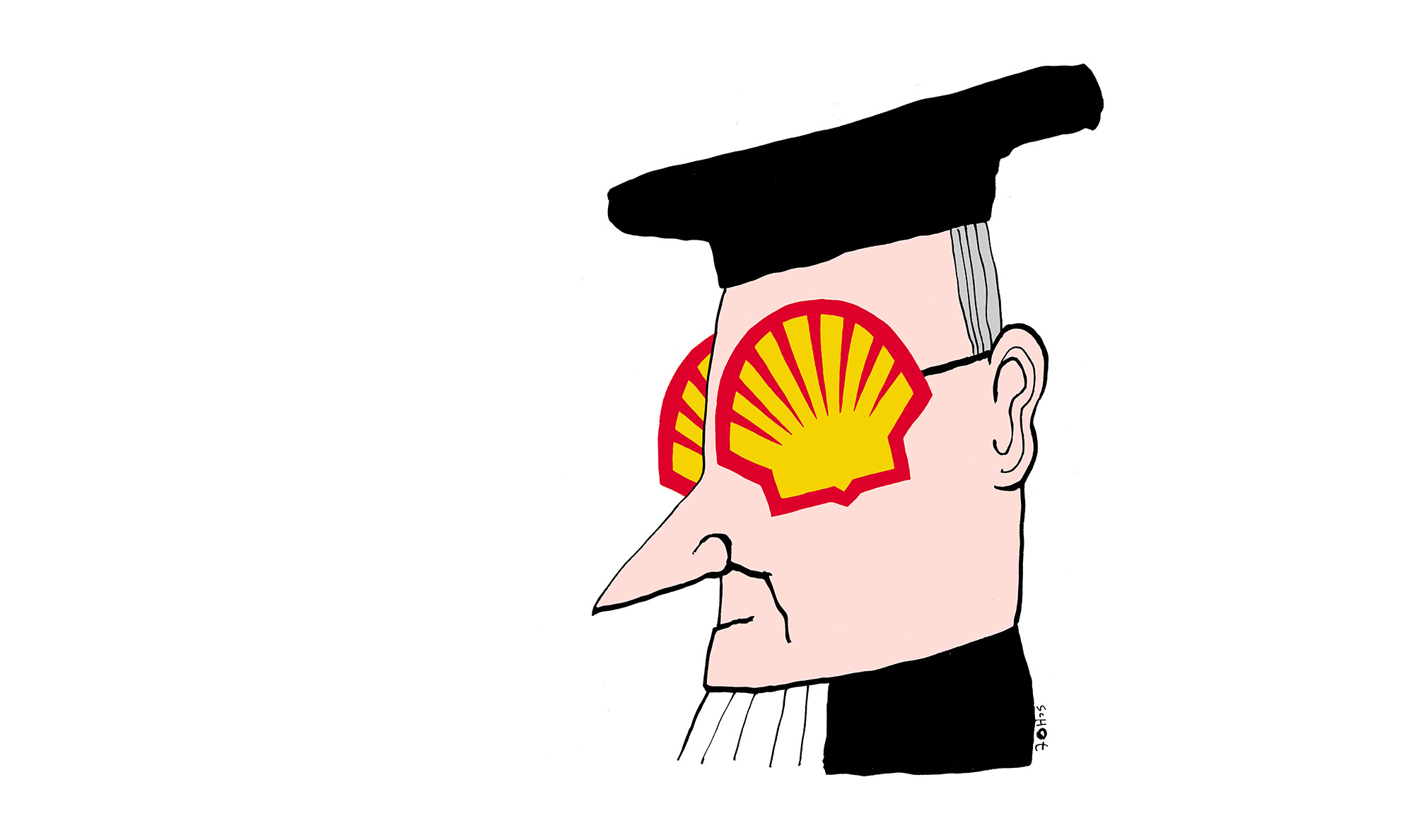
In addition to TU Eindhoven and Erasmus University Rotterdam, an occupation will take place at the University of Amsterdam on 16 January. Dozens of students are demanding that the UvA cut its ties with Shell. According to the students, Shell is doing ‘greenwashing’.
Read more
-
Occupation protest at UvA over ties to Shell
Gepubliceerd op:-
Campus
-
Latest news
-
Interest on student debt at highest level in 17 years
Gepubliceerd op:-
Money
-
-
Behind on repaying your student debt? DUO may soon pass the details on to your municipality
Gepubliceerd op:-
Politics
-
-

Extra funding for higher education does not keep pace with inflation
Gepubliceerd op:-
Education
-
Politics
-