Ad

Philosophers oppose ESHCC merger
The members of the Erasmus School of Philosophy (ESPhil) Faculty Council oppose a merger with the Erasmus School of History, Culture and Communication (ESHCC). At a council meeting held on Monday morning, they unanimously rejected the merger recommendation issued by ESHCC Dean Frank van der Duijn Schouten.
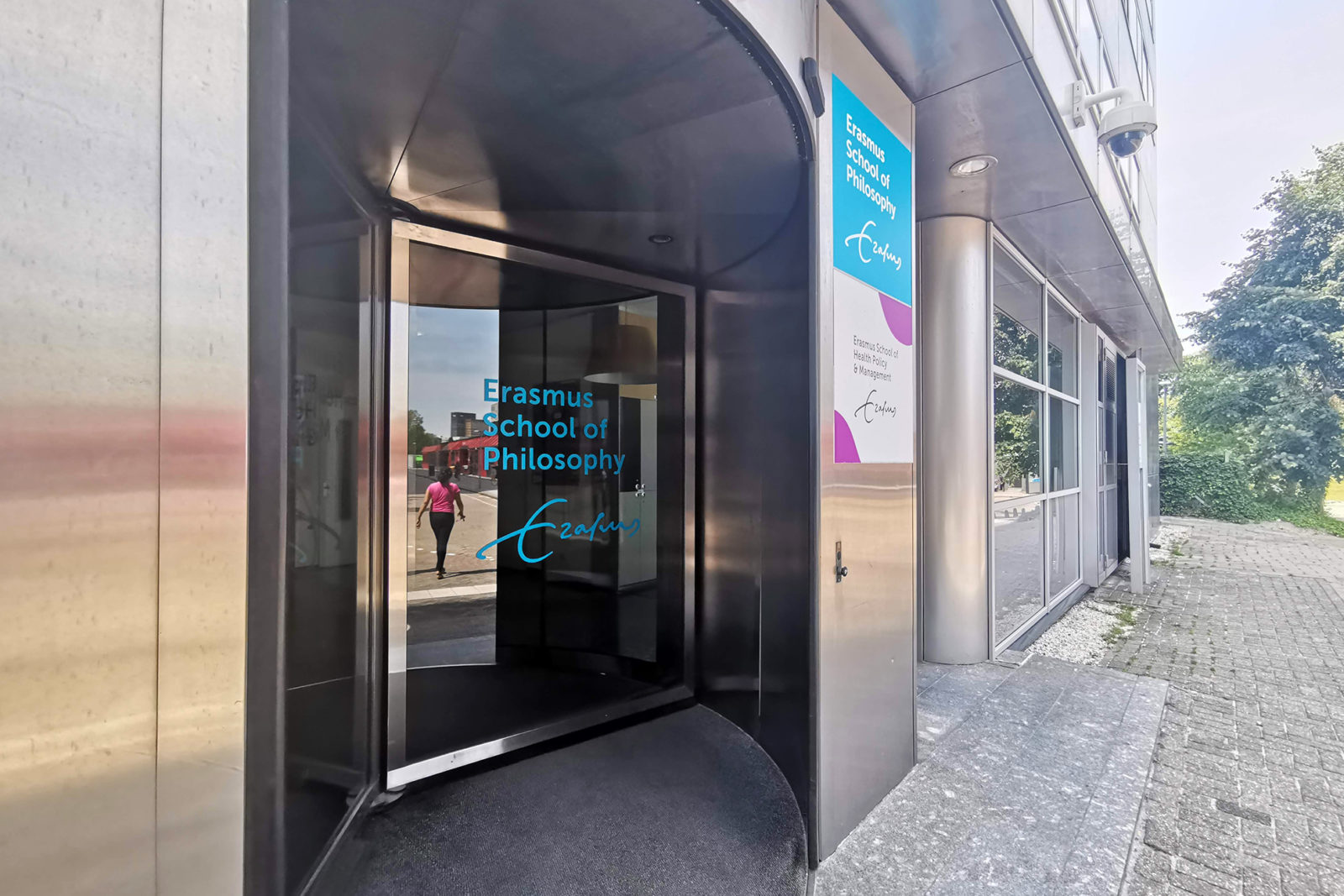
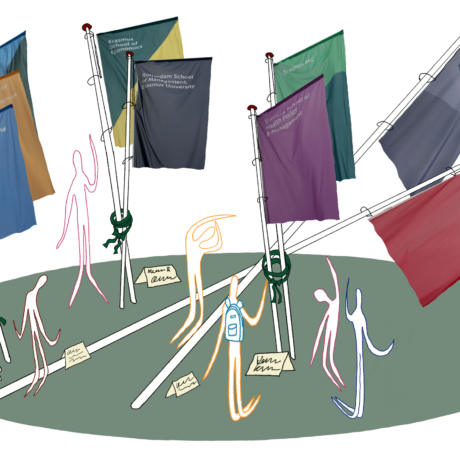
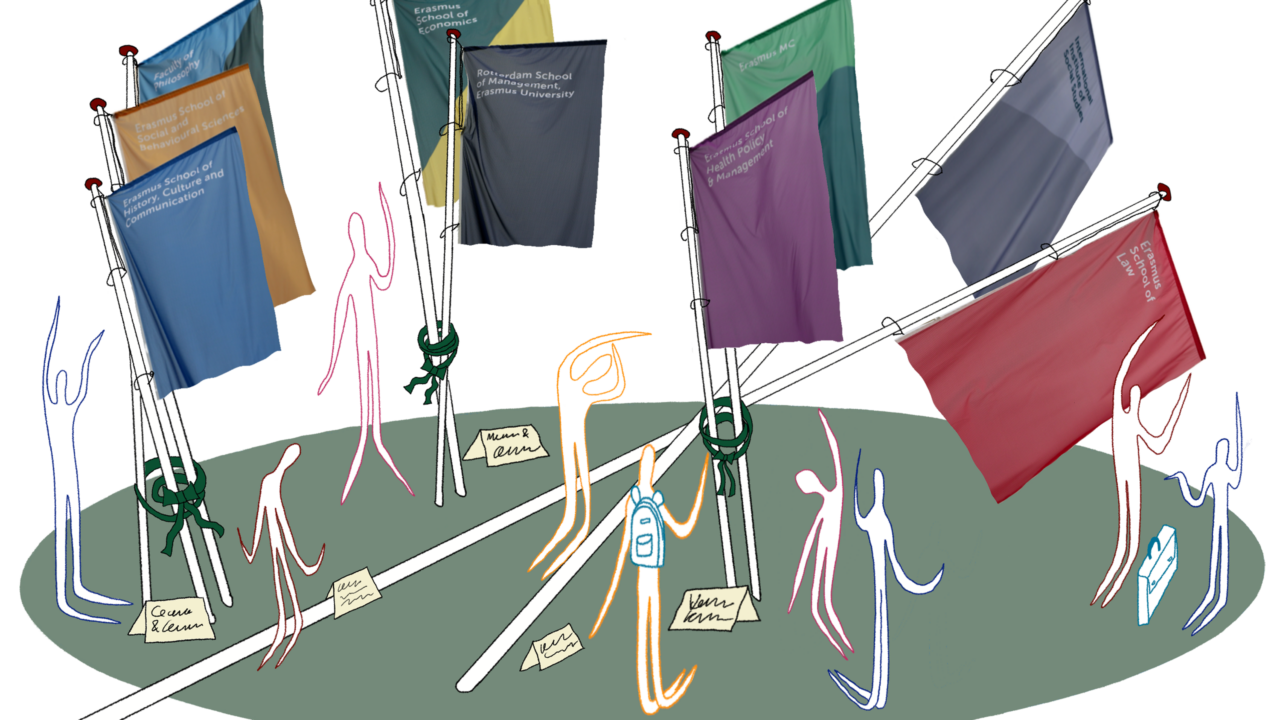
Image by: Tessa Hofland
Two weeks ago, ESHCC’s merger plans were revived. Interim Dean Van der Duijn Schouten said he was in favour of dividing the faculty into two, with one part merging with the Erasmus School of Behavioural and Social Sciences (ESSB) and the other part merging with ESPhil. But the philosophers are not yet convinced that this is a good idea. “The way the scenarios are looking right now, we are ruling out a merger”, said Marloes Westerveld, the chair of ESPhil’s Faculty Council. “There is not enough support at our faculty for that.”
Lees meer
-
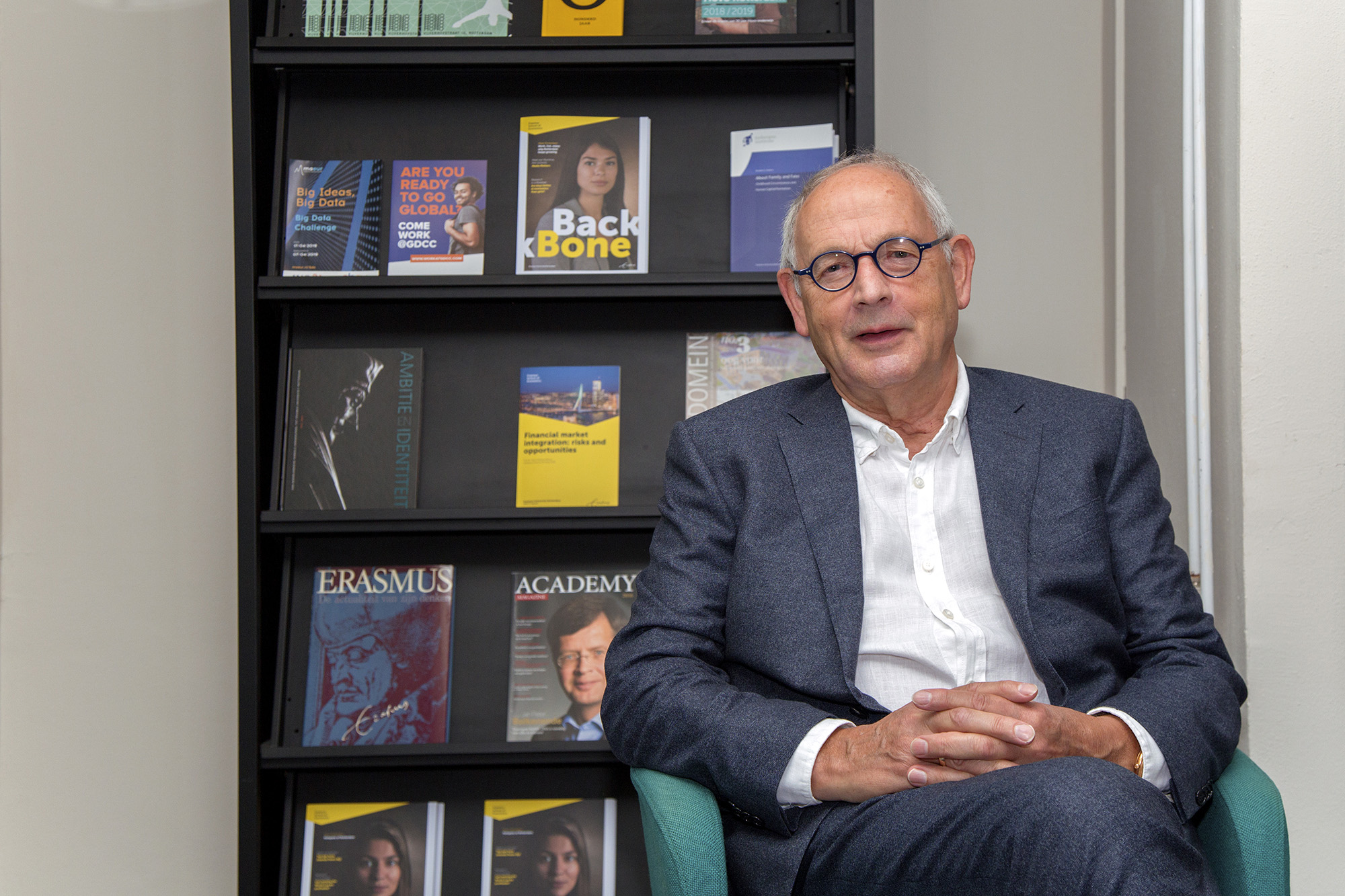
Dean wants to protect the humanities – if need be against the scholars responsible
Gepubliceerd op:-
Governance
-
Many questions
The Faculty Council stated that, in its current form, the merger recommendation raises many questions. “For instance, what does it mean for Philosophy’s independence? And for Philosophy’s position as an interfaculty, and for our double degree?” In addition, Westerveld said the merger was partially rejected because of the atmosphere at ESHCC. “This is very important for our faculty. The way things are right now, we oppose a merger with ESHCC.”
According to Hub Zwart, the Dean of ESPhil, the Faculty Board shares the Council’s views on the matter. “We greatly value our independence, but we’re not just saying no for the sake of saying no.” According to the Dean, his faculty is ‘co-responsible for solid humanities’ at Erasmus University. “And we’d like to think along about the future of the humanities.”
Connecting role
“Initially I was wondering: why are we having this discussion again? Didn’t we have it just a few years ago?” admits Zwart, referring to the turbulent period during which ESPhil’s continued existence was on the line. “Afterwards, we were given a clear mandate: a campus-wide, interdisciplinary role.”
Zwart gives an example: the faculty’s double degree, a programme allowing EUR students to do a Bachelor’s degree in philosophy on top of their primary Bachelor’s degree. “We must continue to be able to fulfill that connecting role, because that’s why we’re here,” ESPhil’s Dean emphasises. “This continues to be a major building block, and I’m not sure we will be able to play that part if philosophy is locked up in a faculty of humanities.”
Broad outlines
Zwart believes the scenarios outlined in the plan for the future drawn up by Van der Duijn Schouten require more detailing. “The report only presents broad outlines. I couldn’t help noticing that the plan operates from the premise that there is a problem that needs solving. I’d mainly focus on the subject matter at hand. I regard the plan as an invitation to reflect on the roles played by philosophy and the humanities, both within and outside academia.”
For her part, Westerveld, too, is prepared to consider alternatives. She understands that plans for the future are being drawn up – plans that will impact ESHCC, ESSB and ESPhil. “The Executive Board is establishing a committee that will further examine the future scenarios. It’s a good thing there will be philosophers on that committee. Our faculty does want to help strengthen the humanities, but we don’t think a merger will be the solution.”
De redactie
-
 Tim Ficheroux
Desk editor
Latest news
-

EM TV newsflash: Shorter waiting time for medical interns, lively trade in graduation tickets and purchasing power increase
Gepubliceerd op:Article type: Video-
EM TV
-
-
In memoriam Rob van der Wal
Gepubliceerd op:-
In memoriam
-
-
Lively trade in tickets for graduation ceremony: ‘Excessive prices are undesirable’
Gepubliceerd op:-
Student life
-

Comments
1 reactie
Comments are closed.
Ad
Read more in Governance
-

University president on powerhouses: ‘If we do nothing, we will hit a wall’
Gepubliceerd op:-
Governance
-
-

‘Academic powerhouses’ to launch by end of 2027
Gepubliceerd op:-
Governance
-
-
Criticism of academic powerhouses: ‘A university is not a power station’
Gepubliceerd op:-
Governance
-


Tanner Tuttle op 14 October 2019 om 17:54
What was the original positions of the pros group and the cons group of the merger? I couldn’t tell from the article.