Ad

CPB: international students bring money into the Netherlands

International students are not a drain on public finances. On the contrary, they benefit the Dutch treasury. This is according to a new analysis of the costs and benefits by the CPB Netherlands Bureau for Economic Policy Analysis.
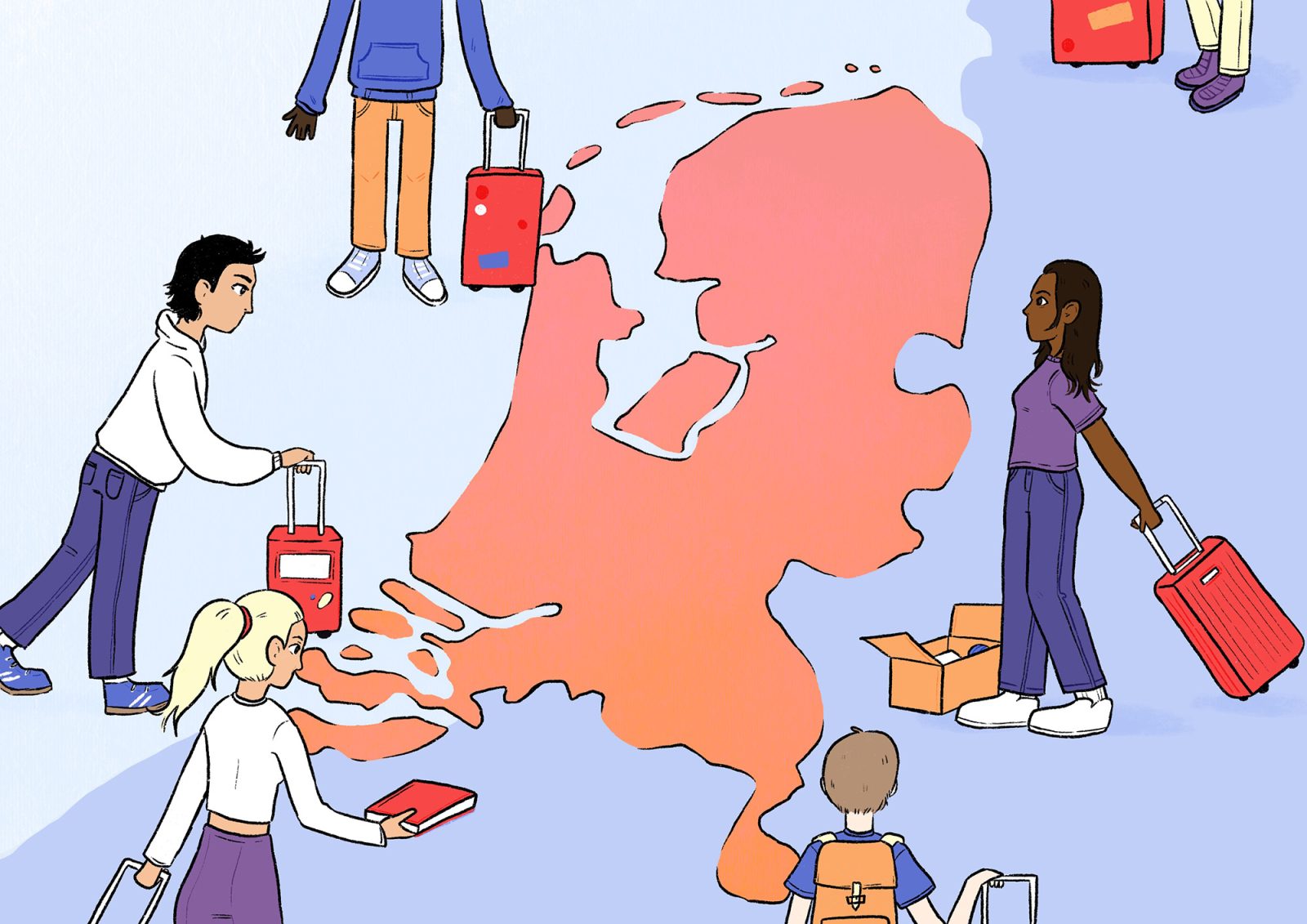
Image by: Femke Legué
More and more international students are staying to live and work in the Netherlands after graduating. This means they also pay tax here. As a result, the costs of education and student finance are more than recouped, the CPB reported on Monday.
This applies to students from within and outside Europe, at universities of applied sciences and research universities alike. Around one in five European students is still living in the Netherlands five years after graduating, the CPB writes. For students from outside Europe, the figure is around two in five.
Now and later
In the short term, the arrival of international students has both advantages and disadvantages. They can help ease staff shortages, but they also need somewhere to live, thereby exacerbating the housing shortage.
In the longer term, by contrast, CPB researchers expect ‘no major effects on the labour and housing markets’, while international students could contribute to innovation and improved international relations.
Costs and benefits
The government funds education and student finance for Dutch students, and does the same for European students. These are substantial expenditures: one international student may study here for longer than another, depending on whether they are taking a bachelor’s or master’s degree, but on average the government spends 32,500 euros on a student at a university of applied sciences and 20,600 euros on a university student.
But those costs are recouped over the years. Among other things, the CPB looks at spending on healthcare and social security and weighs this against the revenue generated and the students’ ‘likelihood of staying’. In the end, a European student at a university of applied sciences generates 13,000 euros for the treasury, while a European university student generates 82,500 euros.
Students from outside Europe have to pay for their education in full themselves. This means that all the tax they pay is profit for the government. That starts with their part-time job alongside their studies. Those studying at universities of applied sciences generate an average of 117,000 euros for the Dutch state, while university graduates generate 243,000 euros.
As early as 2012
The CPB reached a similar conclusion in 2012. At the time, politicians complained that so many German students were coming to the Netherlands, while only a small number of Dutch students were going to Germany in the opposite direction.
Halbe Zijlstra, the then state secretary, was pleasantly surprised by the CPB’s calculation and revised his position on international students. “We cannot ask other EU countries: would you like to pay for students who provide us with an economic benefit? That is a difficult argument to make.”
More positive about migration
Because the world cannot be reduced to economic figures alone, the CPB also considers the ‘broader effects’ of internationalisation. The researchers point out that education in English can be valuable, but so can education in Dutch.
International students have no demonstrable effect on the academic success or employment prospects of Dutch students. “But more contact with international students does appear to lead to stronger international social ties and a more positive attitude towards migration”, the CPB writes.
Brain drain
Another argument against internationalisation is that young people from distant and poorer countries might be able to put their talents to better use in their own countries: is this not a case of brain drain? The CPB is nuanced about this, saying that it can actually offer mutual benefits.
There are indeed gains and losses: brain gain and brain drain. But talented migrants can be more productive in more developed economies, the CPB argues, and they can ‘partly compensate the country of origin for the loss by, for example, sending money to their families’. Moreover, those countries can also benefit from trade and from highly educated people who later return.
Een lijst met artikelen
-

Return or stay? More and more Dutch-Caribbean students explore that question
Gepubliceerd op:-
Student life
-
De redactie
Comments
Comments are closed.
Ad
Read more in Internationalisation
-

Knowledge institutions warn against the Netherlands’ frugal approach in Europe
Gepubliceerd op:-
Internationalisation
-
Politics
-
-

Minister sees ‘major problem’ looming: will there be too few international students soon?
Gepubliceerd op:-
Internationalisation
-
Politics
-
-

After Covid, students are once again more likely to go abroad for part of their studies
Gepubliceerd op:-
Internationalisation
-