Ad

World Cup participation means a lot for Curaçaoan students: ‘For the first time you see your country being recognised’

For Rotterdam residents with Curaçaoan roots, this tournament is about more than football. It is the first time they can support their own country on such a big stage. “Being seen is crucial for the feeling of belonging.”
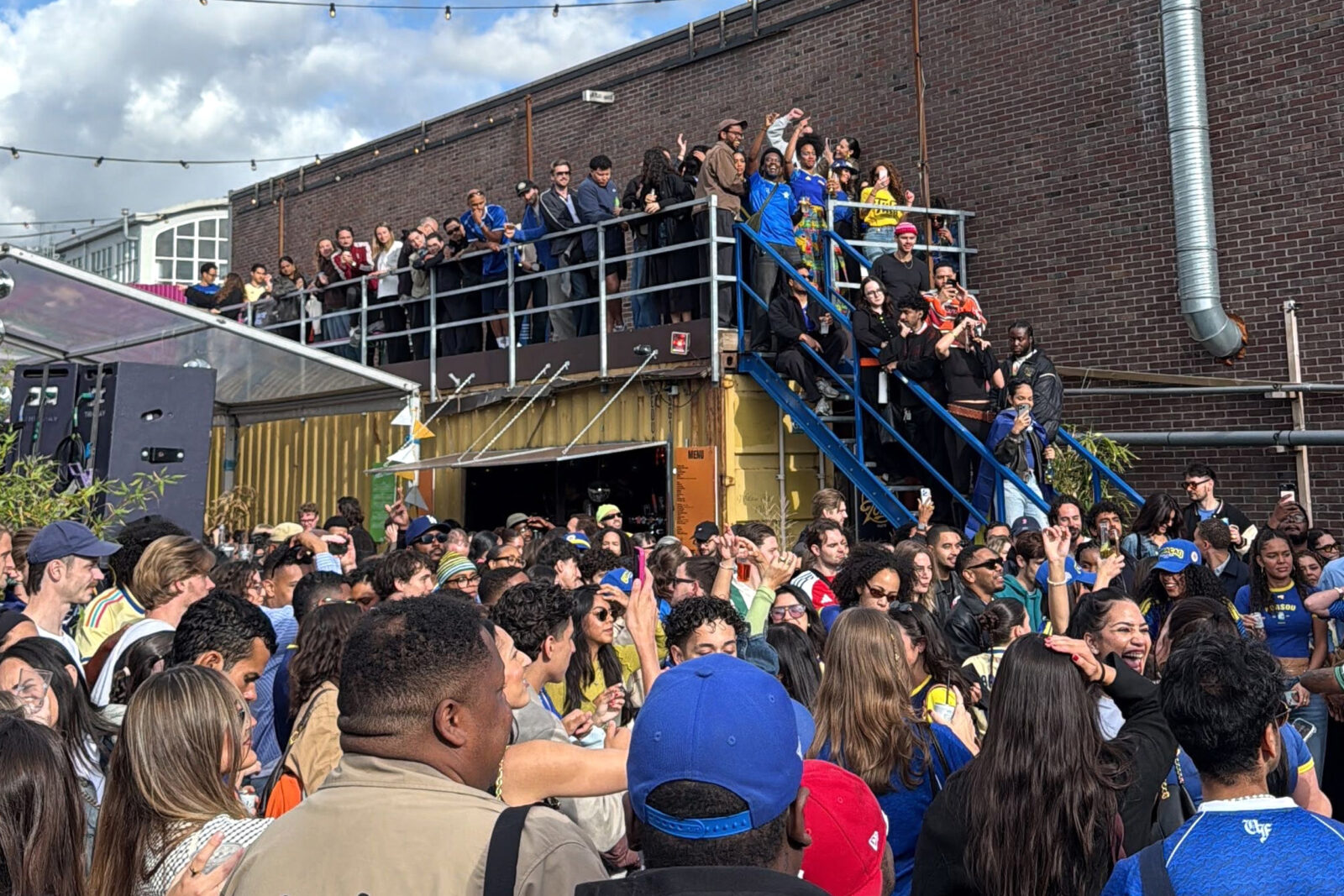
Supporters cheer for Curaçao during first World Cup match.
Image by: Matthew Gibbs
During this World Cup, Rotterdam is not only turning orange, but blue as well. Against all expectations, Curaçao qualified for the World Cup last year. That brings pride, connection and recognition. According to EUR researchers Lis Camelia and Palesa Mashigo, it is a moment of great symbolic significance for the Curaçaoan community in the Netherlands. “Being seen is crucial for the feeling of belonging”, says Camelia.
A historic night
Claudia Ponte da Costa, medical student and chair of the Dutch Caribbean Association Rotterdam (DCA), remembers the decisive qualifying match very clearly. A draw against Jamaica was enough to secure a spot at the World Cup.
“We watched this qualifying match with our student association, in the middle of the night. The explosion of joy was immense when we did it. The fact that we, as a tiny island, get to take part is bizarre.” She stood there with tears in her eyes. “Because we were watching with a group of 40 people at the same time, we all experienced it very intensely. And that while normally I am not such a big football fan at all.”
Finally cheering on your own country
“Normally I support Argentina, Brazil or the Netherlands. Now I can finally cheer on my own country”, says psychology student Shaydee Cras, who was born in Curaçao. She also recognises herself more in the players. “What makes it even more special is that these boys grew up in the same way and have typically Curaçaoan surnames.”
Cras watched the first match in Amsterdam, in a crowded bar with food stalls and music. The fact that Curaçao lost by a large margin did not spoil the fun. “When we scored, everyone went crazy. We really did not care that we went on to lose by a wide margin.”
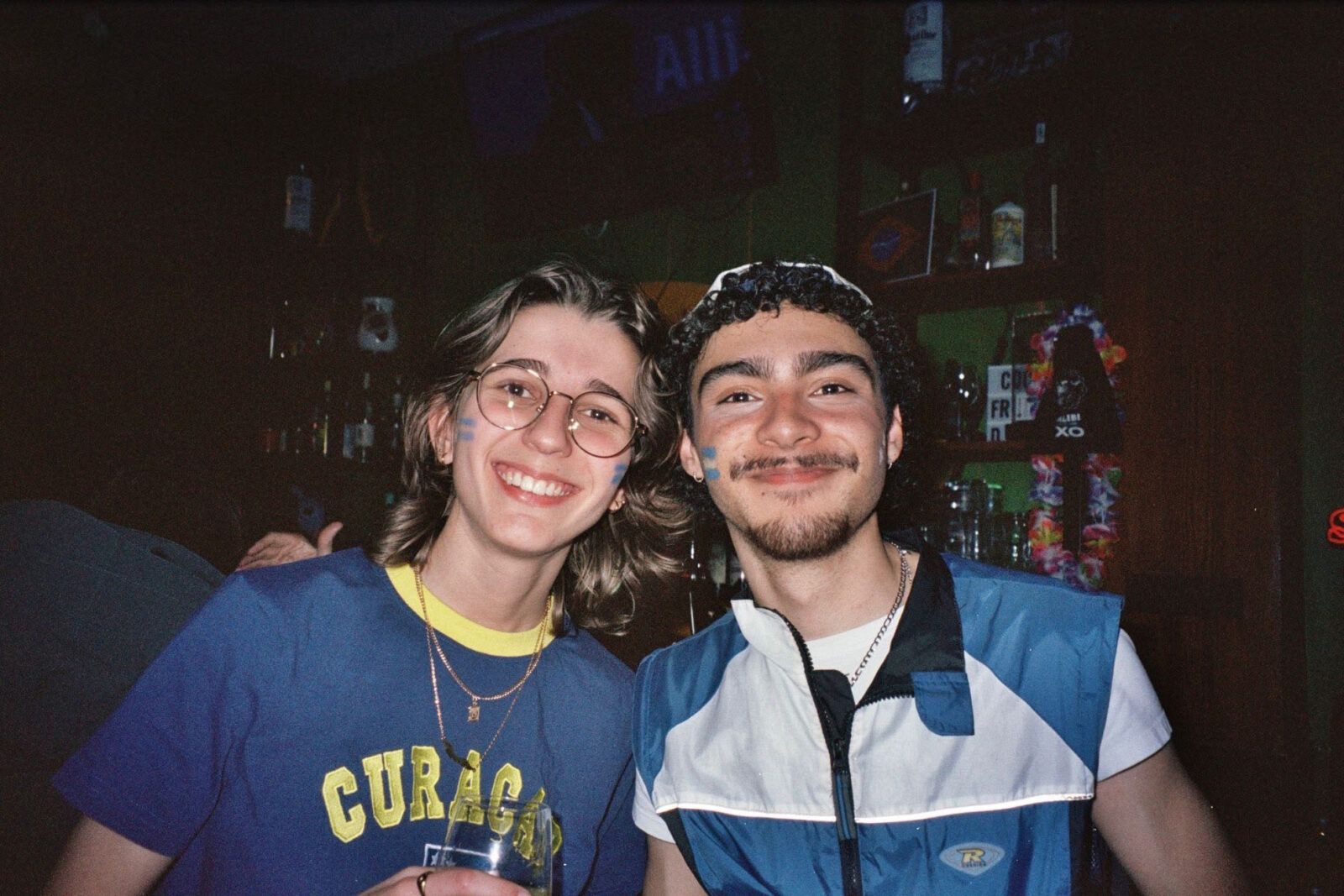
Claudia Ponte da Costa is cheering with her friend.
Image by: Claudia Ponte da Costa
Making other parts of identity more visible
What is happening during this World Cup goes beyond football, say researchers Lis Camelia and Palesa Mashigo. The two PhD candidates are reflecting on what such a historic sporting moment means for identity, inclusion and connection. They are currently making a documentary about what the tournament means for the Curaçaoan and Cape Verdean communities in Rotterdam.
“In the documentary we are trying to show Rotterdam as a melting pot of different cultures, and how the different communities support their teams”, Mashigo explains. “For some of these groups, it is the first time that they see their teams on a global stage like this.”
Blue and yellow in the streets
Flags hanging from windows, football shirts on and watching the matches together. While in everyday life the roots of these communities are less visible, a major football tournament provides room to express other identities loudly and proudly, the researchers say.
“People always carry multiple identities with them at the same time”, says Camelia. “However, some parts of their identity remain more hidden in everyday life. During this World Cup, they are able to show these parts.”
Cras always wears something that has a link to her native island Curaçao. Her nails are completely in the style of the Curaçaoan flag: the familiar blue, yellow and little stars are clearly visible. She is also wearing the pastel yellow away shirt. The shirt is meant to convey energy, flair and perseverance.
Ponte da Costa is one of many who has a flag hanging from her window. “And if I had a car, I would definitely have put little flags on it as well”, she adds with a laugh.
For the medical student, the tournament brings people together. For example, she more easily recognises fellow Curaçaoans. “When I walk down the street and I see another fan, I always shout: Blue Wave!”, she says. “People then turn around and laugh, or shout the same back. We have really become a big movement.”
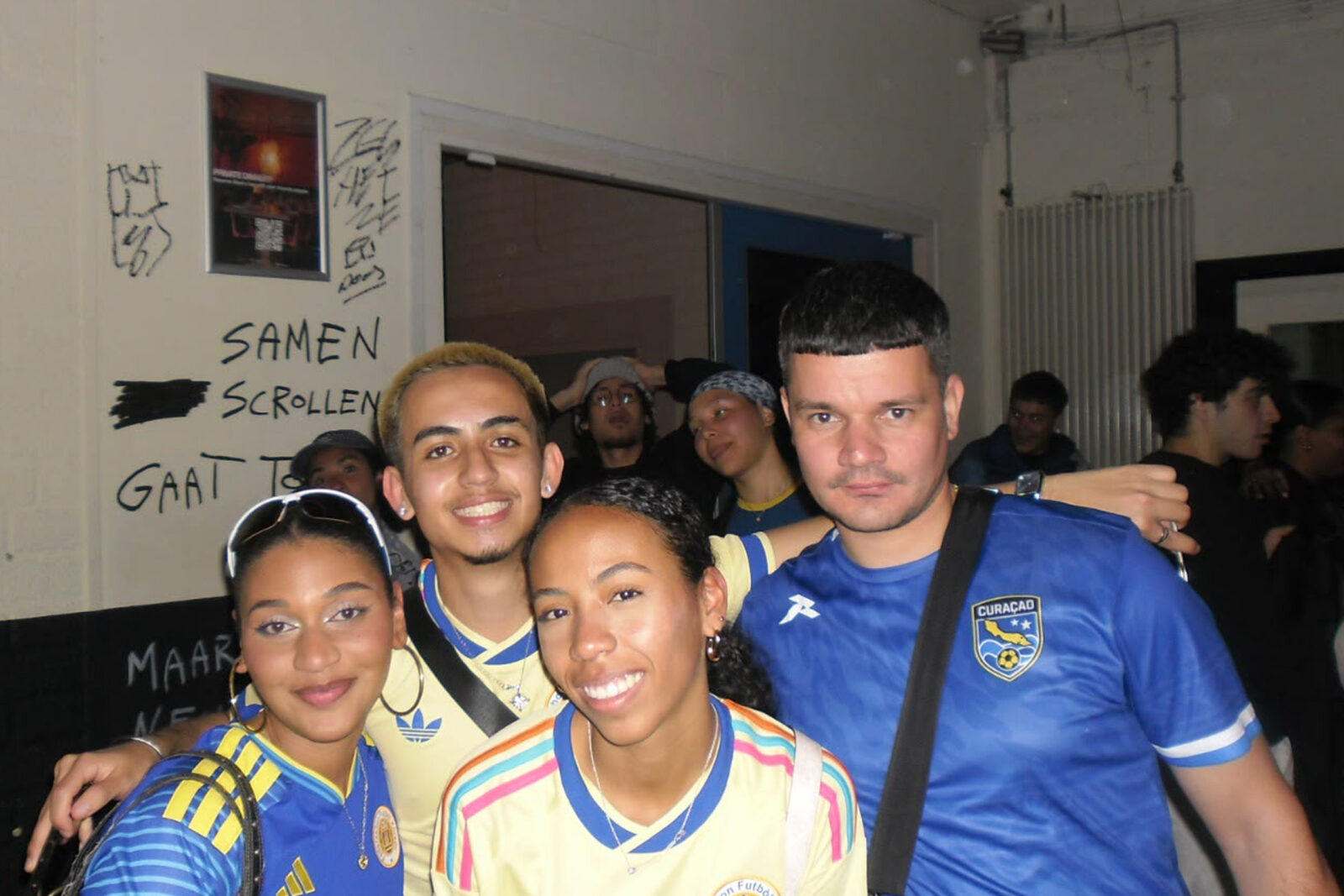
Shaydee Cras and her friends during Curaçao’s first match.
Image by: Julian de Haas
Recognized more easily
Camelia and Mashigo see this feeling in many fans. “Countries such as Curaçao, but also Cape Verde, are both small islands. The fact that they are now taking part in such a big tournament brings more recognition and gives these countries worldwide attention. Moreover, they see their own flags and faces reflected in the stands.”
Ponte da Costa recognises this. “For the first time, you see your country being recognised. Normally I always have to use Google Maps to explain where Curaçao is. Now I see that people already know this.”
More is needed for structural change
Even so, more is needed than a one-off World Cup appearance to achieve structural representation and inclusivity for countries. “The participation of countries such as Curaçao and Cape Verde is of enormous symbolic importance, and we are very happy about that, but we have no illusions that this will lead to systemic change. A lot of work still needs to be done to achieve this”, says Mashigo. “More diverse leadership would be an important step forward, so that the decision makers in football better reflect the diverse life experiences of the players on the pitch.”
For now, the focus is on tonight, when Curaçao play their final match against Ivory Coast. Not an easy opponent, but the students are hopeful. “I hope it will be 1–0”, says Ponte da Costa. Cras is slightly more cautious in her prediction. She would be happy with a draw. But whatever happens tonight, pride will prevail for both of them.
De redactie
-
 Stef Straver
Intern
Comments
Comments are closed.
Ad
Read more in Student life
-

18-year-old student dies after ‘hazing party’ in France
Gepubliceerd op:-
Student life
-
-
Jasper has lost his carefree outlook since the attack on Erasmus MC, but the experience will make him a better doctor
Gepubliceerd op:-
Mental health
-
-
Government sets aside millions extra for student accommodation construction
Gepubliceerd op:-
Housing
-