Ad

War in Iran: will the energy transition get a push or a blow?

The war in Iran is driving up petrol prices, with effects rippling through to the food chain: via gas as a raw material for fertiliser and oil as the basis for plastic. It painfully exposes how intertwined the energy system is with almost everything we consume. Will this crisis speed up the move towards sustainability? Economist Ronald Huisman is hopeful.
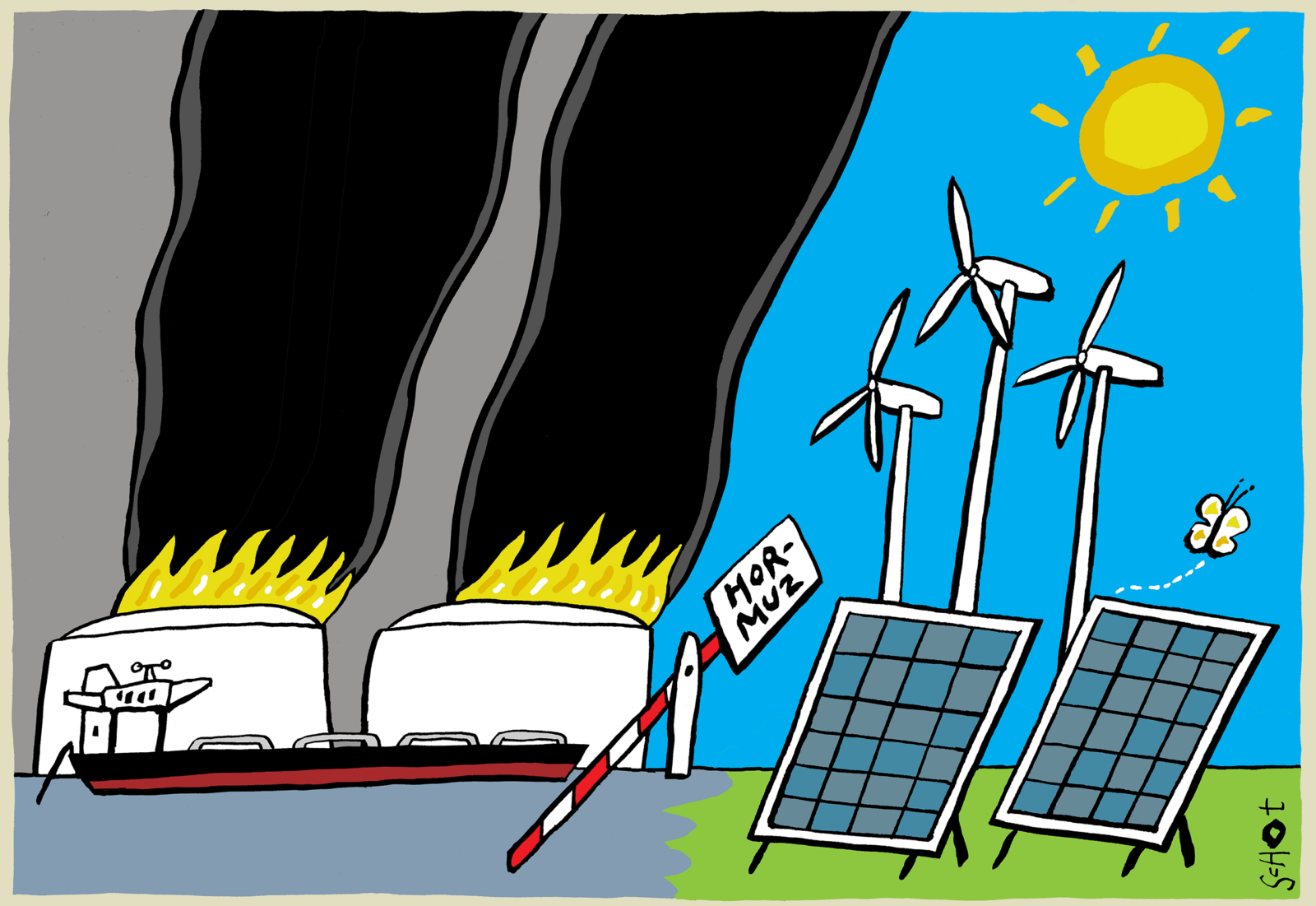
Could the war in Iran lead to an acceleration of the energy transition?
“In 2022, after Russia invaded Ukraine, gas prices also shot through the roof. During that peak, everyone was talking about sustainability. But gas prices quickly dropped back to a normal level, and everything returned to business as usual. On top of that, we got a somewhat more populist government, which made investing in sustainable energy more uncertain. The solar panel market, for example, collapsed.”
Ronald Huisman is professor of Sustainable Energy Finance at the Erasmus School of Economics. His research focuses on energy and commodity markets, with a particular focus on the energy transition.
“Still, we are now seeing demand for solar panels rise sharply again all at once. Many people sense that what is happening in Iran now will create problems over a much longer period than in 2022. 20 percent of the oil on the global market has to pass through the Strait of Hormuz, which has been blocked for weeks. Trump’s strategy is unclear, and there is a great deal of uncertainty about how this will end.
“The length of the crisis could provide an incentive to invest more in sustainable energy. And the higher price of plastic and food will certainly make people more inclined to recycle and reuse. In that sense, I do hope this conflict will act as a catalyst for awareness and behavioural change.”
With prices this high, is there not also a lot of money to be made from oil and gas? Shell, for example, made almost 1 billion euros in additional profit. Does that not undermine the incentive to become more sustainable?
“The oil companies are indeed making a lot of money from this right now. But that is only temporary – if gas and oil prices fall again, those profits will disappear too. In the Netherlands, there are dozens of smaller energy companies financing solar farms or wind farms, or working on all kinds of innovative forms of sustainable energy. They can provide a counterweight to the large energy companies. Vattenfall, for example, is clearly working to reduce its share of fossil fuels.”
Why are we still so dependent on fossil energy sources? What are the bottlenecks in the energy transition?
“Many investors, such as pension funds, do want to invest sustainably, but there are not enough good business cases to invest in. Many sustainable projects don’t offer sufficient returns. Offshore wind is currently very difficult to finance. Compared with a few years ago, the costs of staff and equipment have risen enormously, making those projects no longer profitable.
Many investors, such as pension funds, do want to invest sustainably, but there are not enough good business cases to invest in
“Another problem is congestion on the network. Too little has been invested in expanding electricity networks in recent years. That green electricity may be generated, but if we don’t have the infrastructure to store or transport it, then it is useless.”
This sounds like a problem we could have seen coming. Why did the government or investors not anticipate it?
“The problem is that both financiers and the government don’t think in terms of the entire energy chain, but rather in separate elements of it. The government did subsidise wind turbines and solar panels, for example. That led to enormous growth in sustainable energy. The Netherlands is now a European leader in generating green energy, but because not enough has been invested in infrastructure, we can’t do much with it now.”
Do you see a shift in investments since the war in Iran? Are investors already responding by putting more money into sustainable energy?
“These are literally tankers that need steering. Large investment funds don’t change their strategy that quickly. What I do see is that they are becoming more aware of the systemic risks this war creates and what that means for their investment profile. The agricultural sector in several African countries is already being hit hard by fertiliser shortages as a result. Investors with social investment goals, such as combating food shortages in Africa, are also being squeezed by an energy crisis.”
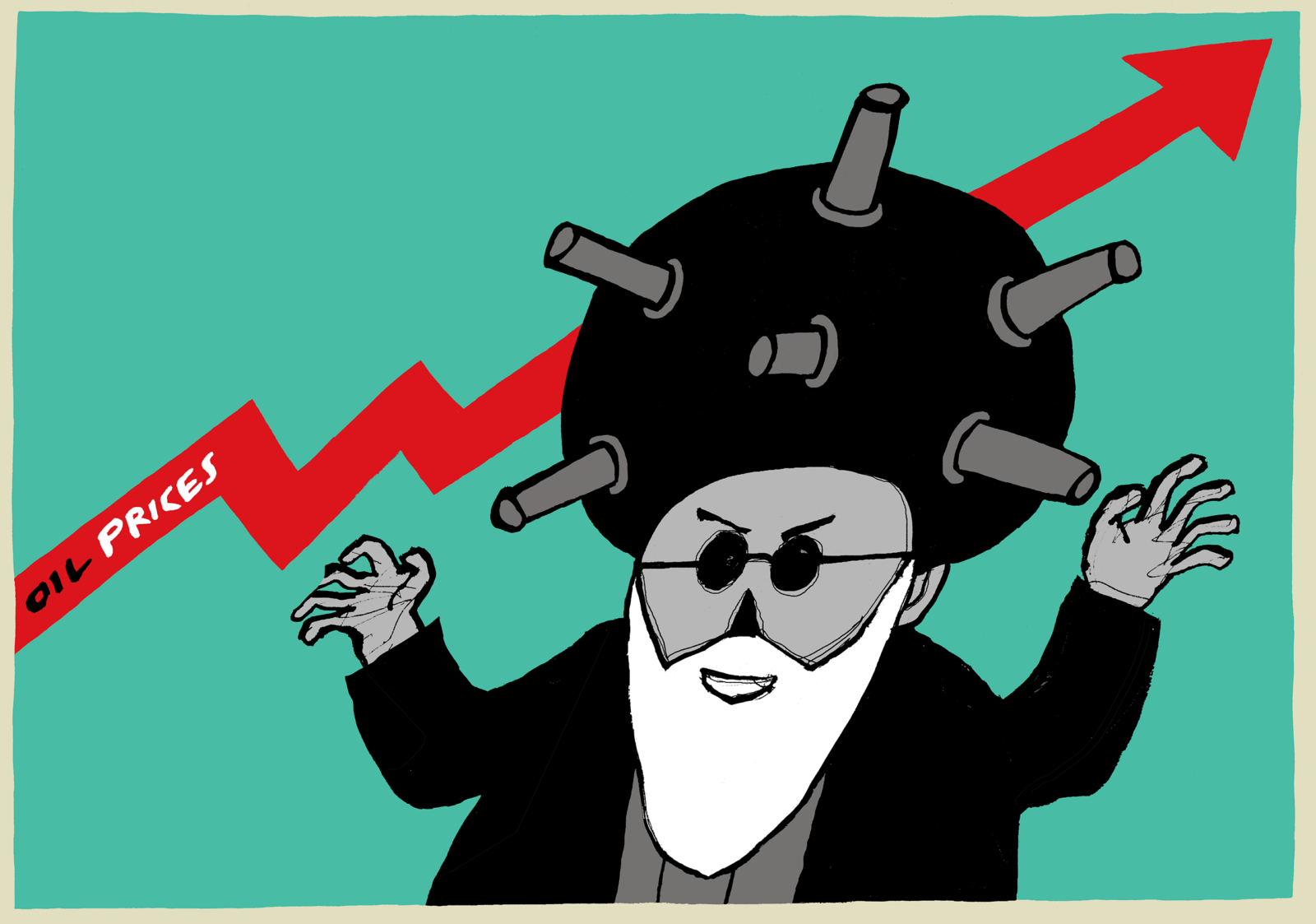
How can we become less dependent on these kinds of geopolitical whims?
“Geopolitical risks are part of the system. And investors need to think more in systems in order to limit those risks. Instead of focusing on a single share, they need to understand that there are multiple links in the chain that depend on one another to keep the entire energy system functioning.
“If you look at it that way, you invest differently than if you do it ‘the Wall Street way’. That short-term way of investing in individual shares has become disconnected from the real economy. If investors paid more attention to systems such as the sustainable energy sector, they could support the entire network. That would make it less vulnerable to risks such as the geopolitical impact we are seeing now. This isn’t a short-term solution, but in my view it is the only way out in the longer term.”
Is that something investors are genuinely working on?
“In Europe, around 34 percent of investors put money into sustainable funds, and that percentage is rising. Some of them are genuinely engaged in impact investing. That is an investment strategy in which investors try to have an impact on the real economy, in order to contribute to, for example, the energy transition or other sustainable development goals. In the Netherlands, for example, PGGM, an investment manager for pension funds, wants to invest a large share of its assets in this way.”
To what extent are sustainability investments dependent on the political climate?
“In the United States, Trump is throwing sustainability completely overboard and portraying it as a hobby of the Democrats. Here too, there is tension between short-term and long-term thinkers. I certainly hope we don’t start thinking more like Trump, although I do have confidence in that. In the EU, sustainability policy is much more deeply embedded. For example, in the EU taxonomy for sustainable activities, which obliges companies to report on sustainability.”
I do think it's brave that they aren’t just putting band-aids on the immediate pain, but are really looking ahead to how we can emerge from this structurally stronger
What do you think of the measures the government is taking in response to this crisis?
“I understand that it feels strange that they aren’t doing anything about fuel prices at the pump, because that is where people feel the pain, and Germany and Belgium are doing it. But I do think it is brave that they aren’t just putting band-aids on the immediate pain, but are really looking ahead to how we can emerge from this structurally stronger. For example, they are making it easier for low- and middle-income households to buy an electric car. Until now, even with subsidies, that was only affordable for the wealthy. Up to now, the entire energy transition hasn’t exactly been inclusive. Yet everyone will have to take part – a transition isn’t achieved if only an upper layer of society changes its behaviour.”
Since the war in Iran, there has also been renewed political debate about reopening the Groningen gas fields. What is your view on that?
“The decision to close the gas wells is an ideological one. As in: we need to move away from gas, so we are stopping it. But an energy transition is exactly that: a transition. You can’t switch from fossil fuels to sustainable energy overnight. People sometimes think you can, including in politics. A transition takes years, and in the meantime you want to use the least polluting fossil fuel available. Right now, that is gas, because it emits the least CO2. Supplies from Russia have disappeared. With the blockade of the Strait of Hormuz, another supply route is gone. At the moment, the largest supplier is the United States. Well, how do we feel about that right now?
“So both from the perspective of the energy transition and from the geopolitical situation, it is a good idea to start extracting gas in the Netherlands again. Of course, there is the personal suffering of the people of Groningen. That balance has to be carefully considered – personally, I don’t know much about that side of it. But we simply need those gas reserves to bridge the period until we have become sustainable.”
Een lijst met artikelen
-

‘With gadgets like Meta Glasses, we pay to be surveilled’
Gepubliceerd op:-
The Issue
-
De redactie
-
 Manon Dillen
Editor
Comments
Comments are closed.
Ad
Read more in The Issue
-
‘With gadgets like Meta Glasses, we pay to be surveilled’
Gepubliceerd op:-
The Issue
-
-

‘Most medical influencers do not think they are unqualified’
Gepubliceerd op:-
The Issue
-
-
How expensive festival tickets and major concerts are threatening the entire live music sector
Gepubliceerd op:-
The Issue
-