Ad

Visitors commemorate wartime violence at monument De Steen der Miljoen Tranen

Student corps RSC/RVSV organised the Remembrance Day ceremony on Monday in Kralingen. Visitors emphasised the importance of remembering together and of not looking away from the wartime violence of today. “Without historical insight, present-day events are not recognised sufficiently.”
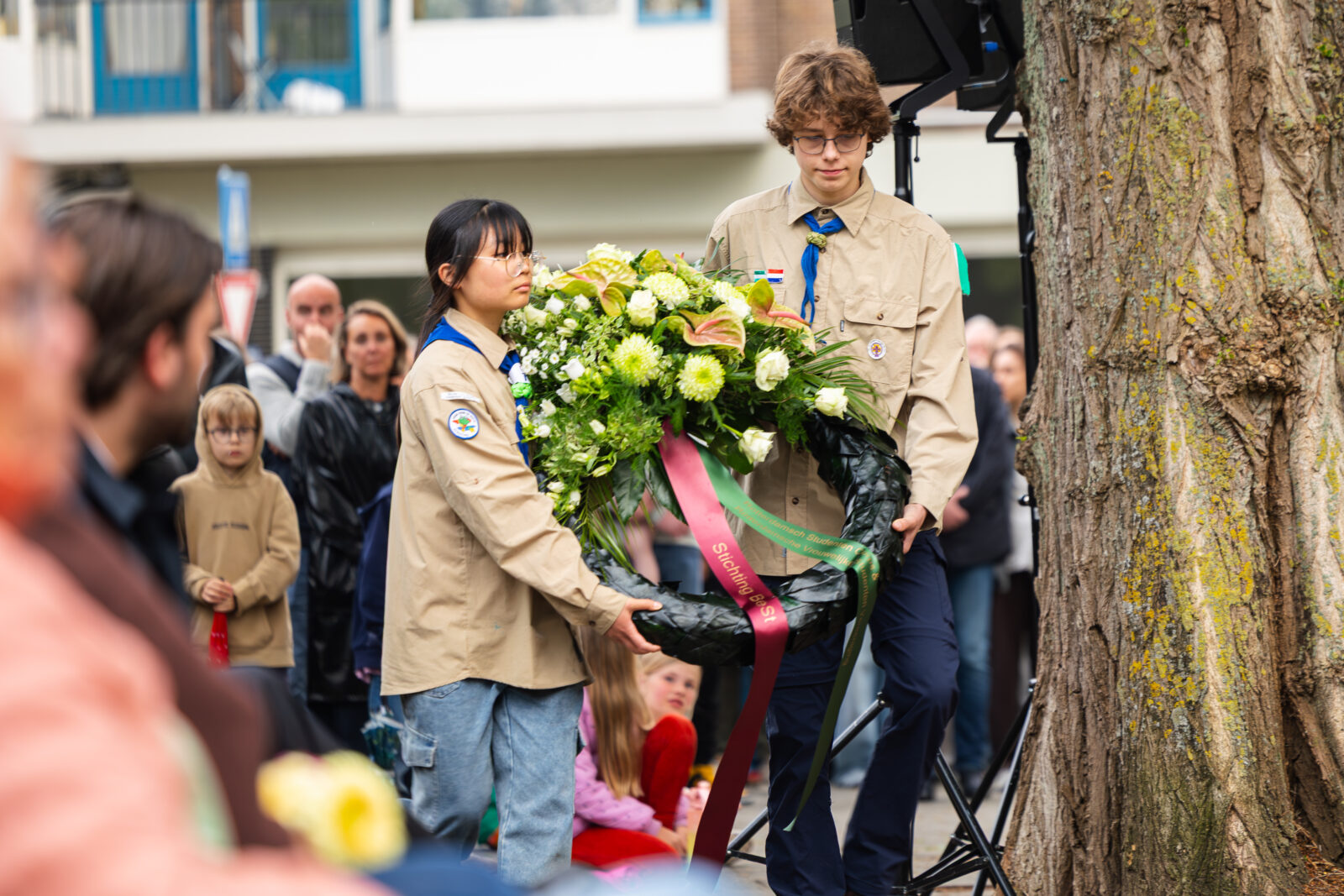
Members of the scouts help lay a wreath.
Image by: Pien Düthmann
It’s 7.30pm. The road by the monument De Steen der Miljoen Tranen on the Oudedijk is still busy with trams, cars and cyclists. Two rows of chairs are ready for guests and visitors with limited mobility. Members of the music association the Koninklijke Rotterdamse Post Harmonie set up their instruments and warm up. More and more people quietly gather at the monument.
One of the early visitors is Hans de Jong, who lives a hundred metres from the monument. Last year he buried his mother. Both his parents experienced the war consciously. Those experiences left deep scars. “When years later I ran through the house in boots, my mother was still startled”, he says. The war also affected his upbringing, in which tolerance played an important role. That is something he misses nowadays: “The public debate is being unnecessarily sharpened, and technology amplifies this.”
According to De Jong, it’s essential that people continue to commemorate together on a day like this. “Passing on stories is so important. Nowadays you have groups that only talk about each other, but no longer with each other.”
Silence
Just before 8pm the surrounding streets are closed off. The square has filled with students, neighbourhood residents and other people from Rotterdam. Everyone draws closer together. After a short opening speech comes the Taptoe, the trumpet signal played just before the two minutes’ silence.
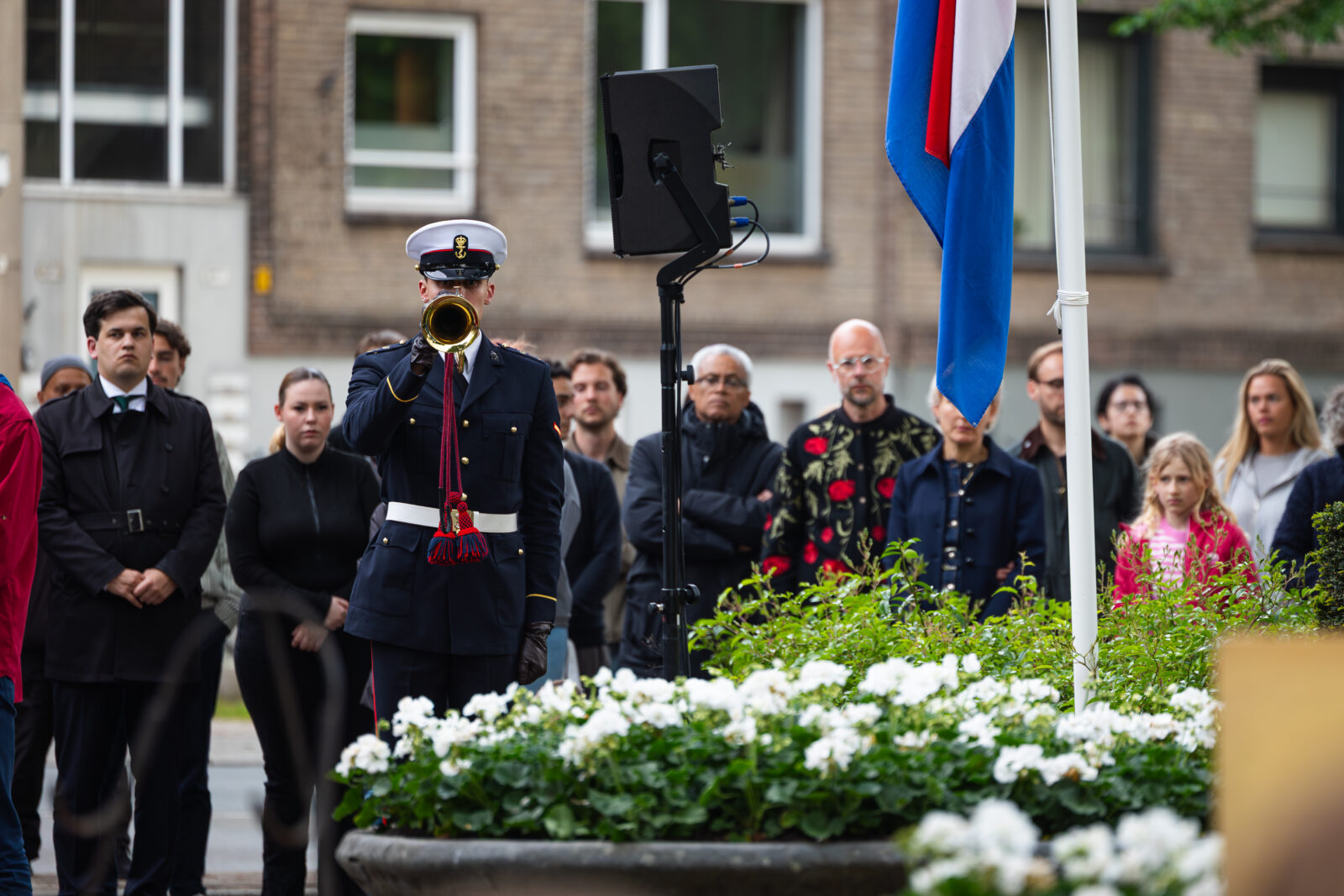
A trumpeter ushers in the two minutes of silence.
Image by: Pien Düthmann
Then it’s quiet. Only the wind in the leaves, the cooing of pigeons and the sound of cars in the background can be heard. A group of students watches from a window on the corner of the street. After the moment of silence the first verse of the national anthem follows. Everyone who is able to stand does so to sing along with the anthem.
The importance of remembrance
After that, Marte Jongbloed, author of the children’s book 1300 bommen in 13 minuten (‘1300 bombs in 13 minutes’), speaks about the bombing of Rotterdam. A jogger stops to listen to her message. Jongbloed reads a passage from her book and draws a parallel with the present. Today young children in other parts of the world also lose everything. That is why she finds it important to draw parallels between the past and the present: “Without historical insight, present-day events are not recognised sufficiently. Even now it starts with scapegoat politics and silencing people.”
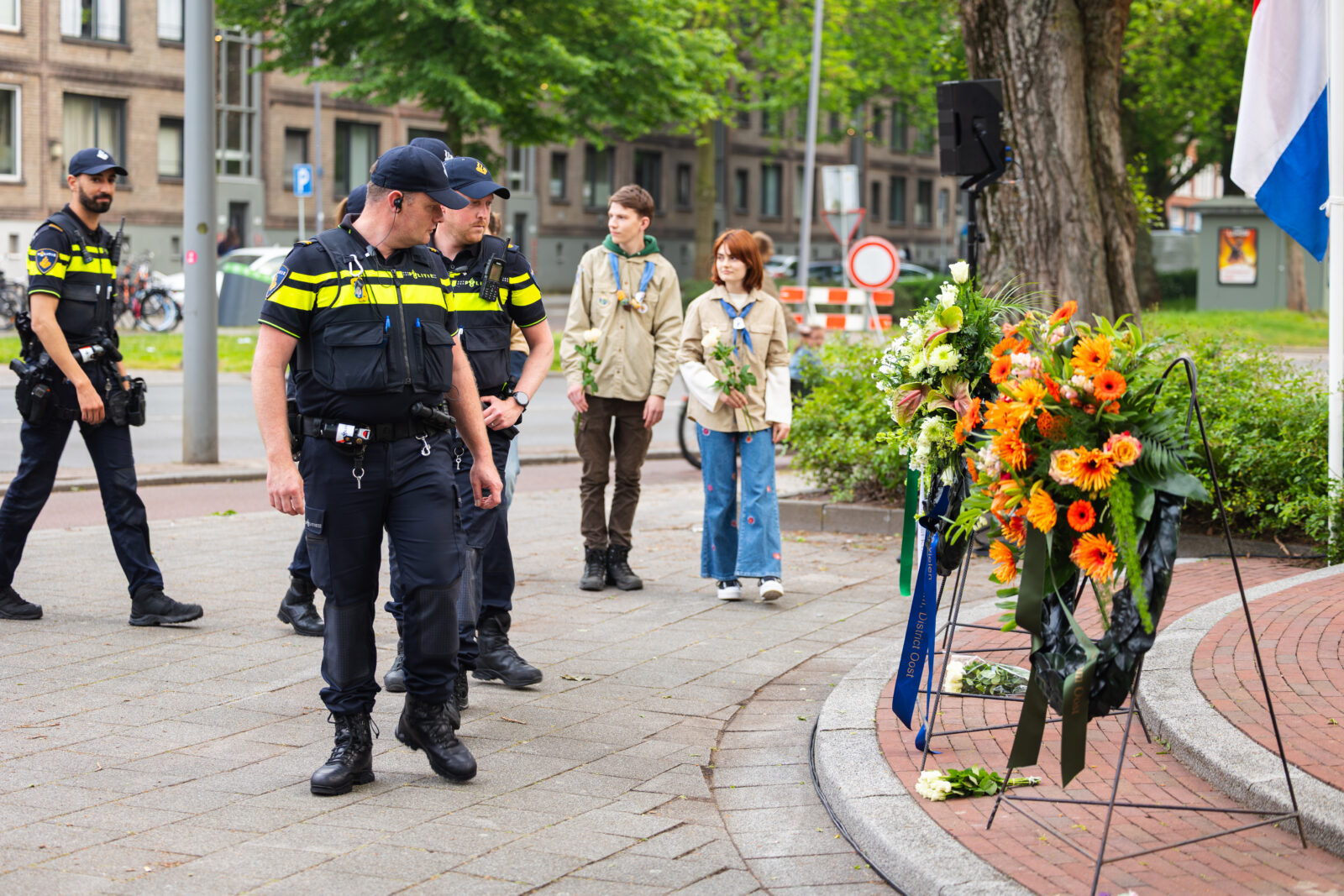
Local police officers pay a personal tribute.
Image by: Pien Düthmann
Around 8.10pm the wreaths are laid by the neighbourhood council, the police, various foundations and the student associations RSC/RVSV and Laurentius. The scouting association helps hand over and place the wreaths.
Before the last wreath has been laid, normal life in the city resumes. At 8.15pm the trams are running again along the Oudedijk and the streets are reopened. Many present turn around, because the clatter of the trams is hard to ignore. After the wreath-laying the public is given the opportunity for a personal tribute. People pause briefly at the monument or lay a single flower by the monument.
Special evening
Neighbourhood council member and opening speaker Joey Engelen is pleased with how the evening went. “I’m actually surprised by the turnout, so many people have come to this commemoration tonight”, he says. He is proud of the cooperation with the student corps RSC/RVSV, which organised everything well.
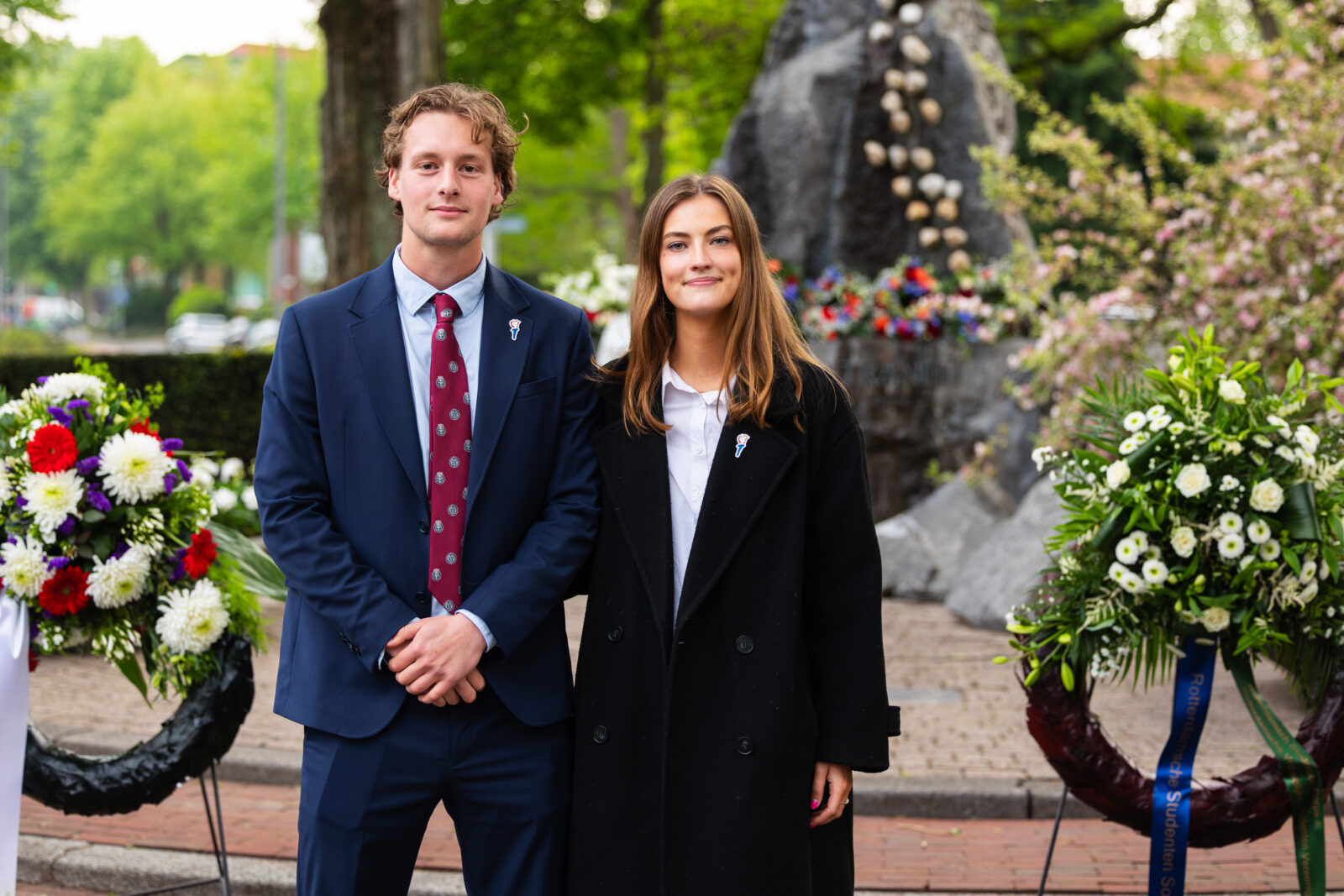
Committee members Hidde Bekke and Suus Böcker have organised this evening.
Image by: Pien Düthmann
He also points out a striking detail in the paving. Close to the monument there is a red lamp in the ground that marks the fire line. This is the boundary between houses that were destroyed during the bombing and those that remained standing. The monument stands exactly on that dividing line.
At 8.30pm volunteers clear away the last items. Emke Stroosma, a business administration student, normally watches the live broadcast of the commemoration on the Dam from home. Tonight she was in the audience herself as a volunteer. “This service is much more personal”, she says. “That makes it a lot more special”.
Een lijst met artikelen
Comments
Comments are closed.
Ad
Read more in Student life
-
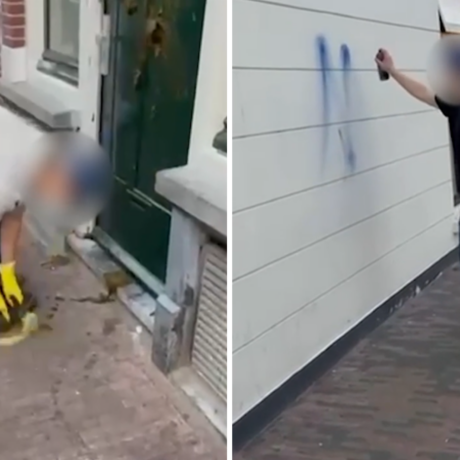
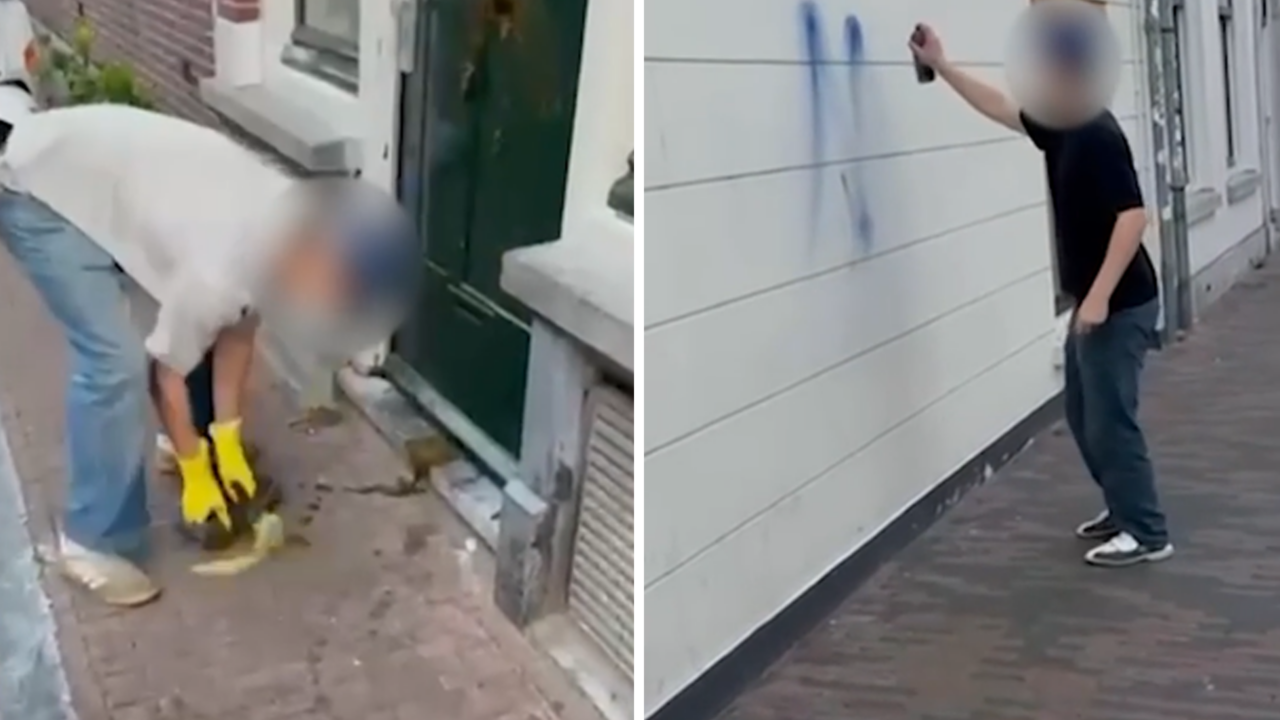
RSC/RVSV accused of poo stunt targeting student houses in Utrecht
Gepubliceerd op:-
Student life
-
-
Carolina could wake up ten minutes before her lectures
Gepubliceerd op:-
Housing
-
-
No joint introduction week for vocational, applied sciences and university students for now
Gepubliceerd op:-
Eurekaweek
-