Ad

House of Representatives: Minister must enter talks on binding study advice

The House of Representatives is calling on the government to enter into discussions with universities and universities of applied sciences about the binding study advice and to examine whether it can be replaced with a ‘personal advice’. Previous research shows that the BSA has significant drawbacks.

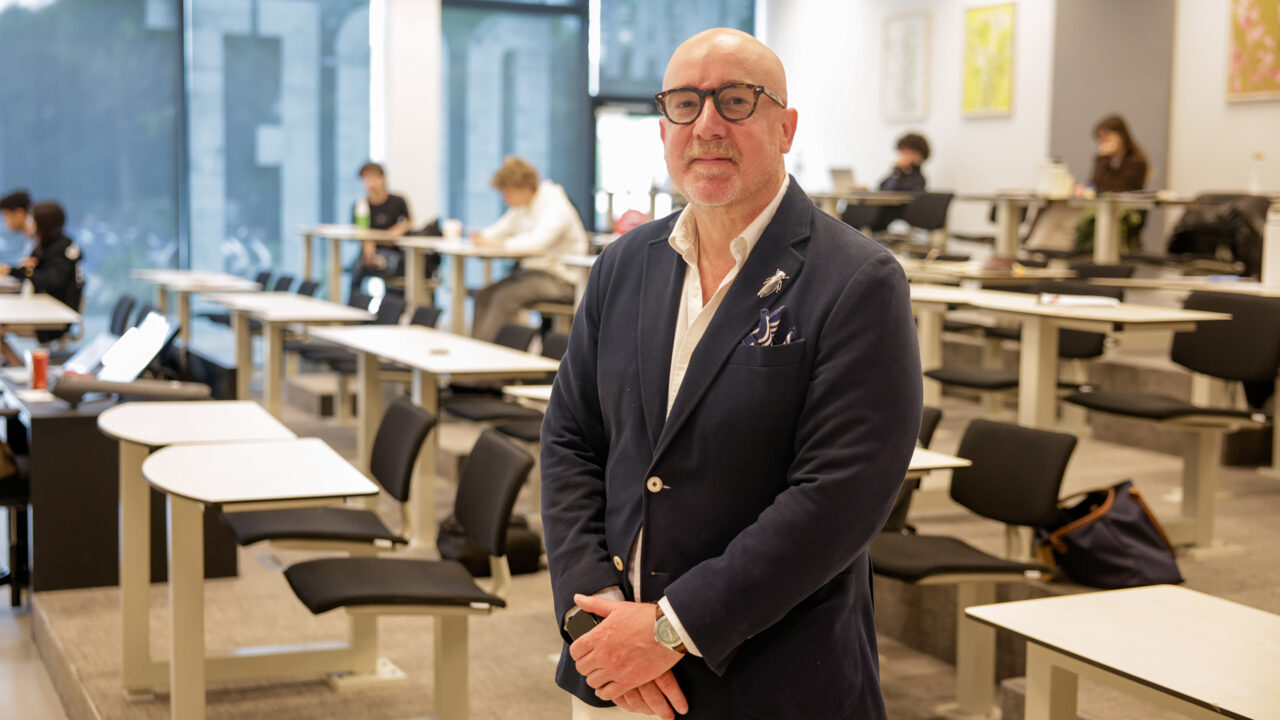
Image by: Femke Legué
At many universities of applied sciences and research universities, first-year students must obtain a certain number of credits. If they fail to do so, they are required to leave their programme.
However, a large-scale study by a researcher at VU Amsterdam shows that the binding study advice has few advantages and ‘significant drawbacks’. For instance, half of the students who are forced to leave due to the BSA would ultimately have completed the programme successfully.
Zuyd University of Applied Sciences also published a critical report. In 2021, the institution replaced the binding study advice with a non-binding personal study advice, and with success: around twenty per cent of the students who would have been forced to leave under the old system still obtained their diploma within four years. Men in particular appear to have been disadvantaged under the old system.
Entering talks
Education minister Rianne Letschert previously said in an interview that she does not want to interfere; it is up to institutions themselves to decide whether to retain the binding study advice. Nevertheless, the House of Representatives is asking her to engage in discussions with universities and universities of applied sciences.
A motion on this matter, submitted by D66 MP Ilana Rooderkerk together with Fatihya Abdi (PRO) and Doğukan Ergin (DENK), was adopted on Tuesday. The proposers argue that in practice the binding study advice is often applied too rigidly and that study advice requires more tailored approaches. Is it not possible to explore a supportive personal study advice?
Governing party VVD voted against, as did PVV, JA21 and FvD. However, with support from, among others, governing parties D66 and CDA, the motion still secured a majority in the House of Representatives.
Student wellbeing
Student organisation ISO responded positively. “Abolishing the binding study advice is something politics can do today for student wellbeing”, says board member Sam de Jong. “And without it costing any money. For us it is a simple choice: abolish the binding study advice, give students control again and ensure sufficient tailored support and personal guidance.”
De Jong emphasises that students must be involved in the discussions. “Especially at institutional level, boards know that participation bodies should be involved in these decisions. Nothing about students, without students.”
Een lijst met artikelen
-

Study success through binding study advice on shaky ground, but EUR holds on to Nominal=Normal
Gepubliceerd op:-
Education
-
De redactie
Comments
Comments are closed.
Ad
Read more in Education
-
TU Delft may not favour women in admissions to courses
Gepubliceerd op:-
Education
-
-

RTL: More than half of master’s theses contain AI-generated text
Gepubliceerd op:-
Artificial Intelligence
-
Education
-
-
Education pioneer Etienne Augé: ‘Technology should give us more time for people’
Gepubliceerd op:-
Education
-