Ad

Participants in dialogue on academic freedom want actions to match words
Around fifty staff and students made an initial contribution on Monday morning to a nationwide discussion on academic freedom. A wide range of topics were discussed in dialogue sessions, from course evaluations to geopolitics. Participants would like to see the university defend academic freedom not only in words, but also in deeds.
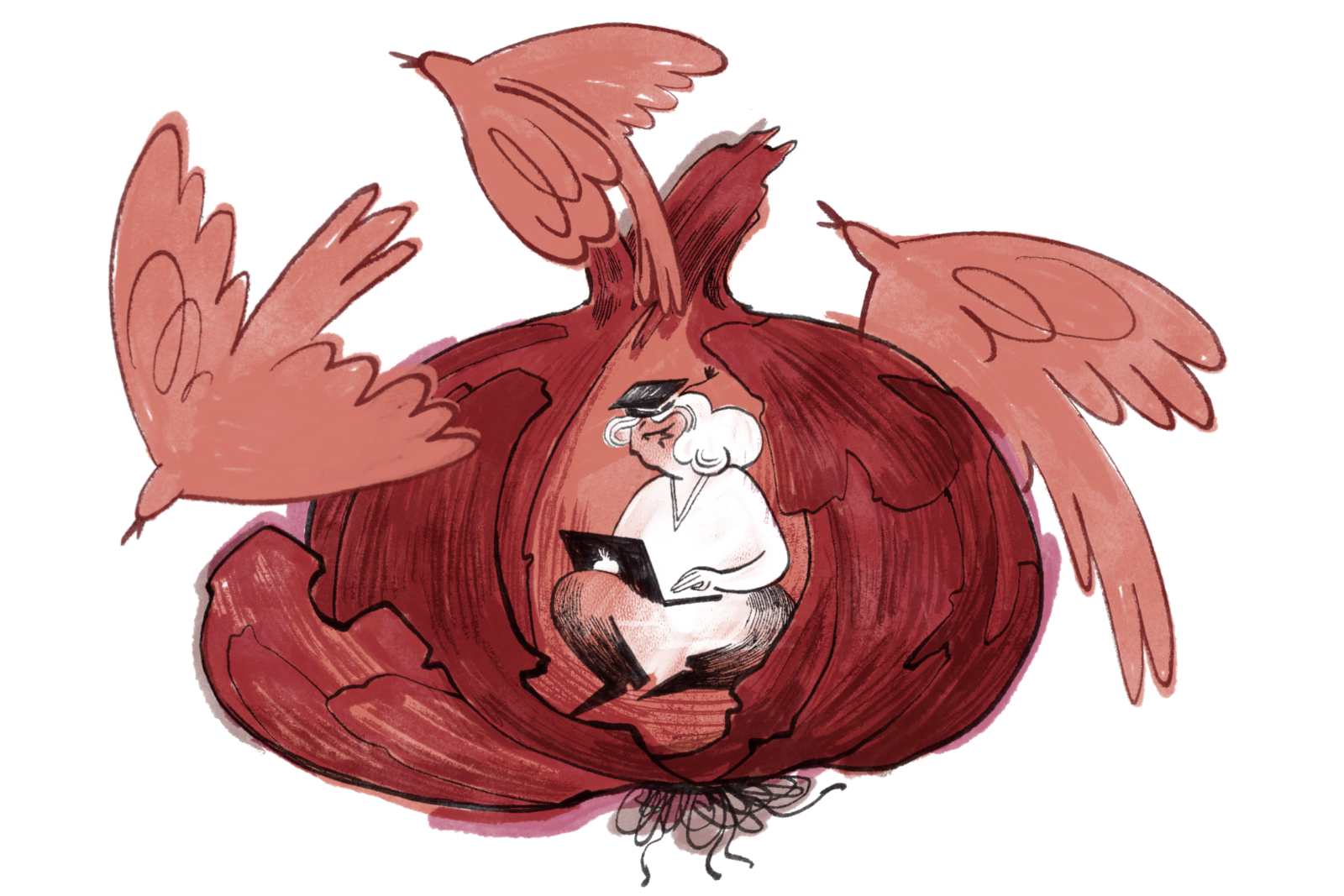
Image by: Ami Rinn
A PhD candidate does not dare to speak out because colleagues hold different views. And a researcher hesitates to speak to a journalist for fear of being misunderstood or ending up with a negative headline. Rector magnificus Jantine Schuit cited two examples of self-censorship at the university on Monday morning, as part of her opening speech on academic freedom.
The fact that this freedom is under pressure has prompted a series of meetings at various universities. In the Senate Hall in the Erasmus Building – normally the setting for PhD ceremonies and inaugural lectures – around twenty academics, slightly more support staff and four students gathered for the first of four dialogues to be held this spring.
‘Increasingly difficult’
According to Schuit, academic freedom is under pressure both worldwide and closer to home. The rector cited the United States as an example, where political interference has led to certain research themes disappearing and some degree programmes being censored. In the Netherlands, too, the debate is beginning to take shape, Schuit said, with discussions about whether sufficient room is being given in the curriculum to a wide range of perspectives.
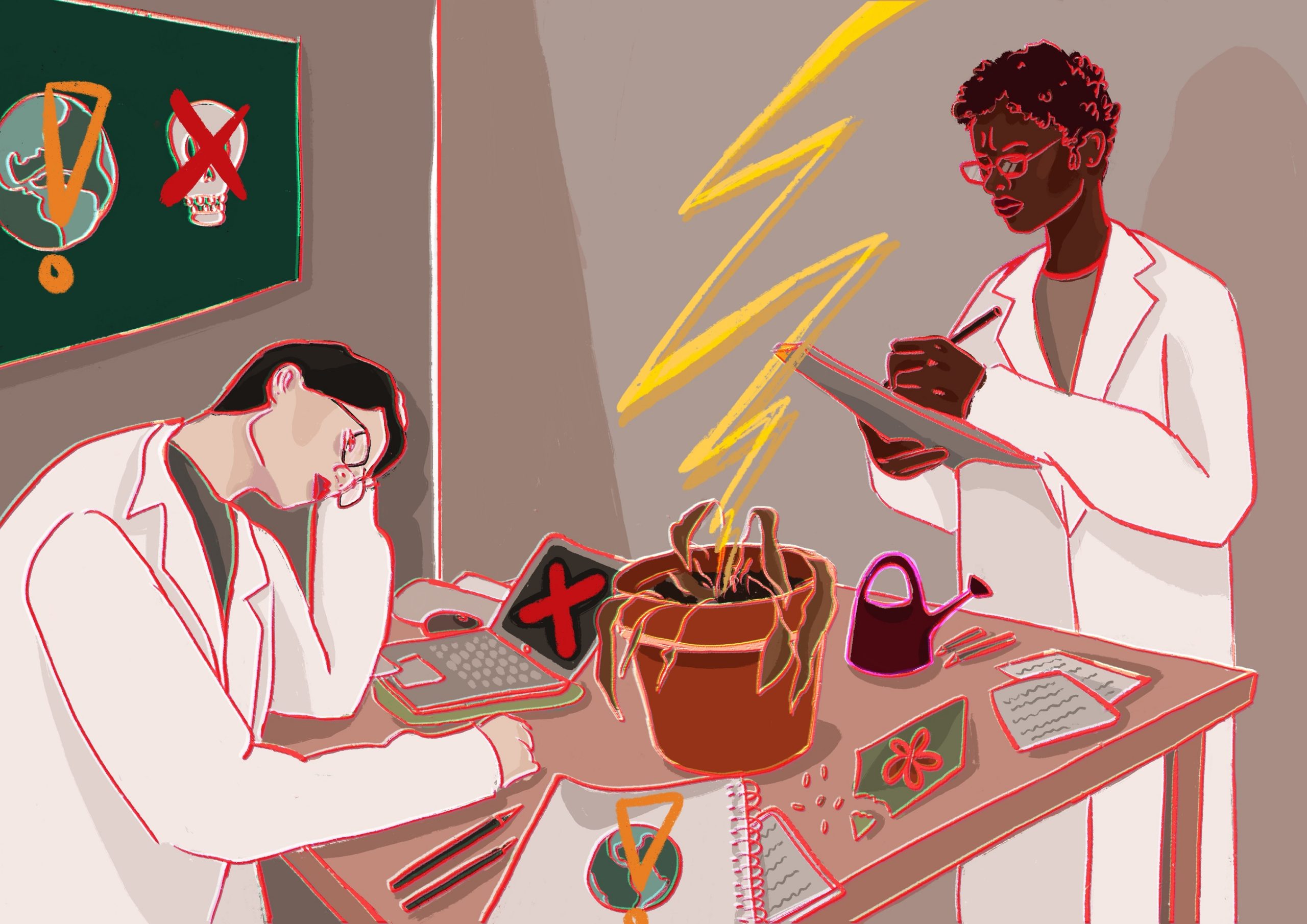
Budget cuts, workload and geopolitical tensions can make it harder to have an open conversation at this university, Schuit argued. “The university should be a place where dialogue can be conducted openly. In practice, it is becoming increasingly difficult to have a respectful conversation between people who disagree.”
The Netherlands drops on freedom index
Professor of Political Philosophy and Economic Ethics Constanze Binder took over from Schuit and explained that, according to an international index, academic freedom in the Netherlands has been declining for years, from 0.92 in 2018 to 0.76 in 2024.
Academic freedom operates at different levels, Binder explained using a graph in the shape of an onion with ‘layers’. The first layer is the individual freedom to learn, to conduct research or to teach. The second layer concerns the freedom to disseminate knowledge. And the outer layer relates to the conditions: do you have job security, are there sufficient funds and is there institutional autonomy?
She then gave a crash course in the history of academic freedom, starting with Galileo Galilei and Desiderius Erasmus challenging those in power, via Mary Wollstonecraft, who campaigned for women’s rights in education in the eighteenth century, to Wilhelm von Humboldt, the founder of the concept of academic freedom.
The audience was divided into eight groups as diverse as possible, who moved to the Langeveld Building for smaller-scale sessions. There they continued discussing the concept of academic freedom and what it means to them, explicitly in the form of a dialogue rather than a discussion or debate.
Braver university
It became clear that each participant has their own interpretation of the concept and brings their own experiences. Topics mentioned several times included the (lack of) support from the university when a researcher’s freedom comes under pressure, whether through legal action or personal threats. Participants felt that the university should be braver in defending principles and should also support and protect researchers when necessary.
Some see the framework of the university’s strategy, within which research must fit, as restrictive of freedom. If you follow your curiosity and arrive at a topic that does not fit within that framework, your chances of funding or promotion are reduced. The same applies to sector plans or research grants from the NWO or the EU.
Not alone
Participants also had ideas about how freedom could be better protected. ‘We need time and money’, was one solution that received broad support. A more facilitative attitude from ‘management’ would also be appreciated.
The main lesson of the morning? The discovery that more colleagues are concerned about academic freedom. “We are not alone!” someone shared via the Mentimeter at the end of the meeting.
Read more
-
Science as a geopolitical ‘bargaining chip’: Horizon Europe is growing rapidly
Gepubliceerd op:-
Science
-
De redactie
-
 Elmer Smaling
Deputy editor-in-chief
Comments
Comments are closed.
Ad
Read more in Science
-

Seven EUR scientists receive a Vidi grant
Gepubliceerd op:-
Science
-
-

New code of conduct for science emphasises ‘distinctiveness and autonomy’
Gepubliceerd op:-
Science
-
-

Hate campaigns and political pressure: KNAW wants legal protection for academic freedom
Gepubliceerd op:-
Science
-