First Philosophy: a philosophy podcast for beginners and advanced listeners

Teachers come and go, but when philosopher Awee Prins retired, a group of former students felt strongly that his classes had to be preserved. They recorded his final series of lectures and turned them into the podcast series First Philosophy. The first episodes have now been released.
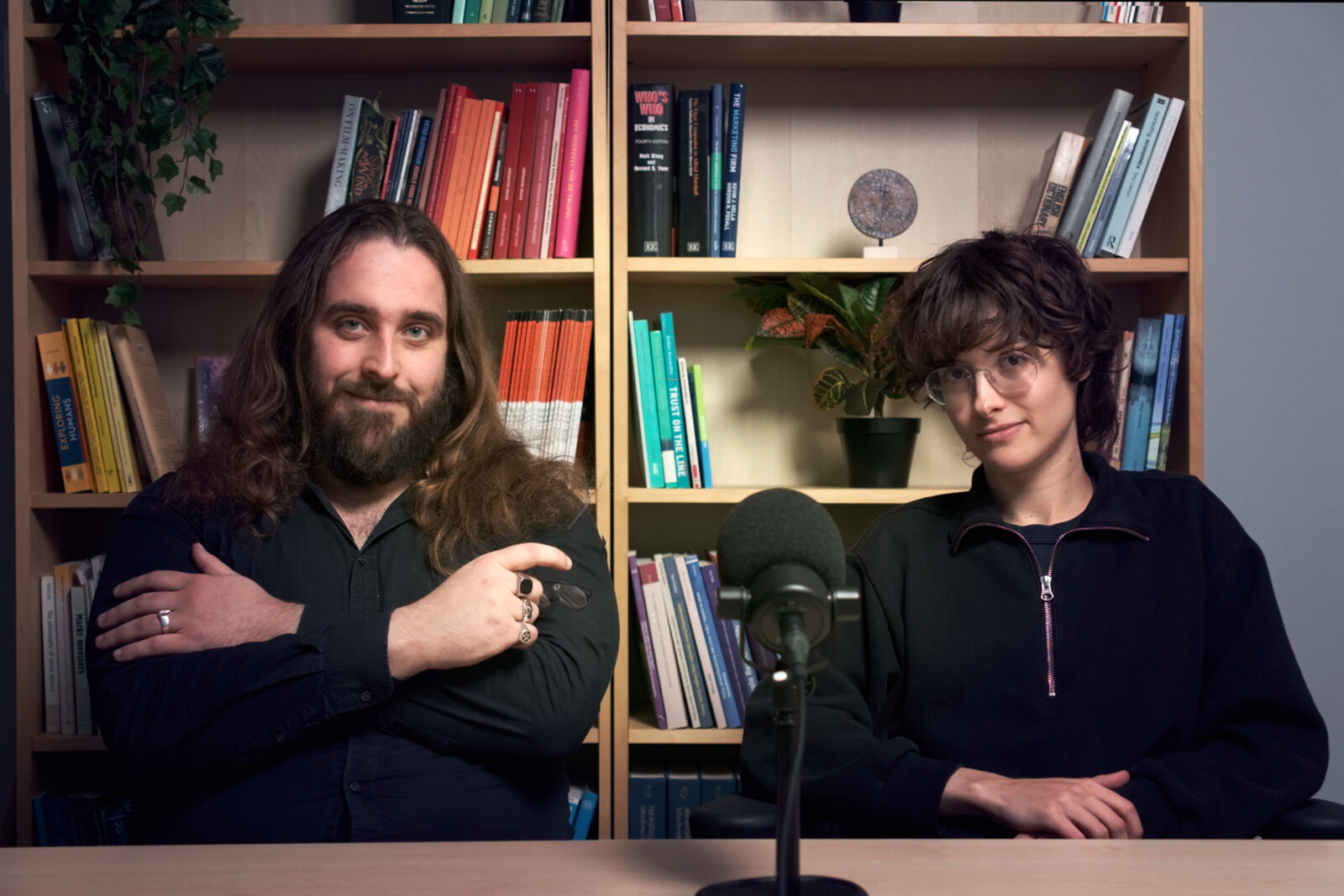
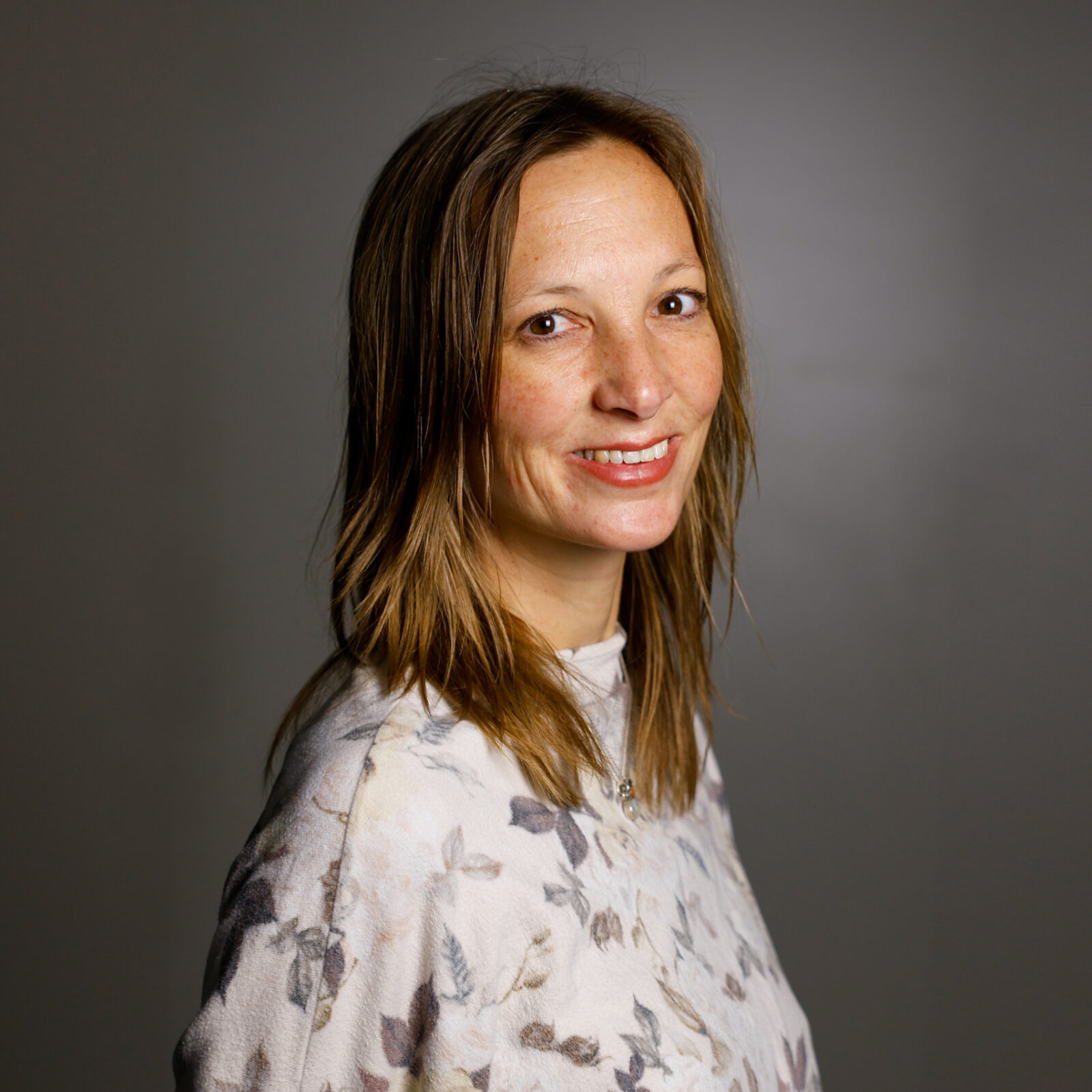
Image by: Max Wassink
The lectures of associate professor of Philosophy Awee Prins were an experience in themselves. That is something producer Max Wassink, Eddie Adelmund and hosts Sonia Shvets and Kas Molenaar are all very clear about. Sonia: “Above all, we want to show the joy of philosophy in everyday life, the way Awee could.”
The enthusiasm and love for philosophy come through in the commentary by Kas and Sonia, who, as the episodes progress, become increasingly attuned to one another (Sonia in episode 8: “I’ve prepared a viewpoint on this that’s going to annoy you.”).
The first eleven episodes of the podcast are online. You can listen to the podcast on Spotify or watch it on YouTube.
The hosts agree on their favourite episodes – the ones about their favourite philosophers: Levinas and Heidegger. Kas: “Sonia is so passionate in the episode about Levinas, I absolutely loved seeing that. I had the most fun preparing and recording the episodes on Heidegger, but afterwards I did feel anxious about whether I’d forgotten something or made a mistake.”
Bringing philosophy to life – according to his former students, Awee Prins was a master at it. Max believes Prins’ expressive way of teaching played a major role. “As a video and podcast maker, I noticed how rhetorically powerful his teaching style was – almost like a piece of theatre. I think that’s an aspect of knowledge transfer that often gets overlooked. And it’s precisely that vivid, idiosyncratic approach that made the content really hit home.”
Storyteller
Kas and Sonia also highlight Prins’ talent for storytelling to show how the philosophical method can be used. Kas: “Awee weaves theory together with stories. As a student, those stories stick with you. And only later do you realise that every single story had a purpose.”
Take Prins’ approach to the philosophical question ‘what is the right thing to do?’ – a question that, according to Prins, cannot be answered through abstract scientific thinking, because that kind of thinking overlooks the reality of difficult or even impossible choices. He illustrates this using a story by Sartre about a soldier who must choose between defending his country or caring for his terminally ill mother: what is the right thing to do?
“Philosophy doesn’t give you answers”, Sonia explains, “it’s not there to pass judgement, but to ask questions. As a teacher, Awee had the gift of not delivering a tightly wrapped-up narrative, but leaving room for open ends – showing that there is more, without trying to explain everything. He doesn’t ask rhetorical questions in his lectures – everything is open for further reflection.”
‘Older students sometimes say in surprise: I know everything he’s saying and yet it feels like I’m hearing it for the first time’
Layers
Thanks to the stories, the lectures remain a journey of discovery – even for advanced listeners. Kas: “Older students sometimes say in surprise: I know everything he’s saying and yet it feels like I’m hearing it for the first time.”
It was only when Kas and Sonia, as graduates, listened back to the first-year lectures that they realised how brilliantly they were constructed. Prins was able to distil the essence of a vast amount of material into a two-hour lecture – one in which many layers could still be uncovered.
The big challenge for the podcast makers was to convey those layers in the podcast – making it accessible, but not like a textbook. In the podcast, Sonia and Kas occasionally pause the lecture to offer context for listeners without a background in philosophy. But their main contribution – in the spirit of Prins – is to make the material personal, for instance by responding to the questions Prins poses.
In the first episode, for example, Sonia talks about the question ‘what is landscape?’, and shares the story of her grandparents’ potato field, where her entire family would gather on the first Sunday of September to harvest the potatoes. For her, this landscape was not just a place where potatoes grow, but also a place of an ‘enriching yearly reunion’.
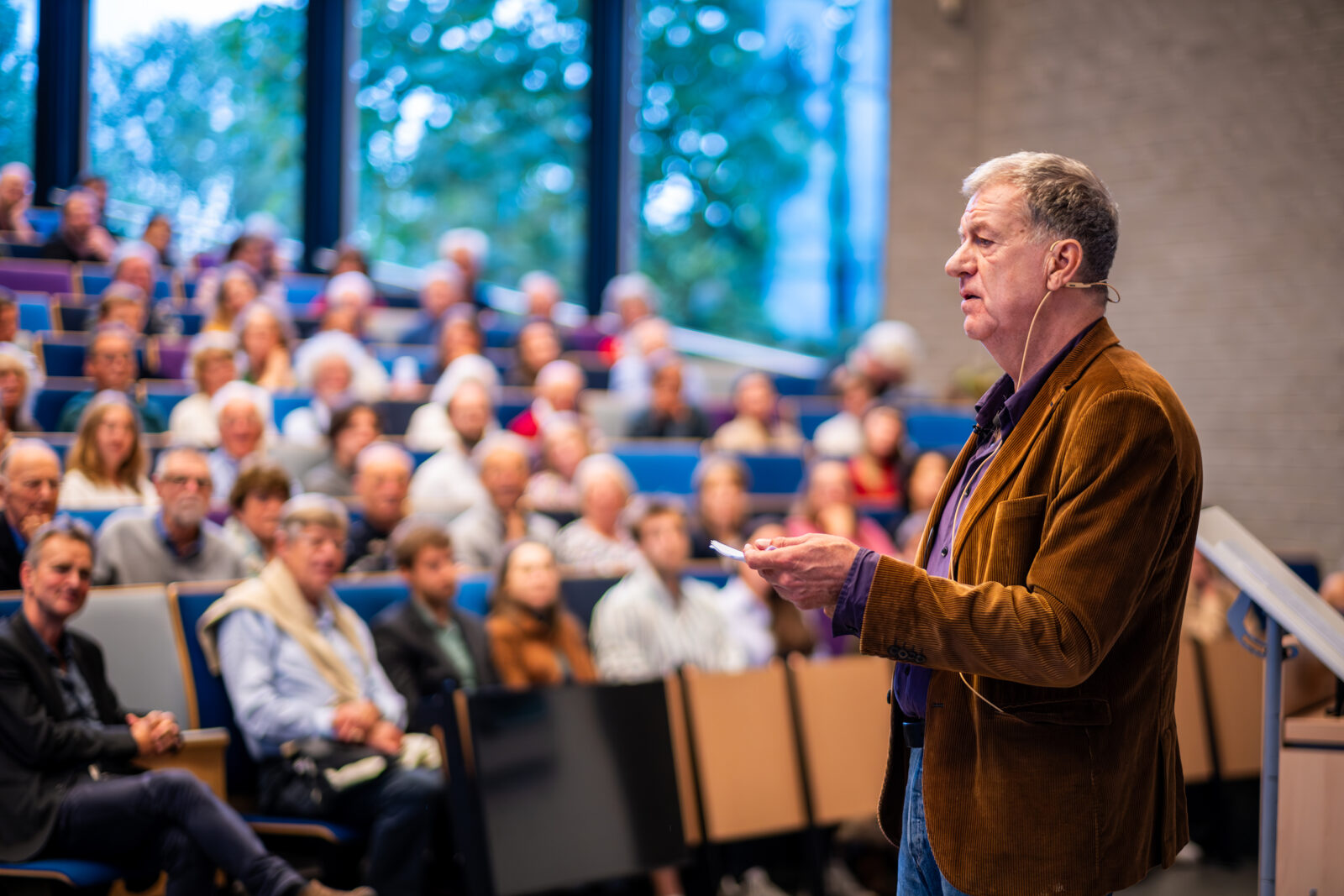
Image by: Hanna Radstake
Fun
The podcast recordings took place at the university and in Max’s basement. As preparation, Max provided the audio clips and transcripts of the lectures, which Sonia and Kas first reviewed separately and then discussed together at length. Kas: “We had so much fun recording – it never felt like a task we had to get through. The producer sometimes had to rein us in. Sometimes we had two hours of material and only used twenty minutes. But sometimes we used nearly everything.”
Still, they emphasise: for future podcast makers, the key to a good podcast is not about hearing yourself talk. You have to pursue a goal – like sharing Awee Prins’ lectures. At the very least, it should be a goal that’s close to your heart, Max adds: “If you want to make something, choose a topic that you’re genuinely interested in. A podcast is just as much a reflection of yourself as it is of the content you’re presenting.”
De redactie
Comments
Comments are closed.
Read more in Education
-
Letschert gives nothing away in first parliamentary debate
Gepubliceerd op:-
Education
-
Politics
-
-

EUR master’s in International Management among sixteen ‘excellent’ masters in the Netherlands
Gepubliceerd op:-
Education
-
-
Faculty honours programmes mostly continue, but have to adapt to budget cuts
Gepubliceerd op:-
Education
-