Ad

Faculty honours programmes mostly continue, but have to adapt to budget cuts

Due to the new university strategy, the Executive Board has made a decision to discontinue the Honours Academy from 2027, stopping all EUR-wide honours programmes. This decision affects the honours programmes of the schools as well, with most of them making changes due to the budget cuts.
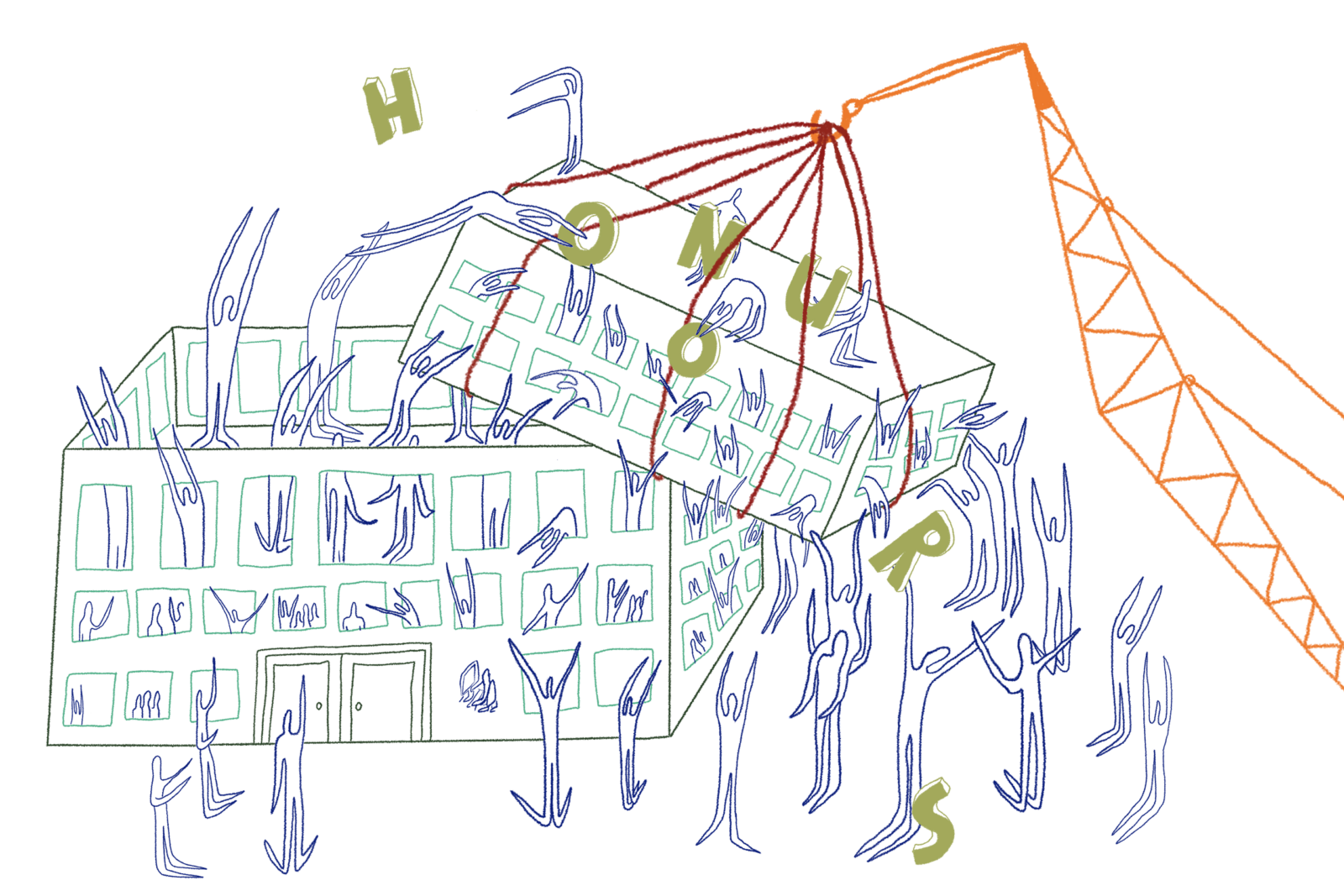
Image by: Sonja Schravesande
Interdisciplinary merger at ESHCC
While most faculties at the Erasmus University have only one honours programme, the Erasmus School of History Culture and Communication (ESHCC) has three – one for History, one for Culture, and one for Communication.
“The past five years, there was central financing for all honours programmes. This was a temporary measure to help faculties have a good high quality honours education,” explains Mijke Slot, the coordinator of the Communication honours programme.
“We knew it was temporary, but we all hoped it would be continued. It’s really important to have this kind of funding, especially for smaller or middle-size schools. Without it, it’s up to the schools to decide whether they want to invest in and continue their honours programmes.”
“In the current situation of budget cuts, our programmes have become much more vulnerable. Due to this challenge, our management decided to merge the three ESHCC honours programmes into one,” Slot says.
“While it will be challenging, we want to develop a great interdisciplinary programme where students from different departments with different perspectives can work together.”
Intercontinental trips scrapped
“We will continue to offer the bachelor honours programme this academic year”, a spokesperson from the Rotterdam School of Management (RSM) wrote in response to questions by EM. “In line with our mission and the broader direction of the EUR, we have refined the programme to strengthen its sustainability and societal impact. Previously, it included engagement with international innovation ecosystems and an intercontinental study trip, whereas the programme now emphasises collaboration with local and European partners. Our master’s programmes can determine their academic structure and whether to include an honours track individually.”
The Erasmus School of Social and Behavioural Sciences (ESSB) has adapted its honours programme from this academic year. That involves practical changes, such as making the class trip less costly (Brussels instead of Suriname). The faculty is hopeful it can continue the programme.
No major changes at other schools
“The Erasmus School of Law (ESL, ed.) has decided to continue the honours programme, at least for the time being”, says Femke Noomen, director of the Erasmus Honours Law College.
“An important reason for this is that our honours programme is organised differently from most others. Within ESL’s programme, students are required to participate in a committee or on the board of the study association (Astrea) during one year of the programme.”
This study association organises a large part of the honours activities itself. “This varies from organising study trips to creating modules such as workshops at law firms, visits to the European Parliament, lectures of guest speakers and fulfilling student internships within social law firms. A large part of the costs of the programme are covered by the study association, thanks to sponsorships that they secure themselves.”
Similarly, at the Erasmus School of Economics (ESE), the honours programme will continue with the school funding it directly now. No further decisions have been made at this point.
Read more

De redactie
-
 Radina Kirilova
Student Editor
Comments
Comments are closed.
Ad
Read more in Education
-

TU Delft may not favour women in admissions to courses
Gepubliceerd op:-
Education
-
-

RTL: More than half of master’s theses contain AI-generated text
Gepubliceerd op:-
Artificial Intelligence
-
Education
-
-
Education pioneer Etienne Augé: ‘Technology should give us more time for people’
Gepubliceerd op:-
Education
-