Among peregrine falcons, buzzards and northern fulmars, Jos van der Geest found an anchor point

For Erasmus MC lecturer Jos van der Geest, the Natural History Museum Rotterdam has become an important place in his life. Every Tuesday evening, a group of volunteers works here, creating an archive of bird and mammal history. For Van der Geest, these evenings were an anchor point during a difficult period.
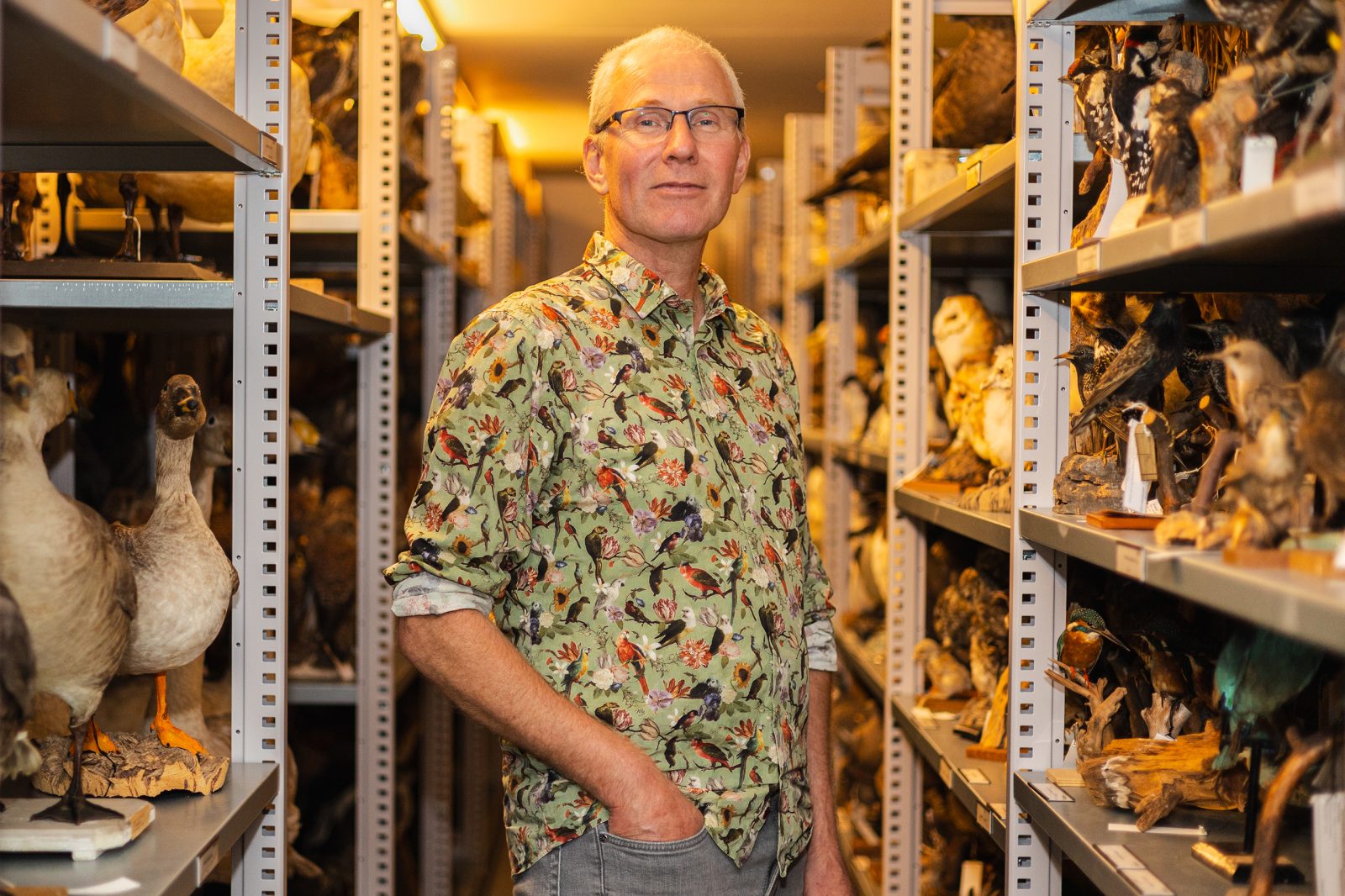
Image by: Pien Düthmann
“Look, this is the shoulder – in a peregrine falcon that really is one solid lump of muscle. The muscles are red because a lot of blood flows through them”, says Jos van der Geest (55) in his green shirt covered in drawn birds. He researches neuroplasticity and motor control and teaches (neuro)physiology and anatomy at Erasmus MC. The anatomy and motor control of humans, that is. In the salon of the Natural History Museum, with its high windows and even higher ceiling, beneath the original cream-coloured, curly ornamental ceiling from 1852, he talks about his hobby during the public open day: he is a scientific bird preparator.
With 6,422 staff and 31,473 students, it’s impossible to know everyone at the university. But what do these people do once they step off campus? In this end-of-year series, EM makes the connection with six remarkable stories about what students and staff do in their spare time.
Within taxidermy, a scientific preparator is the person who processes dead animals in such a way that they can be preserved as study skins for research. A bird is not mounted so that it looks nice on a branch – that is more the artistic direction. The animals are filled again and closed up, these are known as study skins.
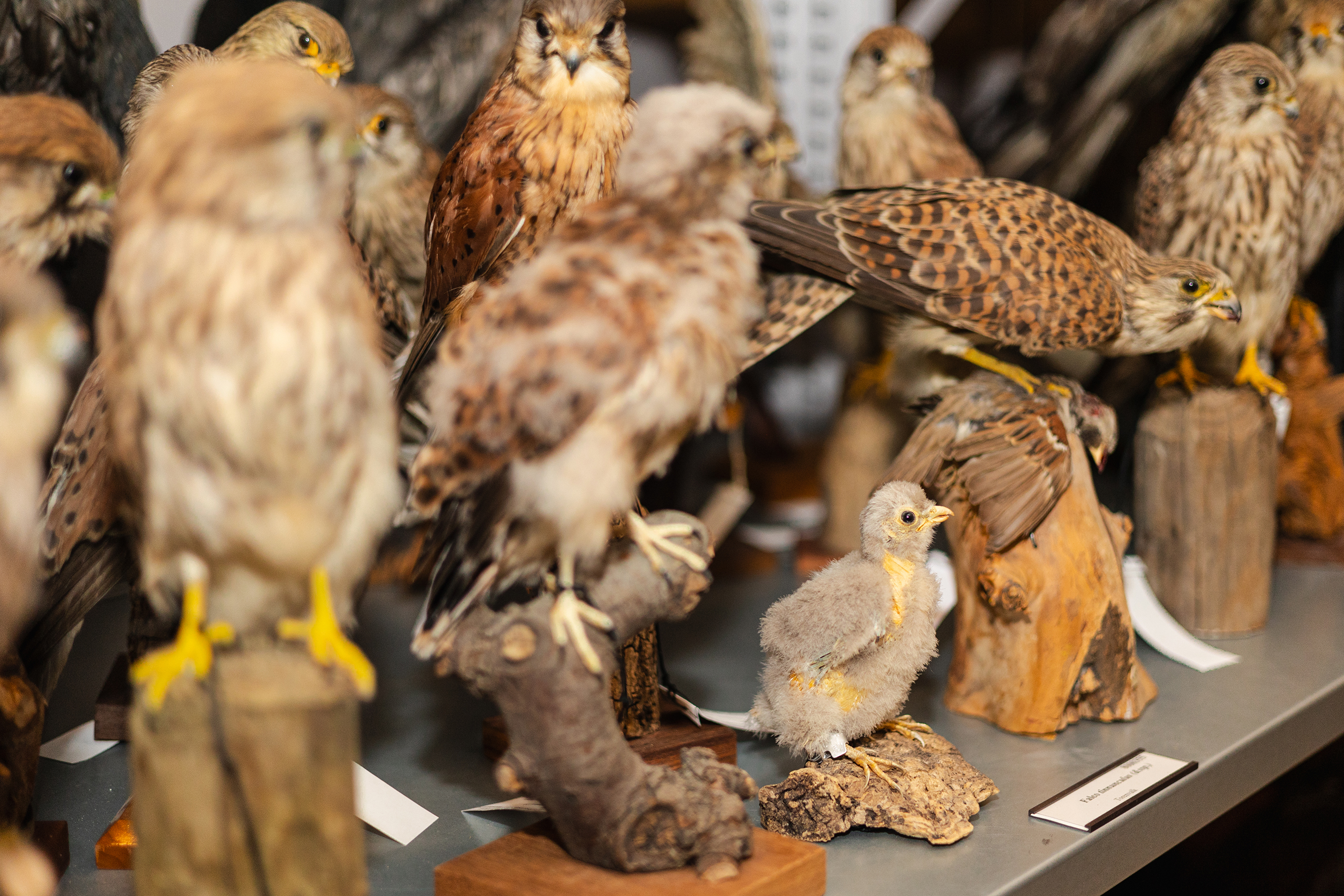
Image by: Pien Düthmann
Eternal life
Two women lean further towards the inside-out peregrine falcon. “Ooo”, says the woman with brown curls. “I thought this would be very bloody.” “Not at all”, replies Van der Geest. “When we have a small wound, blood comes out because our heart is still pumping. The heart of this lady has stopped.”
‘It really is the small things that can make you very happy’
As Van der Geest holds his scalpel-like silver knife, he explains how he works: “I cut the skin with the feathers, beak and legs loose from the rest. We keep those. The internal organs will rot and cannot be preserved.” Both women nod. “If we preserve enough animals, in a hundred years we can see how, for example, the peregrine falcon has changed, just as we can look back over the past century.” “Goodness, how beautiful”, concludes the visitor with the brown curls. “You are giving the bird a second and eternal life.” Van der Geest beams: “That is exactly what I find so beautiful about it.”
From now on, his name will be linked to this bird, because that is written on the card that is attached to it. “Sometimes I also give a bird a name. One of my students, Féline, now in her third year of Medicine, was so fascinated that she came along once. I then named a peregrine falcon after her. She was so happy. It is a small gift you can give, and I enjoy that. It really is the small things that can make you very happy.” The card on the leg also contains scientific information: how the animal died, how heavy it was, and its measurements.
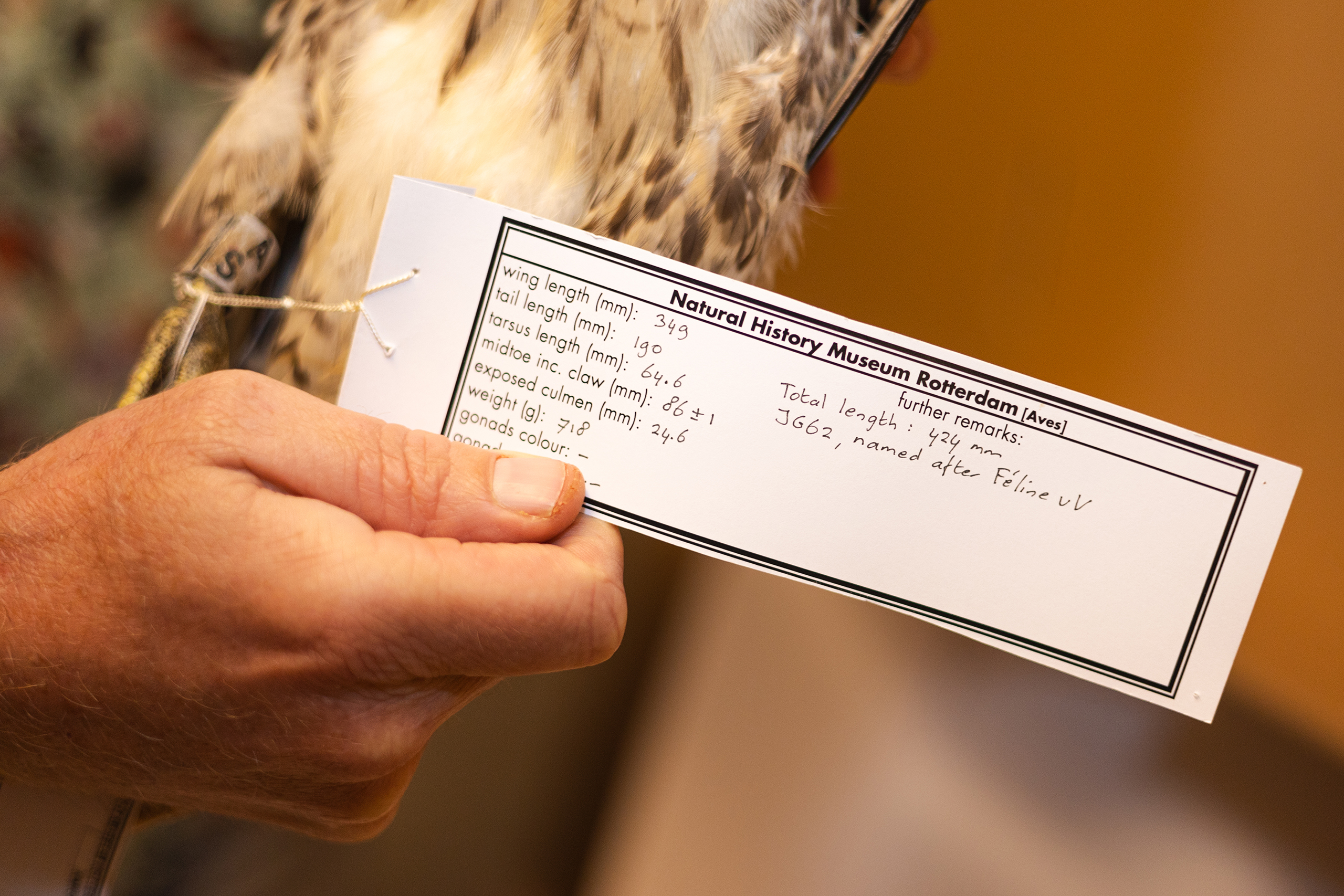
Image by: Pien Düthmann
Birds as individuals
In the museum storage, Van der Geest explains a little later what fascinates him about these dead birds: “If you prepare three identical birds in a row, you suddenly start to see individuals.” What he finds so beautiful about his hobby is the combination of biology and history, and the contribution he makes to science. “I am a nature lover, not an expert, but I enjoy learning new facts.”
The people who come every Tuesday evening to prepare animals complete the experience for him. “They are such different people. Very refreshing, because you step outside your work bubble. Everyone here is happy for you when you complete a beautiful project. No jealousy or sideways looks. If it does not work, or you make a small mistake, for example a tiny hole in the skin, you get an encouraging word or a pep talk.”
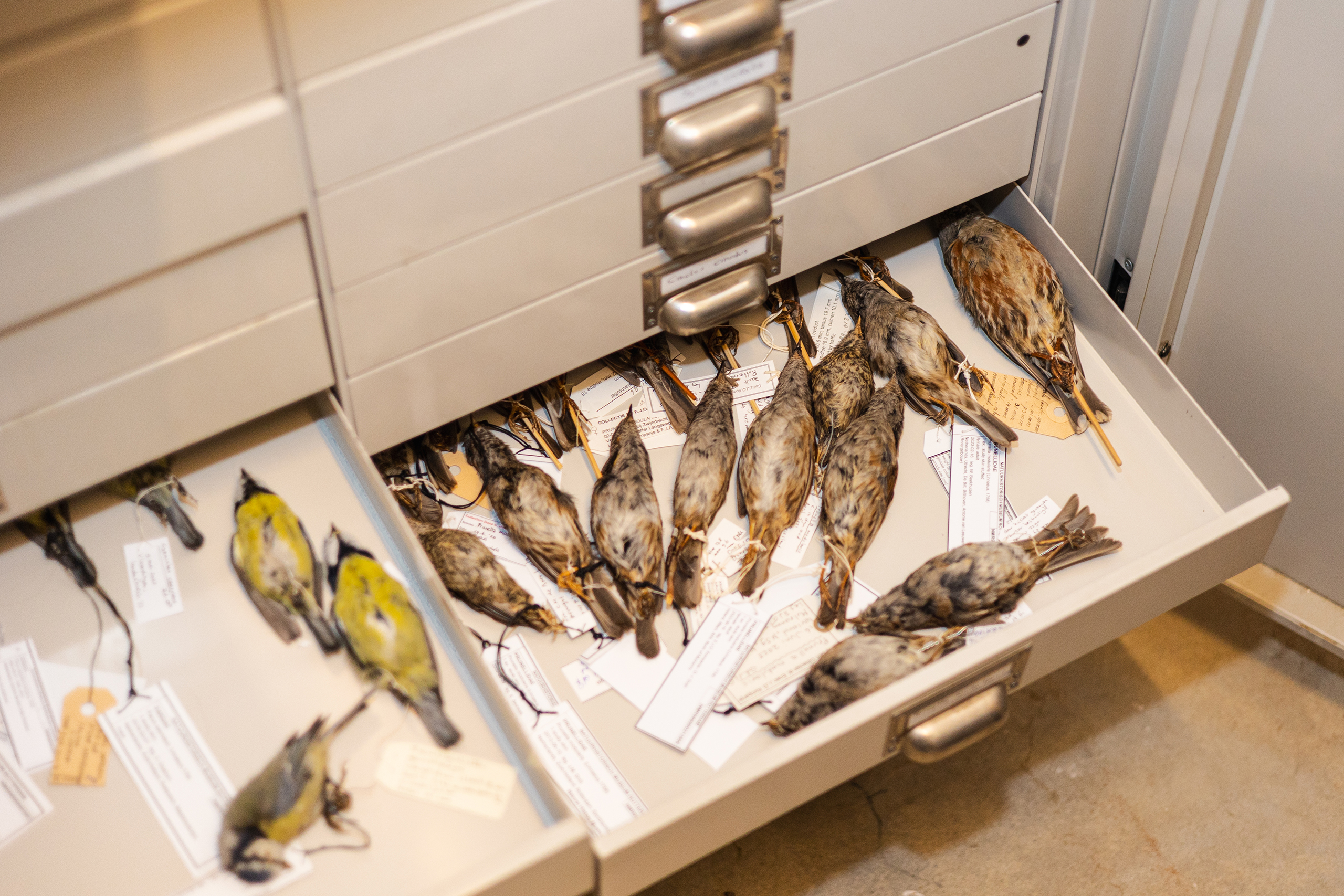
Image by: Pien Düthmann
Tattoo of a peregrine falcon
His favourite bird is the peregrine falcon. “They are beautiful. In my youth, these birds had become extinct in the Netherlands due to the use of pesticides in agriculture. Now they have returned, again due to human intervention. They are very fond of tall buildings.” A peregrine falcon is tattooed on Van der Geest’s right forearm.
At the Natural History Museum, he prepares more than just peregrine falcons. “I do have a preference for birds, I think they are beautiful and remain fascinated by them. I like mammals less, but others in the team do.” That his two-hundredth bird is a peregrine falcon is no coincidence. This one was kept for this moment; the team knows it is his favourite bird.
‘The worst that can happen is that a bird is not included in the archive. Is that really so bad? Of course not’
‘Have faith’, Van der Geest wrote in capital letters in his notebook on 9 August 2022. In it, he has been making notes since his first day: which bird he had in his hands, how the animal died, what tips he received. “The tip about having faith is still one of the best. During the preparation process, the bird looks awful, but after a wash and filling it is beautiful again.” He received the tip from his now retired Erasmus MC colleague Erwin Kompanje. “I had heard about preparing birds before and had watched at Naturalis – I live in Leiden. When Erwin received a badge for forty years of volunteer work as a preparator at the museum, we started talking and he invited me to come along. I have never left.”
It is a relaxing hobby. One where you work with your hands, one that makes you happy. And that is worth a lot, he concludes. Here, you are allowed to make a small mistake. “Then you cover that little hole with a feather. The worst that can happen is that a bird is not included in the archive. Is that really so bad? Of course not.”
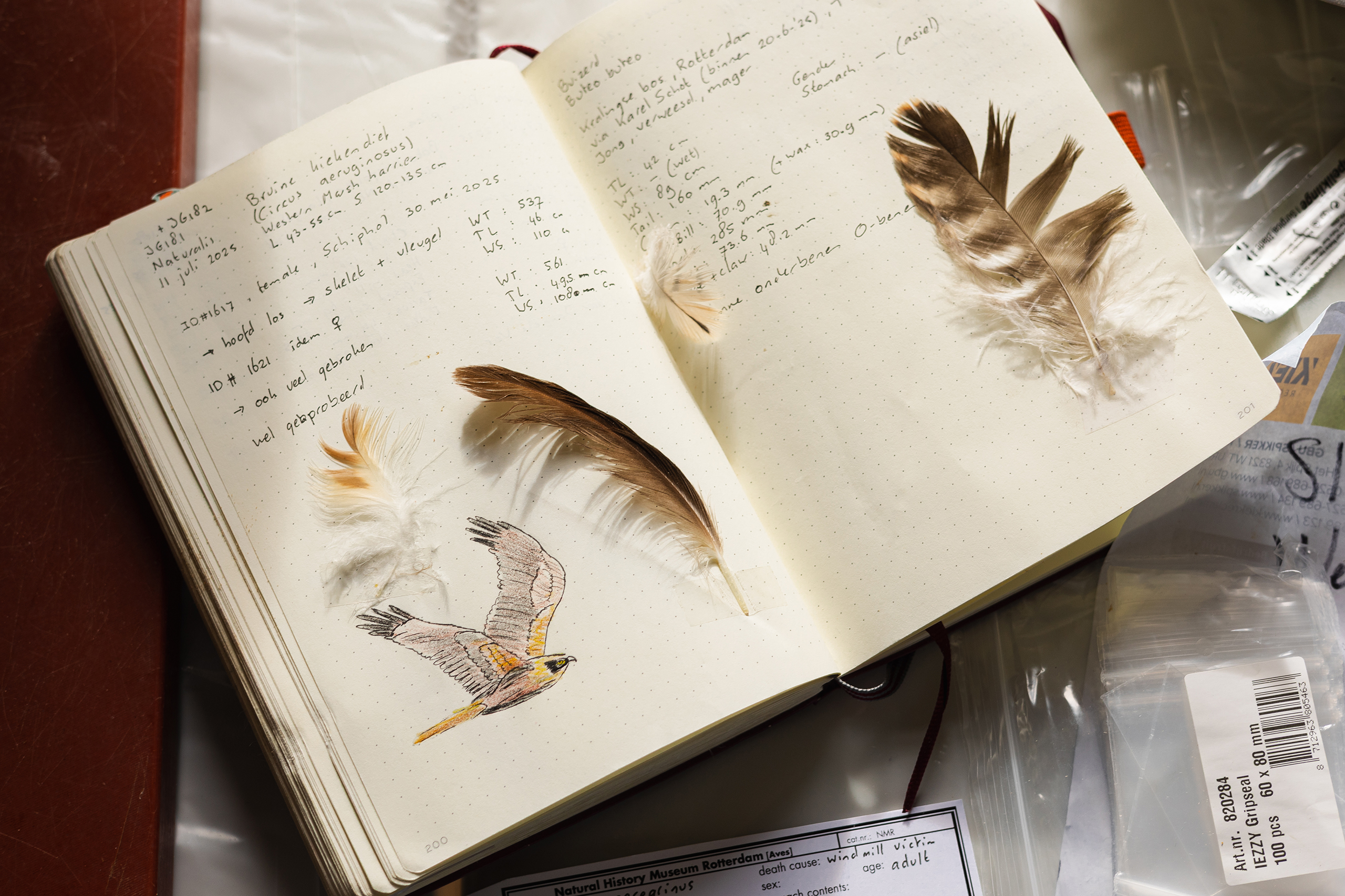
Image by: Pien Düthmann
Anchor point
Over the past two years, preparing birds may have become more than just his hobby. The Tuesday evenings in the museum helped him through a difficult period. “After the attack at Erasmus MC two years ago, which I was right in the middle of, the Tuesday evening in the museum was my anchor point. It provided continuity and the motivation to come to Rotterdam. I may have missed one, the first Tuesday after the attack.”
After the attack, a psychiatrist diagnosed Van der Geest with PTSD. He is doing much better now. “I was given the tip: go and do something you already wanted to do, but that is otherwise unimportant. I started drawing. In my notebook, I now draw the bird on the page about that bird. I copy it from a picture. This tip worked very well.”
Time to go back upstairs. Away from the previously prepared birds, such as a magpie from 1928, a great tern from 1922, boxes full of Fulmarus glacialis (northern fulmars), Buteo buteo (buzzards) and more. Once back at his table with the peregrine falcon, Van der Geest is soon fielding many questions from visitors again. “Are you going to mount this one later?”, asks a young man with a German accent. “No, that is more the artistic side and not the scientific one”, he explains. “They used to do that in the museum as well, but then, for example, you cannot properly examine the wings. That is important for research.” The female peregrine falcon is now almost finished, just a bath, drying and filling to go.
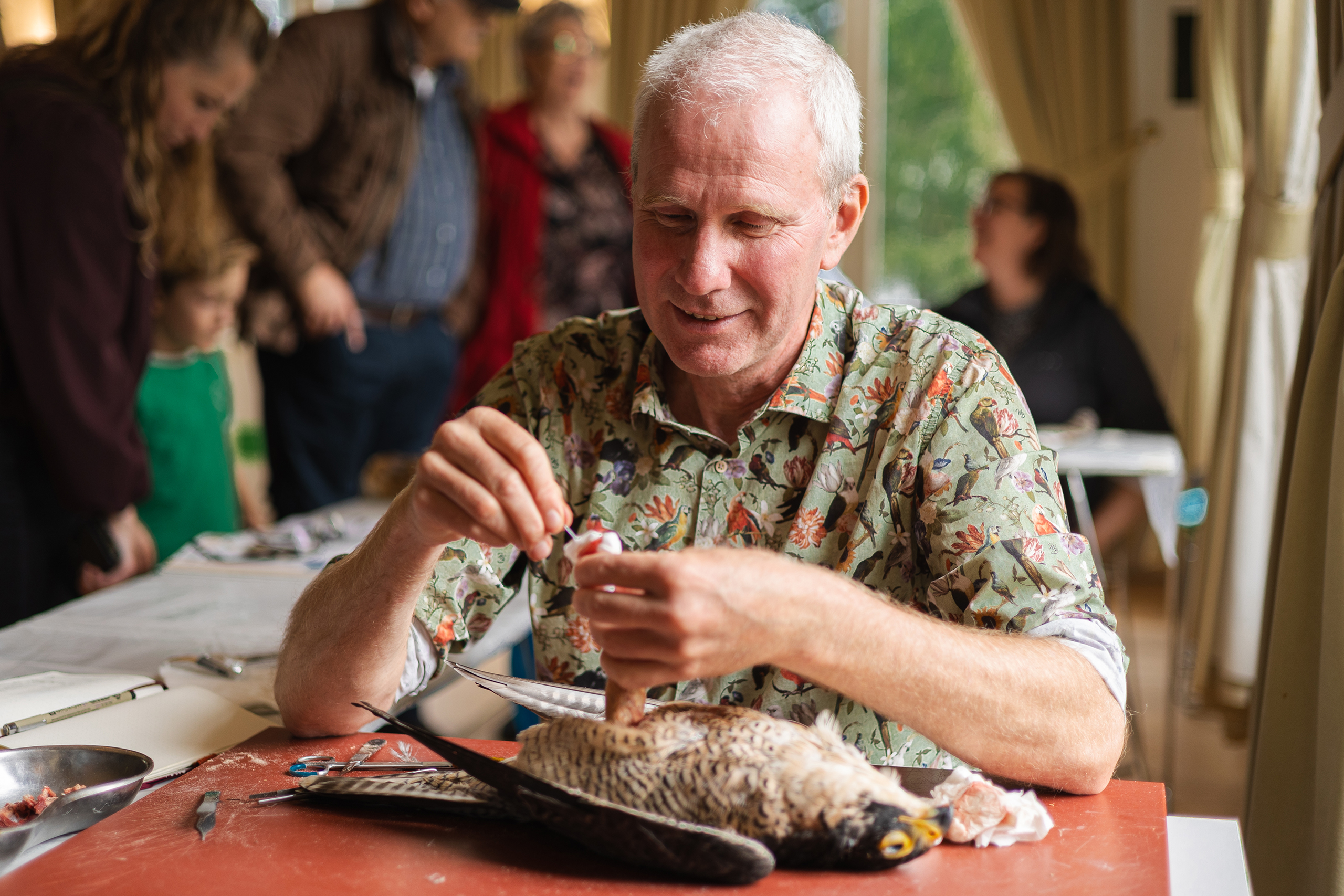
Image by: Pien Düthmann
De redactie
-
 Tessa Hofland
Editor
Latest news
-
EM TV newsflash: Break-in in F building, EUR receives two Vici grants, and student wins 10,000 euros music prize
Gepubliceerd op:Article type: Video-
EM TV
-
-
Meditation room closed in the middle of Ramadan after break-in in F building
Gepubliceerd op:-
Campus
-
Comments
Comments are closed.
Read more in Staff
-

Pay rise for interns, clinical rotations and staff at UMCs
Gepubliceerd op:-
Staff
-
-
Pension fund ABP dumped US government bonds
Gepubliceerd op:-
Staff
-
-
Ellen van Schoten brings cityscapes, half-timbered houses and cathedrals to life
Gepubliceerd op:-
Staff
-