Joining the active bystander training: ‘Social safety is a long-term effort’

A socially safe workplace is a shared responsibility. With that in mind, 37 active bystander training sessions have been given at Erasmus University this year. “Often, the most harmful thing for a person is not so much the unwanted behaviour itself, but the fact that the group notices and remains silent”, trainer Scott Solder told the group.

Image by: Noa Zonderland
“A toxic atmosphere in the workplace already from day one, who has experienced that? You don’t need to explain, and you don’t need to answer”, active bystander trainer Scott Solder immediately adds to his question. The small group of young employees is sitting in Langeveld 4.02, the Young@EUR banner stands next to the entrance. Two of the twelve hands shot up straight away. One of the two adds a little more detail after all: within six months she had left again. To this day she is glad she did.
- Transgressive behaviour is also a structural problem at the EUR, which is why it is important to report it
- Naomi Ellemers: Don’t wait any longer to tackle social safety
- Social safety is stumbling block in negotiations on collective labour agreement Dutch universities
- Warning about misconduct by an academic is not that simple
- ‘1 in 5 PhD students experience undesirable conduct’
Social (un)safety has been an issue at universities for years. Various studies within the academic sector show that bullying, gossiping, (sexual) intimidation and discrimination still occur far too often among students and staff. “At this university we are committed to preventing this by investing in both awareness and in improving support and follow-up when boundaries are crossed nonetheless”, says HR policy officer for social safety Mies Franken.
“Social safety in the workplace is about more than just such unwanted behaviour”, Franken adds immediately. Keeping the latest staff survey in mind, which shows that work stress is a recurring major problem, she says: “It is also about when you send emails – on a Sunday afternoon or not? Do you call in sick or do you still come to the office half-ill? With such behaviour you are unconsciously sending a message: I expect the same from you at the weekend or when you are ill.” Social safety is about daring and being able to be yourself at work, Franken believes, about having the courage to discuss with one another when a boundary has been crossed, and about having proper support policies in place.
Group pressure
Solder explains in the workshop why it is so difficult to speak up or to stand up for yourself or someone else. “Evolution has programmed us not to stand out. That group consciousness is very strong, that is how you used to survive, and that feeling is still there.” The twelve people nod or look at each other. That sounds logical to the group. “That is why people often laugh along with hurtful or discriminatory jokes”, Solder continues. These jokes are dismissed as harmless, part of the workplace culture. Out of fear of retaliation, or because you do not see it as your problem, you’re not quick to speak up, the trainer explains.
Yet speaking up can indeed bring about change, says Solder. He gives an example from his time working at the BBC: the dismissal of Jeremy Clarkson after he punched a Top Gear producer in the face because he couldn’t get a steak after a long day of filming. “He wasn’t dismissed immediately”, Solder says. The group reacts softly but clearly indignantly. “Clarkson was popular with the public, a favourite of many. He had already received special treatment several times and was allowed to stay by the BBC Board each time. This time, however, the protests persisted and he was dismissed after all.” Group pressure now had a positive effect.
Lees meer
-
Why universities are unsafe (work)places
Gepubliceerd op:-
Safety
-
Four methods
After one and a half hour of workshop, the participants will have new energy to work together towards a safer workplace and beyond, Solder promises. In the workshop he discusses the four methods bystanders can use to intervene in unwanted situations: direct intervention, distraction, delegation and acting afterwards.
‘What matters is that you do something, and something you feel comfortable with’
Using examples, the group can consider what they would like to do. Directly intervene when a senior shouts at a junior researcher in the corridor? And how? Or would you take the junior out of the situation by inviting them to join you for a coffee? Would you report it to the manager? Or would you speak to the senior afterwards? The twelve people respond differently depending on the example – sometimes almost all choose ‘direct’, sometimes they are divided across all four options. “What matters is that you do something, and something you feel comfortable with”, Solder says. “There is no right or wrong beyond that, you will often combine several methods.”
Long-term effort
Trainings like these are not the solution to everything, Franken acknowledges. “Social safety is a long-term effort. We don’t want to place the responsibilities only on employees, but every little bit helps and no longer looking away from socially unsafe behaviour certainly helps.” All departments have their own initiatives for a safe workplace, Franken says. The active bystander training sessions are meant to further support these.
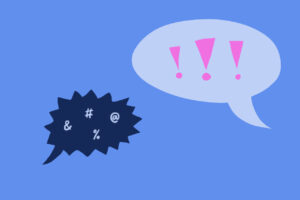
Image by: Noa Zonderland
The HR department offered the training to all faculties and departments. A total of 37 in 2025. “Some faculties wanted training for a specific group, for example professors”, Franken says. “We were able to arrange that.” The trainings are partly funded by Erasmus University, partly through subsidies. “These trainings are part of a broader approach to this theme. Many services and faculties have their own initiatives to promote a safe workplace”, Franken says. “From HR, we look at how best to align with these through central offerings like this.” Attendance requirements differed per service and faculty, but according to Franken many staff members have participated.
The idea for this series of training sessions had existed for some time. “This came from the evaluation of our previous project”, Franken says. “That was the play Mindlab, about academic integrity. We are now already working on a new project based on the evaluations of the active bystander-training sessions. Many staff members say they find it important to keep discussing this subject with their direct colleagues.” Franken and other colleagues are now exploring how they can facilitate that conversation.
Future
Although there is still plenty of work to be done, Franken sees progress. She sees, for instance, that the number of people who dare to report socially unsafe incidents or places is increasing. “A larger percentage of staff know where they can go, for instance to the confidential counsellors or to Safe@EUR.” Reporting is an important step, also for the university to gain insight into what is going on and what can be improved.
Lees meer
-
Reports about sexual harassment at university are tip of the iceberg
Gepubliceerd op:-
Student life
-
Solder wants to leave the group with something important: openly support the person who is being shouted at, the one who is repeatedly ignored in meetings, the one who is always the butt of ‘jokes’. “Often the most harmful thing for a person is not so much the unwanted behaviour itself, but the fact that the group sees it and stays silent. By acting you can show that not everyone agrees with the undesirable behaviour.” Ask aloud whether that one colleague can repeat what she said earlier in the meeting, or say something kind out loud to the one who is always the centre of a joke, are some examples Solder adds.
De redactie
-
 Tessa Hofland
Editor
Latest news
-
Away with the ‘profkip’, says The Young Academy
Gepubliceerd op:-
Science
-
-
House of Representatives wants basic grant for university master after HBO
Gepubliceerd op:-
Money
-
Politics
-
-

Company takes a huge chunk of the student finance of at least 350 internationals
Gepubliceerd op:-
Internationalisation
-

Comments
Comments are closed.
Read more in Safety
-
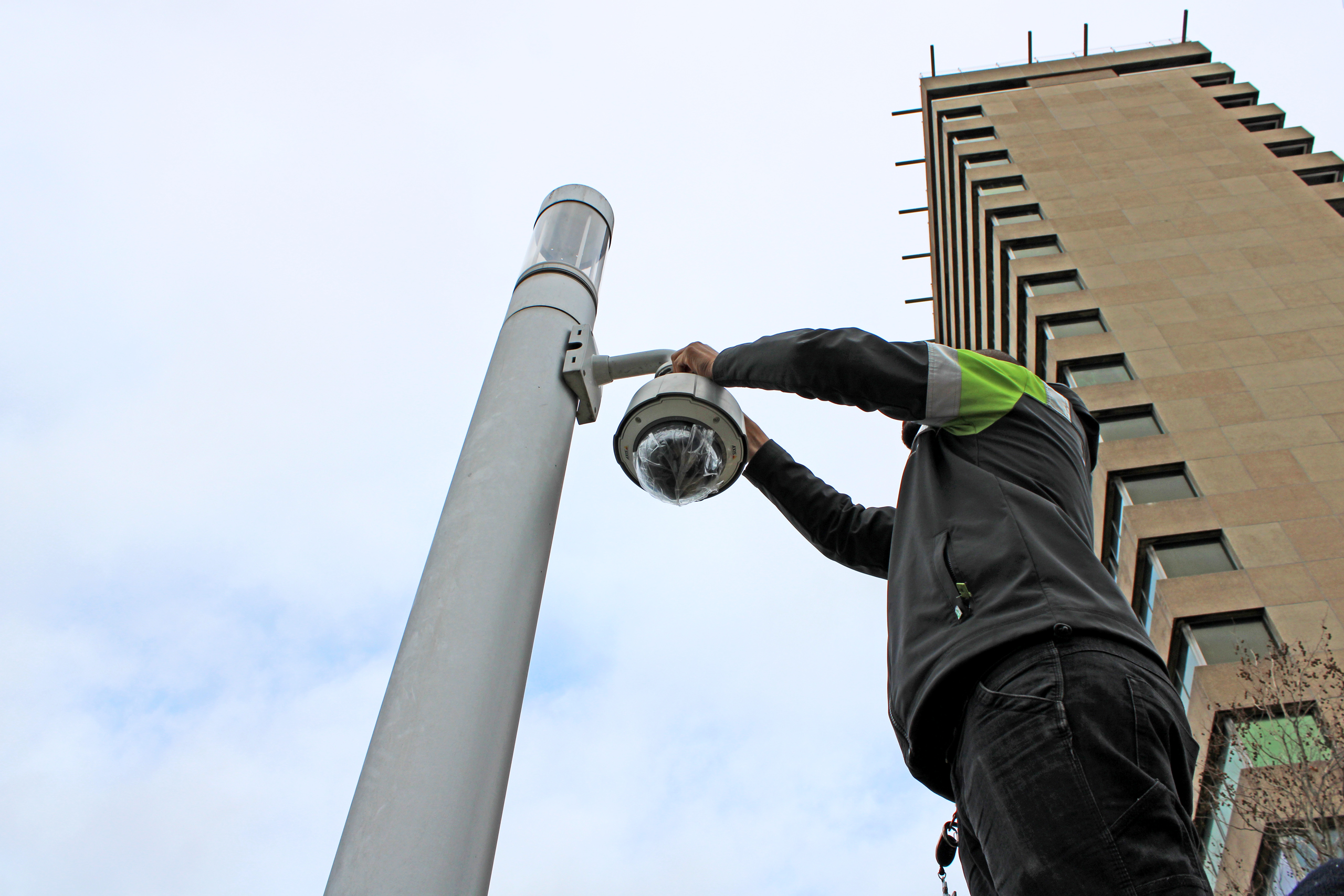
New campus camera system costs 1.7 million euros
Gepubliceerd op:-
Safety
-
-

Executive Board adopts Israel advice and freezes collaborations immediately
Gepubliceerd op:-
Safety
-
-
New advice: minimise existing cooperation with three Israeli universities
Gepubliceerd op:-
Safety
-